Roy Deo’s most trusted associate was a Jewish kid from Brooklyn who wanted nothing more than to be a made man in the Italian Mafia. Chris Rosenberg got his wish in the most literal sense—he was accepted, he was protected, and he was ultimately executed by the man who had become a father figure to him. Rosenberg was born on October 6, 1950, in the heavily Italian-American neighborhood of Canarsie, Brooklyn. Although he was of Jewish descent, he aspired to become a made man in the Gambino crime family, a status traditionally reserved for full-blooded Italians.
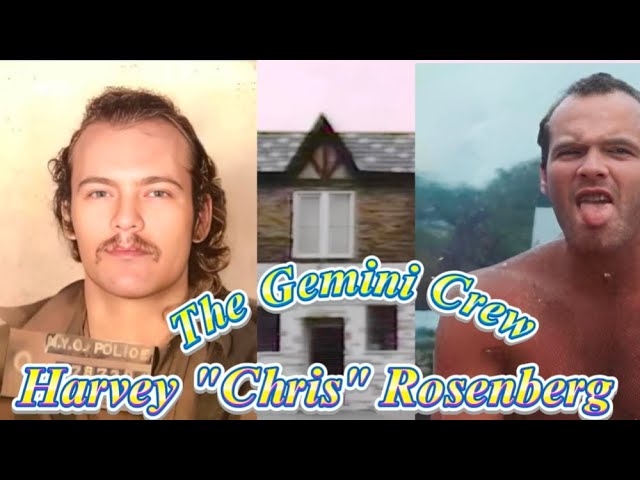
To distance himself from his heritage, he encouraged people to call him “Chris Deo,” borrowing the surname of his mentor, Roy Deo. His descent into crime began early. At just 13 years old, he was selling marijuana. In 1970, he was arrested for car theft, a charge that was reduced to a misdemeanor.
Further arrests followed in 1971 and 1972 for hashish possession and attempting to steal a snowplow, but those cases were dismissed. In 1966, Rosenberg met Roy Deo at a gas station in Canarsie. Deo saw potential in the young man and enlisted him to steal cars that could be sold through his network of junkyards. Rosenberg became the first crew member to form a social bond with Deo, regularly attending family gatherings at his home.
By 1972, Rosenberg owned a garage called Car Phobia Repairs, which secretly served as a hub for stolen vehicles. He also introduced Deo to his lifelong friends, Joseph Testa and Anthony Senter, known as the Gemini Twins. Because they were full-blooded Italians, they were able to become made members of the crew, solidifying Rosenberg’s importance to Deo’s operation. By 1974, Rosenberg was selling cocaine and Quaaludes with Deo’s backing.
A pharmacist supplied them with medical-grade drugs that could still be legally prescribed at the time. Through this connection, they crossed paths with 22-year-old Andre Katz, who bought a stolen car from the crew. When Katz was arrested for possessing the vehicle, he pointed the finger at Rosenberg. Shortly after, Katz was ambushed and beaten so severely that he was hospitalized.
He identified Testa and Senter as his attackers and vowed revenge. On November 13, 1974, Rosenberg opened his garage door and was ambushed by a gunman with an automatic rifle. He survived, but a bullet shattered his lower jaw and another hit his right arm. The shooting left his face permanently disfigured, and he grew a beard to hide the scars.
Suspicion immediately fell on Katz. While Rosenberg was still recovering in the hospital, the crew met to decide Katz’s fate. They unanimously agreed he had to die. A newer crew member, Henry Borelli, suggested using a female acquaintance to lure Katz into a trap.
On June 13, 1975, Katz arrived at the woman’s apartment complex expecting a date. Instead, he was abducted by Rosenberg, Borelli, Testa, and Senter. They brought him to the meat department of a local grocery store where Deo was waiting. Katz was stabbed multiple times in the heart with a butcher knife, reportedly by Rosenberg, in revenge for the shooting.
His body was then subjected to more than a dozen postmortem stab wounds. Deo and Testa, both former butcher apprentices, were suspected of dismembering the body. Katz’s head was crushed using an industrial machine designed to compact cardboard boxes. Dental records were the only way to identify him.
Borelli and Testa were arrested after Borelli’s female associate confessed, but both were acquitted in January 1976. Years later, in the late 1980s, a federal and state task force reopened the case. Dominic Montiglio, the nephew of Gambino family high-ranking member Anthony Gaggi, testified that Rosenberg had confessed to the murder. Montiglio also claimed Rosenberg said Katz’s murder set a precedent: future conflicts would be resolved by dismemberment to make victims disappear.
The Deo crew’s murder rate escalated dramatically in the late 1970s. Montiglio later stated that the crew was so committed to violence that if they didn’t kill at least three people a week, their morale suffered. Many killings followed the “Gemini method,” named after the crew’s headquarters, the Gemini Lounge. Victims were lured to an apartment behind the lounge, known as the clubhouse.
According to government witness Frederick DiNome, Deo would shoot the victim in the head with a silenced pistol. A towel was wrapped around the wound to prevent blood from spilling. Another crew member would then stab the victim in the heart to halt blood circulation. The body was drained in a bathtub to reduce the mess during dismemberment.
Body parts were bagged, boxed, and sent to Brooklyn’s Fountain Avenue dump. Witnesses described Rosenberg as the one who consistently inflicted the final stab wounds on victims after they had been shot. They also noted a peculiar ritual: Rosenberg often carried out stabbings and dismemberments wearing only his underwear or boxer shorts. This was reportedly a calculated move to avoid staining his expensive designer clothing.
Victims were killed for various reasons, mostly related to suspected cooperation with law enforcement or drug disputes. One victim, Kevin Gelli, was given cocaine by Rosenberg to sell. When Rosenberg demanded payment for the drugs, Gelli claimed his house had been robbed. Rosenberg allegedly shot him dead on the spot.
Another man was found shot to death in the trunk of a car after allegedly trying to rip Rosenberg off in a marijuana deal. By the late 1970s, Rosenberg lived a lavish lifestyle in an upscale neighborhood. He owned several businesses, including a pizzeria and a body shop. He was responsible for smuggling large quantities of marijuana from Colombia and distributing cocaine.
He was also pursuing a private pilot’s license. In 1979, Rosenberg traveled to Florida to broker a major cocaine deal with Charles Padnick, a loan shark client of Deo’s. Padnick was connected to a Cuban man named William Serrano, who had ties to two Cuban drug dealers known as Pepon and El Negro. Serrano told his associates that an Italian group was looking to buy a substantial cocaine shipment.
Rosenberg met with Serrano, introducing himself as Chris Deo. He was never told the true origin of the drugs. Serrano, Padnick, and others flew to New York to finalize the transaction. Within hours of their arrival, they were brutally executed, dismembered, and disposed of by Rosenberg and other crew members.
That same night, Rosenberg was treated at a hospital for gunshot wounds to his hand and head. Many speculated the Cubans had tried to resist before being overpowered. When El Negro didn’t hear from his relatives, he contacted Padnick’s son, Jamie. Jamie flew to New York and met the same fate—murdered and dismembered without a trace.
The Cubans had only two pieces of information: the name “Chris Deo” and the general location of New York City. Their contacts eventually connected the name to Roy Deo and the Gambino family. In 1983, Dominic Montiglio turned government witness. He revealed he had been tasked with delivering messages between the Cuban contact in New York and the Gambino family.
According to Montiglio, El Negro insisted the conflict could only be resolved through the murder of Chris Rosenberg. The hit needed to be highly publicized—if Rosenberg’s death didn’t make the headlines, no one would believe it had actually happened. Deo stalled for weeks, reportedly because of his close relationship with Rosenberg. The delay frustrated the Cubans, who sent a team of enforcers to New York to ensure the hit was carried out, threatening violent consequences if it wasn’t.
During this escalating tension, Deo committed his most infamous murder. He mistook 19-year-old Dominic Ragucci, a college student selling vacuum cleaners door-to-door, for a Cuban hitman. When Deo saw Ragucci’s car parked near his house, he pursued him in a high-speed chase and shot him dead. This act of mistaken identity caused a significant stir.
Deo’s superior, Anthony Gaggi, intervened. He confronted Deo and ordered him to eliminate Rosenberg before more innocent lives were lost. Rosenberg was reportedly never informed about the Cuban situation. On May 11, 1979, he went to the regular nightly meeting with Deo and the crew.
As he sat at the table, Deo pulled a pistol from a brown bag and shot him in the head. The shot wounded but didn’t kill Rosenberg. As he stumbled to one knee, Anthony Senter stood and shot him four more times in the head. Rosenberg’s body was placed in his car and parked on a street near the Gateway National Recreation Area in New York City.
Frederick DiNome then drove by while Henry Borelli raked the vehicle with machine gun fire. This ensured the murder was blatant enough to be mentioned in the local newspaper, giving the Cubans proof of the killing. Witnesses claimed Deo expressed genuine regret for years afterward at having been forced to kill Rosenberg. Members of the Deo crew were suspects in Rosenberg’s murder, but there wasn’t enough evidence to charge them at the time.
The murder was later included in a 1984 indictment against surviving crew members. At trial in 1988, testimony was given by Dominic Montiglio and Vito Arena, linking the remnants of the crew to Rosenberg’s murder. In 1989, the defendants were convicted of all charges. Joseph Testa and Anthony Senter, the only core Deo crew members who hadn’t been murdered or imprisoned, were sentenced to life in prison.
Rosenberg’s role in these operations contributed to the Deo crew’s legacy as one of the most lethal groups in Mafia history. The crew is believed to have been responsible for over 100 murders. Rosenberg’s story remains a chilling chapter in the annals of organized crime—a testament to the treacherous world he embraced, and the brutal price of loyalty within it.