
The body of Dave Rudabaugh, the man history would come to know as “Dirty Dave,” lay sprawled on the floor of a dusty cantina in Parral, Mexico, riddled with bullets from a dispute over a card game. It was February 18, 1886, and the life of one of the most feared and transient outlaws of the American frontier had come to a sudden, violent end. But even in death, there was no peace for the man who had once ridden with Billy the Kid and outsmarted the legendary lawman Wyatt Earp.
According to local tradition, his corpse was dragged into the street, decapitated, and his head was displayed in a jar as a grim warning to other foreign troublemakers. It was a savage end for a man who had spent his entire life navigating the brutal, unforgiving landscape of the Old West, a man whose very name inspired a level of dread that few of his contemporaries could match.
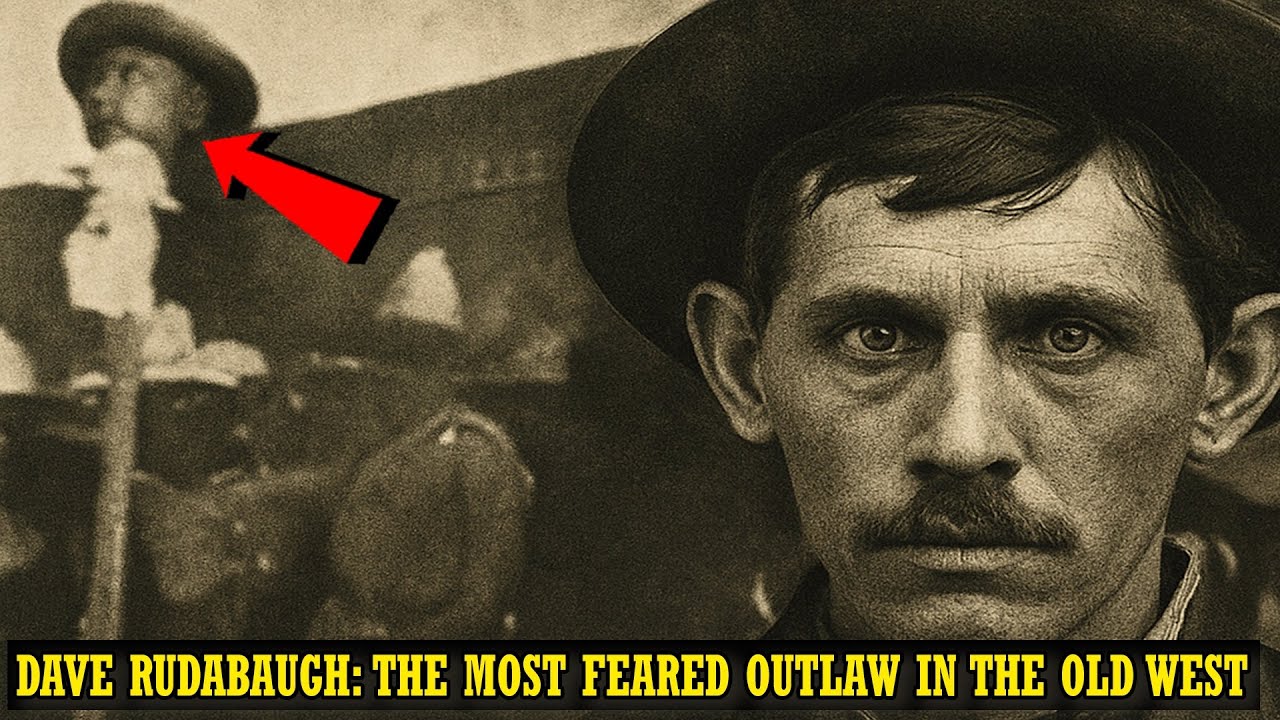 Rudabaugh’s story begins not in the lawless territories of the Southwest, but in the relative civility of Fulton County, Illinois, in 1854. His childhood was shattered by the upheaval of the Civil War, a conflict that claimed the life of his father and left the family adrift. The Rudabaugh family relocated first to Ohio and then to the burgeoning frontier state of Kansas, a region that was itself a powder keg of opportunity and conflict.
For a young man without a strong paternal anchor, the Kansas frontier offered a precarious existence, one where the line between legitimate work and criminal enterprise was often blurred by the sheer struggle for survival. It was in this environment that the seeds of Rudabaugh’s future were sown, setting the stage for a life that would become inextricably linked with some of the most infamous figures and violent episodes in Western history.
By the early 1870s, Rudabaugh had fully embraced a life on the wrong side of the law. His activities in Arkansas brought him into contact with a shifting alliance of outlaws, including Milton Yarberry and the enigmatic Mysterious Dave Mather. Together, they engaged in the twin frontier crimes of theft and cattle rustling, operating in a loosely organized network that was far more common than the formal gangs of popular legend.
Their presence in the region drew the suspicion of local authorities, particularly after a local rancher died under questionable circumstances. While formal charges were never filed, the scrutiny became too intense, and the men scattered, with Rudabaugh allegedly heading north to the gold rush boomtowns of the Black Hills in South Dakota, a place where a man with a quick gun and no scruples could find ample opportunity to relieve prospectors of their hard-earned wealth.
The mid-1870s found Rudabaugh in the Black Hills, where he reportedly turned to stagecoach robbery, a crime that preyed on the lifeblood of commerce in the remote region. It was around this time that he allegedly formed a partnership with Mike Ror and Dan Deant, a group retroactively dubbed “The Trio.” Their exploits were a mix of theft, fraud, and gambling, and it is from this period that one of the most intriguing, yet unverified, legends of the West emerges.
According to the story, Rudabaugh crossed paths with the legendary gambler and gunfighter Doc Holliday, and the two men formed an unlikely alliance. Rudabaugh, a natural with a pistol, supposedly taught Holliday how to shoot, while Holliday, a master of the card table, instructed Rudabaugh in the finer points of gambling. While this account remains unconfirmed, it perfectly illustrates the fluid nature of the frontier, where a man could be a gambler, an outlaw, and a hired gun all in the same week.
Rudabaugh’s escalating criminal career reached a new level in October 1876 when he allegedly participated in the robbery of a construction camp along the Santa Fe railroad line. The crime was a lucrative one, as these camps were often paid in cash and had minimal security. The boldness of the act prompted a swift response from the law, and it was here that Rudabaugh’s path first crossed with one of the most famous lawmen in American history.
Wyatt Earp was temporarily commissioned as a deputy U. S. Marshal and tasked with tracking down the fleeing outlaw.
 Earp pursued Rudabaugh across more than 400 miles of treacherous terrain, a testament to the growing reach of frontier justice. The chase eventually led Earp to Fort Griffin, Texas, and a pivotal meeting in the Shanscy Saloon with Doc Holliday, a man who would become Earp’s closest friend and ally. It was Holliday who provided the intelligence that Rudabaugh was likely heading back toward Kansas, a tip that allowed Earp to relay the information and eventually lead to the outlaw’s capture.
The year 1878 marked a turning point in Rudabaugh’s life, beginning with a spectacular failure. On January 22nd, he and his gang attempted to rob a train near Kinsley, Kansas, but the operation was a disaster, netting them nothing. The response from the law was immediate.
A posse led by the formidable Bat Masterson, accompanied by John Joshua Webb, tracked down and apprehended Rudabaugh and his accomplice, Ed West, the very next day. Facing a lengthy prison sentence, Rudabaugh made a calculated decision that would become a hallmark of his survival strategy: he turned state’s evidence. He agreed to testify against his former partners in exchange for immunity, a move that demonstrated his ruthless pragmatism and his willingness to betray anyone to save his own skin.
His release, however, did not signal a return to a law-abiding life. Instead, he accepted an offer from Masterson to work as a hired gun for the Atchison, Topeka, and Santa Fe Railway, throwing himself into the violent corporate conflicts known as the Railroad Wars.
During this period, Rudabaugh forged a close and complex alliance with John Joshua Webb, the very man who had helped arrest him months earlier. This shift in loyalty was typical of the frontier, where survival often trumped moral consistency. The two men traveled to Las Vegas, New Mexico, a booming town where they became key members of the infamous “Dodge City Gang,” a powerful group of gamblers and toughs who wielded significant political influence.
The gang’s leader, Hyman G. Neill, better known as “Hoodoo Brown,” held official positions in the town, giving their criminal activities a thin veneer of legitimacy. Rudabaugh, with his reputation and connections, found himself in a position of relative power, but the volatile environment was a powder keg waiting to explode.
The explosion came in the spring of 1880 when John Joshua Webb was arrested for murder. In a desperate attempt to free his ally, Rudabaugh and another gang member tried to break Webb out of jail on April 5th. The attempt failed catastrophically, and in the ensuing chaos, Deputy Sheriff Antonio Lino Valdez was killed.
 The murder of a lawman transformed Rudabaugh from a common outlaw into a top-priority target. He fled Las Vegas, heading southeast to Fort Sumner, New Mexico, a notorious gathering spot for outlaws and drifters. It was there that he became affiliated with a group that included the most legendary outlaw of them all: Billy the Kid.
While Billy was known for his charisma, Rudabaugh carried a far more ominous reputation, and their time together was short-lived.
On December 23rd, 1880, the group was cornered at a location called Stinking Springs by a posse led by Pat Garrett, the newly appointed sheriff of Lincoln County. The capture of Billy the Kid and his gang, including Rudabaugh, was a major event that drew attention across the entire territory. The prisoners were initially taken to Las Vegas, but the local populace was enraged over the death of Deputy Valdez, and there was a real threat of a lynch mob.
To protect the prisoners and ensure a fair trial, authorities transferred them to the more secure jail in Santa Fe. In February 1881, Rudabaugh appeared before the court and, facing overwhelming evidence, pleaded guilty to multiple charges of mail theft, a serious federal offense. He was sentenced to 99 years in prison.
But his legal troubles were far from over. He was subsequently tried and found guilty in connection with the death of Deputy Valdez, and this time, the sentence was death.
While awaiting his execution, Rudabaugh was held in the Santa Fe jail, where he was reunited with his old ally, John Joshua Webb. The conditions were harsh, and security was lax. The two men, along with another inmate, attempted a desperate escape.
During the chaotic attempt, another prisoner, Thomas Duffy, was killed under murky circumstances. The first attempt failed, but Rudabaugh and Webb eventually managed to break free, slipping through the fingers of the law once again. Rudabaugh fled westward into Arizona Territory, a region embroiled in its own bloody conflicts.
 There, he allegedly aligned himself with the Clanton faction, a group of ranchers and outlaws locked in a bitter and deadly feud with the Earp brothers and Doc Holliday in Tombstone. While definitive proof is lacking, many accounts suggest Rudabaugh may have played a role in the ambush of Virgil Earp and the fatal attack on Morgan Earp, and he is also speculated to have been present at the deadly confrontation at Iron Springs where Curly Bill Brocius was killed by Wyatt Earp.
With the dissolution of the Clanton faction and the cooling of tensions in Arizona, Rudabaugh once again found himself on the move, this time crossing the border into Mexico. He settled in the town of Parral in the state of Chihuahua, where he found work as a cowboy and, according to some accounts, continued to engage in livestock theft. Life in Parral was a far cry from the violent saloons of the American West, but it was still a place where tempers could flare and disputes could turn deadly.
On February 18, 1886, Rudabaugh became involved in a heated argument during a card game. The confrontation escalated, and gunfire erupted. When the smoke cleared, two men were dead and another was wounded.
Rudabaugh managed to escape the saloon unharmed, but he realized he had left his horse behind, a vital asset for survival in that part of the world. He made the fatal decision to return for it. Upon re-entering the saloon, he was met with a hail of gunfire from the dead men’s associates.
He was struck multiple times and died on the spot.
The aftermath of his death was as brutal as his life. Local tradition holds that his body was dragged out and desecrated, his head severed and placed in a jar as a public display, a grim warning to other outsiders who thought they could bring violence to their town. Over the years, legends have multiplied, with some claiming he was killed in Colorado or was a member of Soapy Smith’s gang, but these tales lack historical support.
What remains indisputable is the sheer scope of Rudabaugh’s journey through the heart of the Old West. He was the only known outlaw to have crossed paths with such a staggering array of iconic figures: Wyatt Earp, Bat Masterson, Pat Garrett, Doc Holliday, and Billy the Kid. He was a man who cheated death time and again, who betrayed his friends and outwitted his enemies, but in the end, he couldn’t outrun the consequences of his own violent choices.
His life was not one of legendary heroism or clear purpose, but a chaotic, unrooted existence that perfectly reflected the brutal, unpredictable energy of the American frontier. Dave Rudabaugh’s name may not be as famous as Billy the Kid’s, but his fingerprints are all over the bloodstained map of the Old West, a cautionary tale of a man who became a ghost in his own lifetime, feared by many, trusted by none, and ultimately unforgettable.