
The intricate tapestry of the Second World War’s final winter in Europe is often reduced to the harsh brutality of the Battle of the Bulge and the inexorable Soviet advance from the East. Yet, along the banks of the Rhine River in early January 1945, a desperate and audacious gamble was unfolding, an operation that saw the Reichsführer-SS, a man whose name is synonymous with terror rather than tactical brilliance, take direct command of a military offensive aimed at the heart of Alsace. This was Operation Winter Solstice, a bid to recapture Strasbourg, and it was a crucible that tested the limits of Nazi dogma against the harsh realities of a collapsing war machine.
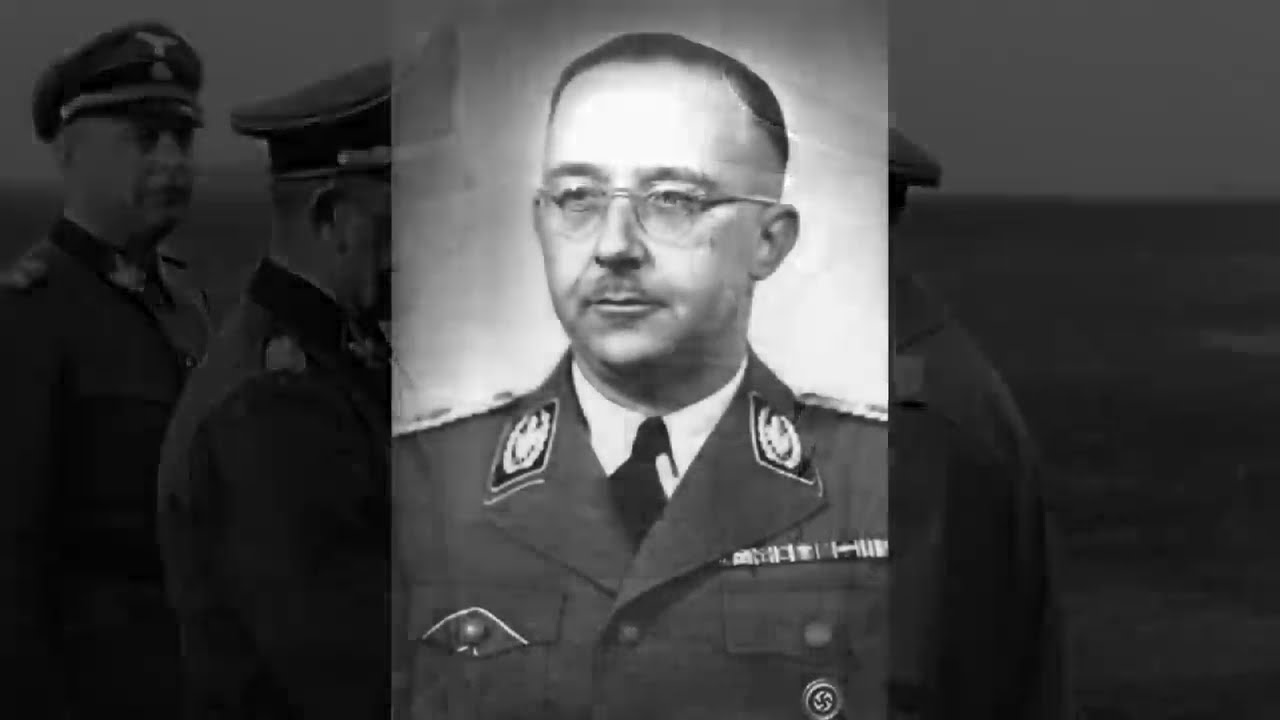
The German High Command, reeling from the stalled Ardennes offensive, watched with a mixture of horror and grim fascination as Heinrich Himmler, the architect of the Holocaust, sought to add military glory to his list of sinister achievements.
 The genesis of this operation lay not in strategic necessity but in the paranoid delusions of Adolf Hitler and his profound distrust of his professional generals. The failure of the Wehrmacht to achieve a decisive breakthrough in the Ardennes had confirmed Hitler’s belief that the Prussian military establishment lacked the requisite fanaticism to win the war. He saw their caution as defeatism, their realistic assessments of fuel and ammunition shortages as mere excuses.
In his view, what was needed was an infusion of Nazi willpower, an unyielding commitment that would overcome material deficiencies through sheer ideological fervor. This conviction led him to an extraordinary decision: he would place a political commissar, in effect, in charge of a field army. Heinrich Himmler, the head of the SS, the Gestapo, and the entire police apparatus, was appointed to command Army Group Upper Rhine, a new headquarters created on the 26th of November 1944.
Himmler’s appointment was met with widespread dismay within the officer corps. The generals, who had spent their careers mastering the art of war, were suddenly answerable to a man whose only military experience was as a cadet in 1918, which he had not even completed. He was a stranger to the operational art, a master administrator but a complete novice when it came to the logistical and tactical complexities of commanding an army group.
Yet, he was Hitler’s most trusted accomplice. The new command was ostensibly a large one, primarily comprised of the 19th Army, which was holding the front in the Colmar Pocket, the last significant piece of French territory in German hands west of the Rhine. It also held sway over certain units of the Replacement Army.
From his luxurious command train, which lacked the sophisticated communication systems required for modern warfare, Himmler would attempt to orchestrate a military campaign, leaning heavily on his qualified staff officers whose expertise he meticulously undermined with his constant, often ill-informed, interference.
The strategic situation in January 1945 was desperate for Germany. Operation Nordwind, the companion offensive in Alsace to the south of the Ardennes, was already grinding to a halt after advancing only about ten miles. The American 6th Army Group, under General Jacob Devers, was putting up a fierce resistance that was blunting the German spearheads.
But Himmler saw an opportunity amidst the chaos. The American forces north of Strasbourg were being thinned out to feed the battle against Nordwind. This presented a seemingly vulnerable flank.
Himmler’s ambition, a driving force nearly as potent as his cruelty, was ignited. He envisioned a grand pincer movement to recapture Strasbourg, the capital of Alsace, a city of immense symbolic and psychological value. The prize, he believed, would not only be a strategic coup but a personal triumph that would demonstrate his superiority over the struggling professional generals.
He promised to deliver the city to Hitler as a gift, a spectacular propaganda victory to mark the 12th anniversary of the Führer’s rise to power.
Operation Winter Solstice, the codename assigned to this ambitious plan, was to begin on the 5th of January 1945. The southern arm of the pincer was to come from the Colmar Pocket. The German 19th Army would push northwards, with the 198th Infantry Division and the 106th Panzer Brigade, supported by roughly forty or fifty tanks and assault guns, striking against the relatively weak French forces covering the northern sector of the pocket.
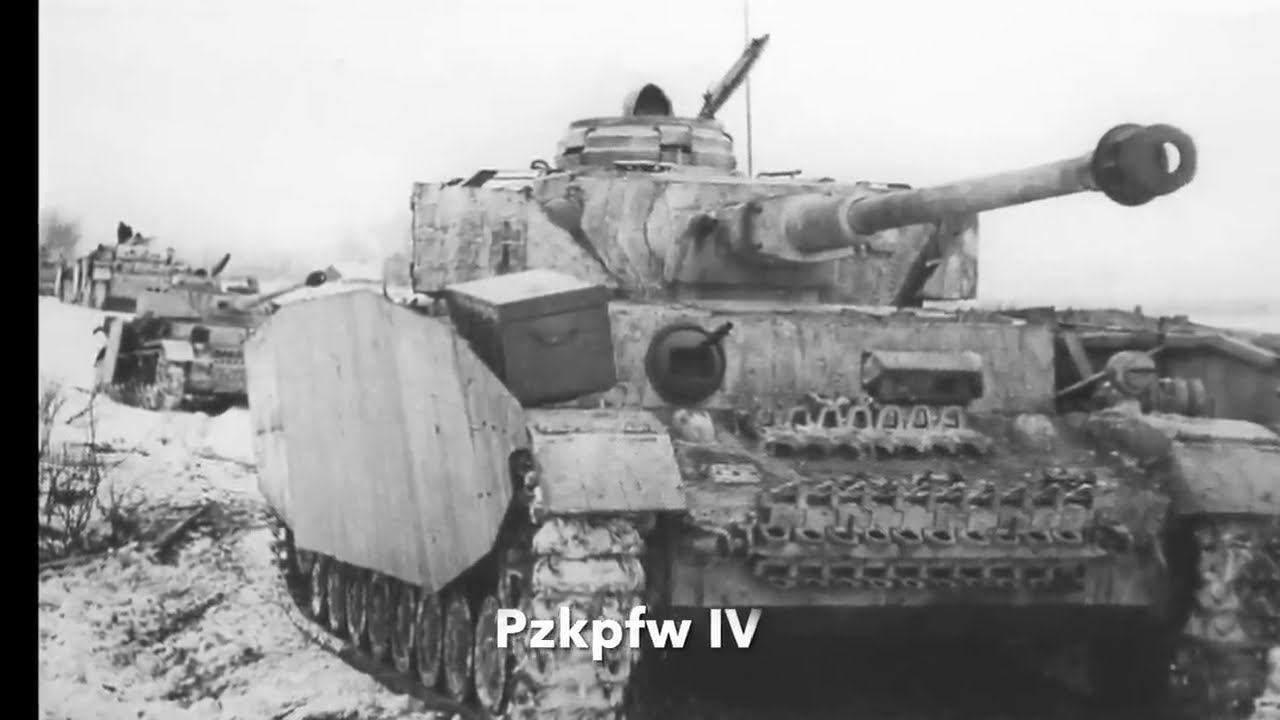
 The primary thrust, however, the northern arm, was the responsibility of the XIV SS Corps. This formation, despite its title, was mostly composed of Army units, with only an SS Police Regiment to justify its designation. Its core was the 553rd Volksgrenadier Division, and its attacking force was a battlegroup from Panzerjäger Abteilung Lutze, equipped with a hodgepodge of Panzer IVs, Jagdpanzer IV tank destroyers, and lighter Hetzer assault guns.
The operation began with surprising success for the Germans. On the night of January 4th and into the 5th, the XIV SS Corps crossed the Rhine near Gambsheim, a town just south of the confluence of the Rhine and the Ill rivers. The crossing was made against negligible opposition, catching the American forces completely off guard.
Within hours, the German infantry had carved out a secure bridgehead, and heavy ferry operations began immediately, moving the precious armored vehicles across the river. By the 5th, German task forces had already secured the towns of Herrlisheim and Offendorf, expanding their foothold on the west bank. The American 6th Corps, under Major General Edward H.
Brooks, was initially slow to react, believing the attack to be a limited diversionary raid, especially with the heavier threats posed by the Nordwind offensive further to the north. The only immediate opposition was Task Force Linden, from the 42nd Infantry Division, but these were fresh, inexperienced regiments, strung out too thinly to hold the German advance.
Over the next few days, the Gambsheim bridgehead was expanded to a depth of about ten miles. The weak American counterattacks were easily brushed aside by the more seasoned German troops. A significant boost to the German effort came with the introduction of the highly experienced 6th SS Mountain Division Nord, which made a deep penetration in the main Nordwind battle area to the north, further diverting American attention and forces.
Meanwhile, in the south, the southern pincer of Winter Solstice got underway on the 7th of January. The 198th Infantry Division, supported by the 106th Panzer Brigade, attacked out of the Colmar Pocket. They pushed through the weak French defenses on the west side of the Rhinau Canal, capturing the town of Erstein.
This along the Ill River threatened to trap French forces in the region. Although most of the surrounded French troops managed to escape across the Ill that night, the Germans had captured the entire west side of the river, stretching their control up to the Rhine for a few crucial miles north of the pocket. However, the attack stalled here.
The German forces were simply too weak to push further, and Hitler himself cancelled the order for the rest of the 269th Volksgrenadier Division to join the assault. The southern arm of the pincer had stopped, its gains limited to stretching the Colmar Pocket northwards, but it had come nowhere near Strasbourg.
The focus now shifted entirely to the northern pincer, the bridgehead at Gambsheim. The German High Command, having seen the initial success of Himmler’s forces, made a decisive and risky choice. They decided to commit their operational reserve, which included the powerful 10th SS Panzer Division Frundsberg, not to shore up the faltering Nordwind offensive, but to strike south down the west bank of the Rhine from the north.
 The goal was to link up with Himmler’s bridgehead, creating a massive trap around the majority of the American VI Corps. Himmler, whose dream of personally capturing Strasbourg had failed, opportunistically shifted his objective. He would now be a central figure in a much grander envelopment.
On the 16th of January, the XXXIX Panzer Corps, spearheaded by the elite 10th SS Panzer Division, the 7th Parachute Division, and two assault gun brigades, launched its attack southwards. The direction of this offensive took the Americans by surprise, slamming into the flank of the US 6th Corps.
The link-up attempt triggered some of the most ferocious and desperate fighting of the entire Alsace campaign. The American 12th Armored Division, recently arrived and untested in combat, was thrown into the fray to contain the German thrust. The 43rd Tank Battalion of the 12th Armored attempted to attack the town of Herrlisheim on January 16th.
The attack was a disaster. The American tankers ran into a 𝓀𝒾𝓁𝓁 zone of meticulously positioned anti-tank guns and German armor, losing twelve Sherman tanks in a matter of minutes. The 17th Armored Infantry Battalion did manage to reach Herrlisheim, but were pushed back out by a vicious German counterattack.
The next day, January 17th, saw another brutal struggle for the town. The 43rd Tank Battalion fought its way into Herrlisheim from the south, but then radio contact was lost. A company of Panther tanks from the 10th SS Panzer Division, under the command of Oberscharführer Eike Bakmann, launched a devastating assault into the town.
The Panthers, with their superior armor and long-range guns, completely decimated the American tank battalion. The 43rd Tank Battalion was effectively destroyed, losing 28 Shermans destroyed and another 10 captured and pressed into German service. The subsequent German infantry counterattack overran the positions of the 17th Armored Infantry Battalion in the pre-dawn hours of the 18th of January.
Despite these tactical victories, the 10th SS Panzer Division could not capitalize on its success. The division was bled white in the fighting around the town of Kilstett between the 17th and 21st of January, losing at least 21 Panthers and 8 Panzer IVs. The American defense was fierce, and the deep mud, combined with constant artillery fire, made any further advance impossible.
By late January, the Ardennes bulge had been eliminated, allowing the Americans to transfer fresh divisions to the Alsace front. This influx of reinforcements halted the German push near Haguenau. A bloody stalemate developed in the villages of Hatten, Rittershoffen, and Herrlisheim.
The Americans, realizing they were being drawn into a costly and pointless battle of attrition, made a deliberate decision to withdraw. On the night of January 20-21, the US VI Corps began pulling back to a new defensive line along the Moder River, south of the Haguenau forest. It was a tactical retreat, a move to shorten their lines and conserve their exhausted forces for the final push into Germany.
 It took the XXXIX Panzer Corps some time to realize the Americans had gone. Once they did, they advanced rapidly, finally making contact with the Gambsheim bridgehead on the 22nd of January. Himmler’s forces had achieved their link-up.
But the moment of supposed triumph was hollow. Overconfident from their success, the Germans attempted to push further south, into the towns of Bischwiller and Haguenau, but they suffered heavy casualties for very little ground gained. The few small bridgeheads they managed to establish over the Moder River were quickly eliminated.
The German attacks in this sector were finally halted on the 26th of January. The operation was over. It had failed in its grand objective of destroying the US VI Corps and had spectacularly failed to recapture Strasbourg.
The link-up had only been achieved because the Americans had voluntarily given up the ground to shorten their lines, not because of any overwhelming German strength.
What was Himmler’s legacy as an army commander after Operation Winter Solstice? He had successfully expanded the Colmar Pocket northwards, but this proved to be a strategic burden, stretching his 19th Army even thinner on the ground. He had captured a bridgehead at Gambsheim and won some small but bloody tactical engagements, most notably the destruction of the US 43rd Tank Battalion.
Yet, the grand strategic aims were a complete failure. He had been unable to outmaneuver the American command and his personal ambition to present Strasbourg to Hitler remained unfulfilled. The entire operation had demonstrated the gulf between his ruthless ambition and his utter lack of military acumen.
Army Group Upper Rhine, as the headquarters was finally renamed in its last few days, was dissolved on the 29th of January 1945. Himmler, however, was long gone. He had already been appointed to command a new, even more daunting military challenge on the Eastern Front: Army Group Vistula, a ragged collection of units thrown together to face the massive Soviet winter offensive.
As he left the banks of the Rhine, he likely did not reflect on the thousands of dead German and American soldiers whose lives had been squandered to satisfy his vanity and Hitler’s delusions. He simply saw an opportunity for a new, more prominent stage for his delusions of military grandeur.