
The final reckoning for the men who chose to serve the Nazi occupation of their homeland was swift, brutal, and absolute. In the chaotic weeks following the collapse of the Third Reich, an estimated 2,300 members of the Serbian Volunteer Corps, the armed wing of the fascist Zbor movement, were summarily executed by Yugoslav partisans near the Kočevski Rog plateau in Slovenia. The mass killings, which occurred in May 1945, represented a zero-mercy policy against collaborators who had spent four years fighting alongside Hitler’s forces, and they effectively sealed the fate of a movement that had traded its national soul for a place in the New European Order.
The executions were not trials; they were acts of retribution, carried out in the forests and ravines of the Dinaric Alps where the bodies remain interred in secret graves to this day.
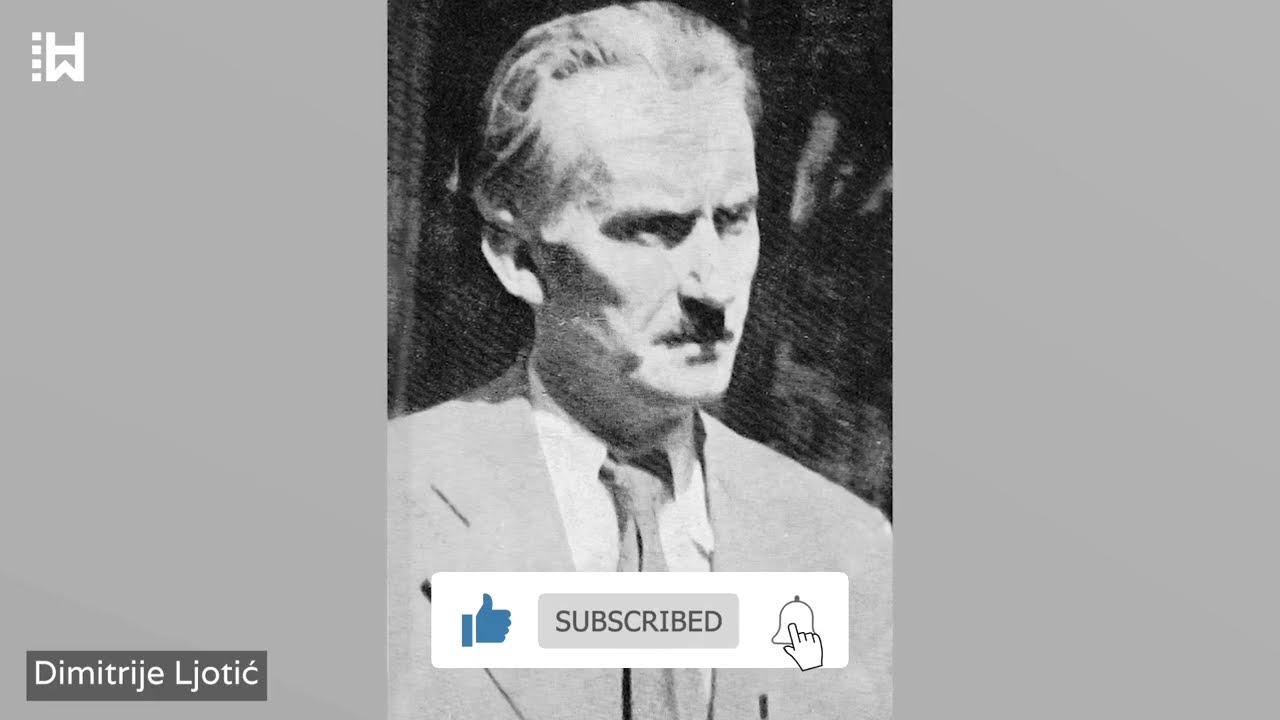
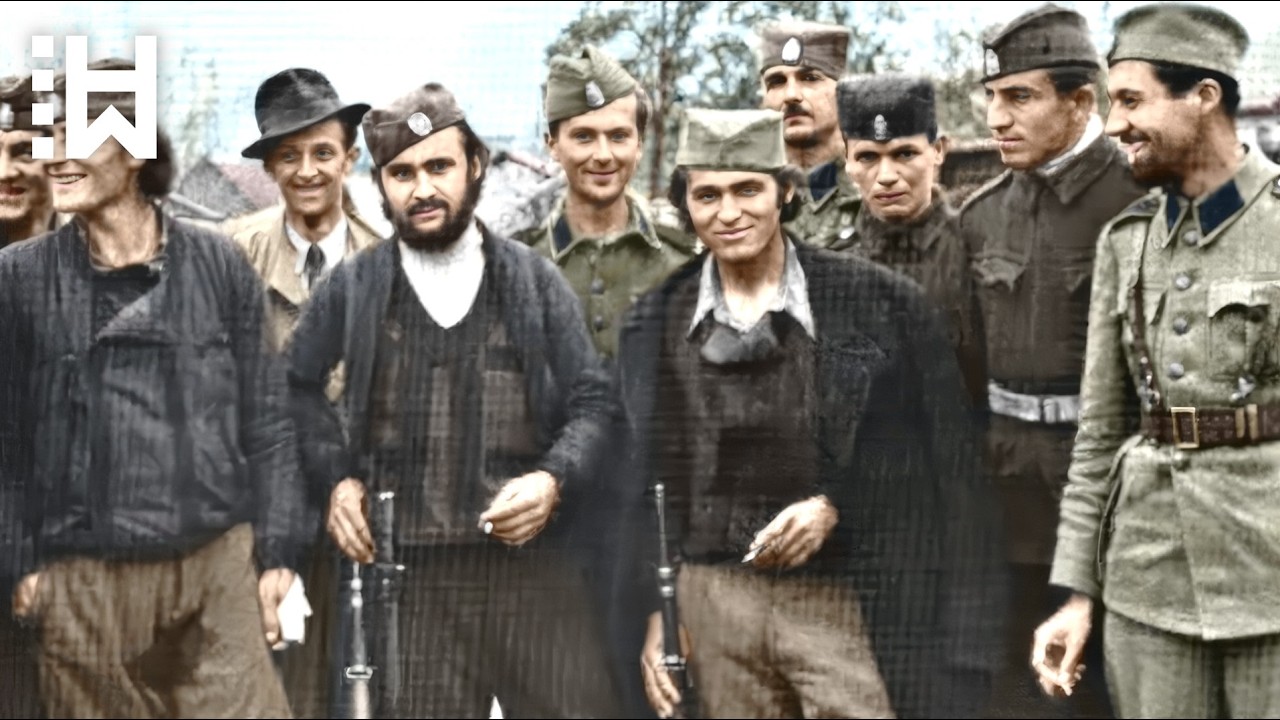 The road to the Kočevski Rog forest began with a betrayal of the Yugoslav state long before a single shot was fired in the April 1941 invasion. Zbor, officially known as the Yugoslav National Movement, had been founded in Belgrade on January 6, 1935, as a merger of several fringe nationalist and far-right organizations. At its helm was Dimitrije Ljotić, a former Yugoslav Minister of Justice who had become consumed by a vision of authoritarian rule that he believed could save the Serbian nation from the twin scourges of Bolshevism and Western liberalism.
Ljotić rejected parliamentary democracy with a fervor that bordered on religious zeal, pushing instead for a centrally organized corporatist state modeled on the principles of Catholic social teaching, albeit filtered through a lens of extreme nationalism and xenophobia. The movement was not merely anti-democratic; it was fiercely anti-communist, anti-Masonic, and openly anti-Semitic, making it the only political organization in the Kingdom of Yugoslavia to embrace the Nazi racial ideology as a foundational principle.
Despite its radical platform, Zbor remained a marginal force in Serbian political life. It never mustered more than roughly 10,000 active members and repeatedly failed at the ballot box, where its candidates were soundly rejected by a population that harbored deep resentment toward Germany for its role in the First World War. Ljotić’s public admiration for Adolf Hitler and Benito Mussolini further alienated him from the Serbian mainstream.
Yet what Zbor lacked in indigenous support, it more than compensated for with foreign patronage. German industrial concerns and intelligence agencies funneled money into the movement’s coffers, while the SS and the Abwehr, Germany’s military intelligence service, successfully infiltrated its ranks. By 1940, Zbor was effectively an extension of Nazi intelligence apparatus within Yugoslavia, a shadow organization waiting for the moment when its patrons would arrive in force.
That moment came on April 6, 1941, when the German war machine launched Operation Punishment, a devastating invasion of Yugoslavia. The Royal Yugoslav Army capitulated in just eleven days, and Serbia was placed under direct German military occupation. For Zbor, the collapse of the Yugoslav state was a political resurrection.
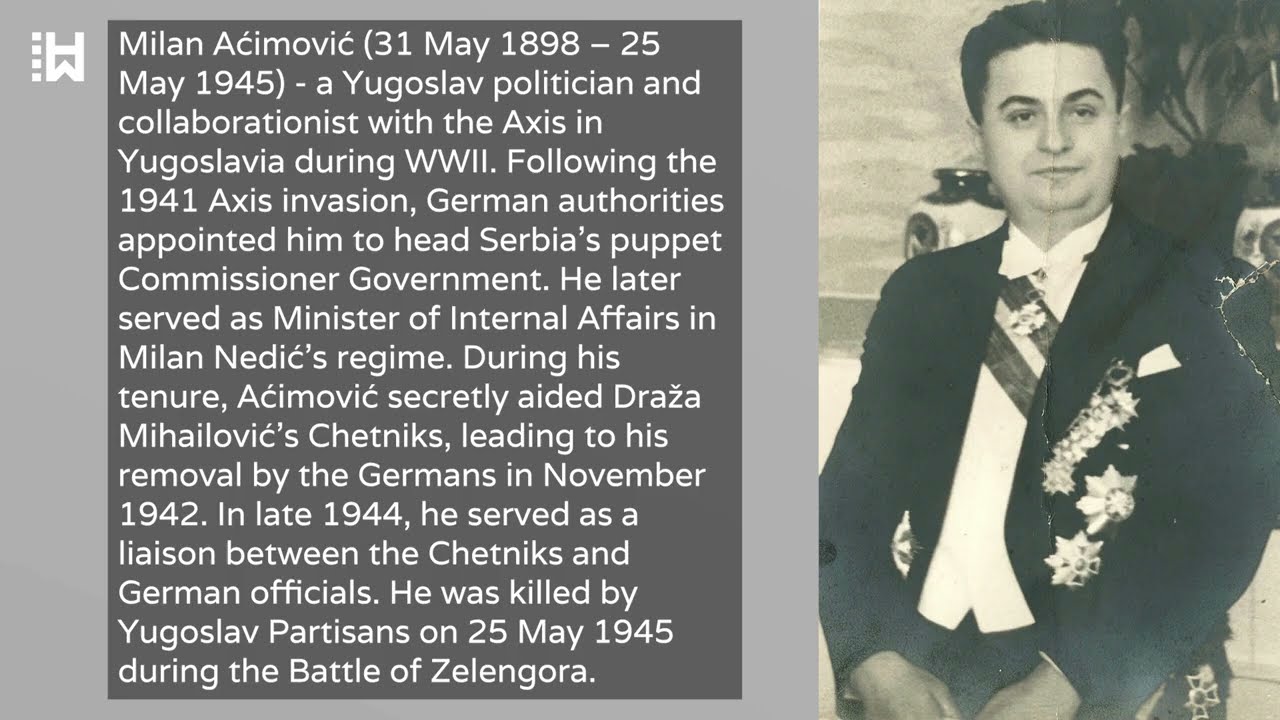
Ljotić emerged from hiding, and the movement that had been banned and driven underground only months earlier suddenly found itself operating under the protection of the occupation regime. The Germans viewed Ljotić as a useful asset, a Serbian quislings who could help pacify a hostile population. On April 30, 1941, they established a commissioner government headed by Milan Aćimović, a former Yugoslav interior minister, but Ljotić declined the offer to serve as economic commissioner.
His refusal was not born of resistance, but of political calculation; he understood that his unpopularity among ordinary Serbs made him a liability, and he preferred to wield power from behind the scenes rather than as a public figurehead.
By August, the Germans had replaced Aćimović’s administration with a Government of National Salvation, led by former Royal Yugoslav General Milan Nedić. Zbor’s influence permeated the new administration, particularly in the realm of propaganda. In October 1941, the movement organized the Grand Anti-Masonic Exhibition in Belgrade, a grotesque display that promoted the conspiracy theory that Jews, Freemasons, and communists were secretly plotting world domination.
The exhibition, funded by German money, was a potent mixture of medieval prejudice and modern totalitarian propaganda. It was a clear signal that Zbor was not merely a political party but an engine of ideological warfare, dedicated to the destruction of cosmopolitan culture, Serbian liberal traditions, and the Jewish community who had lived in Belgrade for centuries.
 But propaganda was only a precursor to the violence that would define Zbor’s legacy. As the summer of 1941 progressed, armed resistance to the German occupation spread like wildfire across Serbia, driven by two competing factions: the communist partisans led by Josip Broz Tito and the royalist Chetniks of Draža Mihailović. German commanders, facing a guerrilla war they could not contain, turned increasingly to local collaborators to fight their own people.
In September 1941, Zbor members formed the core of a new armed unit known as the Serbian Volunteer Detachments. Command was given to Constantine Mušicki, a former colonel in the Royal Yugoslav Army who was a devoted follower of Ljotić. The volunteers were staunchly anti-communist, and their primary mission was to hunt down and 𝓀𝒾𝓁𝓁 partisans alongside German troops.
They were supplied with weapons by the occupation authorities and operated under German supervision, but their ideological fervor made them more ruthless than regular occupation troops.
The detachments, later reorganized as the Serbian Volunteer Corps or SDK, quickly became integrated into the German counterinsurgency machinery. Their involvement in the Kraljevo massacre in October 1941 stands as a stark illustration of their complicity in the Nazi genocide and terror. After resistance fighters killed ten German soldiers and wounded twenty-six in the city of Kraljevo, German commanders ordered retaliatory executions.
Thousands of civilians were rounded up, including workers, teachers, school children, Jews, and Roma. Zbor members were permitted to inspect the prisoners and were allowed to remove more than 3,000 detainees they identified as political allies or collaborators from the execution lists. Those who remained—some 2,800 men and boys—were marched to fields outside the city where troops from the German 717th Infantry Division opened fire with machine guns.
The massacre was a joint operation of collaboration and occupation, where the local fascists literally had the power of life and death over their own countrymen.
As the war dragged on, the SDK grew in size and scope, reaching nearly 10,000 personnel by 1944. They fought primarily against Tito’s partisans, engaging in brutal and often savage combat across the rugged terrain of occupied Yugoslavia. Yet their role went beyond conventional warfare.
SDK members routinely assisted the Gestapo in tracking down Jews who had managed to escape earlier arrests, and they helped send captured Jews to the Banjica concentration camp in Belgrade, where they were subjected to starvation, torture, and execution. By this point, Jotić’s movement had abandoned any pretense of Serbian nationalism; it was fully subsumed into the Nazi project, serving as an auxiliary police force for the Gestapo and the SS. The ideological line was clear: the partisans were a greater threat to Serbia than the occupation, and the only way to defeat the communists was to stand side-by-side with the Germans who were murdering their neighbors.
 The tide of war turned decisively in 1944, as Soviet forces began their westward march across the Eastern Front and the partisans launched a massive offensive to liberate their own country. In October 1944, the Red Army and the partisans entered Belgrade, forcing the Germans and their collaborators into a desperate retreat. Ljotić fled the Serbian capital together with Milan Nedić and hundreds of officials, while the SDK withdrew westward with the Wehrmacht, fighting a rearguard action against the advancing partisans.
They marched through Croatia and into Slovenia, where they continued to fight, hoping to hold out until the Western Allies—who they believed would recognize their anti-communist credentials—could save them from the vengeance of Tito’s forces. For months, they fought in the snowy mountains of Slovenia, but the military situation was hopeless.
By the spring of 1945, the Third Reich was in its death throes. Soviet troops were besieging Berlin, and the Western Allies were advancing into Germany from the west. Ljotić and his remaining followers now looked towards Italy and Austria, desperate to reach the British or American lines before the partisans could capture them.
They believed that the Western Allies, who were already looking ahead to the coming clash with the Soviet Union, would see them as valuable allies against communism. But fate had other plans. On April 23, 1945, while traveling through Slovenia, Dimitrije Ljotić died in a car crash just weeks before the end of the war in Europe.
The founder of Zbor, the man who had so fervently embraced fascism, did not live to see the final destruction of his movement. His death was anticlimactic, but it did nothing to stop the desperate retreat of his followers.
With Germany collapsing, the surviving members of the SDK continued their march towards Italy and Austria. In the final weeks of the war, thousands of them crossed the border into Austria and surrendered to British forces, hoping for mercy. They were disarmed and placed in prisoner-of-war camps, believing that their capitulation to a civilized power would protect them from the vengeance of the partisans.
They were wrong. In a series of decisions that would be contested among historians for decades, the British government, operating under agreements with Tito’s provisional government, agreed to return these men to Yugoslavia. The repatriations were a matter of realpolitik; the British were more concerned with maintaining a stable post-war Europe and did not want to risk a break with the Yugoslav partisans over the fate of accused war criminals.
For the SDK members held in Austria, the surrender was a one-way ticket to death. They were loaded onto trains and trucks and transported across the border, where they were handed over to partisan units. The partisans had no intention of holding trials for men who had fought alongside the Gestapo, helped hunt Jews, and participated in massacres.
 They were marched to remote locations in Slovenia, including the steep forested ravines of Kočevski Rog, and executed. The exact number is disputed, but historians estimate that between 2,100 and 2,300 SDK members were killed in May 1945. Some were shot on the spot; others were forced to climb into mass graves where they were shot.
Their bodies were buried in unmarked pits, hidden from the world for decades in a collective silence that was imposed by the new communist government of Yugoslavia, which did not want to acknowledge the scale of the retribution, nor the fact that many of the executed were Serbs.
While the SDK bore the brunt of the post-war executions, other leading collaborators met similarly grim or disputed fates. Milan Aćimović, who had headed the first collaborationist administration, joined the Chetnik forces of Draža Mihailović during the final months of the war and was killed while retreating from the partisans in May 1945. Milan Nedić, the head of the Government of National Salvation, was captured by the British and handed over to Yugoslavia.
He died in custody in Belgrade on February 4, 1946, after falling from a window. The circumstances of his death remain a subject of speculation; some claim he committed suicide, while others suspect he was pushed or thrown. Constantine Mušicki, the commander of the Serbian Volunteer Corps, was similarly captured and transferred to Yugoslav authorities.
In 1946, he was brought before a military court in Belgrade, sentenced to death, and executed on July 17, 1946, alongside Velibor Jonić, who had served as education minister in Nedić’s government.
The execution of Jonić and Mušicki marked the final legal act of Yugoslavia’s reckoning with Zbor. By the end of the war, the movement had effectively ceased to exist. Its leader was dead, its military formations had been wiped out, and its ideology was thoroughly discredited by the enormity of the crimes committed in its name.
Yet the legacy of Zbor remains a painful and contested chapter in Serbian history. The group represented a minority of the population, but its collaboration with the Nazi occupation resulted in the deaths of thousands of Serbs, Jews, and Roma, and it continues to cast a long shadow over contemporary political debates in the region. The total human cost of the occupation of Yugoslavia was catastrophic; roughly one million people lost their lives, including over 67,000 Jews who were murdered in the Holocaust.
In Serbia, of the approximately 17,200 Jews who lived there before the war, around 88 percent were killed, a horrifying statistic that illustrates the depth of the tragedy that Zbor played a role in facilitating. The mass graves at Kočevski Rog are not just a memorial to the collaborators who were executed, but a silent testimony to the brutal civil war within a civil war, where the lines between occupier, collaborator, and resistance were often blurred by survival, ideology, and betrayal.