
LONDON — The telephone at Buckingham Palace rang at nine o’clock each morning for nearly a quarter of a century, and on the other end of the line was a woman the world had almost forgotten existed.
King George V and his sister, Princess Victoria of Wales, known to the family as Toria, maintained a daily ritual of argument, gossip, and mutual need that cut through the formality of the British crown. When she died on December 3, 1935, at the age of 67, the king reportedly never recovered. Seven weeks later, he was dead too, his physicians whispering that he had lost the will to resist the illness that consumed him.
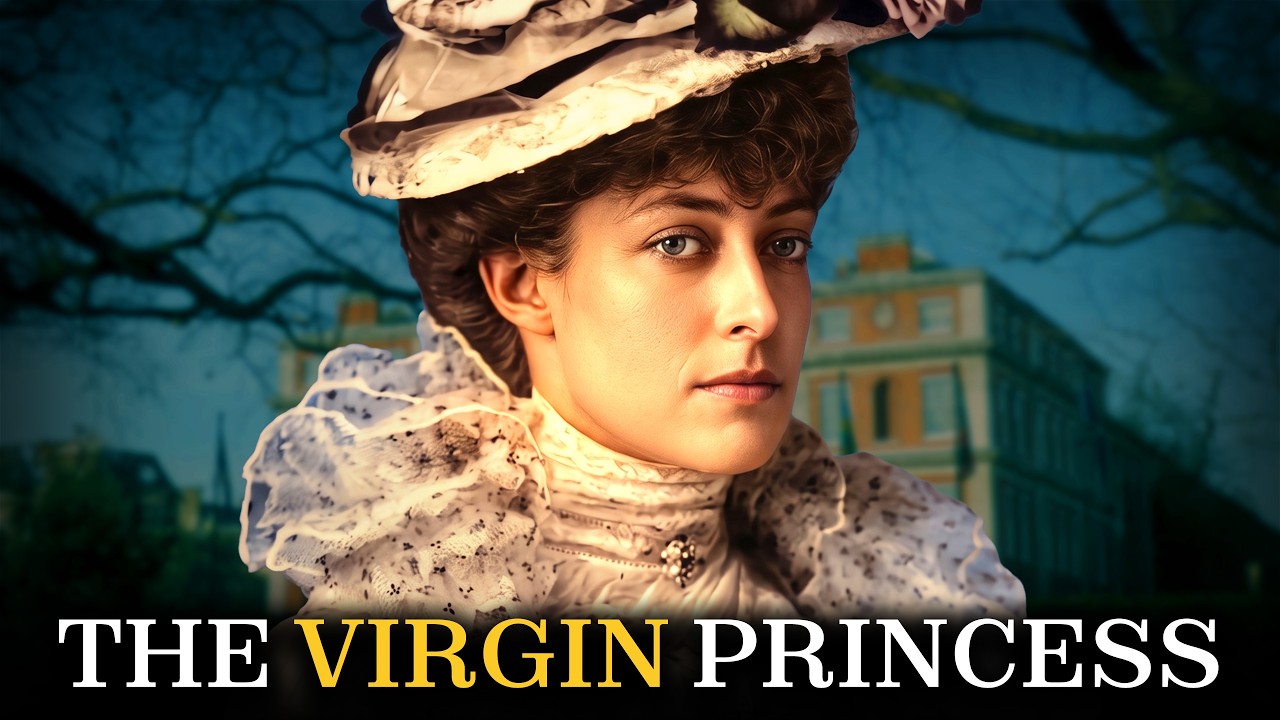 The story of Princess Victoria is one of the most tragic and overlooked chapters in modern British royal history. She was the daughter of King Edward VII, the sister of a king, the aunt of a king who would abdicate, and the great-aunt of the Queen who would reign for seventy years. Yet she remains an invisible figure, a woman whose life was defined not by what she did, but by what she was prevented from doing.
A Name That Became a Problem
Born on July 6, 1868, at Marlborough House in London, the infant princess was christened Victoria Alexandra Olga Mary, placing the name of her formidable grandmother, Queen Victoria, at the front. It was a gesture intended as a peace offering, but the Queen Consort read it as a demotion of her own name to mere ornament. The child was never called Victoria.
Within the family, she became Toria, a nursery diminutive that stuck for sixty-seven years.
The household into which Toria was born was, by Victorian royal standards, an unusual one. Her father, Albert Edward, Prince of Wales, had endured a brutal, disciplined upbringing under Prince Albert’s punishing educational regime. He despised it.
When he had children of his own, he made a conscious decision to give them the opposite: freedom, warmth, and an atmosphere of chaos that horrified Queen Victoria. She wrote in private correspondence that the Wales children were “such ill-bred, ill-trained children that I can’t fancy them at all.”
At Marlborough House and Sandringham, the Wales children were allowed to roam freely, to interrupt adults, to keep pets indoors at all hours. Meal times drifted. Discipline was virtually nonexistent.
The result was a brood of princes and princesses who were warm, devoted to one another, and almost entirely incapable of sustained intellectual effort.
The Mother’s Grip
The defining structural fact of Toria’s life was her mother, Alexandra. The Danish-born Princess of Wales was one of the most beloved royal consorts of her era, beautiful, graceful, and genuinely kind. She was also one of the most possessive mothers in the history of the British monarchy.
From the time her daughters were small, Alexandra referred to them as “my little ones,” a phrase that appeared in her correspondence year after year, attached to women who were well past the age of marriage. She dressed Toria, Louise, and Maud in identical outfits long after the practice had any visual logic. Family photographs from the 1880s and 1890s show three grown women posed in matching dresses and ribbons as if they were six years old.
Louise eventually escaped through marriage. Maud escaped too, becoming Queen of Norway. Toria did not escape at all.
Across the next forty years, Alexandra kept her closer with every passing season.
The Question That Defined Her
Why did Princess Victoria never marry? Across more than a century of royal biography, that question has generated explanations ranging from cool-headed analysis to pure invention. The answer turns out to be both narrower and stranger than royal mythology suggests.
In the early 1880s, a match was floated with the Crown Prince of Portugal, the future King Carlos I. The proposal collapsed almost immediately because the marriage would have required Toria to convert to Roman Catholicism. The Prince and Princess of Wales refused outright.
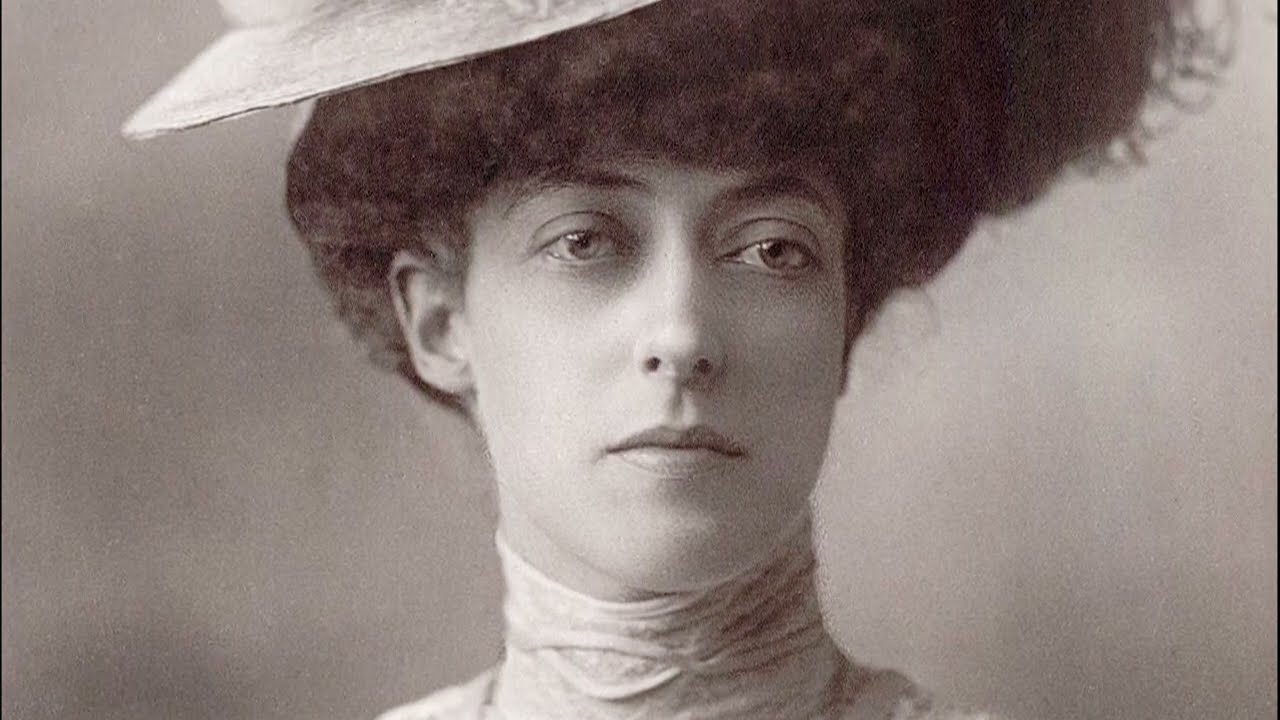 A more developed attachment formed with the Russian Grand Duke Michael Mikhailovich, known to his cousins as Misha. The match was real enough that family letters circulated about it for years. The Russian court eventually refused, and Misha later contracted a morganatic marriage that exiled him from the imperial family for life.
Toria’s Russian future closed cleanly.
The two prospects that came closest to producing an actual marriage were British. The first was Archibald Primrose, fifth Earl of Rosebery, a widowed former prime minister, eccentric, brilliant, and immensely wealthy. His mutual attachment with Toria was one of the most heavily documented near-romances in late Victorian court life.
There were obvious problems. Rosebery was a politician and a commoner. Queen Victoria and the wider royal family balked at the social demotion such a marriage would represent.
The second possibility was even more impossible: Sir Arthur Davidson, Edward VII’s equerry, a man whose attachment to Toria was whispered about in court circles for years, but who, as a court official far beneath her rank, could never become a serious candidate. Both relationships died quietly, suffocated by protocol.
The cruelest assessment of Toria’s marital future came from Windsor Castle decades before any candidate had been proposed. In a letter to her daughter, the Crown Princess of Prussia, Queen Victoria wrote flatly of her granddaughter: “She will never marry. I am sure she is not strong enough.”
The line was brutal because it was correct. It identified a household so structurally hostile to female independence that the princess would not even attempt the escape.
The Body That Spoke
The medical record of Princess Victoria is one of the most tangled documents in late Victorian royal biography. She suffered from severe neuralgia, recurrent migraines, debilitating indigestion, chronic colds, and long bouts of low mood that contemporary doctors declined to name.
Her physicians treated her stomach complaints as “gastric catarrh,” a vague nineteenth-century label that covered almost everything from food poisoning to ulcers to anxiety-driven indigestion. Her nervous digestion was treated as a separate condition, though it was plainly connected to her psychological state.
The strongest modern reading takes Toria for a serial hypochondriac whose ailments were largely psychosomatic, weaponized as a quiet, almost unconscious form of resistance against a domestic life she could not openly refuse. Her illnesses tended to intensify at exactly the moments when her mother’s demands became unbearable. They receded during the rare intervals when she was allowed any independence.
The body was doing the work that the mouth was not permitted to do.
The Bell and the Glorified Maid
King Edward VII died on May 6, 1910. The architecture of Toria’s life shifted immediately. Her brother George ascended to the throne.
Her mother became Queen Dowager and found herself displaced from the center of the British court by her daughter-in-law Mary. Toria, who had spent her entire adult life in her parents’ orbit, was reassigned overnight to a single undisputed function: keeper of Alexandra.
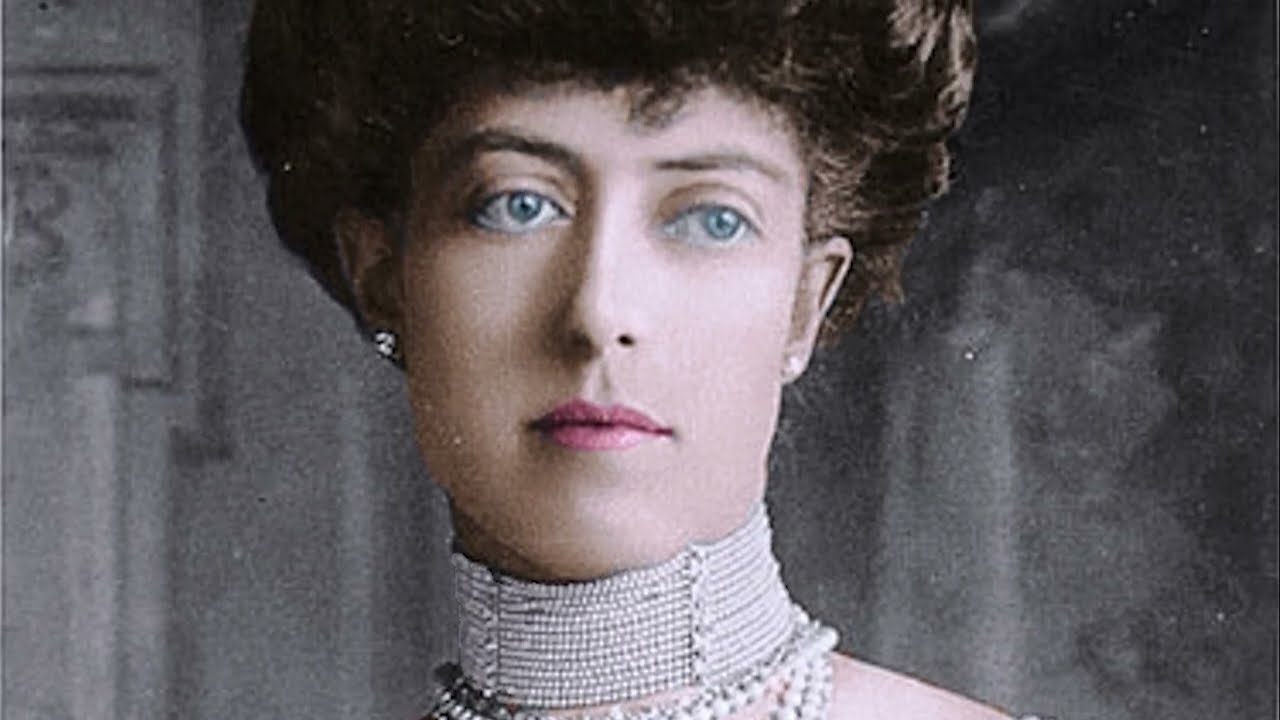 The household reorganized itself around the Dowager Queen. Marlborough House became her permanent London residence. Sandringham was retained as her favorite retreat.
Toria moved with her mother between the two. She had no separate establishment, no house of her own, and no income that was not channeled through her mother’s accounts.
The clearest contemporary description of this arrangement came from Toria’s first cousin, Russian Grand Duchess Olga Alexandrovna, who put the matter bluntly: “Queen Alexandra treated Princess Victoria like a glorified maid.” Olga described the small, exhausting daily details — Alexandra ringing her bell from any room and expecting Toria to appear instantly, the Dowager Queen keeping her daughter on permanent standby, calling her to fetch objects that already lay within reach. The requests were not about the objects.
They were about confirming, with a quiet ringing of the bell, that the daughter remained within earshot and on call.
The Morning Phone Calls
There was one relationship that held Toria together through these decades, and it did not run through Marlborough House. It ran through Buckingham Palace every morning at half past nine. George V dialed Toria almost every weekday during his reign.
The conversations were not official. They were gossip, family complaint, weather, dogs, illness, the latest tedium from the cabinet, the latest absurdity from a cousin. The king used the calls the way an exhausted middle-aged man uses any such valve — to vent, to be teased, to drop the weight of being king.
Toria fit the role exactly. Her tongue was sharper than her brother’s, her observations of court life funnier and crueler. She tattled freely on the king’s children and grandchildren, a habit that drove Queen Mary into quiet fury but which George secretly treasured.
The two of them formed something close to a private intelligence service of two.
For Toria, the calls were oxygen. They were a daily structural reminder that she was loved by the most powerful man in Britain.
The Whispering Hags
Queen Mary, the sister-in-law, found Toria insufferable. The relationship ranked among the most poisonous documented family quarrels of the early twentieth-century royal household. Mary of Teck was shy, intellectually disciplined, deeply conscious of duty, and almost entirely without humor about the institution she had married into.
The Wales sisters — Toria, Louise, and Maud — were loud, gossipy, mocking, and tightly bound to each other.
The Wales sisters regarded Mary as dowdy, plotting, and unbearably dull. Mary regarded the sisters as cliquish, childish, and frivolous. Courtiers loyal to Queen Mary began to refer to Toria and her sisters as “the whispering hags.”
The label was mean but almost certainly accurate as a description of the social experience of being in the same drawing room with the three sisters. They whispered, leaned toward each other, and shared private jokes, often about Mary, which they made no real effort to conceal.
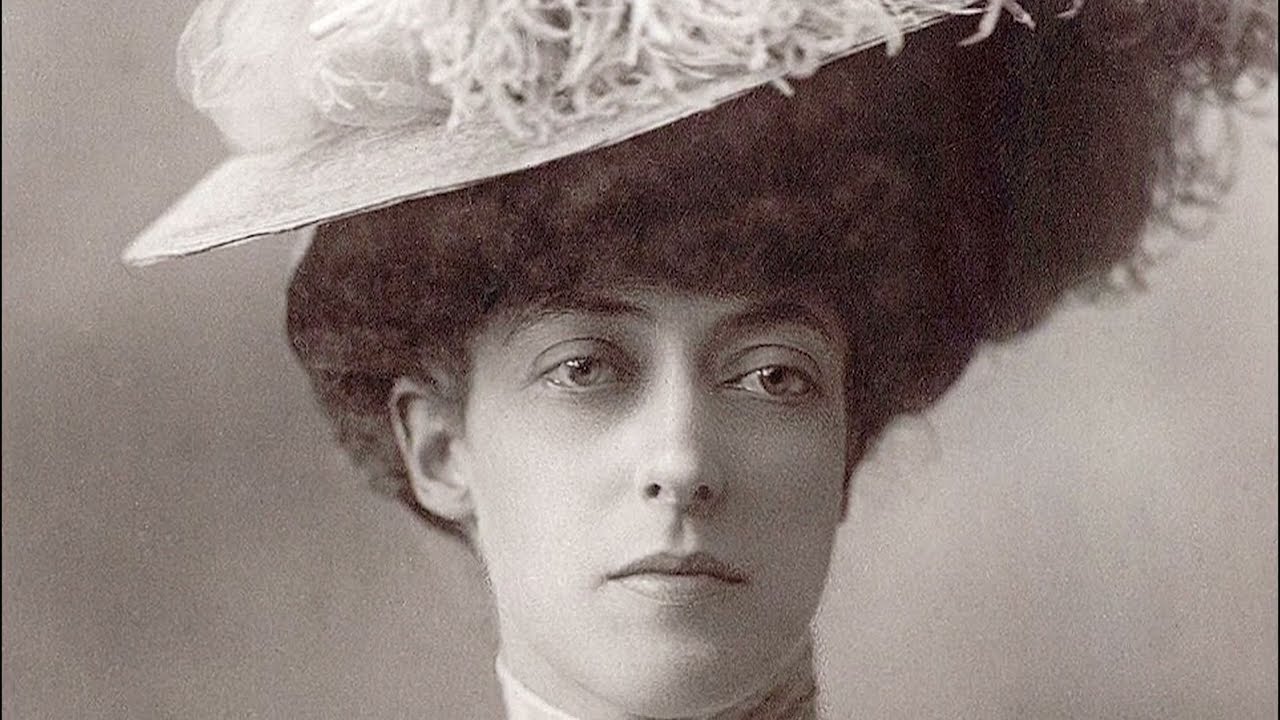 Toria was the sharpest of the three. By her fifties, she had become a sustained, low-grade saboteur of household peace, a woman who knew everyone’s weaknesses and could not resist exploiting them in casual conversation. The tongue that Edward VII once thought clever had become in middle age the only weapon Toria still owned, and she used it on her sister-in-law without restraint.
Ten Years of Freedom
On November 20, 1925, Queen Alexandra died at Sandringham, eighty years old, deaf, depressed, and surrounded for the last time by the small machinery of attendance she had built around herself. Toria was then in her late fifties. She had never owned a house, never lived alone, never run her own household, never been free of the bell.
Within months, she did something that for a woman of her generation and position counted as quietly radical. She bought a house. The house was Coppins, a modest country estate in the village of Iver in Buckinghamshire, far enough from the central court to allow her a measure of privacy.
She moved in, decorated it herself, and began for the first time to arrange her own staff, set her own meal times, plan her own day.
The village of Iver absorbed her with surprising warmth. She became honorary president of the Iver Horticultural Society, attended village fetes, and learned her neighbors’ names. At Coppins, she also pursued music, becoming a patron and friend of the celebrated cellist Beatrice Harrison.
In 1928, they recorded a private session at the studios of His Master’s Voice, with Toria at the piano. A sixty-year-old princess performed not for a court or crowd, but for a recording engineer. It was the most personal statement she ever made.
The End
By the early 1930s, Toria’s health began a steeper decline. The chronic stomach trouble that doctors had labeled gastric catarrh had hardened into something more concrete and dangerous. On the night of December 1, 1935, at Coppins, she suffered a severe gastric hemorrhage that no medication could stop.
She died in the early hours of December 3, 1935, at the age of 67, in the only house she had ever owned. She had been mistress of her own household for almost exactly ten years.
Her will was brief and personal. Coppins passed to her nephew, Prince George, Duke of Kent. Her funeral was small by royal standards.
The press obituaries were respectful and faintly puzzled.
Inside the family, the loss was felt most sharply by exactly one person. King George V was already a sick man, declining for months. His sister’s death ended whatever remaining capacity he had to resist what was already coming.
He wrote in his diary: “How I shall miss her and our daily talks on the telephone. No one ever had a sister like her.”
He cancelled public engagements. The morning telephone had no one on the other end. George V died at Sandringham on January 20, 1936, seven weeks to the day after Princess Toria’s death.
His last hours were managed controversially by his physician, who hastened the king’s death with a fatal injection so the announcement could reach the morning newspapers.
The brother and sister were buried in the family vault at Windsor within weeks of each other. The morning telephone had been silent for almost two months, and the receiver at Buckingham Palace would never again ring at nine for the same reason it once did.