Arnold Rothstein was shot during a business meeting at Manhattan’s Park Central Hotel on November 4, 1928, and died two days later at a local hospital. The killing was reportedly linked to a $320,000 debt he owed from a three-day high-stakes poker game the previous month. Rothstein claimed the game had been fixed and refused to pay. While lying in the hospital, Rothstein declined to name his attacker.
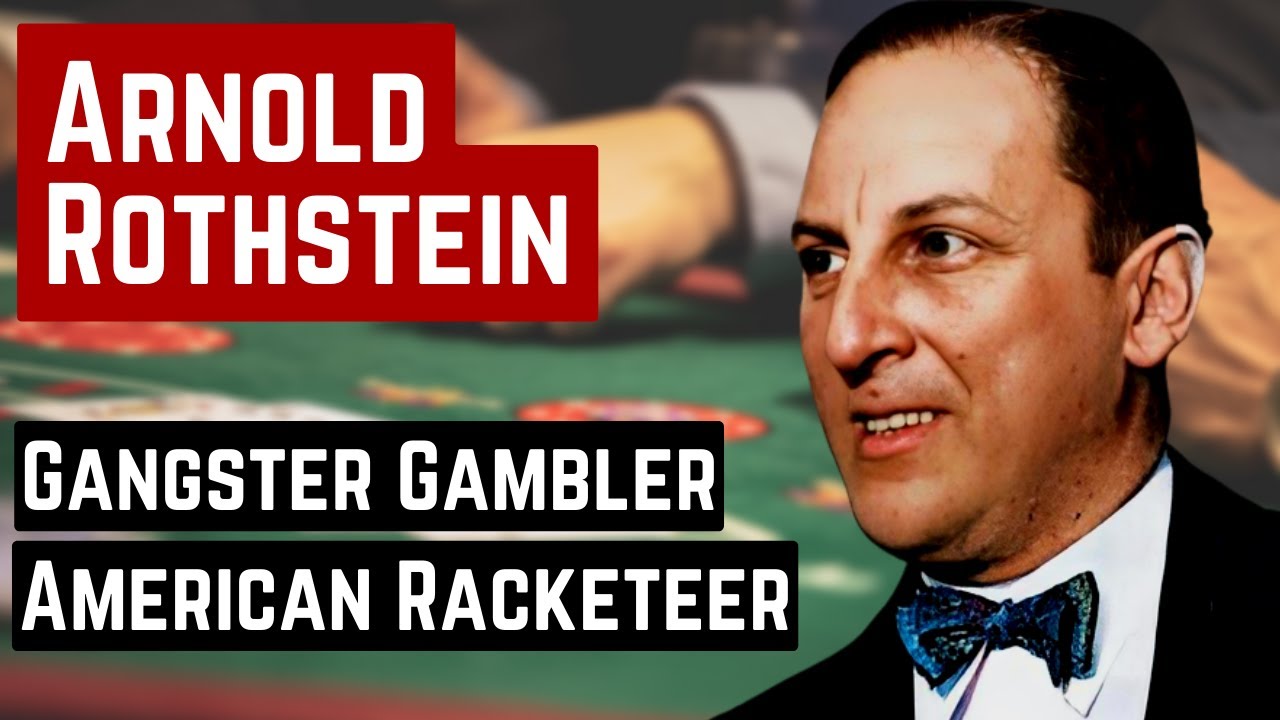
When pressed by police, he reportedly replied, “You stick to your trade, I’ll stick to mine,” and at another point, “My mother did it. ” A gambler named George “Hump” McManus was arrested for homicide but later acquitted for lack of evidence. Rothstein’s death marked the end of a career that transformed organized crime in the United States. Born in Manhattan to a wealthy Jewish businessman, Rothstein showed little interest in school despite excelling in mathematics.
His father, who had earned the nickname “Abe the Just” for his upright character, frequently chastised him for gambling as a child, but the boy would not stop. Asked in 1921 how he became a gambler, Rothstein said he had always been one and couldn’t remember a time when he wasn’t. He added that he gambled to demonstrate to his father that he could not be told what to do. In 1907, Rothstein fell in love with Carolyn Greene, a showgirl who was only half Jewish on her father’s side.
His traditional parents deemed her unsuitable, and she refused to convert to Judaism as his father demanded. Abraham Rothstein then declared he no longer had a second son who would violate Judaism’s rules by marrying outside the faith. The couple married in 1909 in Saratoga Springs, New York. By 1910, Rothstein had moved to Manhattan’s Tenderloin neighborhood, where he opened an important casino.
He also invested in a horse racing track in Havre de Grace, Maryland, where he was believed to have fixed many of the races he won. With a large network of informants, financial backing from his father’s banking associates, and a willingness to pay premium prices for good information, Rothstein became a millionaire by age 30. Rothstein is widely reputed to have organized corruption in professional athletics, including conspiring to fix the 1919 World Series. According to one version of the story, gambler Joseph “Sport” Sullivan approached Rothstein to help fix the series.
Another version holds that a boxer and several other chief gamblers decided to frame the series and make a killing. Rothstein profited greatly from the outcome, in which the Chicago White Sox lost to the Cincinnati Reds in what became known as the Black Sox Scandal. White Sox owner Charles Comiskey, a prominent player from 1882 to 1894, was widely despised by players for his miserliness. He had a long history of underpaying his players despite their success, including winning the 1917 World Series.
Baseball’s Reserve Clause prohibited any player who refused a contract from playing on any other professional team, and without a union, players had no bargaining power. Gamblers could find players on many teams looking for extra cash during that era. Rothstein was called to Chicago to testify before a grand jury investigating the incident. He claimed to be an innocent businessman seeking to clear his name and reputation.
Prosecutors were unable to find evidence linking him to the affair, and he was never charged. Despite acquittals in a public trial in 1921, Judge Kenesaw Mountain Landis permanently banned all eight players involved from professional baseball. The ban persisted despite requests for reinstatement in the decades that followed. Rothstein also faced suspicion in horse racing.
Under the alias Redstone Stable, he owned a racehorse named Sporting Blood that won the 1921 Travers Stakes under dubious circumstances. Trainer Sam Hildreth and Rothstein were accused of conspiring to raise the odds on the horse. On the morning of the race, Hildreth entered the outstanding three-year-old Grey Lag, which increased Sporting Blood’s odds. Rothstein then placed a $150,000 wager through bookmakers.
Hildreth removed Grey Lag from the starting lineup just before the race without giving a reason. Rothstein took in over $500,000 in bets in addition to the purse, but a conspiracy was never proven. Rothstein recognized the business opportunities presented by Prohibition and expanded into bootlegging and drug trafficking. Alcohol was smuggled along the Hudson River, across the Great Lakes from Canada, and into upstate New York.
Rothstein also invested in speakeasies and used his own fleet of transatlantic freighters to become the first to illegally import Scotch whiskey, understanding that expensive alcohol would be the fashionable choice. With the help of his banking and political connections, Rothstein made it possible for street gangs to bypass Tammany Hall. When Meyer Lansky, Jack “Legs” Diamond, Dutch Schultz, and Charles “Lucky” Luciano joined forces to form a criminal organization, their double-dealing with their own bosses undermined the entire late 19th-century style of political gangsterism. Rothstein turned organized crime from a thuggish activity into a big business run like a corporation.
Rothstein commanded high fees for his services and frequently served as a mediator in disputes involving New York gangs. His preferred office was Lindy’s, located at Broadway and 49th Street, where he often conducted business while seated on the corner, protected by bodyguards. He placed wagers and collected money from those who had lost the day before. By 1925, Rothstein had established a sizable criminal empire and was one of the most powerful criminals in the country.
He was the biggest bootlegger in the nation for a time, with an estimated net worth of over $10 million. He is widely considered one of the founding fathers of organized crime in the United States and was responsible for tutoring up-and-coming gangsters like Lansky, Schultz, and most notably Luciano. His nicknames included “Mr. Big,” “The Fixer,” “The Man Uptown,” “The Big Bankroll,” and “The Brain.
“