In June 1970, a 19-year-old Princess Anne was seen repeatedly alongside a dashing 30-year-old cavalry officer at Royal Ascot, and those in the know recognized what was unfolding. Andrew Parker Bowles was the most eligible man in the Household Cavalry, and for a season, he courted the Queen’s only daughter. However, Parker Bowles was a Roman Catholic, and a centuries-old law meant that for Anne to marry him, she would have to forfeit her place in the line of succession entirely. Within three years, he married another woman, and she married another man, and the season was quietly folded away.
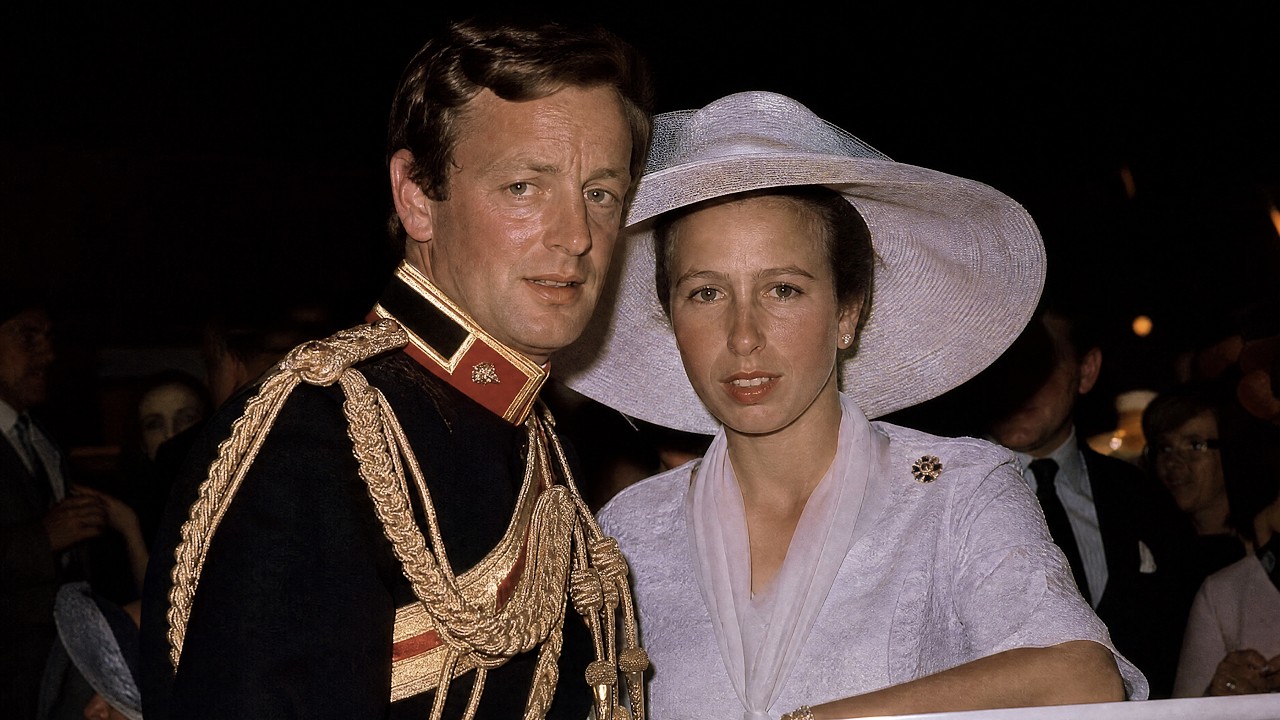
Over the next 55 years, Parker Bowles, who became the first husband of Queen Camilla, remained Anne’s closest friend while saying almost nothing publicly about her. The story of their bond began and ended at that same racecourse, surviving both of their marriages, divorces, and the most public scandals to ever engulf the royal family. The central obstacle was the Act of Settlement of 1701, which disqualified any member of the royal family who married a Catholic from the line of succession. In 1970, Anne was fourth in line.
The penalty fell on the royal, not the Catholic. Had she married him, she would have been effectively removed from her own inheritance. That same season, a parallel romance was developing. Camilla Shand, whom Parker Bowles had been seeing on and off for years, was falling for Prince Charles.
Within a few months in the early 1970s, two commoners and two royal children were romantically entangled in a closed circle of a few hundred aristocratic families. The resolution came in 1973 when two fathers, tired of the indecision, published an engagement notice in The Times for their children. With his hand forced, Parker Bowles proposed to Camilla. In July 1973, they married in a Catholic service at the Guards Chapel before 800 guests, including Princess Anne herself.
Just four months later, Anne married Captain Mark Phillips at Westminster Abbey, a Protestant Olympic horseman the rules approved of. Parker Bowles went on to a distinguished 34-year military career, including commanding the Household Cavalry Mounted Regiment and serving as the Queen’s personal Silver Stick in Waiting. Camilla’s relationship with Prince Charles, however, revived in the late 1970s, and their marriage settled into an arrangement where both partners had other attachments. Anne’s marriage also cooled as she became the hardest-working member of the royal family.
In the spring of 1989, private letters written to her by naval officer Timothy Lawrence were stolen from inside Buckingham Palace and handed to a newspaper, though their contents were never published and the thief never found. Later that year, Anne and Phillips announced their separation. Both 1973 marriages formally dissolved within three years of each other—Anne divorced Mark Phillips in 1992, and Parker Bowles divorced Camilla in 1995. While both royals faced public scrutiny, they refused to speak publicly about their private lives.
Anne married Timothy Lawrence in a quiet Scottish kirk the same year, and Parker Bowles married Rosemary Pitman in 1996. The friendships endured despite the chaos. Parker Bowles served as godfather to Anne’s daughter Zara, and his second wife’s funeral was attended by Anne herself. He and Camilla maintained a friendship that led him to be a guest at her wedding to Charles in 2005 and at her coronation as Queen in 2023.
At the center of it all is Parker Bowles’ remarkable silence. Despite being the most famous wronged husband in Britain, he never wrote a memoir, never gave a tell-all interview, and never cashed in on scandal. When a reporter recently asked about his personal life, he responded with four words: “Mind your own business. ”
His loyalty to Princess Anne continued to the end, as the two remained regular companions at Royal Ascot for decades.
While everyone else in the royal drama spoke or was made to speak, Parker Bowles and Anne remained the two who said nothing—and emerged with their dignity and their friendship intact. His silence was not an absence of feeling, but a lifelong commitment to a bond that an old law made impossible to formalize, yet could never break.