Carmen had long believed her marriage to Javier had been a good and honest one. For most of her adult life, she repeated to herself that fate had rewarded her modesty and fidelity with that one man and that one house on the outskirts of a small town near Valladolid. The house was like an extension of their marriage, a little crooked, a little old, but theirs, tamed, smelling of chickpea stew, cheap supermarket soap, and tobacco smoke that had forever clung to the curtains. One day, however, she discovered that all that certainty fit into a single notarial sheet of paper and could be torn to pieces as easily as a dry wafer.
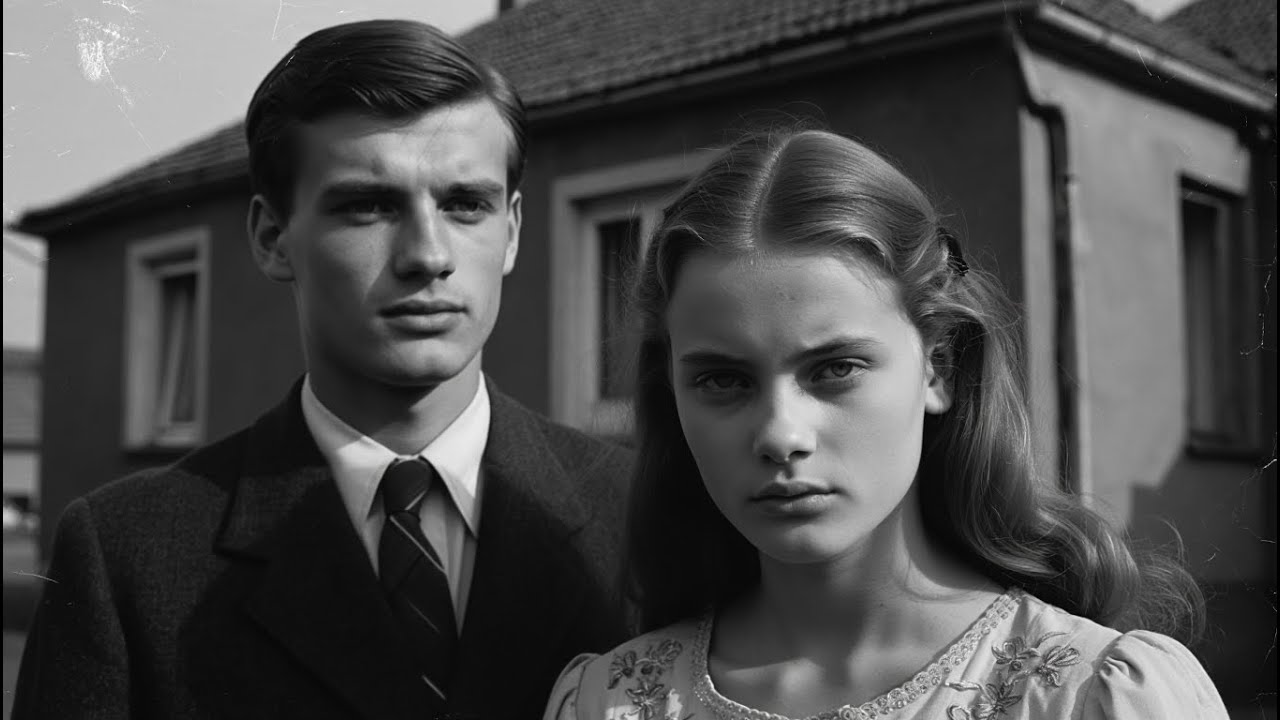
On her kitchen table rested an ivory-colored envelope with the letterhead of a notary’s office from the town center. Carmen was afraid to touch it, just as she had feared as a child approaching her hand to a hot iron. Around her, everything looked exactly the same as always. The chipped cup with red polka dots that Javier filled with coffee with milk each morning, the dishcloth hung from the back of the chair, the old radio that pretended to tune into the same station for years.
Only he was absent. In place of his throat-clearing and his soft whistling beside the first sip of coffee, there remained a weight of silence that crept into every corner. For years, their life had followed a simple rhythm. She taught language and literature at the town’s secondary school.
She returned home loaded with notebooks and her head full of essays about heroes who, in the end, always understood what truly mattered. He worked at a mechanic’s workshop on the outskirts. He came back soaked in the smell of oil and gasoline, but with the same gentle smile capable of disarming her fatigue. On Sundays they went to mass at the neighborhood church and then sat on a bench across from the house to count the familiar faces returning from the market.
From the beginning, Carmen knew that the house on Chestnut Street was not theirs. Javier had explained it calmly before they married. The building belonged to a distant cousin in the city who had agreed to rent it to them under very favorable conditions. It sounded reasonable and fair.
Every month, on the same day, Carmen left a sealed envelope with her share of the rent on the dresser. Javier picked it up without a word, put it in the inside pocket of his jacket, and always repeated the same thing: “I’ll take care of it. ” That little ritual became as natural as the prayer before sleep, the rustle of the bills, the way he smoothed the envelope with his hand, the slight nod of his head. It all composed the image of a responsible man who took care of the roof under which they lived.
She never thought to ask whether the cousin raised the rent or whether he planned to sell the house. She trusted Javier as she trusted that the next day they would hear his footsteps again in the hallway
That morning that never came, the cold arrived before November, and with it came the heart attack, the smell of disinfectant in the hospital, the doctor’s murmur, that strange word she refused to accept: irreversible
The funeral passed wrapped in fog. People squeezed her hands, told her she had been an exemplary wife, that with a husband like him, life had blessed her. She returned to the empty house, where every object screamed his name, and yet none answered her questions
A few days later, the notary called.
The voice on the other end of the line was calm and professional, as if it were a matter of little importance. Carmen traveled to the town center wearing one of Javier’s coats that was too big for her because she had never bought a good one for herself. There had always been more urgent expenses. She signed what was put in front of her.
She nodded when she heard the words about her husband’s last will. She tucked the will into her purse like someone storing a document that doesn’t belong to her, one that first had to be domesticated
Alone at home, back at the kitchen table, she dared to open the envelope. The paper crackled with a strangely loud sound. The letters danced slightly before her eyes, so she read slowly, aloud, as if she were with first-year secondary students.
Then she saw the sentence that split her life in two. The dwelling on Chestnut Street had been registered in the name of Carmen García, wife of the deceased, in full ownership, over 15 years earlier. She read it once, again, and again. The words refused to become something real.
If the house had been hers for so long, whom had she been paying rent to with such discipline—the cousin whose face she had never seen, or the husband who for years had tucked the envelope into his pocket saying, “I’ll take care of it”? The first wave was not anger, but shame. A rough, stinging shame, like the icy air hitting her cheeks when the wind suddenly blew. She stood up so abruptly that the cup clattered against the saucer.
The will fell onto the counter as if it burned her fingers. For a moment she wanted to crumple the sheet and throw it into the fire, along with other papers that always ended up in the fireplace because they no longer served any purpose. “It must be a mistake,” she whispered into the empty kitchen. Her own voice sounded strange, like that of an older, tired woman, the kind she sometimes caught a glimpse of in the mirror pretending it was someone else.
The notary must have written it wrong. Perhaps Javier only wanted to make things easier for me after he died. That thought was like a thin life raft, but still afloat. She clung to it with all her strength.
She knew her husband. She had watched him save every euro, give up new shoes so that the pantry never lacked jars of lentils and so that at Christmas there was always turrón on the table. It didn’t fit with the image of a man who for years accepted money from his wife for a house that was actually hers, though perhaps, perhaps there was something about him she had never known. She picked up the will again, ran her eyes over the lines.
Nothing had changed. The house had been hers for a long time. Javier had never mentioned it. The weight in her chest grew denser, harder than stone.
It was not clean anger, but a mixture of disbelief, sadness, and that odd feeling that someone had shifted her life by a millimeter, just enough for everything to look the same, but fit together differently
That night she opened the wardrobe where Javier’s jacket still hung. She ran her hand over the fabric without looking for anything in particular, merely seeking comfort in a familiar shape. Then, guided more by instinct than reason, she began to check the pockets. She found an old bus ticket, a crumpled receipt, a folded piece of paper with an illegible phone number, crumbs of an ordinary life, but no answers
In the days that followed, she tried to pretend nothing had happened.
She returned to school. She stood in front of a class of teenagers who looked at her with a mix of curiosity and sympathy. She talked to them about metaphors in poetry, about how a single word can change the meaning of an entire verse. And yet, in her own life, a single sentence in the will had changed everything, and she didn’t dare say it aloud.
Every time she looked at the blackboard, she didn’t see the chalk marks, but the words about the ownership of the house. At night she sat again at the kitchen table and placed the will in front of her like an exercise marked with a large red exclamation point. On one occasion she held the paper so close to the flame of a candle that the edge began to darken. She imagined how the fire would catch the letters, how the text would disappear and after a few seconds only ash would remain.
If I burn it, everything will go back to its place, she thought. I’ll keep the version I know. I can keep believing my marriage was good, without cracks. But her hand did not move.
She knew deep down that the paper did not create the truth, it only exposed it. Burning it would undo nothing, it would only rob her of the chance to understand. And without understanding, every memory with Javier hurt, like a photograph in which one suddenly sees something previously overlooked
She stood for a while at the window watching the neighbor water the geraniums on her balcony, some kids playing with a ball in the street, life going on as if nowhere in the world a will existed. Suddenly she felt she couldn’t go on like this, neither pretending nothing had happened, nor turning her husband into a monster in her imagination.
She needed facts. She needed to hear from someone outside what Javier had actually done
The next morning the air over the town was so clean and cold that it seemed the night rain had washed the sky thoroughly. Carmen walked toward the notary’s office slowly, with cautious steps over the cobblestones, like someone not entirely sure she wanted to reach the end of the road. In her purse rustled the papers: the will, the yellowed marriage certificate, some documents taken from the drawer almost by reflex, as if their mere presence could protect her from some unexpected word.
She felt she was not heading to an office, but to an encounter with her own life, suddenly written in a different hand
The notary received her with the same professional courtesy as the first time, but Carmen was no longer the same woman who had only come to sign. She sat across from him, clutching her purse on her lap like a shield. “I’d like to understand,” she said in a low but firm voice. “The will says the house has been mine for many years, and I’ve been paying my husband rent all this time.
It’s a mistake, Mr. Notary. ” The man looked at her for a few seconds longer than a simple file would require. He took a file folder, removed several documents, and placed them between them like neutral evidence.
“The deed transferring the dwelling was signed quite a while ago,” he explained calmly. “Your husband came alone. He then said he wanted to secure your future in case creditors came knocking. ” The words “secure your future” sounded in Carmen’s head almost like irony, but immediately mixed with a thread of understanding.
Memories from years back returned: factories closing silently, people lining up at the employment office, conversations about how everything changes and nothing is secure. Javier came home later, quieter, smelling not just of the workshop, but also of the thick smoke of bars where mechanics talked about loans, installments, and the fear of foreclosure. “He mentioned debts at the workshop,” the notary added, running his finger over one of the pages. “He feared that if the business went under, they would seize the house.
Putting it in your name was his way of preventing that. Saving the house to save the family. ” It sounded like something Javier would do. But why, then, had he let her believe for so many years that the owner was a distant cousin?
Why had he kept collecting the envelope month after month when the roof was already hers? “Did he say anything else? ” she asked. The notary hesitated for a moment, as if wondering whether he was crossing the line between document and confession.
“I only remember him commenting that he didn’t want to burden you with his fears,” he finally said. “That you sacrificed a lot and that he had to remain the one who keeps the house. Back then, many had the feeling that the ground was moving beneath their feet. I think that for him, that house was the last proof that he was still the head of the family.
” That sentence hit her harder than all the legal paragraphs. For a moment she saw Javier not as the man who took the envelope with her money, but as someone leaving the notary’s office with papers in hand, feeling that each signature moved him a little further from himself. Perhaps that was why, every month, he took the envelope not to rob her, but to preserve the illusion that he was still contributing something, that he was still the one who paid for the house
She left the notary’s office with her head heavy with thoughts. The town was still the same, but its sounds were muffled by a single question.
If Javier had done all this out of love and fear, who had he really been to her all those years? That same afternoon, as if guided by a hand pushing her back in time, she began to go through the wardrobe she almost never opened. Among old tablecloths she found a wooden chocolate box, heavier than it looked. Inside was a stack of letters tied with a faded ribbon.
The paper was fragile, the handwriting uneven and clearly feminine. The first sentence hit her like a stone. “Dear Javier, I will never forget that you saved my son and me from the street. ” Each letter was a variation of the same story: impossible debts, the threat of losing the apartment, Javier’s appearance with his calm voice and just enough money to keep the bailiff away.
In one of the letters there appeared a surname Carmen didn’t recognize, in another the address of a block of flats on the other side of town. Between the lines breathed the desperate gratitude of someone who had been on the verge of losing everything. With the letters in her hands, Carmen felt her own story suddenly widening into another parallel life. Had he helped that woman merely as a decent man?
Or had there been something more he had never dared tell her—something that, if known, would truly change what they had been to each other
Instead of hiding the letters away again, she put them in her purse beside the will. She looked at the address written on the yellowed paper, as if it were a map leading to a house where someone else carried her own version of Javier. She still didn’t know that the door she would knock on the next day would not be opened by an enemy, but by a woman who had lived with the same fear and the same gratitude as she had—and that the biggest shock would not be encountering a stranger, but facing the image of her own husband, who would stop fitting into a single word
The block of flats the address led her to was tall and gray, like every building in that neighborhood. But for Carmen it seemed like the entrance to an unknown region of her own life.
The stairwell smelled of dampness and old soap. On the walls someone had painted childlike flowers that time had faded. She stopped before the right door with her heart pounding so hard it almost drowned out the doorbell. In her hand she clutched the letters, as if letting them go could erase what she had already read.
The door opened slowly. In the doorway appeared a woman with gray hair pulled back in a careless bun, with eyes where caution mixed with weariness. “Yes? ” she asked, sizing Carmen up with her gaze.
“My name is Carmen García,” she said, noticing her voice break for a second. “My husband was named Javier. I found your letters. I need to understand what there was between you.
” For an instant, in the woman’s eyes, something like recognition flickered, like the lightning that precedes a storm long expected. “Come in, please,” she said at last in a low voice. “I’m Elena. ”
The apartment smelled of barley coffee and the sweet dust of old books.
On a dresser stood a photo of a boy in school uniform and beside it a candle burned halfway down. Carmen paused for a moment before that image and something tightened in her throat. In this house, too, someone was missing whose place was still marked with small rituals. They sat at a small table.
The letters lay between them, like a narrow, heavy bridge stretched over the river of silence. Elena gently touched the ribbon that held them together. “I thought that someday I’d throw them away,” she murmured, “or that your wife would never know about them. ” The word “wife” did not sound with resentment or mockery.
It sounded like a reality accepted long ago. “For years I paid rent for a house that was mine,” Carmen said with more calm than she felt. “The will says he put it in my name to protect me. I found these letters.
I no longer know what part of our marriage was care and what was a lie. ” Elena took a deep breath, like someone filling her lungs before diving. “I met Javier when everything was falling apart,” she began slowly. “My husband took out a loan that swallowed us like a well.
We were going to be evicted from our apartment. The bailiff was almost at the door. Javier came then to the same notary’s office where I was cleaning. He overheard my conversation with the lawyer.
” She recounted it plainly, but with so many details that Carmen could see the scene: Elena with her child in her arms, the silent husband at the table, the envelopes with red stamps they were afraid to open. And Javier, first listening, then returning with a proposal. He helped them negotiate the debt, found them extra work from his workshop, brought them food when the fridge had nothing left but the light. “Were you a couple?
” Carmen finally asked, knowing that question had to come out, even if each word weighed like lead. Elena shook her head. “No. Between us there was something that could have become that if we had let it, but he always drew a line.
He said he had a wife he could not fail, that at home someone was waiting for him who believed in his strength. He also said you were better than he deserved. ” Those words reached Carmen in a place of herself she didn’t know. For years she had seen herself as the weak part, dependent on her husband, someone who contributed something to the rent, but who still lived under his roof.
And now she learned that in another apartment, on the other side of town, Javier spoke of her as someone whose respect he did not deserve. And the house came back to the point that burned her inside. She told Elena how he had put it in her name, but still let her pay. Elena looked out the window for a while, as if searching for the answer in the gray sky.
“I remember one afternoon,” she said at last. “We left the notary’s office almost at night. My eviction had been postponed for a time. His workshop was still hanging by a thread.
He told me he felt like he had handed his wife the remains of his manhood, that if the house was in her name, he was no longer the one who provided for his family. And yet he knew that otherwise they could lose everything. ” Carmen saw him with a new clarity, as if he were sitting before her. A man torn between two fears:the fear of the bank, of foreclosure, of the street, and the fear of becoming, in his own eyes, someone who couldn’t manage life.
The envelopes with the rent stopped being just proof of a deception. They became also his clumsy attempt to keep feeling that he was still giving something and not merely begging fate to be kind. “He once said,” Elena added almost in a whisper, “that he had done something you would never forgive him if you ever found out, but that he did it because he loved you and that he feared the day he would see disappointment in your eyes more than death itself. ” In the living room fell a silence that was no longer that of a stranger’s house.
It was the shared silence of two women who understood that their lives had crossed because of the fear of the same man—fear of poverty, of losing face, of the truth. Carmen felt she could scream, weep, or hurl a thousand more questions. Instead, she pulled the letters slightly toward her and only said, “He was afraid, too. ” That sentence was a choice greater than a thousand reproaches
When she returned to the house on Chestnut Street, the light in the hallway seemed different, warmer.
She ran her hand over the doorframe, as if greeting not just the home, but a story whose every chapter she finally knew. In the kitchen she took from her purse the will, the deed of ownership, Elena’s letters, anda photograph of a young Javier smiling shyly at someone off-camera. Instead of throwing anything into the fire, she went to the bedroom and brought back an old wooden chocolate box. She placed the documents inside, one by one, almost with tenderness.
First the truth of the official papers, then the truth of the stranger’s letters, and finally the photo of the man she had loved without ever fully knowing. She closed the box and stored it at the back of the wardrobe, on the shelf where she kept things rarely used, but important. It was not an escape; it was a decision to accept the whole—the love and the lie, the care and the fear, the pride and the shame that had lived under that same roof
The next morning she opened the window wider than usual and let the cold air in. She looked at Chestnut Street, at the children running toward school, at the neighbor shaking out a rug, at the same world that had existed before she knew the house was hers.
Only she was different. Her marriage had not suddenly turned into a sham from day one. It had revealed itself as a human story about a man who loved enough to put the house in his wife’s name and feared enough to accept her envelopes for years so as not to feel useless. And about a woman who, only after his death, learned to love him as he truly was—with his weaknesses and not just with the idealized image of the perfect husband.
The house was not hers merely according to the documents. It became truly hers when she stopped deceiving herself and allowed the truth to stay inside, just as she had stored the box in the wardrobe, not to display it, but to keep it forever.