When a man running one of Las Vegas’s biggest casino empires told investors exactly why the city was changing, he said it out loud on a recorded call without apology. There was a time when Las Vegas belonged to everyone: factory workers, school teachers, retired couples celebrating with a cheap buffet and a bucket of quarters. That Las Vegas is gone, and he explained why. The city was never originally built for the rich.
When the first casinos opened in the Nevada desert in the 1940s, they were chasing soldiers returning from war, families on summer road trips, and blue-collar dreamers who wanted one weekend of feeling bigger than their zip code allowed. The deal was simple: come to Vegas, lose a little money, and in exchange, feel like a king. Cheap rooms, free drinks at tables, all-you-can-eat shrimp for $3. 99, and free volcano eruptions were the lure.
The casinos needed the volume, energy, and noise of the middle class to create an atmosphere that could not exist without a crowd. For decades, the formula worked. Millions of people arrived every year, generating revenue and supporting hundreds of thousands of workers. By the early 2000s, the Strip was producing more tourist revenue than almost any other destination on Earth.
But as major companies like MGM, Caesars, and Wynn consolidated control, shareholders demanded aggressive growth. Somewhere in the boardrooms, a simple question emerged: what if they stopped chasing everyone and only targeted the wealthy? One high roller spending $500,000 a weekend generates more profit than a thousand middle-class tourists spending $500 each. So, the executives rebuilt the model around that idea.
The changes were gradual at first. Resort fees appeared quietly, then ballooned from $15 to $55 per night. Room rates climbed past $400. Buffets, the heart of affordable Vegas, began closing because they attracted the “wrong kind of customer.
” Blackjack payouts shifted from 3:2 to 6:5, cutting player winnings nearly in half. Free entertainment disappeared. The Mirage volcano, erupting since 1989, was demolished in August 2024 for a new guitar-shaped hotel tower. Treasure Island’s pirate battle show was removed years earlier.
The executives called the process “premium repositioning. ”
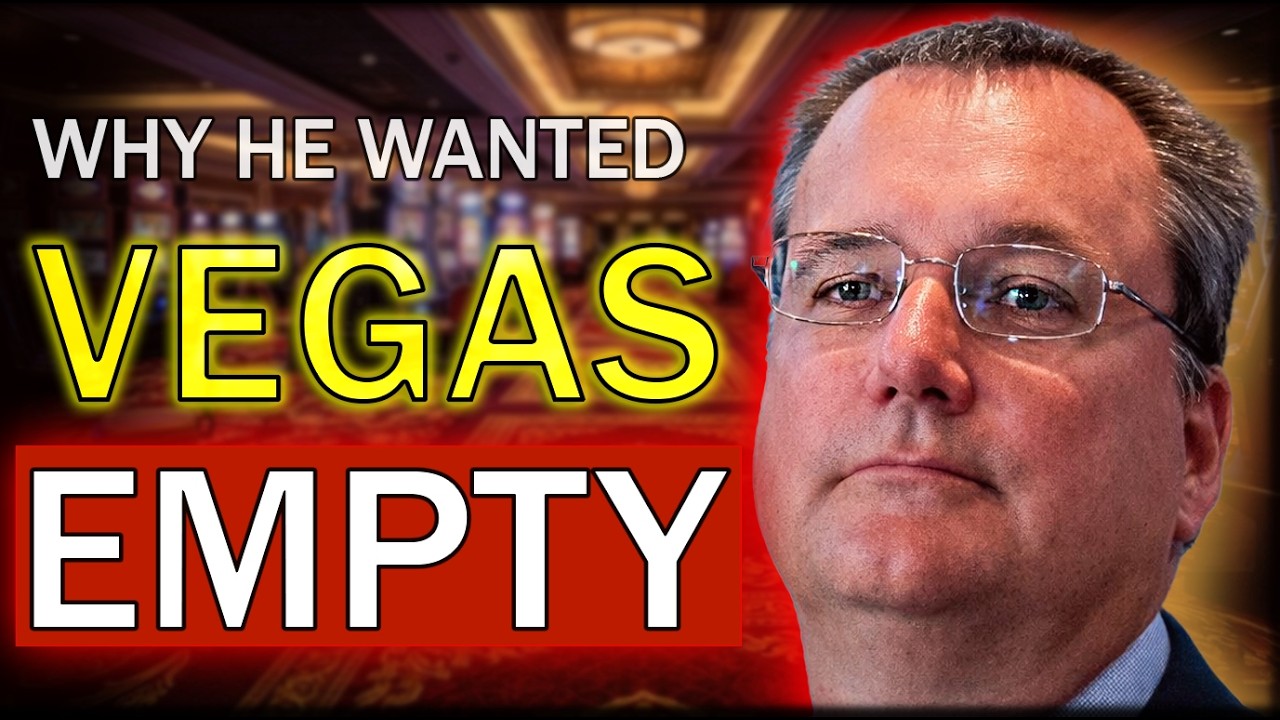
In 2023, Caesars Entertainment CEO Tom Reeg made a statement on an investor call that spread like a scandal. “You’re kicking out the lowest end. I see no reason that needs to stop or would stop,” he said.
He was describing the deliberate elimination of budget travelers from the Strip as a selling point. The reaction was immediate. On Reddit and travel forums, long-time visitors described feeling like strangers in a city they once loved. One user wrote that their group couldn’t justify the trip after adding up resort fees, food, and new table minimums.
Another said, “We can’t afford Vegas the same way we used to. ” Strip workers also spoke publicly, with a cocktail waitress at a major Caesars property describing tip income disappearing and a server reporting that take-home tips had dropped by half. At first, the numbers looked fine. Revenue at MGM and Caesars climbed through 2023 and into early 2024.
But cracks were spreading beneath the headlines. Hotel occupancy on the Strip dropped to 78. 9%, down more than two points from the prior year. Average daily room rates fell by 5.
5% to around $185, which was misleading once resort fees were added. Then came the number that told the real story: casino net income on the Strip fell 40. 4% in 2024, even while overall revenue climbed more than 6%. Revenue was up, profit was down by 40%.
Visitor numbers were falling and so was spending. In June 2024 alone, the city saw an 11. 3% drop in total visitors — more than 400,000 fewer people in a single month. Meanwhile, the US online gambling market hit $122.
6 billion in 2024. Younger players who had been pushed out of Vegas were happily gambling on their phones from home. The middle class that Vegas had made unwelcome had found somewhere else to go. The knock-on effects were severe.
The Las Vegas Convention and Visitors Authority collected a record $382 million in room tax revenue in 2024, but officials were already budgeting for a slowdown. About a third of Clark County’s room tax flows into public education and transportation infrastructure. When visitor volume drops, those funds shrink. Las Vegas was staring down a $110 million budget deficit that casino revenue was supposed to fill.
Local casinos off the Strip, which still catered to everyday players, were reporting revenue increases of up to 50%, while major Strip properties were bleeding. The players hadn’t vanished; they had migrated. Competitors noticed. Atlantic City launched a marketing campaign positioning itself as the affordable alternative.
Towns in surrounding Nevada advertised “no resort fees” as a headline feature. Cabo San Lucas and Cancun pitched all-inclusive packages costing less than a three-night stay at a mid-tier Caesars property. Travel influencers posted price comparisons that earned tens of millions of views, with comment sections full of people planning to go elsewhere instead. The poker palace in North Las Vegas, open since 1974 and paying more than 120 employees a living wage, closed in 2025.
Not because of bad management or scandal, but because the economics of ordinary gambling had been quietly strangled. The Mirage volcano is gone. The pirate show is gone. As of early 2025, only eight buffets remain on the Strip, down from dozens a decade earlier.
In their place are VIP lounges that don’t appear on public websites, private gaming salons for high rollers, and cabana rentals at $500 a day. Vegas was never really selling gambling; that was just the hook. It was selling the feeling that the city wanted you there, that it had dressed itself up for you. That feeling cost money to manufacture.
It required crowds, noise, strangers cheering at a craps table, and a free volcano erupting on the sidewalk. When you price out the people who create that energy, you don’t get a quieter, more refined version of the same thing — you get nothing. The neon is still on. The money is still moving somewhere.
But the magic that made Las Vegas what it was lived in the crowds, in the ordinary people who came to feel for one weekend like they owned the place. Vegas let them leave without much fanfare. The question now is whether the city can find its way back before the empty tables tell a story even shareholders can’t ignore.