The real-life inspiration for Tony Soprano was not a powerful crime boss holding court in a gleaming headquarters. He was Vincent “Vinnie Ocean” Polarmo, who ran the Decavalcante crime family from a struggling strip club called Wiggles in New Jersey that could barely pay its bills. While HBO’s *The Sopranos* showed Tony Soprano commanding his empire from the glamorous Bada Bing, the actual mobster who inspired David Chase’s creation operated from a run-down establishment in a bad neighborhood. FBI surveillance photos from 1998 showed a rag-tag crew of roughly 40 made members, not the powerful dynasty portrayed on television.
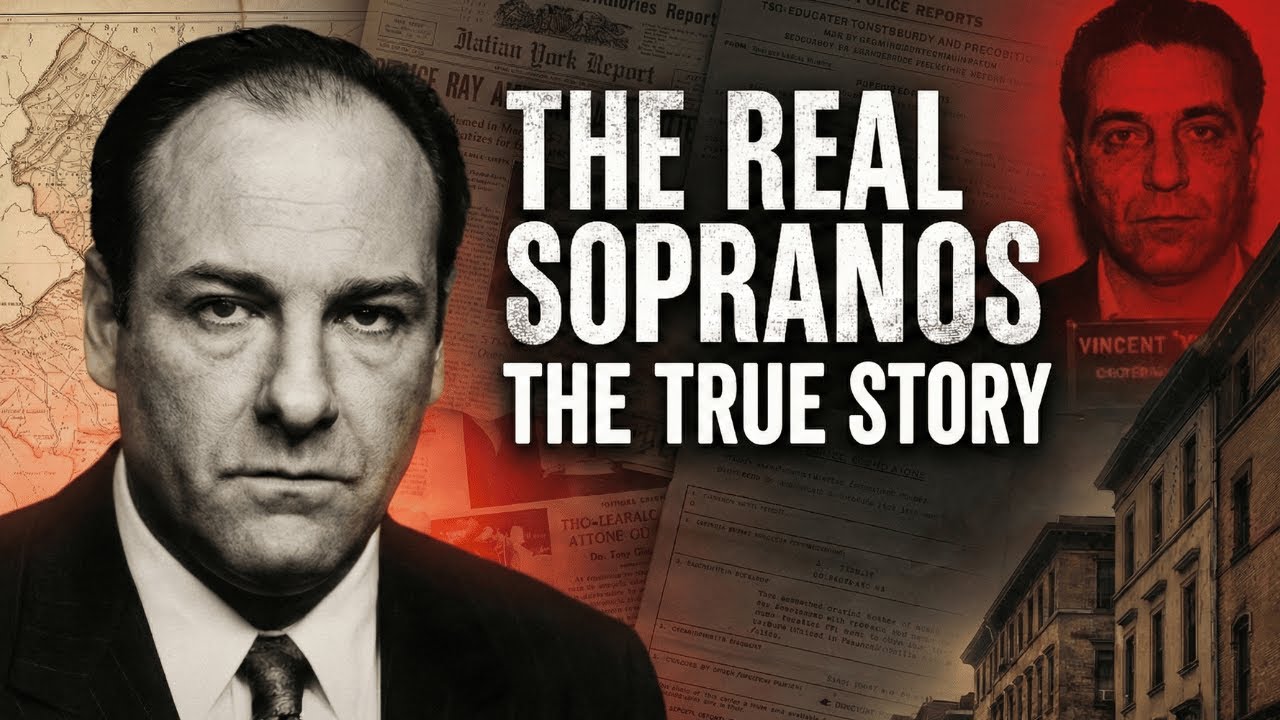
The Decavalcante crime family, also known as the North Jersey crime family, controlled gambling, construction, and murder-for-hire operations throughout northern New Jersey for over half a century. Despite being the smallest mafia family in America, never exceeding 50 made members, they wielded influence far beyond their size through blood ties to Sicily and a seat on the Mafia Commission alongside New York’s five families. The family’s foundation was built by Simone “Sam the Plumber” DeCavalcante, born in 1912. He earned his nickname from his legitimate front company, Canelworth Heating and Air Conditioning in Newark.
From his modest office, DeCavalcante orchestrated a multi-million dollar criminal empire that included illegal gambling, murder, extortion, and political corruption. Fellow mobsters called him “the Count” because he claimed descent from Italian royalty and the famous DeMedici family. In the HBO series, Tony Soprano’s confidence comes from therapy sessions with Dr. Melfi.
David Chase gave Tony therapy because HBO audiences needed someone to explain the mob world. The real Sam DeCavalcante never questioned anything. FBI recordings from his plumbing office show a man who fully embraced mob life, speaking about murder and extortion with the same casual tone he used to discuss plumbing supplies. What made DeCavalcante unique among American mafia bosses was his willingness to modernize old La Cosa Nostra traditions.
He abolished the traditional initiation ceremony that required new members to hold a gun, knife, and burning holy card. In 1961, the FBI planted a listening device in Sam’s Newark plumbing office. For four years, federal agents captured an unprecedented glimpse into the inner workings of an American mafia family. This intelligence would later inform the RICO statutes used to dismantle organized crime nationwide.
Sam discussed murders, political bribes, territorial disputes with New York’s five families, and the intimate details of running a criminal organization. The conversations revealed a boss who genuinely cared about his men’s welfare, often saying, “I’d give my life for our people. ” But they also exposed the brutal reality of mafia justice. The FBI tapes referenced eight murders and countless acts of violence.
One particularly revealing conversation occurred just days before Thomas Dunn was elected mayor of Elizabeth in 1964. Dunn visited DeCavalcante’s office and was recorded saying that if you have any way of getting to two individuals, tell them to keep their lousy mouth shut because this thing could cream me at the last minute. The tape showed how deeply organized crime had penetrated New Jersey politics. In 1969, the FBI released 2,300 pages of these conversations to the public, creating a sensation.
The “DeCavalcante Papers” provided the most detailed look inside a mafia family ever made public. Sam served two years of a five-year sentence, then returned to his organization with his reputation intact. The real Decavalcante family lived in paranoia after those tapes became public. Every conversation became suspect, every room potentially bugged.
While HBO needed Tony to keep talking for dramatic purposes, the real mobsters learned to communicate in whispers, code words, and silence. By 1980, age and legal pressure convinced Sam to retire to Miami Beach, Florida. He passed control to Giovanni Riggi, known as “John the Eagle. ” Under Riggi’s leadership, the family expanded its influence throughout New Jersey’s construction industry.
Riggi once bragged that not a nail goes through a wall without them getting a piece of it. His crews controlled concrete suppliers, waste management companies, and labor unions, and maintained close relationships with the Gambino crime family under John Gotti. The show glamorized this reality. In *The Sopranos*, Tony’s waste management business provides steady income while serving as a respectable front.
The real Decavalcante construction and waste management operations were crude shakedown schemes: showing up at job sites demanding payments, threatening work stoppages, and intimidating contractors who would not pay. Riggi’s empire began crumbling in 1990 when he was indicted on state and federal charges. Facing 12 years in prison, he appointed John D’Amato, known as “Johnny Boy,” as acting boss. That decision led to one of the most shocking murders in mafia history.
D’Amato was a well-respected soldier who had earned his position through years of loyal service. But he harbored a secret that would prove fatal: he was secretly attending swingers clubs and engaging in sexual relationships with men. When word reached other family members, they were outraged. Anthony Capo, a brutal enforcer, later testified in court that nobody was going to respect them if they had a gay homosexual boss sitting down discussing La Cosa Nostra business.
On January 6, 1992, Capo and Victor Diara picked up D’Amato in a white Lincoln ostensibly to drive him to lunch in Newark. With D’Amato sitting in the back seat, Capo turned and shot him twice. When D’Amato groaned the words “Oh no,” Capo shot him twice more, killing him instantly. They searched his pockets, finding $8,000 in cash and an FBI agent’s business card, then wrapped his body in a plastic tarp.
His corpse was driven to a farm owned by family soldier Philip “the Undertaker” LaMela in upstate New York. His body was never recovered, and the murder remained officially unsolved for over a decade. HBO’s *The Sopranos* adapted this tragedy into the Vito Spatafore storyline in season 6. When Vito is discovered in a gay nightclub, Tony agonizes over what to do, giving Vito time to flee to New Hampshire and showing Tony struggling with the decision to order his death.
It is dramatic television full of moral complexity and delayed consequences. The real John D’Amato got no such consideration. There was no agonizing, no philosophical debate, no chance to run. He was murdered within weeks of the rumor spreading, shot in the back of a car without warning.
The D’Amato killing exposed the family’s vulnerabilities and attracted unwanted attention from law enforcement. But the organization continued operating under a ruling panel system, with Vincent “Vinnie Ocean” Palermo emerging as the most prominent leader. Palermo became the direct inspiration for Tony Soprano after series creator David Chase learned about his criminal activities. Like Gandalfini’s fictional mob boss, Palermo owned a strip club called Wiggles, the real-life Bada Bing, where he conducted business and entertained associates.
But Wiggles was nothing like the Bada Bing on HBO. According to FBI surveillance reports from 1998, it was a failing operation in a run-down building, barely making enough money to cover its overhead. Palermo used it as a meeting place because rent was cheap and the location was discreet. HBO could not build a television series around a struggling strip club in a bad neighborhood.
The Decavalcante family’s downfall began in 1998 when Ralph Guarrino, a low-level associate, was arrested for participating in a $1. 6 million heist at the World Trade Center. Facing serious prison time under RICO statutes, Guarrino agreed to become an FBI informant and began wearing recording devices to family meetings. FBI agent Michael Malerney, who had been studying the Decavalcante organization for years, used Guarrino’s intelligence to build an unprecedented case against the entire family hierarchy.
Malerney knew everything about his targets: their children’s names, their medical conditions, even their favorite foods. When he arrested Anthony Capo, Malerney brought orange juice and chocolate because he knew Capo was diabetic. This meticulous preparation paid off when Capo agreed to cooperate rather than face life in prison. His confession revealed details about the D’Amato murder, the killing of Staten Island resident Fred Weiss, a murder personally requested by John Gotti, and numerous other unsolved crimes.
Capo’s testimony became the cornerstone of the government’s RICO case. On December 2, 1999, FBI agents arrested over 30 members and associates in coordinated raids throughout Newark and Elizabeth. The arrests effectively dismantled the family’s command structure and ended their reign over North Jersey’s criminal underworld. In HBO’s *The Sopranos*, FBI raids feel almost theatrical.
Agents swarm Tony’s house, and Gandalfini’s character maintains his defiance even in handcuffs. The real December 1999 raids were bureaucratic and humiliating. FBI agents arrived at shabby homes and modest apartments in Newark before dawn, arresting men in their pajamas, many of them elderly or sick. There was no defiance, no dramatic standoffs.
Most went quietly, already broken by years of surveillance and informant betrayals. The trials that followed were devastating. Between 1999 and 2005, 45 men were imprisoned under RICO statutes, including the family’s consigliere and seven capos. Philip Abramo, known as “the King of Wall Street,” a college-educated accountant who ran sophisticated stock fraud schemes, was convicted of five murders and sentenced to life in prison.
As these real-life events unfolded, HBO premiered *The Sopranos* in 1999. The FBI captured family members on wiretaps discussing the show and debating which characters matched real people they knew. One mobster was recorded asking what *The Sopranos* was and whether it was supposed to be them. Today, the Decavalcante family exists as a shadow of its former self.
Giovanni Riggi died in 2015 at age 90, having served as the family’s most successful boss for over three decades. Charles Majuri, known as “Big Ears,” is the current official boss, with Domenico Marzulo expected to take control of what remains of the organization. The FBI investigation, which solved 11 murders and secured 71 convictions using RICO statutes, stands as one of the most successful organized crime prosecutions in American history. Because of HBO’s *The Sopranos*, millions of people believe they understand what real organized crime looks like.
They picture wealthy mobsters living in suburban mansions, conducting business from upscale strip clubs, maintaining complex psychological lives while navigating family drama and therapeutic breakthroughs. The real Decavalcante crime family tells a different story. These were men operating from failing businesses in declining New Jersey towns. Men who murdered a respected boss for his sexual orientation without hesitation.
Men who turned on each other the moment federal pressure arrived. They didn’t agonize over moral choices in therapy sessions. They made brutal decisions quickly and lived with constant paranoia. *The Sopranos* succeeded because David Chase made mob life feel psychologically rich and narratively satisfying.
The real Decavalcante family was none of those things. They were small-time criminals who happened to inspire the greatest mob story ever told and then got destroyed by the same FBI surveillance techniques that Sam the Plumber first experienced in 1961. From Sam DeCavalcante’s bugged plumbing office to Vinnie Ocean Palermo’s failing strip club. From John D’Amato’s murder to the 1999 FBI raids that ended their organization.
The Decavalcante family’s real story is more pathetic than prestigious, more bureaucratic than dramatic. Their story ended not with ambiguity like David Chase’s series finale, but with handcuffs, RICO prosecutions, and the destruction of a criminal empire that had dominated New Jersey for generations.