The gunfight that made Tombstone, Arizona Territory, famous did not actually happen inside the OK Corral. The legendary confrontation unfolded on October 26, 1881, in a narrow vacant lot on Fremont Street, near C. S. Fly’s boarding house and close to the rear entrance of the corral.
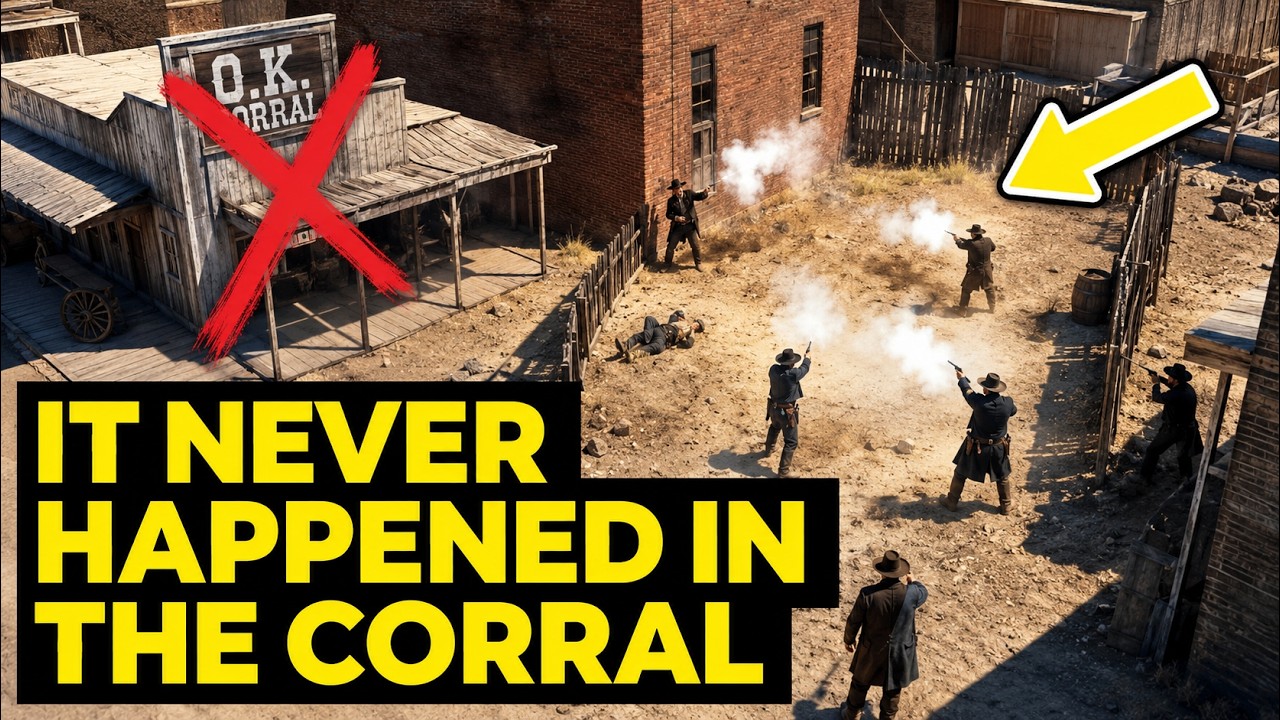
The name stuck because it was memorable, but the cramped, dusty space where the shooting occurred bears little resemblance to the wide-open showdown depicted in movies. The name is just one of several misconceptions that have shaped public understanding of the event for more than a century. The real story is smaller, faster, and far more complicated than the clean hero-versus-outlaw tale popular culture has promoted. The fight was brief, lasting roughly 30 seconds and involving about 30 shots.
When it was over, Billy Clanton and brothers Tom and Frank McLaury were dead. Virgil Earp, Morgan Earp, and Doc Holliday were wounded. Wyatt Earp emerged unscathed, while Ike Clanton and Billy Claiborne fled the scene. Popular retellings place Wyatt Earp at the center of the story, but he was not the lawman in charge that day.
His brother Virgil held that role. Virgil was the Tombstone town marshal and a deputy U. S. marshal, and he made the decision to disarm the Cowboys in violation of a local ordinance prohibiting firearms within city limits.
Wyatt was present and important to the action, but he was not the leader. His later fame, however, reshaped how history remembers the event. Wyatt lived until 1929, long enough to tell his version of the story to writers and filmmakers, while Virgil faded into the background. The conflict itself was not a simple case of righteous lawmen confronting evil outlaws.
The Cowboys, a loose group connected to rustling and violence in the region, had dangerous reputations. But the Earps were not saints. They were frontier men embedded in Tombstone’s world of gambling, saloons, mining interests, and local power struggles. Tensions had been building for days before the final confrontation.
Ike Clanton and Doc Holliday had argued, threats had been exchanged, and both Ike Clanton and Tom McLaury had confrontations with the Earps earlier that day. Sheriff Johnny Behan, the Cochise County sheriff, added another layer to the divided local authority. He was not allied with the Earps and later became one of the men who accused them of murder. Town and county officials, newspapers, business leaders, and political factions all had competing interests, and the aftermath of the shooting was fought as much in print and in court as it had been in the vacant lot.
The exact sequence of events during those 30 seconds remains disputed. Witnesses gave conflicting accounts of who reached first, who fired first, and whether the Cowboys were surrendering or making threatening moves. The uncertainty contributed directly to the legal proceedings that followed. Ike Clanton filed murder charges against the Earps and Doc Holliday, leading to a lengthy hearing before Justice of the Peace Wells Spicer.
After weeks of testimony, Spicer ruled there was insufficient cause to send the defendants to a full murder trial, though he criticized aspects of Virgil Earp’s actions. The ruling did not end the violence in Tombstone. Virgil Earp was later attacked and seriously wounded. Morgan Earp was killed in March 1882.
Those events pushed Wyatt into the so-called Earp Vendetta Ride, a period of revenge killings that deepened the controversy around the family. Wyatt eventually left Tombstone with Doc Holliday, but the story continued to grow in the public imagination. Over the decades, the OK Corral became a national symbol of the Old West. Wyatt was transformed into the calm lawman of legend, Doc Holliday became the loyal, dying gambler, and the Cowboys were cast as stock villains.
Virgil, the man who officially led the lawmen that day, was largely forgotten in popular memory. The real gunfight was local and brief, but it became something far larger. It represents the collision between a booming silver town trying to establish order and armed men who did not all accept the same rules. The records do not allow the story to become completely simple.
The debate over what happened, and what it meant, has lasted more than a century and continues to define how America remembers its frontier past.