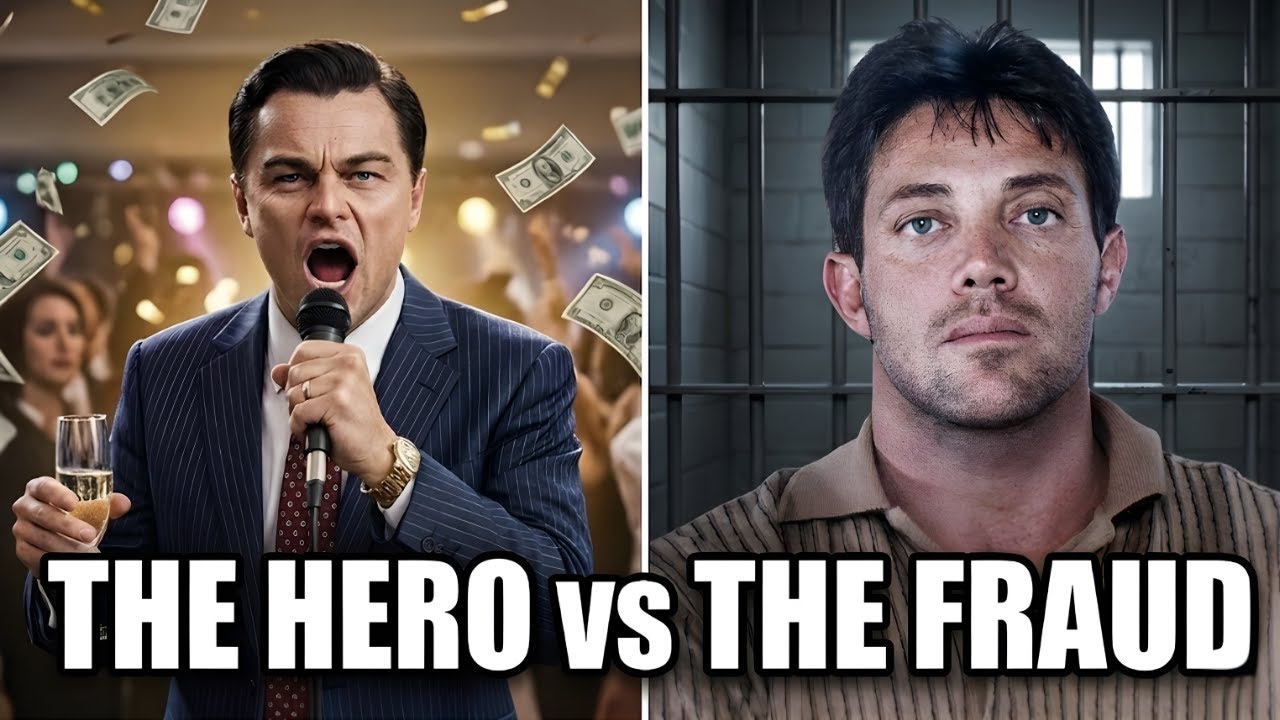
The raucous office scenes in Martin Scorsese’s 2013 film *The Wolf of Wall Street* show Jordan Belfort and his brokers hurling dwarves at Velcro targets, spraying champagne, and cheering as Leonardo DiCaprio’s character screams about money. The movie presents Stratton Oakmont as the embodiment of the American dream—loud, excessive, and essentially victimless. The real Stratton Oakmont, captured in FBI evidence photos after a raid, looked nothing like a party. It was a boiler room filled with rows of desks where brokers worked from binders of scripts designed for lying to strangers.
Former Stratton broker Josh Shapiro told the New York Post in 2013 that the office motto was: “Never hang up the phone until the client either buys or dies. ”
Belfort, arrested in 1998 and sentenced in federal court in 2003, defrauded 1,513 documented investors. Court documents from the Eastern District of New York show those victims lost approximately $200 million. They were not Wall Street insiders or hedge fund managers; they were teachers, nurses, and retirees.
The film shows none of them. Belfort, born July 9, 1962, began his career at LF Rothschild in 1987. His first full day as a broker was October 19, 1987—Black Monday—when the stock market crashed and his firm collapsed. Within two years, Belfort founded Stratton Oakmont with partner Danny Porush, operating from a Queens strip mall before moving to Lake Success on Long Island.
Federal prosecutors documented that Belfort was not a natural sales genius but a systematic fraudster. Stratton Oakmont operated as what the SEC called a boiler room, a high-pressure operation designed to push worthless penny stocks onto unsuspecting investors. The scheme was classic pump and dump: brokers inflated stock prices through false information and aggressive cold calling, then dumped their shares once prices peaked, leaving victims holding worthless paper. Forbes magazine profiled Belfort in 1991, calling him “a twisted Robin Hood who takes from the rich and gives to himself and his merry band of brokers.
” But court records filed in 1999 showed that description was wrong. Victim impact statements submitted during his 2003 sentencing revealed the actual targets were middle-class and working-class families. One documented victim, Alfred Vit, a retired dentist, lost a quarter of a million dollars after Stratton Oakmont brokers built trust with legitimate stocks like Eastman Kodak, then switched him to worthless penny stocks. When he hesitated, the brokers became hostile.
Federal prosecutors called this engineered theft, not aggressive sales. The film portrays Belfort as a charismatic rebel with a drug problem. In the famous “Sell Me This Pen” scene, DiCaprio’s Belfort demonstrates natural sales talent, positioning him as someone who succeeded through skill. In another scene, Belfort gives a rousing speech about becoming “telephone terrorists” and ramming Steve Madden stock down clients’ throats.
The office cheers, and the film plays it as motivational comedy. Screenwriter Terrence Winter admitted in a 2014 interview with the Writers Guild Foundation that the film deliberately avoided showing victims. Winter said they did not show the victims because Jordan did not think about the victims, and showing them would break his point of view. The film needed audiences to enjoy three hours of excess without feeling morally complicit.
Showing working people losing their savings would kill the dark comedy. After Black Monday, Belfort began selling penny stocks for small brokerages. He discovered that stocks trading under $5 per share operated in a legal gray zone where manipulation was harder to detect. His innovation was creating a system.
According to SEC investigation records, Stratton Oakmont developed the “Kodak pitch. ” Brokers would cold call investors, start with a legitimate stock like Eastman Kodak, and let it perform as expected. Trust established, the broker would then call back with a penny stock Stratton was actively manipulating. Josh Shapiro described the training for new brokers.
They received binders filled with scripts and pages of rebuttals for every objection. If a client wanted to talk to their spouse, the script instructed brokers to reply: “Does your wife talk to you before she buys a fur coat? ” If a client needed time to think, brokers were trained to say: “What’s there to think about? This stock is moving today.
”
The office culture was built on intimidation. Danny Porush would walk the floor screaming at brokers who did not close sales. Shapiro recalled Porush telling one broker who sold only a thousand shares: “You should have slit your throat when you were shaving this morning. ” Managers ripped up $100 bills in front of cold callers who failed to meet quotas.
The film simplifies this completely. Scorsese presents Stratton Oakmont as a tribe of misfits, the establishment versus the outsiders. When Belfort explains pump and dump to the audience, it sounds clever—a loophole. But the SEC complaint shows the firm employed over 1,000 brokers at its peak, generating massive commission revenue.
This was not a garage startup. Federal prosecutors described it as organized crime with phone banks. Winter told Deadline in 2013 that the book was unfilmable as written. “We had to create a structure where his rise made sense dramatically, like a gangster movie.
” The gangster template requires the audience to enjoy the rise before watching the fall. If Stratton Oakmont was shown as a boiler room from day one, there would be no rise to enjoy. By the early 1990s, Stratton Oakmont was operating at full scale. Federal records show the firm manipulated over 30 different penny stocks between 1989 and 1996.
One major scheme involved Steve Madden Shoes. Belfort helped take the company public in 1993, then used Stratton brokers to inflate the stock price while secretly controlling shares through hidden offshore accounts that let him dump stock without detection. The defining moment came in 1996. In April of that year, the National Association of Securities Dealers barred Stratton Oakmont from principal retail trading.
Then on December 5, 1996, the NASD expelled Stratton Oakmont from the securities industry entirely. The Washington Post reported the NASD called it expulsion for “recurrent fraudulent sales practices. ”
It was a death sentence for a brokerage, but according to federal filings, Belfort kept operating for months. The FBI raided the Long Island office, seizing computers, files, and phone records.
Published photographs show rows of desks, abandoned phones, and walls covered with sales quota boards. Federal prosecutors documented 1,513 individual victims with total losses approaching $200 million. Retired dentist Alfred Vit lost $250,000. Multiple victim impact statements describe families who lost college funds, retirement savings, and homes.
The movie version is completely different. In *The Wolf of Wall Street*, Belfort at peak power gives a speech to thousands at a hotel conference. He pounds his chest, the crowd chants, and Scorsese shoots it like a rock concert. Then Belfort survives a Mediterranean storm on his yacht.
He is portrayed as heroic. The film dramatizes the wrong crisis. Removing the NASD expulsion, compressing years of federal investigation into montage, and focusing on the yacht instead of the victims served a specific purpose. Scorsese told Variety in 2013 that the idea was to make it “like a rocket ship, just go, go, go, and then it explodes.
” The yacht sinking is visual and dramatic. The NASD expulsion is bureaucratic paperwork. Showing Belfort continuing to defraud families even after being banned would require the film to acknowledge he knew exactly what he was doing. FBI special agent Gregory Coleman, who led the investigation, described Belfort in interviews as methodical and manipulative.
During depositions, federal prosecutors called him cold and calculating. He did not lose control. He built systems designed to avoid detection. One system involved “wraith accounts,” offshore entities Belfort used to hide stock ownership.
When Stratton Oakmont pushed a penny stock price up, Belfort would dump his hidden shares at the peak, pocketing millions while investors lost everything. The SEC complaint details shell companies in Switzerland, nominees in the Bahamas, and layers of paperwork designed to obscure ownership. This required planning, legal consultation, and international coordination. Court records show Belfort spent millions between 1991 and 1996 on homes, cars, jewelry, and the yacht.
But he knew federal agents were watching. The NASD had been investigating Stratton Oakmont since 1992. The SEC opened an inquiry in 1994. The FBI began surveillance in 1995.
He kept defrauding investors anyway. Victim impact statements reveal consequences beyond money. Some victims described being unable to explain to their children why college was no longer possible. These were life-altering betrayals.
The film flattens Belfort into something simpler. In *The Wolf of Wall Street*, he is a drug addict whose crimes stem from excess and poor impulse control. The Quaalude scenes, especially the country club sequence where Belfort crawls to his car, are played for comedy. The film positions drug addiction as the real problem—if he could just get sober, everything would be fine.
But federal charges against Belfort were not drug-related. He was charged with securities fraud, money laundering, and obstruction of justice. His drug use was incidental. Winter told the Los Angeles Times: “The comedy comes from the absurdity of their behavior, not from endorsing it.
” But framing Belfort’s behavior as absurd rather than calculated fundamentally changes who he was. Absurdity implies lack of control. Belfort controlled everything. Hollywood removed this complexity because a calculating sociopath is not fun to watch for three hours.
The film needed Belfort to be excessive, not evil.