OSWIECIM, Poland — The man who built the most efficient killing machine in human history was hanged on Thursday morning on a wooden gallows erected just yards from the gas chambers and crematoria where he sent more than a million people to their deaths.

Rudolf Hoess, the longest-serving commandant of the Auschwitz-Birkenau concentration camp, was executed at 10:08 a. m. local time on April 16, 1947, after a Polish court convicted him of murder and sentenced him to death.
He was pronounced dead by a physician at 10:21 a. m. He was 46 years old.
The execution took place inside the grounds of the former camp itself, a decision made at the request of surviving prisoners who demanded that the man who orchestrated their torment die on the soil he had soaked with blood. The gallows, fitted with a trapdoor, was constructed by German prisoners of war held in Allied custody.
Hoess arrived at the camp at 8 a. m. on the morning of his execution.
He was taken to the building that once housed his own office, where he asked for and was given a cup of coffee. After finishing the drink, he was escorted to a cell in Block 11, the notorious death block where thousands of prisoners had been held before being shot, starved, or sent to the gas chambers.
At 10 a. m. , guards led him from the cell.
Witnesses described him as calm and controlled as he walked through the camp he had once commanded. His hands were handcuffed behind his back, and executioners had to help him climb onto a small stool placed above the trapdoor.
A priest, Father Zaremba, approached Hoess as he stood on the stool. The prosecutor then read aloud the sentence of the court. The executioner placed the noose around Hoess’s neck.
According to witnesses, Hoess adjusted the rope with a slight movement of his head. The hangman then pulled the stool from beneath him. The trapdoor opened, and the former commandant was left hanging.
Father Zaremba began reciting a prayer for the condemned and dying as Hoess’s body came to rest. The entire procedure lasted less than a minute. His body was later removed, and authorities believe he was cremated, with his remains scattered in an unknown location.
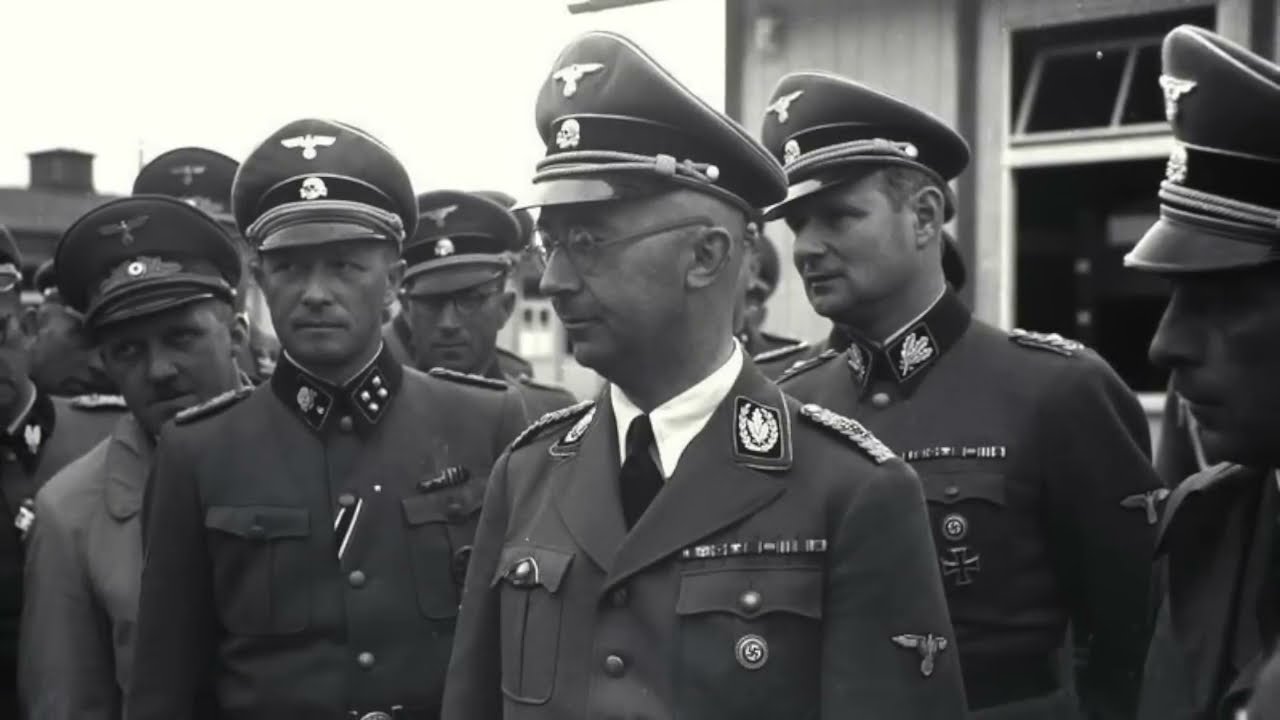
The execution came four days after Hoess wrote a final statement acknowledging the enormity of his crimes. “As commandant of Auschwitz, I was responsible for carrying out part of the cruel plans of the Third Reich for human destruction,” he wrote. The statement offered no apology and no expression of remorse, only a cold acknowledgment of his role in the Holocaust.
Hoess was arrested by British forces in March 1946, nearly a year after the war in Europe ended. He had attempted to evade capture by biting down on a cyanide pill, but the attempt failed. He was subsequently called to testify at the Nuremberg trials as a defense witness for Ernst Kaltenbrunner, the former head of the Reich Main Security Office.
During his testimony, Hoess stunned the courtroom by revealing the scale of the slaughter at Auschwitz. He estimated that 2. 5 million people had been executed at the camp during his time in command, with another half-million dying from disease and starvation.
The figure represented approximately 70 to 80 percent of all those sent to Auschwitz while he was in charge.
Prosecutors at Nuremberg had accused him of murdering 3. 5 million people. Hoess disputed that number, stating, “I regard a total of 2.
5 million deaths as far too high. Even Auschwitz had its limits to its destructive capabilities.” He added, “I myself never knew the total number, and I have nothing to help me arrive at an estimate.”
Historians now believe that approximately 1. 1 million people were murdered at Auschwitz, the vast majority of them Jews, along with Poles, Roma, Soviet prisoners of war, and others deemed undesirable by the Nazi regime. The camp was liberated by the Red Army on January 27, 1945, when Soviet soldiers found more than 7,000 prisoners still alive inside its walls.
Hoess joined the Nazi Party in 1922 after hearing a speech by Adolf Hitler in Munich. He was known for his violent nature and was part of a group that beat a schoolteacher to death, an act ordered by Martin Bormann. Hoess was tried as a ringleader in that killing and sentenced to 10 years in prison.
After his release, he married and had five children.
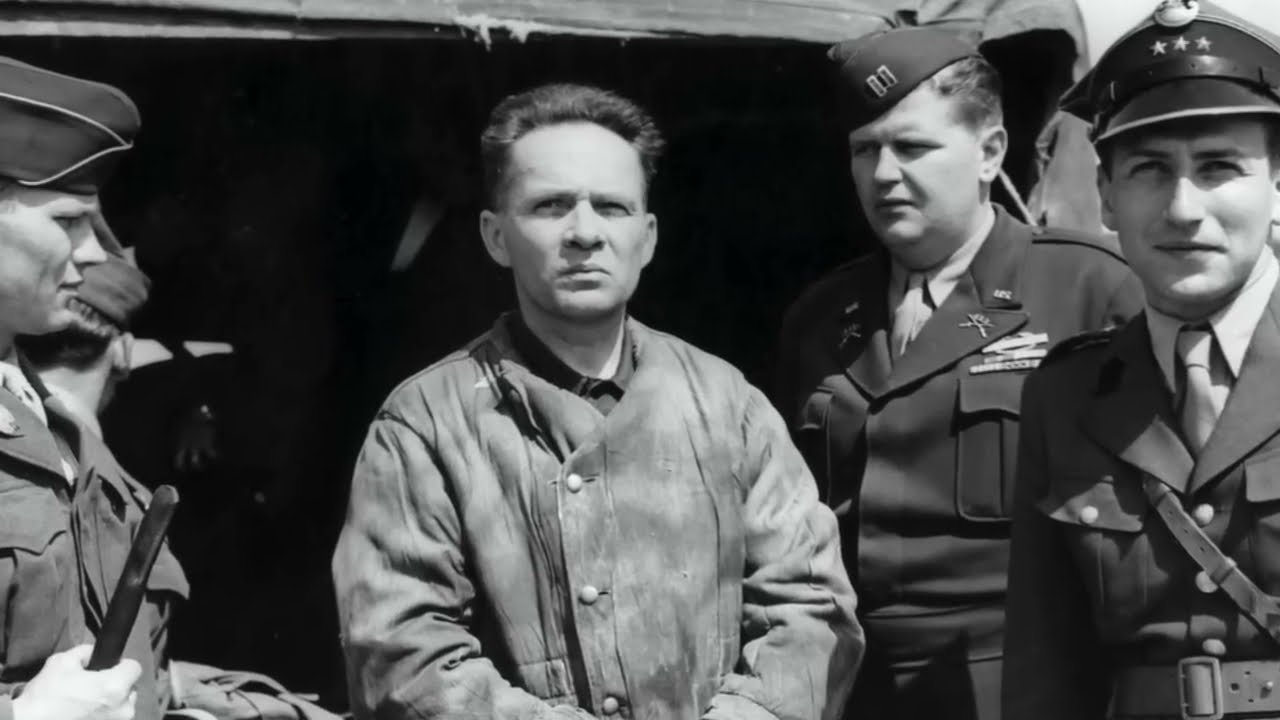
He became acquainted with Heinrich Himmler and joined the SS on April 1, 1934, moving into the Death’s Head unit. Hoess idolized Himmler, preferring the head of the SS to Hitler himself. He was first assigned to Dachau concentration camp in December 1934, where he worked as a block leader.
After being promoted to captain, he became an adjutant to Hermann Baranowski at Sachsenhausen, where he led the firing squad.
It was Hoess who led the execution of August Dickmann, the first conscientious objector to be executed after the war began on September 15, 1939. Hoess fired the finishing shot from his pistol himself. He then transferred to the Waffen-SS in 1939 after the German invasion of Poland.
On May 1, 1940, Hoess was appointed commandant of a prison camp in western Poland built around an old army barracks. The camp was named Auschwitz. He would command it for three years, transforming it into a vast complex known as Auschwitz-Birkenau.
He had been ordered to create a transit camp for 10,000 prisoners, but he had different ideas. He wanted to build the most efficient camp possible, more efficient than anything he had seen before.
Hoess moved into Auschwitz himself, living in a villa with his wife and children. Despite his horrific work in organizing mass murder, he lived a relatively normal home life. At its peak, Auschwitz consisted of three main facilities: Auschwitz I, the administrative center; Auschwitz II-Birkenau, the extermination camp; and Auschwitz III-Monowitz, the slave labor camp for German industrial conglomerates.
The entire complex covered approximately 20,000 acres and was served by numerous sub-camps.
In June 1941, Hoess met secretly with Himmler after learning of the order for the Final Solution. Himmler had chosen Auschwitz for the extermination of Europe’s Jewish population because of its easy access by rail and its large site. The project was described as secret, and Hoess began developing and testing different methods of killing as many people as possible in the most efficient way.
Auschwitz became the most efficient instrument in the Holocaust. Hoess experimented with different methods of gassing prisoners to 𝓀𝒾𝓁𝓁 the most people as quickly as he could. During his reign as commandant, he oversaw the deaths of hundreds of thousands.
In his testimony, he recalled the figures involved in the larger actions: 250,000 from Upper Silesia and the General Government, 100,000 from Germany, 95,000 from Holland, 20,000 from Belgium, 110,000 from France, 65,000 from Greece, 400,000 from Hungary, and 90,000 from Slovakia.
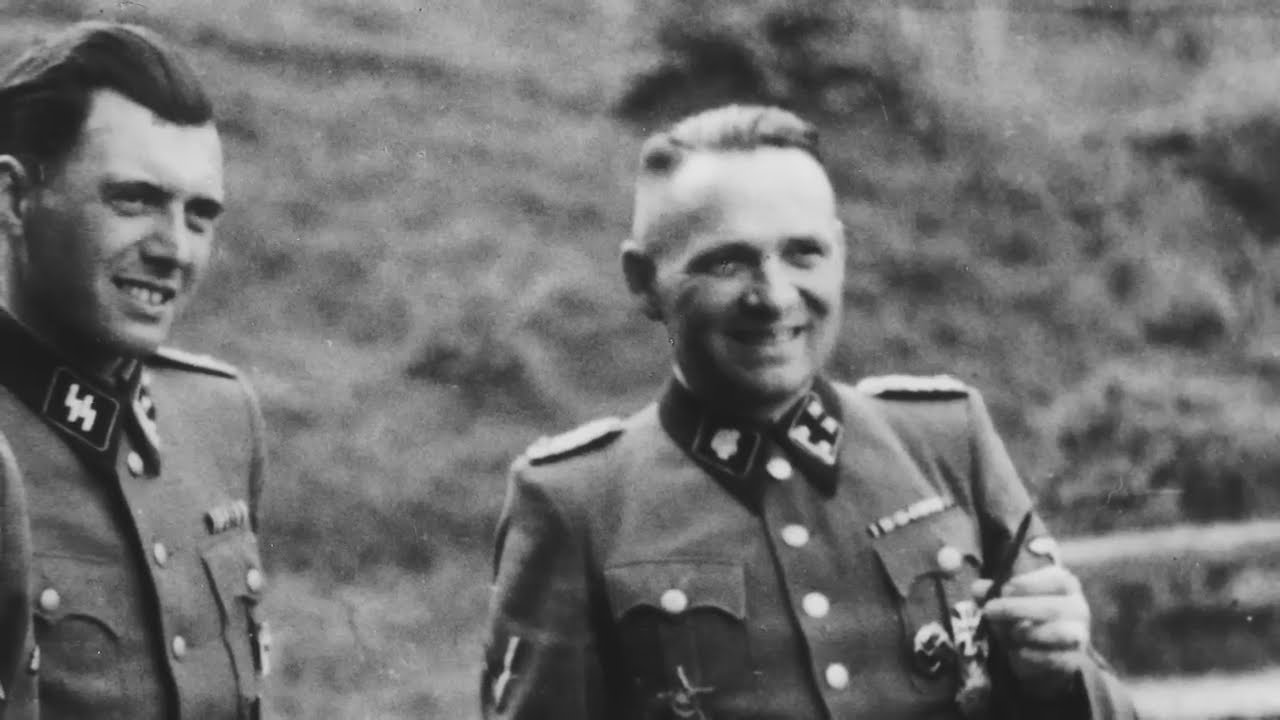 Hoess was removed from Auschwitz in 1943 after having an 𝒶𝒻𝒻𝒶𝒾𝓇 with an inmate, a 𝒔𝒄𝒂𝓃𝒹𝒶𝓁 that could have resulted in his relief from command. He returned on May 8, 1944, to oversee Operation Hoess, in which 430,000 Hungarian Jews were transported to Auschwitz and executed in just 56 days. The sheer volume was so enormous that the camp struggled logistically to deal with the genocide, with thousands of bodies being burned in open pits.
He finished his career at Ravensbruck, organizing the prisoners within that camp. He was arrested in March 1946 and handed over to Polish authorities, who tried him for murder. While in prison, he wrote about his experiences and claimed he had been mistreated by the British while held in captivity.
During his trial, Hoess was calm and controlled. He knew what fate awaited him. At the end of the trial, he asked to send his wedding ring to his wife.
The court announced its verdict on April 2, 1947, sentencing him to death by hanging.
The day after the verdict was passed, former prisoners of Auschwitz asked the court for the execution to take place on the grounds of his own concentration camp. The execution was initially scheduled for April 14, but had to be postponed because authorities feared local residents would attempt to lynch Hoess as he was being taken to the site. The date was moved back to April 16.
Hoess spent his final days in a cell in Block 11, the same building where countless prisoners had been held before their executions. He wrote a final message four days before his death, acknowledging the crimes he had committed but offering no apology to the families of his victims.
The execution of Rudolf Hoess brought a measure of justice to a man who had personally overseen the deaths of more than a million people. But for the survivors of Auschwitz and the families of those murdered there, no execution could ever undo the horror he had inflicted. The camp itself remains as a monument to the victims and a warning to future generations of the depths of human cruelty.
Hoess was one of the most evil men in the history of the Holocaust. His legacy is written in the history books as a testament to the inhumanity of the Nazi regime. On the morning of April 16, 1947, he finally received his comeuppance in the place where he had inflicted so much horror and suffering onto the world.