
On the frozen morning of December 16, 1944, Adolf Hitler unleashed the last great gamble of the Third Reich through the dense pine forests of the Ardennes, and within seventy-two hours the fate of the entire Allied campaign in Western Europe would hinge on a single telephone call placed by an American general whom many of his peers had written off as too reckless, too theatrical, and too dangerous to trust with the lives of an army.
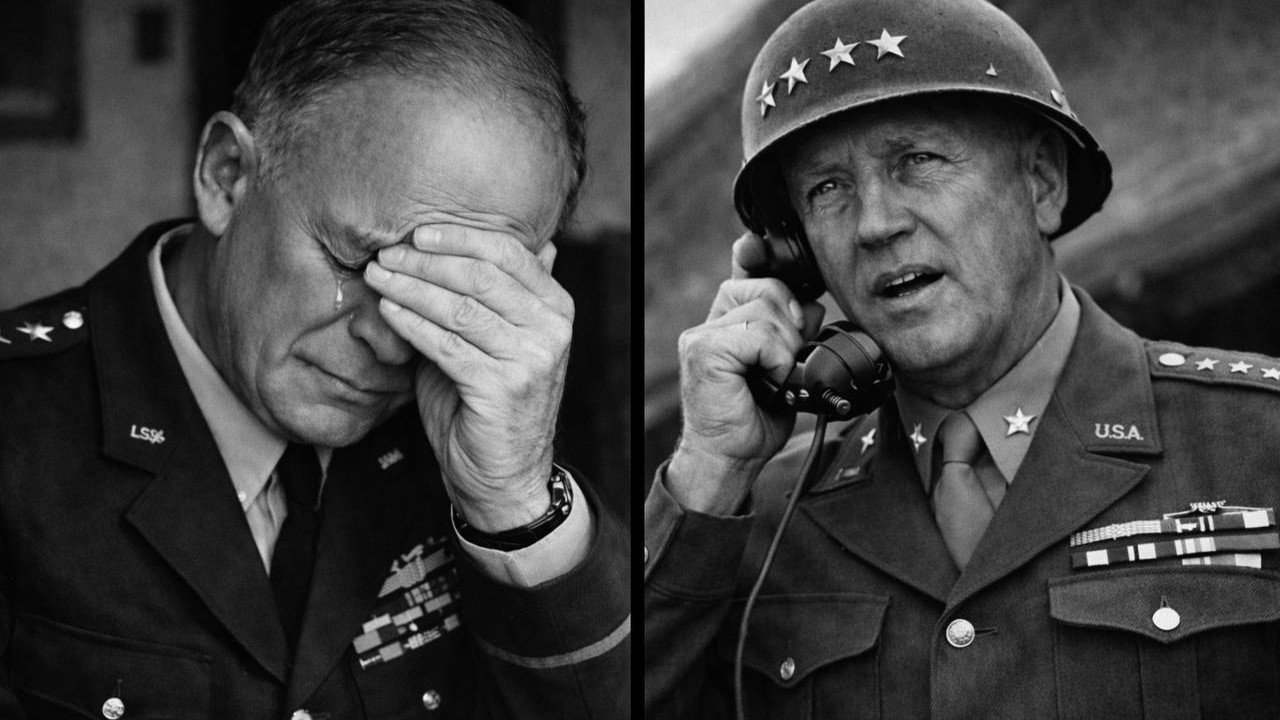
The German offensive, code-named Wacht am Rhein, slammed into a thinly held sector of the Allied line with a fury that stunned Supreme Headquarters. More than 250,000 soldiers, nearly 600 tanks, and thousands of artillery pieces poured through the snow-covered gaps in the American defenses, driving west toward the Meuse River with the ultimate objective of seizing the port of Antwerp, through which nearly seventy percent of all Allied supplies in Western Europe flowed.
By December 19, the situation had become catastrophic. The American 101st Airborne Division, together with elements of the 10th Armored Division, was completely surrounded in the Belgian town of Bastogne. Temperatures plunged to minus fifteen degrees Celsius.
Fog and heavy cloud cover grounded Allied aircraft. Ammunition stocks dwindled. Fuel ran low.
German forces of the Fifth Panzer Army under General Hasso von Manteuffel tightened the ring hour by hour.
At Verdun, General Dwight D. Eisenhower gathered his senior commanders in a cramped headquarters room thick with cigarette smoke and anxiety. The question on the table was brutally simple.
How long would it take for Patton’s Third Army, then nearly 150 kilometers to the south and driving in an entirely different direction, to disengage, pivot ninety degrees, reorganize its supply lines, and launch a counterattack to relieve the encircled town?
Most of the men in that room expected the same answer. A week at minimum. Perhaps longer.
The roads were sheets of ice. Bridges had been damaged or destroyed. Traffic jams already stretched for miles behind the front.
To turn an entire army in winter conditions was the kind of maneuver that military textbooks described as nearly impossible under fire.
Patton looked at Eisenhower and spoke two words that silenced the room. “Forty-eight hours.” Some officers believed it was impossible.
Others believed it was madness. But Patton had already been planning the turn. His staff had been drafting the movement orders before the German offensive even began, anticipating that the enemy’s desperation would eventually force exactly this kind of opportunity.
That night, Patton did not sleep. Maps were spread across tables. Routes were recalculated mile by mile.
Fuel lines were redirected. Entire divisions began turning north before the official order had even been signed. The machinery of the Third Army, one of the most battle-hardened formations in the European theater, began to move with a precision that would later be studied in war colleges for generations.

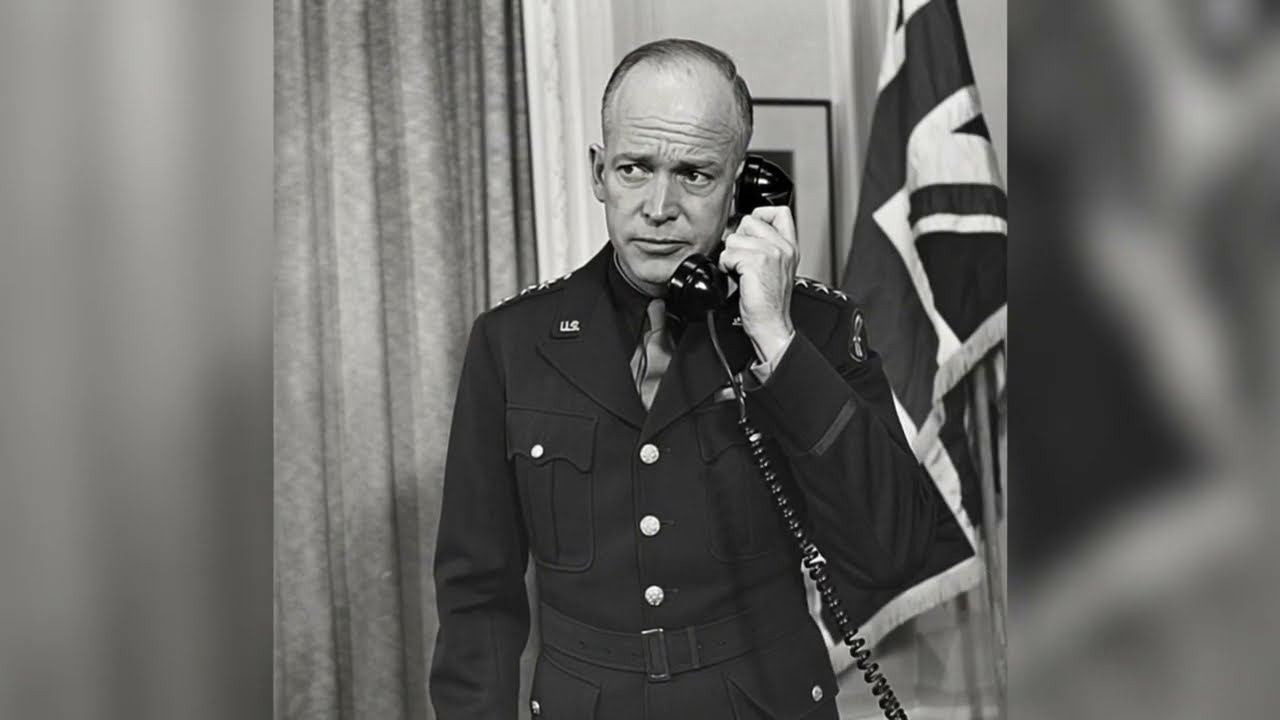
Then came the call. Patton picked up the telephone and contacted Eisenhower directly. His voice was calm, carrying no hesitation whatsoever.
“I can attack now.” Four words. Simple.
Direct. But behind those four words stood tens of thousands of men, hundreds of tanks, and a gamble that could have ended his career and doomed the garrison at Bastogne in a single stroke.
According to officers who were in the room, Eisenhower paused. He understood the risk completely. If Patton failed, the Third Army itself could be cut off and destroyed in detail.
If he succeeded, Bastogne would survive and the German timetable would collapse. In that moment, the fate of twenty thousand American soldiers rested entirely on four words spoken into a field telephone.
Eisenhower approved the attack. Within hours, the movement began. The Fourth Armored Division under General Hugh Gaffey took the lead, with the 26th Infantry Division and the 81st Infantry Division following behind.
What unfolded over the next several days became one of the fastest operational pivots of the entire Second World War, a maneuver executed in the worst possible weather against an enemy that still believed it held the initiative.
More than one hundred thousand men changed direction in winter conditions. M4 Sherman medium tanks, M10 tank destroyers, M7 Priest self-propelled artillery, supply trucks, fuel convoys, and medical units all had to move along narrow roads covered in ice. Many bridges were damaged or destroyed.
Traffic jams stretched for miles. Yet the columns kept advancing day and night through snow and freezing wind, headlights masked, engines grinding against the cold.
Between December 21 and December 23, the lead elements pushed forward nearly 150 kilometers, a pace that stunned German intelligence officers who had assumed no American force could react so quickly. Then, on December 23, the weather finally cleared. For the first time in days, Allied aircraft filled the sky.
Fighter-bombers savaged German positions. Supply planes dropped ammunition and medicine into Bastogne, where the defenders had been rationing shells and bandages for a week.
On December 26, 1944, the 4th Armored Division broke through the German lines and reached the southern edge of Bastogne. The encirclement was broken. The ring was shattered.
Twenty thousand soldiers were no longer alone. The relief column’s arrival sent a shockwave through the German command, which had counted on the town’s rapid collapse to open the road network toward the Meuse and then on to Antwerp.
In the Bastogne sector, major elements of the German Fifth Panzer Army, including experienced armored divisions that had fought on the Eastern Front, had been committed with one objective above all others. Speed. If Bastogne had fallen, German armored units would have gained open road access toward the Meuse River.
 From there, the path toward Antwerp would have widened considerably, and Antwerp was the key to everything.
Nearly seventy percent of Allied supplies in Western Europe flowed through that port. If Antwerp had been captured or even temporarily disabled, Allied supply lines would have collapsed. Fuel shortages, ammunition shortages, and operational paralysis would have followed.
British and American forces could have been separated, and the German High Command was counting on exactly that outcome. A divided Allied front, political tension, delays, and even a temporary success could have prolonged the war by several months.
In December 1944, the Allies were already exhausted after months of fighting through France and the Low Countries. Additional months of war would not have meant symbolic losses. They would have meant tens of thousands of additional casualties on both sides, and the possibility that Soviet forces would advance even further into Central Europe before the Western Allies could regroup.
This is why Bastogne mattered. And this is why Patton’s decision was more than tactical. It was strategic.
George Patton was not a perfect commander. He was aggressive. He was controversial.
He often clashed with other generals, and some considered him reckless. Others thought he cared too much about speed and not enough about caution. But in December 1944, speed was exactly what the Allies needed.
Caution would have meant delay. Delay would have meant the surrender of Bastogne. Patton understood something critical about modern warfare.
Momentum is everything. If you hesitate, you lose the initiative. If you lose the initiative, you lose lives.
In the view of many military historians, this was not simply about courage. It was about timing. Patton acted before the situation became irreversible, and that is what separated him from the others in that room.
The human cost of the Ardennes offensive was staggering. American casualties during the Battle of the Bulge totaled nearly 90,000, including more than 19,000 dead. British casualties exceeded 1,400.
German casualties reached roughly 100,000, with tens of thousands taken prisoner. The winter of 1944 left villages shattered, families displaced, and a generation of young men forever marked by the cold and the carnage.
 Yet the battle could have been far worse. Had Bastogne fallen and had the German advance reached the Meuse, the Allied front might have fractured under the strain. The war in Western Europe could have dragged into the summer of 1945 or beyond, costing even more lives and reshaping the political map of postwar Europe in ways that are difficult to imagine.
History often remembers battles by numbers, by divisions, by tank columns, by kilometers on a map. But sometimes history turns on something much smaller. A decision.
A risk. A moment when one man says, “I will move.” On December 19, 1944, in a headquarters room at Verdun, that moment arrived, and the man who seized it was George S.
Patton.
What remains remarkable is how narrowly the entire operation depended on a single chain of events. If the weather had not cleared on December 23, the relief columns might have stalled. If the 4th Armored Division had been delayed by even a day, the garrison at Bastogne might have been overrun.
If Eisenhower had hesitated on that phone call, the entire timetable would have shifted, and the German High Command might have regained the momentum it so desperately sought.
Veterans of the 101st Airborne later recalled the moment they heard the sound of American tanks approaching through the fog. Men who had been preparing to fight to the last round suddenly understood that they would live. The relief of Bastogne became one of the most celebrated episodes of the war, not because it was inevitable, but because it was nearly impossible.
Patton himself later wrote that he had never doubted the outcome, though those closest to him knew the strain he carried. The four words he spoke to Eisenhower, “I can attack now,” became a symbol of American resolve in the darkest hours of the European campaign. They were not a boast.
They were a promise backed by preparation, discipline, and the willingness to accept enormous risk.
As the decades pass, the generation that fought in the Ardennes is fading from living memory. But the lessons of that winter remain urgent. Momentum matters.
Timing matters. Leadership matters. And sometimes, the difference between victory and catastrophe is a single phone call placed by a man everyone else had counted out.
If someone in your family lived through those years, or told you stories about that winter of 1944, their memories are part of the historical record. Because history is not only written in books. It lives in memory, in the stories passed down from grandparents to grandchildren, in the silence that follows when someone describes what they saw in the snow.