German generals inside Hitler’s East Prussian headquarters concluded independently in late November 1942 that the Sixth Army trapped at Stalingrad would be annihilated unless it broke out within days, and they told Hitler so directly — but a single offhand answer from a Luftwaffe chief who had not checked his own tonnage figures had already given the Führer the excuse he needed to ignore every warning in the room.
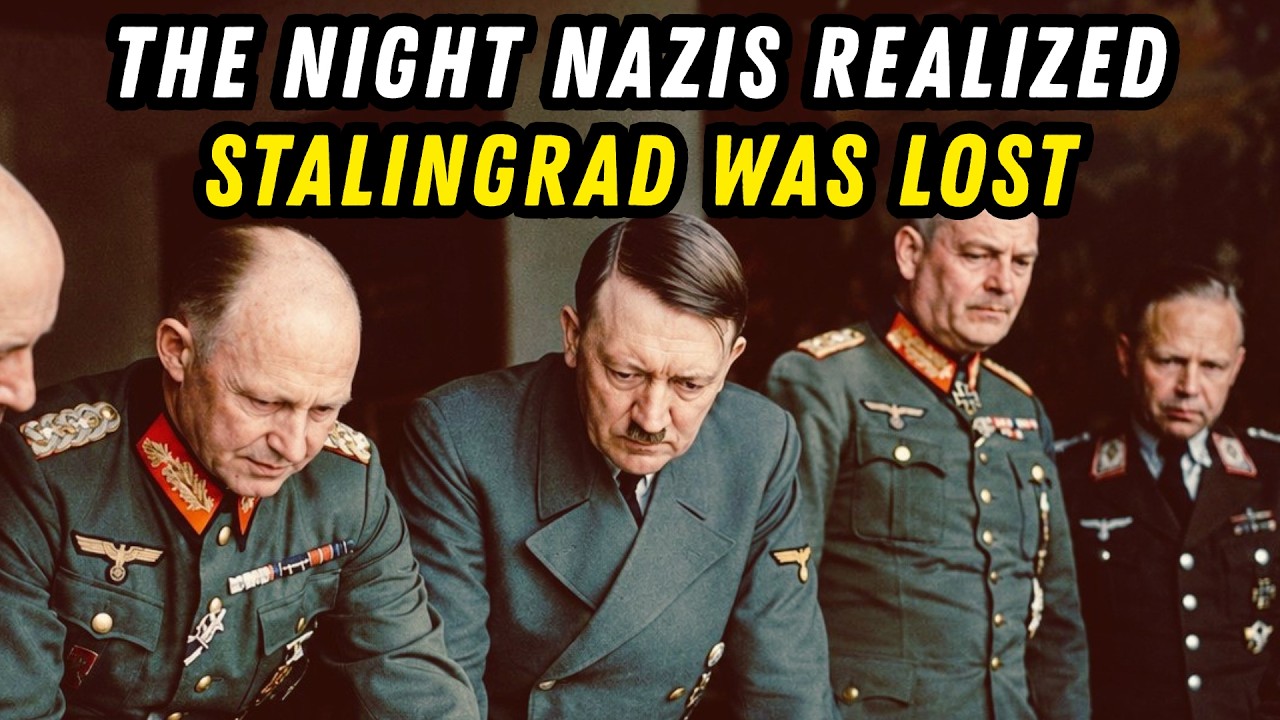
The warnings were not vague. General Kurt Zeitzler, chief of the German Army General Staff, argued forcefully and repeatedly that the quarter of a million men of the Sixth Army had to break out immediately, while they still had the fuel and ammunition to fight their way through the Soviet ring closing around them.
Field Marshal Maximilian von Weichs, commander of Army Group B, reached the same conclusion independently and recommended a breakout even at the cost of heavy casualties during the attempt. Hitler refused both men, insisting that abandoning Stalingrad meant surrendering the entire strategic objective of the 1942 campaign.
The roots of the catastrophe had been visible for months on the maps of the Eastern Front. By November 1942, General Friedrich Paulus and his Sixth Army had fought their way into roughly nine-tenths of Stalingrad after more than two months of brutal urban combat, with German and Soviet soldiers killing each other over individual buildings, individual floors, sometimes individual rooms inside the bombed-out ruins.
Taking that ground had cost the Sixth Army almost everything it had. The force was exhausted, stretched across a long and 𝓮𝔁𝓹𝓸𝓼𝓮𝓭 front, and increasingly short on fuel and ammunition after months of advancing deep into Soviet territory. The most dangerous part of its position, however, was not inside the city.
It was on the flanks.
North and south of Stalingrad, the Sixth Army’s lines were held not by German troops but by the Romanian Third and Fourth Armies, formations more thinly equipped, less experienced, and far more vulnerable to a concentrated Soviet attack than any German division on the Eastern Front. That vulnerability was a warning sign, and the German command ignored it.
At dawn on November 19, 1942, Soviet artillery opened up along the Romanian Third Army’s positions northeast of Stalingrad. Within hours, massed Soviet armor and infantry had punched clean through the Romanian lines. This was Operation Uranus, a double envelopment aimed not at the German-held city itself but at the weak sectors north and south of it.
That same afternoon, Zeitzler picked up the phone and called Hitler, who was at his mountain retreat at Berchtesgaden in the Bavarian Alps, to deliver the news. Soviet tanks had broken through the northern flank, and there was no reserve force in position to stop them.
The next day brought a second breakthrough, this time south of the city, aimed at the Romanian Fourth Army. Two massive Soviet armored columns were now driving toward each other from opposite directions, one from the north and one from the south, with the entire Sixth Army sitting directly between them.
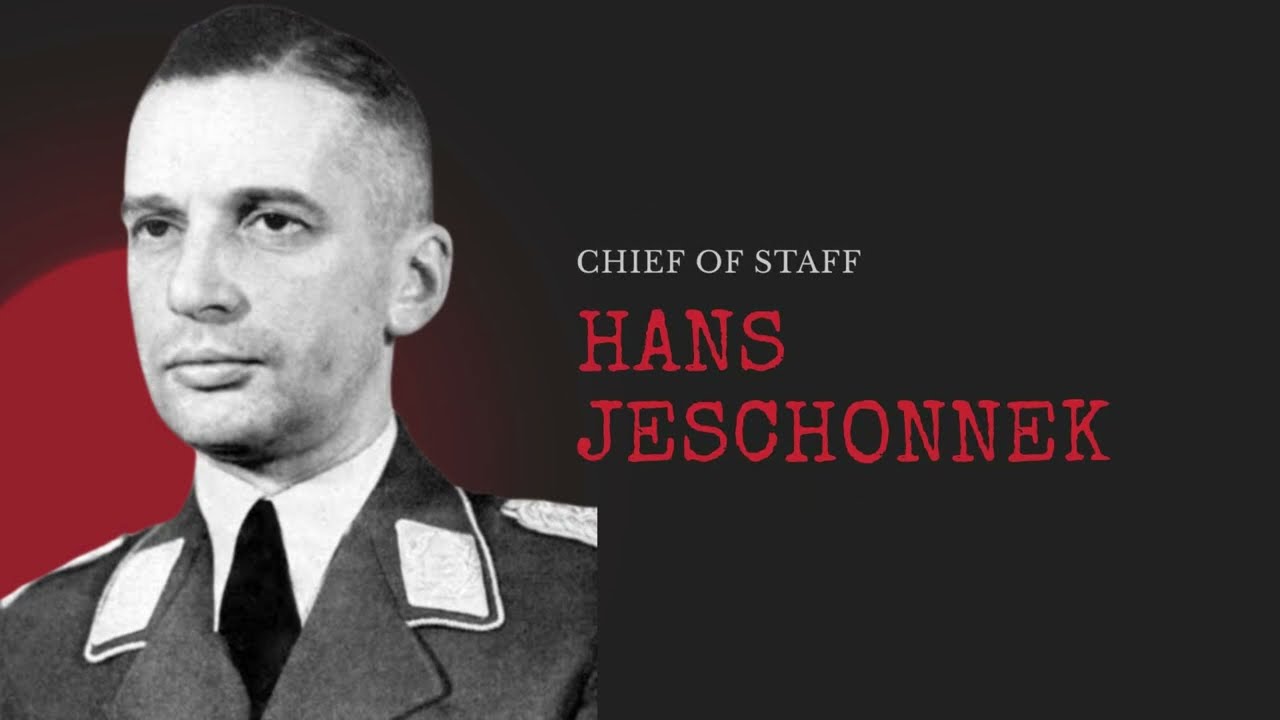
On November 20, at a hastily arranged meeting at Berchtesgaden, Hitler turned to General Hans Jeschonnek, the Luftwaffe’s chief of staff, and asked a direct question: if the Sixth Army was completely cut off, could the Luftwaffe supply the entire force by air? Jeschonnek, reportedly without the tonnage figures in front of him and without consulting the transport and bomber crews who would actually have to fly the missions, answered that it could be done.
He is widely described as having realized almost immediately that he had spoken far too quickly. But the answer was already on the table, and Hitler had heard exactly what he wanted to hear. Had Jeschonnek asked for 24 hours to consult his own transport commanders before answering, the story of Stalingrad might have ended very differently.
The Sixth Army had days before the Soviet pincers closed, and the clock had already started. By November 23, the Soviet spearheads advancing from the north and south linked up near the town of Kalach on the Don River, and the encirclement was complete.
The bulk of the Sixth Army, along with elements of the Fourth Panzer Army and remnants of Romanian units — roughly a quarter of a million men — were trapped inside a pocket in and around the ruins of Stalingrad, with no open supply line and no overland route out.
Inside the pocket, officers who survived the war later described a wave of stunned disbelief. They had watched the warning signs pile up for days: the Romanian positions weakening, the Soviet build-up growing more obvious with every intelligence report. Yet the sheer speed and scale of the encirclement still caught them off guard.
But the decision that would determine whether those men lived or died was not being made inside the pocket. It was being made 1,500 kilometers away inside the Wolfsschanze, the Wolf’s Lair, Hitler’s fortified headquarters compound near Rastenburg in East Prussia. What unfolded there over 72 hours between November 22 and 24 would seal the fate of the entire army.
Zeitzler warned Hitler directly that leaving the army in place would mean losing it entirely, and that the loss would badly damage the rest of the German position across the Eastern Front. Hitler told him that abandoning Stalingrad would mean giving up the entire strategic objective of the 1942 campaign and insisted the position had to be held.
Zeitzler was not finished, and neither was the argument. On November 24, in a meeting also attended by Field Marshal Wilhelm Keitel and Generals Alfred Jodl and Jeschonnek, Hermann Göring personally assured Hitler that the Luftwaffe could keep the Sixth Army fully supplied by air.
This was no longer Jeschonnek’s hasty answer from a few days earlier. This was the head of the Luftwaffe staking his reputation on the claim in front of the entire German High Command. Zeitzler challenged him on the spot, citing his own staff’s calculations of the tonnage the army actually required and the number of transport aircraft available to deliver it.
The exchange between Zeitzler and Göring is described as sharp and openly hostile, with Zeitzler flatly telling Göring that his numbers were wrong and that the airlift could not be done. Hitler sided with Göring, and the order to hold Stalingrad and supply it by air became the official strategy of the German High Command.
The Luftwaffe field commanders closest to the problem, including General Wolfram von Richthofen, who commanded German air operations in southern Russia, and General Martin Fiebig, the corps commander who would actually have to execute the airlift, independently regarded the plan as unworkable from the start and said so by telephone and in person to their own superiors, including Jeschonnek. Their warnings simply never reached Hitler in a form that changed his mind.
Up to this point, the German command had been arguing over whether to hold Stalingrad or abandon it. That argument was now over, because Hitler had made the decision, and the decision was to hold. Everything that followed depended entirely on whether the Luftwaffe could deliver on Göring’s promise — and the answer came almost immediately.
The airlift began in late November, and from the very first days it fell catastrophically short. Average daily deliveries during extended stretches came in at only tens of tons, a fraction of even the lowest estimates of what the Sixth Army needed to survive and fight.
On a single day in late December, deliveries reportedly peaked in the low 300s of tons, the best the airlift ever managed, and even that number was still far below the army’s minimum daily requirement. Soviet fighters and anti-aircraft batteries shot down German transport planes on approach to the pocket’s improvised airfields.
Severe winter weather across the steppe grounded entire squadrons for days at a stretch. The Luftwaffe was losing aircraft faster than it could replace them, and the gap between what was promised and what was actually delivered only grew wider with each passing week.
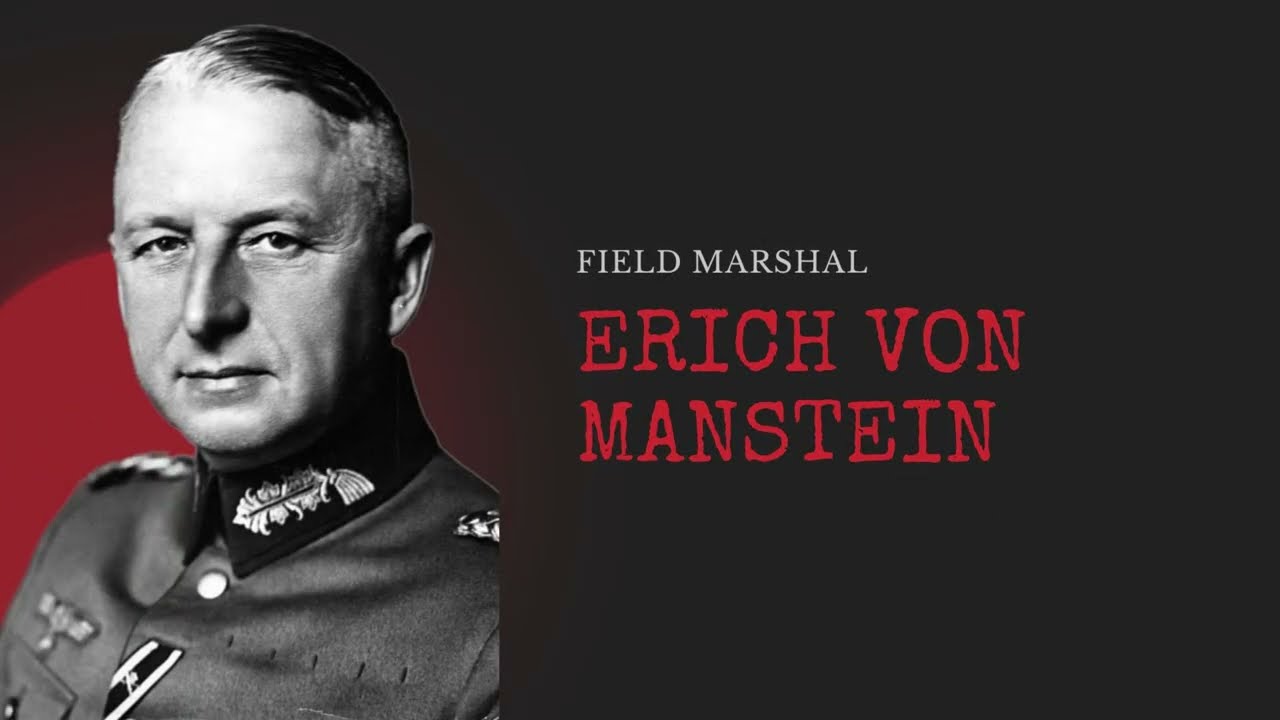
That was only round one. In late November, Hitler created a new formation, Army Group Don, under Field Marshal Erich von Manstein, with orders to organize a ground relief effort to break through the Soviet encirclement. On December 12, Manstein launched Operation Winter Storm, sending elements of the Fourth Panzer Army driving northeast toward the pocket in an attempt to punch a corridor through to the trapped Sixth Army.
The attack made rapid early progress, and for a brief window it looked like a breakthrough might actually reach the pocket. But Soviet resistance stiffened as Manstein’s relief force pushed deeper into enemy-held territory, and then a fresh Soviet offensive, Operation Little Saturn, struck elsewhere on the front and threatened to cut off the relief force itself.
By the time Winter Storm ground to a halt, Manstein’s spearhead was somewhere between 30 and 50 kilometers from the pocket’s outer edge — close enough to see signal flares from the encircled army at night, and no closer.
On December 19, Manstein sent an intelligence officer into the pocket to press Paulus to begin a companion breakout operation code-named Thunderclap, Donnerschlag in German. The idea was to have the Sixth Army fight outward while Winter Storm fought inward, collapsing the Soviet ring from both sides.
But Paulus’ own chief of staff, General Arthur Schmidt, rejected the proposal on the spot, arguing that the army could hold its current position and simply needed better supply. On the evening of December 23, Paulus and Manstein spoke directly by teleprinter. Paulus asked whether he was now authorized to attempt a breakout on his own, and Manstein told him authorization had not yet been given.
That same day, under renewed Soviet pressure on his own flanks, Manstein was forced to call off Winter Storm altogether. By Christmas Eve, the relief force was withdrawing rather than advancing, and the last realistic chance of reaching the Sixth Army from the outside had collapsed.
The only people who had not been told that the army was lost were the men still fighting inside the pocket. With the relief attempt abandoned, the Sixth Army’s situation deteriorated rapidly through January 1943. Rations that had already been cut to roughly one-third of normal levels continued to fall until, by the battle’s final weeks, individual soldiers were receiving a slice of bread or less per day.
Frostbite, starvation, and disease swept through the German positions in the frozen ruins of the city, and there was no medical supply, no reinforcement, and no realistic prospect of either arriving. In a gesture later independently confirmed by multiple officers who witnessed it, Zeitzler reportedly put himself on the same reduced rations as the men trapped in Stalingrad for a period of about two weeks, losing a visible amount of weight before Hitler personally ordered him to stop.
Then, on January 31, 1943, Hitler promoted Paulus to the rank of field marshal. No German field marshal had ever been taken prisoner in the country’s military history, and the promotion was widely understood, including within Hitler’s own inner circle, as an unspoken instruction for Paulus to take his own life rather than surrender.
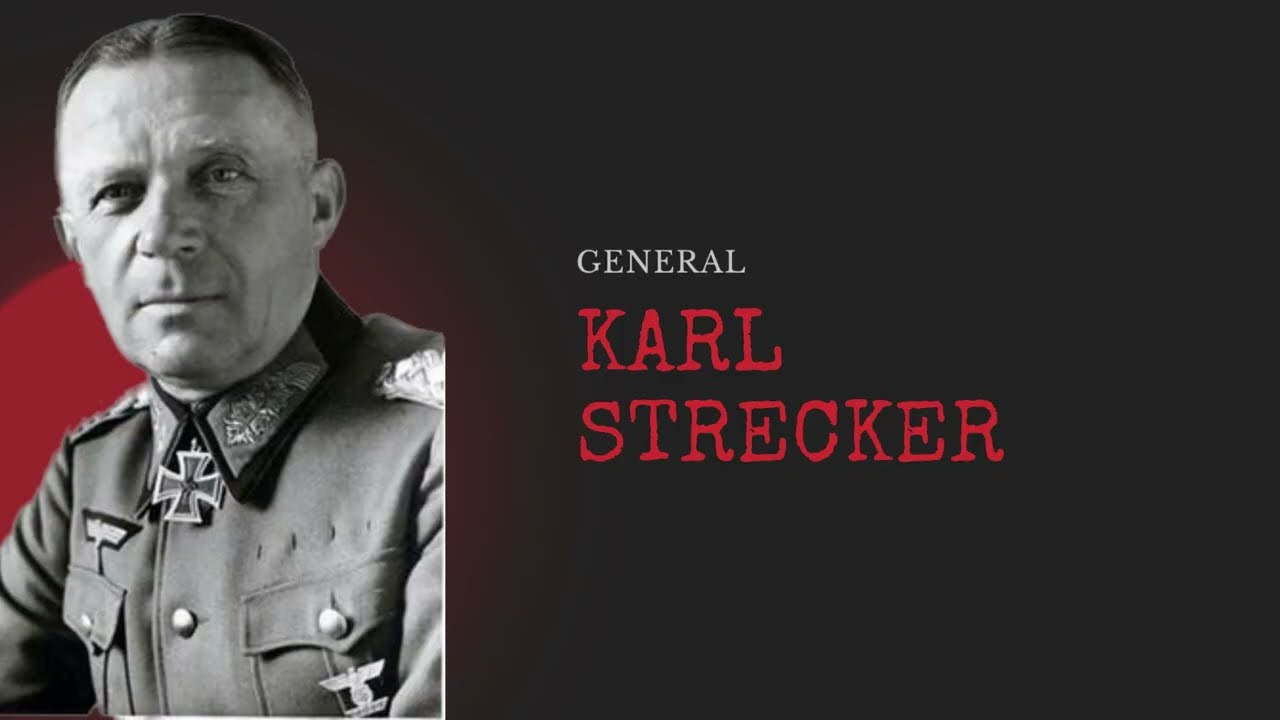
Paulus did not do so. He was captured with his staff that same day as the southern and central sections of the Stalingrad pocket surrendered to Soviet forces. The remaining northern pocket under General Carl Strecker held out for two more days before surrendering on February 2, 1943.
Roughly 91,000 German soldiers were taken prisoner when the fighting finally ended, along with more than 20 generals. Of the men captured at Stalingrad, only about 6,000 are recorded as having survived Soviet captivity and returned home — most of them not until the mid-1950s, nearly a full decade after the war had ended.
The destruction of the Sixth Army at Stalingrad is widely regarded by historians as the turning point of the war on the Eastern Front, the moment after which German forces were permanently on the strategic defensive against the Soviet Union and never regained the initiative.
Total casualties for the full five-month battle, from August 1942 through February 1943, across all nationalities and both sides, are estimated in the range of 1 to 2 million dead, wounded, missing, and captured combined.
Every warning that Zeitzler and the other generals gave Hitler during those 72 hours in November turned out to be correct. The army could not be supplied by air. It could not hold its position.
And it could not be saved.
The historical record now makes the chain of causation painfully clear. A single verbal assurance, offered without figures and without consultation, became the foundation on which Hitler built his refusal to authorize a breakout. When Göring repeated that assurance before the full High Command, it hardened into policy.
And when the airlift failed within days, the men inside the pocket paid the price in full.
Military historians continue to study the episode as a case study in how command structures can fail when a leader’s preferred answer overrides the operational reality reported by his own field commanders. The warnings existed. The calculations existed.
The transport crews who knew the mission was impossible existed. None of it reached the one man whose decision mattered until it was far too late.
For the roughly quarter of a million men of the Sixth Army, the debate in the Wolf’s Lair was not an abstraction. It was the difference between a fighting withdrawal and a slow death in the frozen ruins of a city that Hitler had ordered them to hold at any cost.