Michael Salters was pronounced dead at Washington Hospital Center at approximately 1:00 a. m. on July 17, 1991. He was 32 years old and had been shot at least six times.
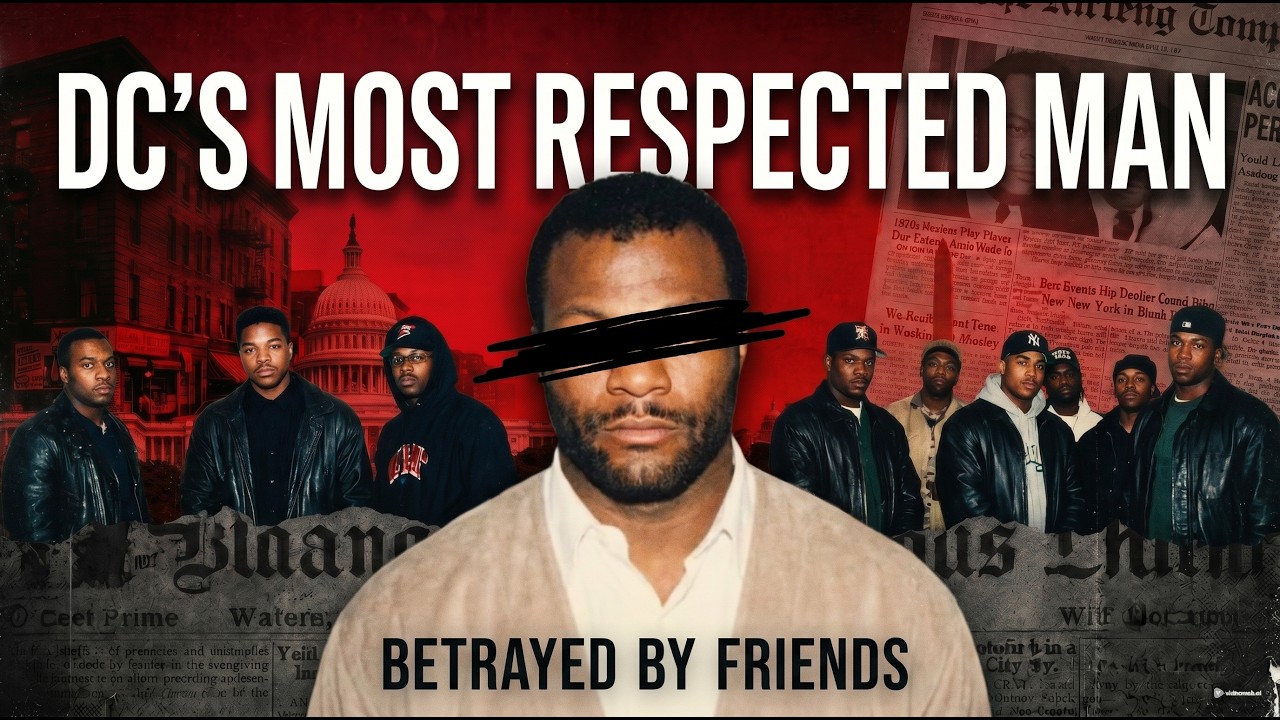
The men who brought him to the hospital entrance drove away before anyone could ask questions. The Washington Post reported his death under the headline “Alleged drug figure slain on D. C. street.
” But in the world that knew him, Salters was not merely a drug figure. Known on the streets of Washington, D. C. , as Fray, he occupied a unique position in the city’s underground economy: he was the man rival drug operators called when disputes threatened to turn deadly.
Law enforcement officials who examined his operation said his real power lay in his ability to referee turf disputes among rival drug dealers. In a street world where violence was the usual final arbiter, Salters was trusted to be fair. Both sides walked away from his judgments having been heard, and the result was that neighborhoods did not go to war. Salters came up through juvenile detention and learned discipline as a boxer with the Reking Crew, D.
C. ‘s boxing institution. In a city that by the 1980s had become the first major American city with a predominantly Black population—and a city with a deep, sophisticated underground economy—Salters built a reputation that made dangerous men defer to his judgment. He moved at the level of D.
C. ‘s most significant operators, including Cornell Jones, who ran the open-air drug market on Hanover Place, and Eddie Mathis, known as the Godfather. But Salters’ role was distinct: he was the equilibrium. When two major operators had a dispute, when product went missing, when territorial lines were crossed, they went to Fray.
It was said of him that he was respected, feared, and even loved—all three at once. That equilibrium was severely tested in 1989, when D. C. ‘s two biggest suppliers, Kurt “Bone” Bailey and Rafe Edmonds, were taken down by federal indictments and the city’s supply went dry.
Into that vacuum arrived Alberto Martinez, known as Alpo, an operator from East Harlem. Alpo brought kilos, flashy cars, and a performance of wealth and power that impressed many in D. C. But Salters saw through it immediately.
Salters had a documented contempt for New York operators coming into D. C. , largely because of what they did to the city: they got D. C.
men to betray and murder other D. C. men, then left the mess behind. His response to Alpo was direct.
Witnesses said Salters took 10 kilograms of cocaine from Alpo without paying. It was a public demonstration, in front of the street world, that Alpo was a supplier, not a power. Salters was not operating blind. He had contacts in New York who knew Alpo’s history and warned him: Alpo had set people up in New York, men who had trusted him.
He had been operating as an informant and manipulator before any federal arrangement made it official. Salters heard the warnings. He knew what Alpo was. But rather than making him more cautious, the knowledge made him more confident.
What Salters did not fully calculate was what public humiliation does to a man whose only real asset is his ego. Alpo later said he learned from someone inside Salters’ own camp that Salters was planning to kill him. In an interview with Feds magazine, Alpo said the plan included a list of names, with his own at the top. He found out, he said, because he was “feeding someone in his camp he wasn’t taking care of.
”
That person from inside Salters’ circle became the instrument of his death. Alpo paid Michael Jackson, a D. C. man connected to the murder, $9,000 in cash, a half kilogram of cocaine, and a 9mm handgun.
That was the price placed on the life of the city’s most respected street figure. Wayne Perry, known as Silk, the most feared enforcer in D. C. history, was also involved in the plot.
Perry confirmed it in Don Diva magazine years later, calling the manner of the killing “a cruddy snake move. ”
On July 16, 1991, Salters was driving in Washington, D. C. , with a relative in a van behind him.
Near First and Bryant Streets Northwest, a car cut off the van and opened fire on Salters’ car. The ambush lasted seconds. The relative drove Salters to Washington Hospital Center. He was pronounced dead at approximately 1:00 a.
m. The city went quiet, then loud with grief. A relative of Salters later said, “I was in prison when Frey got killed. I’ll never forget when someone came to my cell and told me your cousin got killed last night.
I got on the phone and called home and couldn’t believe it. I wondered who would jump out there like that. Frey had that much pull in D. C.
” He added: “How can a man like Frey get killed and nobody tears the city up and goes to war? ”
The answer was that nobody initially knew who was responsible. Alpo had used a man from inside Salters’ own circle, someone nobody would suspect. One local source said: “If the ambassador of Chocolate City could be touched, then anyone could be touched.
”
Salters’ nephew Darrell Salters, known on the streets as Pooh Chee, was a stick-up kid. When he heard the news of his uncle’s murder, he went looking for answers. He allegedly killed several people in retaliation, men connected to what happened at First and Bryant Streets. Pooh Chee was himself gunned down later.
On March 5, 1993, a 27-count federal indictment stemming from the Alpo investigation alleged that Alpo’s crew was responsible for nine homicides between 1989 and 1991. Salters’ murder was among them. The allegation that Alpo and Wayne Perry paid $9,000, a half kilo of cocaine, and a 9mm handgun to have Michael Salters killed was never formally presented in court, but Alpo confirmed it himself in print in Feds magazine. Salters was the specific organizational intelligence that prevented D.
C. ‘s underground economy from destroying itself: the ability to sit across from two dangerous men, hear both sides, and deliver a verdict both would accept. After his death, the city had no replacement. The crack era’s most violent years followed.
Disputes that would have been refereed went unresolved, and D. C. became the murder capital of America in large part because the man who kept it from tearing itself apart was gone. Alpo eventually cooperated with federal prosecutors, entered witness protection, and lived under another name for three decades.
On Halloween night 2021, he was killed on Frederick Douglass Boulevard in Harlem.