Alice Roosevelt was just 17 years old when her father, Theodore Roosevelt, suddenly became president of the United States. The circumstances were grim, and she reportedly received the news of President William McKinley’s assassination with something close to rapture. From that moment on, the young first daughter became one of the most talked-about women in the world. Her behavior was a constant source of frustration for her father.
He once threatened to throw her out of a White House window after she interrupted him three times during a conversation with writer Owen Wister. He then famously told Wister, “I can either run the country or I can attend to Alice, but I cannot possibly do both. ”
Alice’s rebellious streak had deep roots. She was born on February 14, 1884, and her mother, Alice Lee Roosevelt, died of kidney failure just two days later, on Valentine’s Day.
Grief-stricken, her father fled to his ranch in North Dakota and left the infant in the care of her aunt. He later remarried his high school sweetheart, Edith Kermit Carow, but tension between Alice and her stepmother shaped much of her childhood. Edith reportedly made no secret of her hostility, once sneering that Alice’s mother would have bored Theodore to death had she lived. When Theodore and Edith insisted Alice attend a girls’ school in New York City, she reportedly wrote back a scathing letter, threatening, “If you send me, I will humiliate you.
I will do something that will shame you. I tell you, I will. ”
Alice gained notoriety for smoking, drinking, gambling, and staying out late with male callers. When she came out as a debutante in 1902, she defied convention by wearing a pale blue gown instead of the expected white dress.
The shade became known as Alice Blue and sparked a national fashion trend. Her antics were often malicious. At one White House gathering, she reportedly placed a tack on a dignified older man’s chair and watched him leap up, while she acted innocent. Abroad, on a diplomatic cruise in 1905, she jumped into the ship’s pool fully clothed, dragging a reluctant congressman in with her.
That same trip pushed her life in a new direction. Alice developed a romance with Congressman Nicholas Longworth III, a Republican playboy 14 years her senior who reportedly bore a striking resemblance to her father. She admitted she was “more or less” in love with him, and the two became engaged by the time the ship returned to the United States. Their wedding was the social event of the season.
Alice wore a light blue gown and cut her massive wedding cake with a sword borrowed from a military aide. But the marriage quickly soured. In 1912, she publicly opposed her husband’s re-election campaign, and when he lost, she proudly claimed she was the reason. She carried on multiple affairs, most notably with Senator William Borah, a man decades older than her husband.
In 1925, after more than a decade of a childless marriage, Alice discovered she was pregnant. Washington insiders suspected Borah was the father. Alice named her daughter Paulina, but she reportedly joked that she had initially wanted to call the girl Deborah—a reference to Borah. Those close to the family nicknamed the child Aurora Borah Alice.
Alice was not a devoted mother. She remained consumed by her social life and never developed a close bond with Paulina, something that would come back to haunt her. Paulina later married artist Alexander McCormick Sturm and had a daughter named Joanna. Sturm died suddenly of hepatitis in 1951, and Paulina herself died of a sleeping pill overdose in 1957, leaving Joanna in Alice’s care.
Alice doted on her granddaughter in a way she never had with her own daughter, and the pair became inseparable. Alice remained politically powerful well into old age. Her unfavorable comparison of presidential candidate Thomas Dewey’s looks to those of a bridegroom on a wedding cake reportedly helped sink his campaigns. She also championed Richard Nixon’s political career, inviting him to all the right parties until he reached the White House.
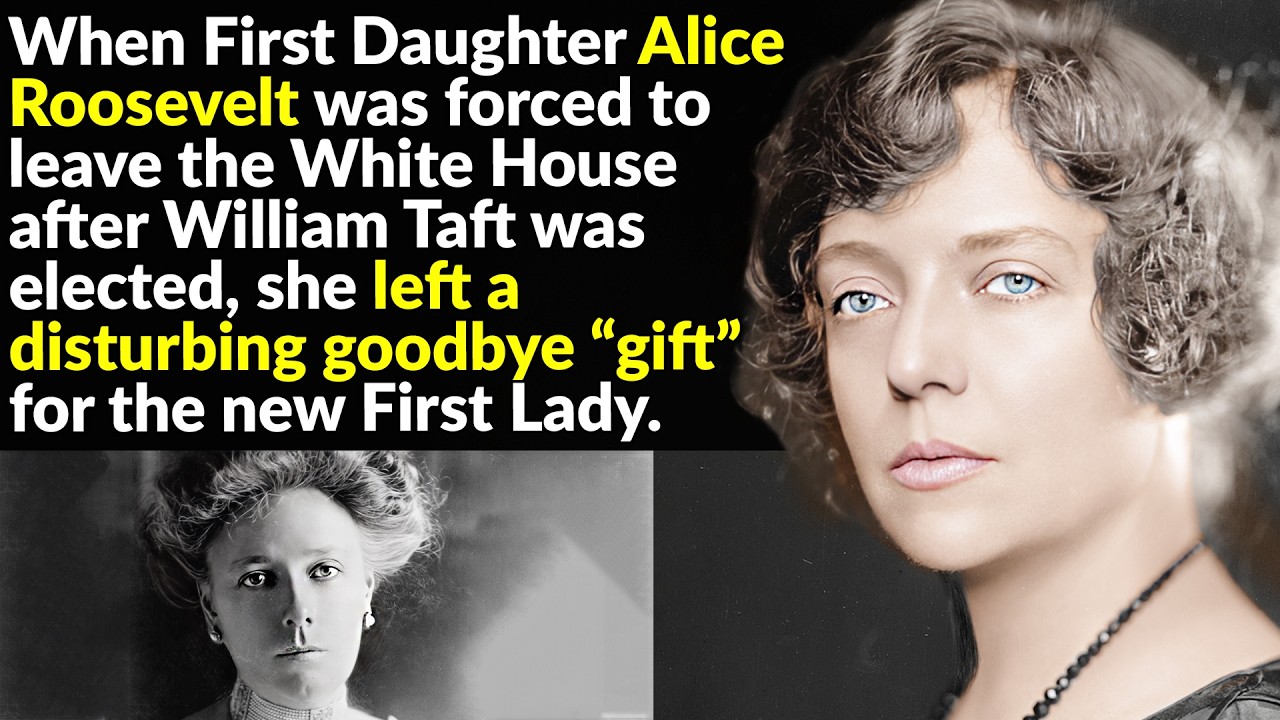
When Nixon resigned amid the Watergate scandal, he quoted from Alice’s published diary about her father’s grief over her mother. Alice reportedly watched the resignation on television and cursed at the screen, denouncing him as a friend. Years earlier, when her father left the White House in 1909 to make way for William Taft, Alice was furious about losing her privileges. As she departed, she reportedly made a voodoo doll in the likeness of incoming first lady Nellie Taft and burned it in the front yard of the property.
The Tafts later banned her from the White House. Alice Roosevelt died on February 20, 1980, in her home in Washington, DC, eight days after her 96th birthday. She outlived all her younger siblings and remained an overachiever until the very end.