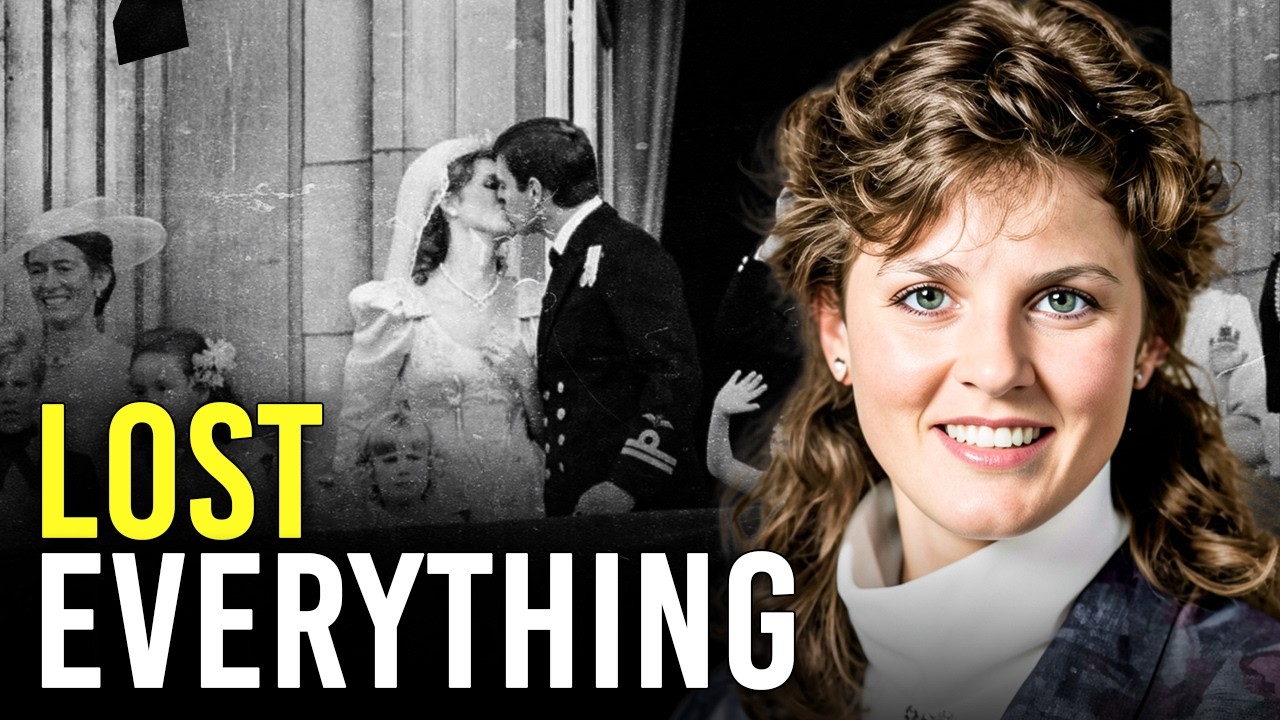
Sarah Ferguson, the former Duchess of York, walked into a London hotel suite in May 2010 believing she was securing a financial lifeline. Instead, she walked into one of the most devastating scandals of her life, captured on hidden camera and broadcast to the world.
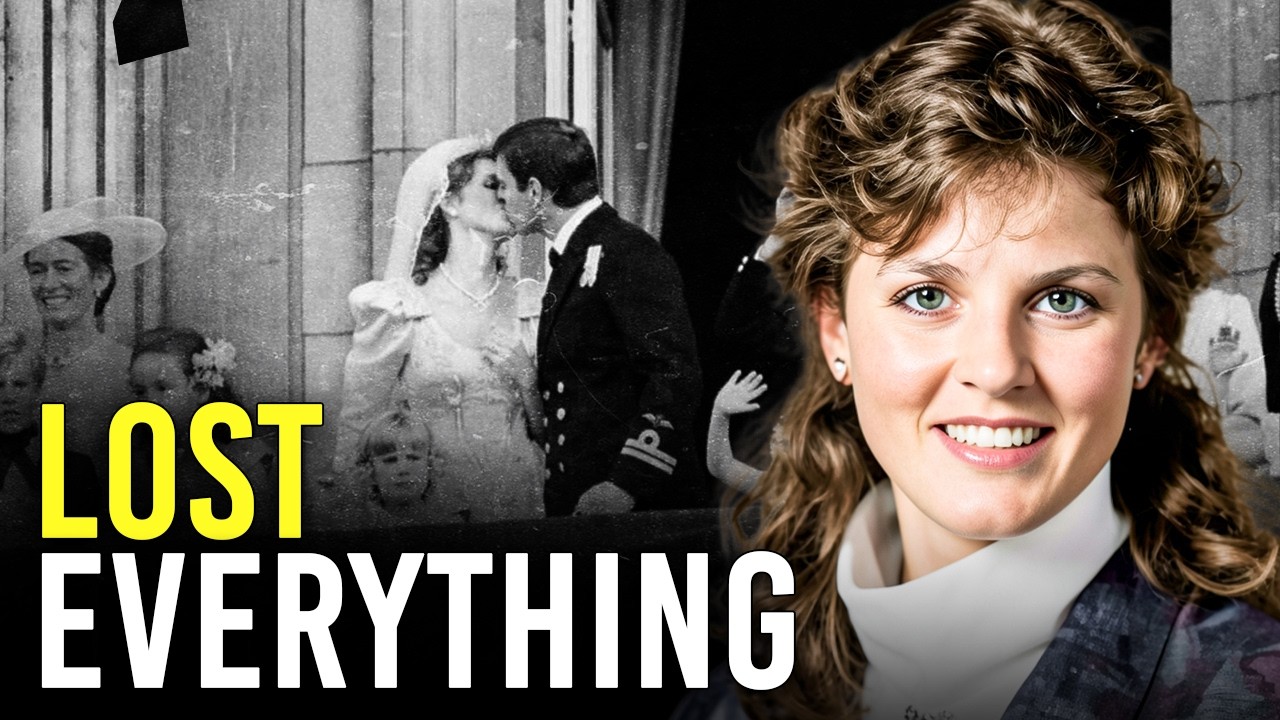
The footage, released by the News of the World on May 23, 2010, showed the 50-year-old mother of two princesses discussing access to her ex-husband, Prince Andrew, Duke of York, for a reported sum of £500,000. She accepted $40,000 in cash as a deposit.
The man across the table was not a wealthy businessman. He was Mazher Mahmood, an undercover reporter known as the “Fake Sheikh,” whose methods had already brought down celebrities, politicians, and criminals across Britain.
For Ferguson, the sting was not an isolated moment of poor judgment. It was the culmination of nearly three decades of financial strain, public ridicule, and a peculiar form of exile from the royal family she had once called her own.
Born Sarah Margaret Ferguson on October 15, 1959, she grew up on the edges of royal life. Her father, Major Ronald Ferguson, moved in aristocratic circles that intersected with the Windsors. She knew the world of palaces without ever being anchored inside it.
That adjacency would define her adult life. She could see the life. She was not born to its protections.
Her mother, Susan Barrantes, left the family when Sarah was a teenager, eventually moving to Argentina. The abandonment shaped everything that followed. Sarah later spoke openly about disordered eating, a hunger for approval, and a compulsive need for warmth and belonging.
She met Prince Andrew in 1985, reintroduced by Princess Diana at a polo match. They married on July 23, 1986, at Westminster Abbey. The Queen created Andrew Duke of York, and Sarah became Her Royal Highness, the Duchess of York.
The ceremony was one of the great royal spectacles of the decade. A state carriage through cheering crowds. Abbey pews filled with dignitaries.
And at the center, the red-haired bride, waving and grinning, visibly delighted in a way no Windsor training manual would have recommended.
For a time, it worked. Sarah brought visible warmth, physical affection, and spontaneity to a family that projected restraint. The tabloids celebrated her.
The public adored her. The monarchy seemed to absorb someone fun without losing its gravity.
Princess Beatrice was born on August 8, 1988. Princess Eugenie followed on March 23, 1990. Motherhood became the role Sarah inhabited most fully, the identity that persisted long after every other title had been stripped or diminished.
But the cracks came quietly. Andrew’s naval career kept him away for long stretches. Sarah described profound loneliness.
She wanted activity, projects, movement. The institution expected stillness, discretion, and emotional restraint she had never been conditioned to provide.
By the late 1980s, the press relationship had curdled. Her weight, her spending, her holidays, her informality became targets. The nickname “Fergie,” once affectionate, turned sharp.
She absorbed the hostility publicly, emotionally, without protective detachment.
The formal separation came in March 1992. Five months later, photographs arrived that changed everything permanently. Sarah was on holiday in the south of France with John Bryan, an American financial adviser.
The images were explicit by royal standards.
The timing was catastrophic. The photographs were published while Sarah was staying at Balmoral with the royal family. By several accounts, she sat at breakfast as the front pages were laid out, images of her own indiscretion spread across the table.
The story ceased to be sad. It became absurd. And absurdity in the currency of royal reputation is far more damaging than tragedy.
Prince Philip, by every informed account, registered a coldness toward Sarah that would not thaw for years. The long exclusion took root, not as formal policy, but as atmosphere, as settled understanding that Sarah Ferguson was no longer someone the institution wished to be associated with.
The divorce was finalized on May 30, 1996. Sarah lost the style of Her Royal Highness. She became Sarah, Duchess of York, not HRH.
That technical distinction is not a footnote. It is the architecture of the entire story that follows.
She kept the ducal title as a courtesy. She lost the sovereign prefix that made the title function as a shield. She was left with the afterimage of royalty, recognizable enough to be scrutinized, exposed enough to be mocked.

The settlement was widely reported at around £350,000 in cash. Diana’s settlement, finalized the same year, was reported at roughly £17 million with Kensington Palace retained as residence. The gap was not accidental.
It told you everything about how the palace assessed the two women’s leverage.
Diana had fought. Sarah had chosen friendship. She chose closeness over combat.
She chose the hope of remaining connected to the family over the certainty of financial security. That choice would follow her into every room she entered for the next three decades.
What followed was a particular kind of limbo. She was no longer Her Royal Highness. She was Sarah, Duchess of York.
The comma where the letters HRH used to be was a hairline fracture separating her from every protection the institution had once provided.
She needed income. The only significant asset she possessed was her own visibility. The name, the face, the association with the House of Windsor.
So she began to work publicly, commercially, energetically.
She wrote her autobiography, revealing the internal architecture of a marriage and family the palace would have preferred to keep private. She wrote children’s fiction. She took on endorsements and corporate speaking engagements, crossing the Atlantic repeatedly.
She became a spokesperson for Weight Watchers in the United States, a deal that reportedly earned her millions. In reputational terms within the world she cared about most, it was confirmation of everything the palace feared.
A former duchess standing on an American stage discussing her weight in front of cameras. Converting royal failure into a wellness brand.
Every public appearance, every endorsement, every interview deepened the gap between who she was trying to become and who the institution believed a former duchess should be. She was monetizing proximity. The palace could not tolerate the volume.
By the early 2000s, the financial strain had moved from private anxiety to public knowledge. Reports surfaced of debts growing rather than shrinking, of business ventures that launched with optimism and folded with embarrassment.
In 2009, Hartmoor, Sarah’s American lifestyle company, collapsed. She told ABC News she owed £600,000. Other reporting suggested the figure might have been higher.
Personal bankruptcy was a genuine possibility.
She was 49 years old. She had spent 13 years since the divorce building, hustling, publishing, endorsing, appearing on any platform that would have her. The accumulated result was a debt large enough to make the front pages.
The woman who had once ridden through London in a state carriage was now explaining her insolvency to an American news camera. The gap between the two images was not irony. It was the whole story.
Through all of this, the relationship with Andrew remained the strangest and most enduring thread. They divorced in 1996, but they did not separate emotionally or domestically in any way the public could easily parse.
They continued to live in proximity, sharing Royal Lodge at Windsor Great Park at various points, appearing together at their daughters’ school events and milestones. Friends described a bond the divorce had not broken.
Sarah spoke about him publicly with an affection that exceeded diplomatic courtesy. Years later, she would tell interviewers she would marry him again, “100 percent,” in a tone that carried present tense conviction.
Andrew’s continued presence in her life meant Sarah was never entirely severed from the royal world. She could attend certain events through his invitation. She could remain physically in the orbit of her daughters’ daily lives.
But the bridge carried traffic in one direction only. Andrew’s royal identity protected him. His place in the line of succession was unaffected by the divorce.
Sarah’s access continued only at his discretion and the family’s tolerance.
By the spring of 2010, the walls had closed to their narrowest point. Sarah was 50. She was carrying debt that had been publicly reported and privately worsening.
Her commercial reputation had been eroded by too many failed ventures.
She later said she had been drinking. She later said she was emotionally in the gutter. Those words, spoken on Oprah Winfrey’s sofa weeks after the scandal broke, were offered as context, not excuse.

What they describe is not a single bad evening but a long deterioration. The cumulative effect of years spent in financial anxiety, public ridicule, and the particular loneliness of being permanently adjacent to a world that would not fully readmit her.
The covert meeting took place in a London hotel suite. The room was the kind of anonymous luxury space where deals are discussed by people who do not wish to be seen in offices or restaurants. The hidden cameras were already running.
Sarah discussed access to Prince Andrew. She named a price, £500,000. She described what she could facilitate, the doors she could open, the introduction she could arrange.
She accepted a bag containing $40,000 in cash.
She smoked. She talked. She took the money.
She left the room believing she had secured a lifeline. She did not know the camera had been running. She did not know every word had been captured on film.
The footage was released on Sunday, May 23, 2010. The News of the World published the story and the images. Every other paper followed within hours.
The final pretense of belonging collapsed in a single news cycle.
Buckingham Palace issued a statement distancing Prince Andrew from any knowledge of the arrangement. The language was measured, institutional, precise. Andrew knew nothing.
Andrew was not involved. The distinction it drew was architectural.
Andrew was inside the structure. Sarah was not. Whatever she had done in that hotel room, she had done as a private individual.
The institution’s only obligation was to make clear that its own walls remained intact.
Sarah’s own public response came quickly. She issued a statement acknowledging her financial circumstances were under stress but insisting that stress was no excuse. She said Andrew had no knowledge of the meeting.
She said it clearly, firmly, repeatedly.
Even in the wreckage of her own reputation, her first instinct was to protect him, to shield the institution from collateral damage, to make clear the shame was hers alone. That instinct had governed her behavior since the divorce.
Then came Oprah. Within weeks of the footage airing, Sarah sat down with Winfrey for an interview that would become one of the most watched and most dissected moments of her long career of public self-disclosure.
She said she had been drinking before the covert meeting. She said she was emotionally in the gutter. She used the language of rock bottom, of personal collapse, of a woman who had lost her sense of where the floor was.
The interview was raw in a way British media rarely permits. It was confessional in the register American daytime television rewards and British reserve finds mortifying. It revealed something important about how Sarah understood herself.
She was not simply offering excuses to a sympathetic host. She was narrating her own decline. She had become, in her own telling, a cautionary figure, a woman undone not by one catastrophic decision but by the accumulated weight of a structural position that had been unsustainable from the day the decree absolute was signed.
The palace statement was institutional, clean, deflective, crafted by people whose profession was the management of sovereign reputation. Sarah’s confession was human, messy, emotional, designed to convert shame into sympathy through radical self-exposure.
One protected the structure. The other begged the audience to understand the person the structure had expelled. Neither register acknowledged the other.
The gap between them is the space the entire story has been building toward.
The monarchy manages image. Sarah managed feeling. They were never speaking the same language, and the sting made that mutual incomprehension visible in a way nothing before it had quite managed.
In April 2011, Prince William married Catherine Middleton at Westminster Abbey. The guest list included nearly 2,000 names. Sarah Ferguson was not among them.
She later said she spent the wedding day in Thailand, far from London, far from the abbey.
 Her daughters were there. Beatrice and Eugenie walked into Westminster Abbey as members of the royal family, took their seats among the congregation, and witnessed a ceremony that would reshape the monarchy’s public future. Their mother was on the other side of the world.
That image, the daughters inside, the mother absent, the same abbey where Sarah had walked up the aisle as a bride 25 years earlier, is one of the quietest and most devastating in the entire story. The absence was the commentary.
Later that year, Sarah launched her own documentary series, Finding Sarah, produced with Oprah Winfrey’s network. The series followed her through therapy, self-examination, and the language of recovery. She also published a memoir covering the same period.
Together, the series and the book represented something Sarah had done before and would do again: the conversion of public collapse into public content. She was not hiding from the disgrace. She was narrating it, framing it, offering it as evidence of self-awareness.
Whether that was courage or compulsion, whether she leaned into confession because it was healing or because it was the only market left, is a question that does not need a definitive answer. Both things can be true. She survived by talking.
She also could not stop.
The broader exclusion persisted long after the sting headlines faded. Sarah’s absence from the royal family’s Christmas gathering at Sandringham stretched across roughly three decades. When she finally reappeared there in late 2022, the moment was covered as news.
Reporting attributed the long exclusion in part to Prince Philip’s resistance and noted that his death in April 2021 may have softened the barrier that held for so long. What is not in dispute is the duration. Sarah spent the better part of 30 years on the outside of the family’s most intimate ritual.
That is not a news cycle. That is a sentence.
In more recent years, Sarah’s public identity shifted again, this time through circumstances she did not choose and could not narrate her way out of. In 2023, she was diagnosed with breast cancer. In 2024, she was diagnosed with melanoma.
The two diagnoses arrived in quick succession and altered the public conversation around her in a way no memoir or television series had managed. The tabloid tone softened. The commentary shifted from scandal to sympathy.
The woman who had been ridiculed for decades was now discussed in the language of survival, resilience, and vulnerability. Not the performed vulnerability of a confessional interview, but the involuntary vulnerability of serious illness.
She spoke about both diagnoses publicly because that is what she does. She speaks. She does not retreat into silence.
She narrates. And this time the narration was not about royal failure or financial disgrace. It was about a body under attack and a woman trying to endure.
Sarah Ferguson is 66 now. She is an author, a media personality, a mother, a grandmother, and a cancer survivor. She is still publicly associated with the York name, whether she wants that association or not.
Princess Beatrice is 37, married to Edoardo Mapelli Mozzi, mother of two daughters, Sienna and Athena. She has built a life that is private where her parents’ lives were exposed, professional where theirs were chaotic, deliberately measured in its relationship to the press.
Princess Eugenie is 36, married to Jack Brooksbank, mother of two sons, August and Ernest. She works in the art world and in charitable enterprise, carrying the York name into a future that looks in some ways more settled than the past that produced her.
The York line continues. The old York glamour does not.
What Sarah Ferguson’s story reveals is not simply that the monarchy can be cruel or that she made bad decisions, though both things are true in part. It reveals what happens when a person is given the image of royal life without the inner discipline or lifelong conditioning required to survive it.
She had the name. She did not have the shield. She had proximity to power.
She did not have power itself. And once the institution decided she was a cautionary exhibit rather than a recoverable member, every attempt to earn, explain, charm, confess, or return only made the same truth harder to escape.
That is not a neat lesson. That is just a life lived for decades in the narrow space between inclusion and expulsion, belonging and exile. The family she married and the family she could never quite rejoin.