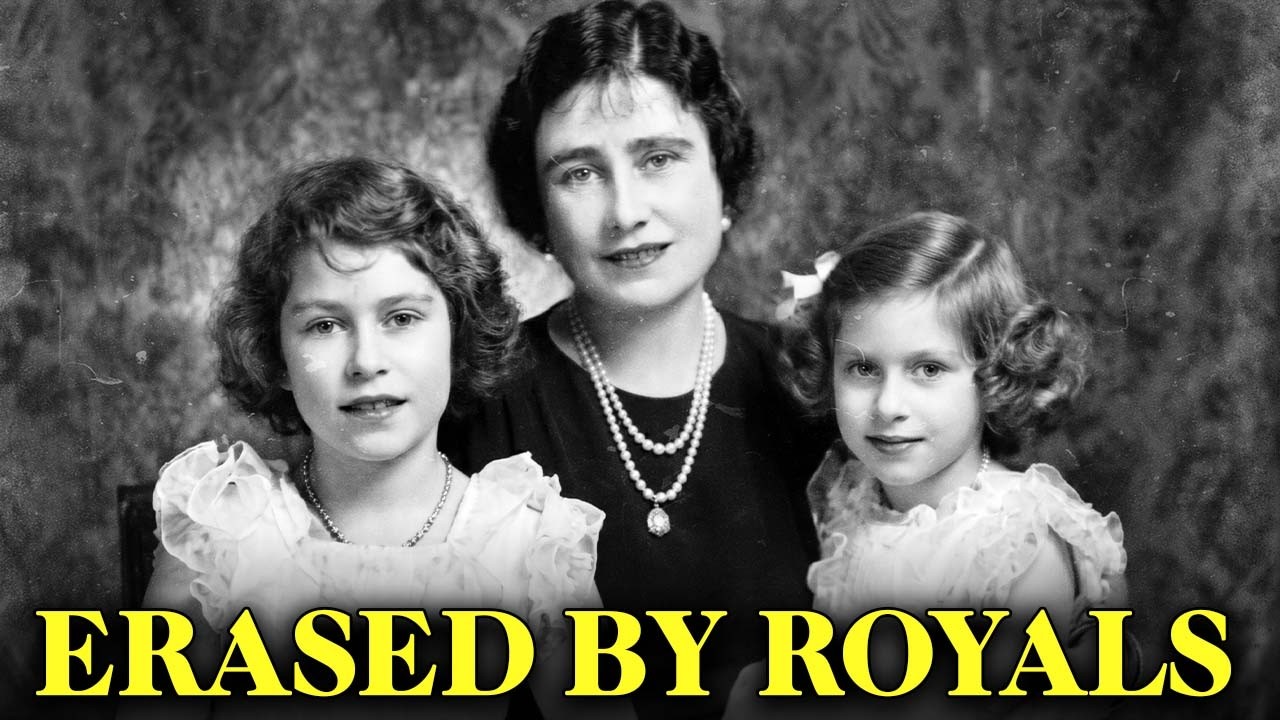
LONDON — Marion Crawford, the Scottish governess who spent seventeen years raising two princesses inside the royal household, died alone in Aberdeen on February 11, 1988, having been erased from the life of the family she served for the final thirty-eight years of her existence.
No member of the royal family spoke to her again after the autumn of 1950. No flowers were sent to her funeral. The silence that had begun with a single act of publication had lasted, without interruption, without reprieve, without a moment of reconciliation, for nearly four decades.
The woman the world once knew as “Crawfie” had entered royal service in the early 1930s as a twenty-two-year-old teacher trained at Moray House College in Edinburgh. She was bright, energetic, and possessed of the particular social skill required of a woman in her position: the ability to be warm without being presumptuous, useful without being ambitious, present without being visible.
That skill brought her into the household of the Duke and Duchess of York, the future King George VI and Queen Elizabeth, at their Mayfair townhouse at 145 Piccadilly. She was hired to teach the young Princess Elizabeth, born in 1926, and later her sister Margaret, born in 1930.
What began as a teaching post became something far more intimate. Crawford took the princesses to Woolworth’s on the 15th of May, 1939, where they bought three-penny toys unrecognized among shoppers. She took them on the London Underground from St.
James’s Park to Tottenham Court Road, watching the future queen navigate a ticket machine and an escalator with methodical care.
She formed the first Buckingham Palace company of Girl Guides so the princesses could tie knots and earn badges alongside other girls. She sat with them through air raids during the Blitz. She supervised homework while anti-aircraft fire carried faintly from the direction of London.
The household operated under a code of cheerful denial in which bombing raids were real but discussion of them was not. Crawford recalled that “unpleasant or bothersome matters were never discussed.” Eight words that captured the entire Windsor philosophy.
Fear was felt. It was not spoken.
The abdication of Edward VIII in December 1936 transformed everything. Elizabeth, at ten years old, became heir presumptive. The family moved to Buckingham Palace.
Crawford was asked to raise two children who were simultaneously ordinary girls and symbols of national continuity.
She did it for the next eleven years. She watched Elizabeth develop the self-discipline that would define her reign, the capacity to absorb disappointment without showing it, to present a face to the world that was calm and competent while the reality behind it was more complicated.
She also watched Elizabeth fall in love with Philip Mountbatten, a Greek prince with German family connections whose naval confidence made the palace nervous. Crawford witnessed the attachment forming. She saw the princess’s face change when Philip’s name was mentioned.
When Crawford finally left royal service in 1947, she was thirty-eight years old. She had given the family the years in which most people build their own lives, marry, have children, establish careers. She had done none of those things.
She had poured those years into other people’s children, other people’s household, other people’s story.
The parting gifts were generous on paper. She married George Buthlay, a former bank employee. She received the Royal Victorian Order, a personal honor in the sovereign’s gift.
She was given a pension, and she was given Nottingham Cottage, a grace-and-favor residence on the grounds of Kensington Palace, furnished in part with pieces Queen Mary herself had helped select.
The cottage was meant to be security. It became a kind of cage. It kept Crawford physically inside the world she had served, on the palace grounds, while placing her emotionally outside it.
She was no longer needed. She was no longer consulted. She was no longer part of the daily rhythm.
She was a retired governess in a borrowed house with seventeen years of intimate knowledge and no sanctioned way to speak about any of it. She had given her youth to the most famous family in the world, and the family had given her a cottage, a medal, and the expectation of permanent silence.
That was the position she was in when the letter arrived from New York. Bruce and Beatrice Gould, editors of the Ladies’ Home Journal, one of the most widely read magazines in America with a circulation in the millions, had heard that the former royal governess might be willing to share her memories.
They wanted warm, affectionate, intimate stories about the little princesses for an American readership that had fallen in love with Elizabeth and Margaret during the war years. They were willing to pay well. They were willing to give Crawford something the palace had never given her and would never give her: a byline.
Her own name attached to her own memories, printed in a publication that millions of people would read. It was the most generous offer Crawford had ever received. It was also the one thing the House of Windsor could not permit.
The manuscript crossed the threshold between the publishing world and the palace in October 1949. Nancy Astor, Viscountess Astor, the first woman to take her seat in Parliament, served as the conduit. She passed the manuscript to the Queen Consort.
The Queen Consort’s reported reaction was blunt. Crawford, she said, had gone off her head. She annotated passages.
She requested removals. She communicated through private channels that the family was not merely displeased but outraged. A cold institutional outrage that was more dangerous than any public fury because it would be enacted through withdrawal rather than confrontation.
There would be no shouting match. There would be no dramatic scene. There would simply be a closing of ranks so complete that Crawford would eventually find herself on the wrong side of every door she had once been welcomed through.
Before the Queen Consort read the manuscript, Crawford was a retired governess exploring a publishing opportunity. After, she was a security breach. The distinction mattered because it changed the way the palace apparatus treated her.
She was no longer a woman to be managed. She was a woman to be contained, and if containment failed, to be punished.
The articles appeared in America in early 1950, and the barrier between private outrage and public event dissolved overnight. Crawford’s name was on the byline. Her memories were on the page.
The Ladies’ Home Journal printed the material with prominent cover billing and serialization across multiple issues.
The American reading public responded exactly as the Goulds had anticipated: with delight. Here were the little princesses as real children, Elizabeth arranging her shoes, Margaret climbing furniture, the two of them squabbling and laughing and doing the things that ordinary sisters did, rendered by a woman who had been there for all of it.
The warmth was genuine. The detail was specific. The tone was admiring.
And none of that mattered, because what the American public received as charm, the British palace received as detonation.
A British serialization deal followed with remarkable speed. Woman’s Own, one of the country’s most widely read weekly magazines, secured the rights for a reported thirty thousand pounds. That sum needs to be understood in context.
Thirty thousand pounds in 1950 was not merely comfortable, it was transformative.
It was roughly equivalent to what a senior professional might earn in a decade of work. It was the kind of money that could buy a substantial house outright, fund a comfortable retirement, and provide security for decades. For Crawford and Buthlay, it represented a financial transformation that placed them overnight in a different economic category from the one they had occupied on Crawford’s palace pension.
The figure matters enormously because it shaped how every party in the story interpreted Crawford’s motives from that moment forward. To the palace, the thirty thousand pounds felt like the price at which a trusted servant had sold the family’s privacy. The fact that the price was high made the betrayal worse, not better, because it suggested calculation rather than naivety, commercial intent rather than innocent affection.
The book followed later that year. The Little Princesses, published under Crawford’s name, gathered the magazine material into a single volume and expanded it with additional detail. It was, by any literary standard, a modest work.
Anecdotal, affectionate, written in the straightforward prose of a woman who was a teacher rather than a writer.
It described the princesses’ childhood with warmth and specificity, the games they played, the lessons they resisted, the small rebellions that Margaret mounted and Elizabeth managed. It described the king’s moods with the gentle frankness of someone who had observed them daily and who understood them as symptoms of pressure rather than flaws of character.
It contained no scandals, no accusations, no revelations that would have damaged the family in any material way. What it contained was intimacy. The daily accumulated specific intimacy of a woman who had been present for the bath times and the bed times, the tears and the tantrums, the small moments of joy and frustration that make up a childhood.
And intimacy in the House of Windsor was the one commodity that could never be permitted to enter the marketplace, because once it was there, it could not be controlled. And control was everything.
The public response was immediate and enthusiastic. The Little Princesses became a best-seller on both sides of the Atlantic. Readers who had grown up watching Elizabeth and Margaret in newsreels and photographs now had access to the private versions of those figures.
The real children behind the waving princesses, described by the woman who had known them best.
The broadsheet press, however, took a different view. The British newspaper establishment, which in 1950 still operated with a degree of deference toward the monarchy that would seem remarkable by later standards, turned on Crawford with a savagery that went far beyond editorial disapproval.
Columnists who might have praised the same material if it had appeared in an authorized biography condemned it as a betrayal of trust so fundamental that it disqualified Crawford from respectable society. The word that attached itself to her, disloyal, carried a weight in post-war Britain that is difficult to recapture now.
Loyalty was not merely a social virtue in 1950. It was, in the aftermath of a war that had demanded collective sacrifice on an unprecedented scale, something close to a moral absolute. The nation had endured the Blitz.
The royal family had endured it alongside them. The compact between crown and country had been forged in bombing raids and rationing.
And disloyalty, particularly disloyalty from someone who had been trusted with the most intimate details of the royal household, who had been inside the fortress while the nation defended it, was treated as a character deficiency so profound that it overrode every other consideration.
It did not matter that Crawford’s material was affectionate. It did not matter that it contained nothing damaging. It did not matter that it made the princesses more beloved rather than less.
She had broken the code. The content of what she had said was irrelevant. The act of saying it was the entire offense.
The palace’s fury was now operating on two levels simultaneously. There was the personal fury of the Queen Consort, who experienced the book as an intimate betrayal by someone she had welcomed into her home, trusted with her children, and treated with a generosity she believed had earned permanent gratitude and permanent silence.
And there was the institutional fury of the palace apparatus, the courtiers, the private secretaries, the officials who managed the invisible machinery of the crown, which saw in Crawford’s publication not a personal betrayal, but a structural threat to the system of discretion that had protected the monarchy since the Windsor rebranding of 1917.
The personal fury and the institutional fury reinforced each other in ways that made the response exponentially more severe than either would have produced alone. The Queen Consort’s anger gave the apparatus permission to act with full force. The apparatus’s institutional logic gave the Queen Consort’s anger the justification of policy.
Together, they produced a response that was not merely punitive, but existential. Crawford was not to be punished and then forgiven. She was to be erased.
Elizabeth, who had been carrying the burdens of the heir since childhood and who would become Queen within two years when her father died in February 1952, was moving inexorably toward the sovereign life Crawford had helped prepare her for. She was twenty-four years old in 1950. She was a wife.
She was a mother. Prince Charles had been born in November 1948.
Her response to the publication was silence. Absolute, permanent, and total. The same silence she would maintain for the rest of Crawford’s life, through decades of the governess’s decline and isolation, through Crawford’s attempts to reach her, through the long years in Aberdeen, through Crawford’s death in 1988.
Elizabeth did not condemn Crawford publicly. She did not defend her. She did not send a private letter of regret or a quiet message through intermediaries.
She simply ceased to acknowledge that Marion Crawford existed.
The silence was more devastating than any public denunciation could have been because it carried the weight of personal history. This was not a stranger cutting off a stranger. This was a woman refusing to speak to the person who had raised her, who had taught her, comforted her, taken her on the underground, supervised her Girl Guide badges, sat with her through air raids, watched her fall in love.
And doing so with the absolute conviction that the institution’s needs came before any personal attachment, however deep, however earned. Crawford had taught Elizabeth many things over seventeen years. She had not anticipated that the most durable of those lessons would be the capacity to close a door and never open it again.
Margaret’s position was different and in some ways more painful, because Margaret had never been armored by the same institutional logic that protected Elizabeth. She was twenty in 1950, emerging into public life as a young woman of striking beauty, sharp wit, and a restlessness that the palace did not yet know how to manage.
Her relationship with Crawford had been warmer, less guarded, less mediated by awareness of future duty than Elizabeth’s. She had loved Crawfie with the uncomplicated directness of a younger child who did not carry the weight of future sovereignty, and who had therefore been free in the nursery to simply enjoy the woman who cared for her.
But Margaret was a Windsor, and being a Windsor meant that the family’s collective judgment overrode individual feeling. The family had decided that Crawford was to be cut off. Margaret complied.
Whether she wanted to, whether she grieved the loss, whether she argued privately for a different approach, none of this is documented with certainty. What is documented is the result. Margaret, too, fell silent.
The Queen Consort’s hardening was the most consequential development in the crisis, because it was her will that drove the palace’s response more than any other single force. Elizabeth Bowes-Lyon had always been a woman of remarkable duality: warmth and steel, charm and resolve, the ability to make anyone feel welcomed, and the ability to make anyone understand, without a word being spoken, that they had crossed a line.
The publication of The Little Princesses burned away the warmth. What remained was the steel. She did not merely cut Crawford off personally.
She established, through the force of her personality, her position, and the social power that the Queen Consort wielded within the British establishment, that anyone who maintained contact with Crawford was making a choice, and that the choice would be noted.
The social quarantine was comprehensive. Former colleagues in the palace, members of the household staff who had known Crawford during her years of service, the wider network of relationships that accrues to anyone who has spent nearly two decades inside a prestigious institution, all of it was subject to the Queen Consort’s displeasure. And her displeasure was not something that anyone with a career or a social position in proximity to the crown could afford to ignore.

Crawford was not merely cut off. She was made radioactive. Contact with her became a form of disloyalty by association.
George VI occupied a quieter, sadder position in the unfolding crisis. His health was deteriorating. The lung cancer that would kill him in February 1952 was not yet diagnosed, but the symptoms were accumulating in the ways that those closest to him could see, even if the public could not.
He was coughing more. He was losing weight. He was tiring more easily.
The man who had never wanted the crown was being worn down by it in ways that went beyond the symbolic. And the physical decline lent a particular poignancy to his position in the Crawford affair, because he had been the king who had made the household feel genuinely familiar. He had been the father who roughhoused with the girls in the nursery.
He had been the employer whose lashes were forgiven because they came from a man under pressure rather than a man of cruelty.
He had given Crawford the cottage, the honor, the pension. He had been in his way the person most responsible for making Crawford believe that her seventeen years of service had earned her something permanent. He was fifty-four years old in 1950.
He was tired. He was ill. He had spent fourteen years carrying a crown he had never sought, and the cost was written in his body.
Whether the Crawford affair occupied much of his attention amid these larger concerns is doubtful. The affairs of a retired governess in an American magazine would have seemed, from the perspective of a man managing a post-war nation and a deteriorating body, relatively minor. But it was not minor for Crawford, and it was not minor for the household.
And his silence on the matter, his failure or refusal to moderate his wife’s response, to intervene on behalf of a woman who had served his family loyally for nearly two decades, was itself a kind of verdict. He would be dead within two years. The governess who had helped raise his daughters would outlive him by thirty-six years, spending every one of those years outside the world he had once welcomed her into.
George Buthlay had achieved what the palace believed he had wanted all along: commercial success based on his wife’s royal connection. The thirty thousand pounds from Woman’s Own, the royalties from the book, the American magazine payments, these represented a financial transformation that placed the Buthlays in a position of material comfort that Crawford’s pension alone could never have provided.
Whether Buthlay felt triumph, satisfaction, or the first stirrings of unease at what this success was costing his wife in every non-financial dimension is not something the sources reveal with certainty. Later accounts paint him as satisfied or at least pragmatic, a man who had calculated correctly that the memories were worth money and who was content with the transaction.
But the transaction was not merely financial. It was existential. Crawford had traded her place in the only world she had ever really belonged to for thirty thousand pounds and a byline, and the exchange was irreversible.
The Goulds in New York had their sensation. The Ladies’ Home Journal had delivered to its readers exactly what it had promised: warmth, intimacy, the private lives of the world’s most famous princesses told by the woman who knew them best. From the editors’ perspective, the project was an unqualified triumph.
The controversy in Britain only amplified American interest. The pearl-clutching of the British establishment, the editorial condemnations, the whispered social disapproval, the palace’s visible fury, was from the vantage point of a Manhattan magazine office free publicity of the most valuable kind.
The Goulds understood the American appetite for royal content in a way the palace never would and never wanted to. Americans did not share the British compact of mutual restraint. They wanted to know.
They wanted intimacy. They wanted the human beings behind the crowns. Crawford had given them exactly that, and the Goulds had facilitated the exchange, and they would face no consequences for it.
The consequences were Crawford’s alone to bear, and she would bear them for the rest of her life.
But success in Crawford’s case was not survival. It was the opposite. Every copy of The Little Princesses that sold, every reader who smiled at the anecdote about Margaret’s mischief or Elizabeth’s shoe arranging, every American housewife who felt closer to the royal family because of Crawford’s words, each one tightened the noose around the woman who had written them.
Because the more the public liked the book, the less possible it became for the Windsors to forgive her. Forgiveness would mean accepting that a servant could publish intimate details about the family and face no lasting consequences. It would mean accepting that the affection of the public, earned through disclosure, was more powerful than the discipline of the institution.
It would mean accepting that the code, the code born in 1917, reinforced by the abdication, maintained through the war, enforced by the Queen Consort with absolute conviction, was not absolute after all. The palace could not afford that conclusion. The institution was built on the premise that its private life was its own.
Crawford had proved the premise was vulnerable, and dangerously so. And for the premise to be restored, Crawford had to be made an example.
There is a particular cruelty in the logic, and it deserves to be named. Crawford had written a book that was warm, affectionate, and admiring. It contained no scandals, no accusations, no damaging revelations.
It made the princesses more beloved, not less. It made the monarchy more human, not less. It was, by any objective measure, a gift to the institution’s public image.
And it was, by the institution’s own reckoning, an unforgivable act. Not because of what it said, but because of what it demonstrated. It demonstrated that the most intimate knowledge of the royal family could be narrated from below, by a woman without title or protection, and that the public would embrace the narration more warmly than any palace-authorized account could hope to be embraced.
The warmth was the weapon. The affection was the threat. And the response, the response that was already taking shape in the private quarters of the palace, in the calculations of courtiers, and the cold resolution of a queen consort who had decided that mercy was a luxury the institution could not afford, would be more thorough, more permanent, and more devastating than anything a gentle book about two little princesses should ever have provoked.
The machinery of exclusion, once set in motion, operated with a thoroughness that revealed how completely the palace apparatus could control the social world around it when it chose to. In the months following the publication of The Little Princesses, the consequences arrived not as a single dramatic event but as a series of closures. Doors that had been open for seventeen years shutting one after another, quietly, firmly, and without explanation.
The telephone calls that Crawford had once received from former colleagues in the household stopped. The invitations that had once arrived to garden parties, to informal gatherings, to the small social events that connected the palace’s extended network of former and current staff, ceased. The letters that Crawford had once exchanged with members of the household went unanswered.
The silence spread outward from the Queen Consort’s displeasure like frost across a window pane, and it covered everything it touched. The mechanism deserves to be understood because it was not crude. The palace did not issue a public denunciation.
It did not release a statement condemning Crawford. It did not need to.
The British establishment of 1950 ran on subtler currencies than public declarations. A word from the Queen Consort to a lady-in-waiting, a raised eyebrow from a private secretary when Crawford’s name was mentioned, the quiet withdrawal of an invitation that had been expected, the failure to return a telephone call that would six months earlier have been answered promptly.
These were the instruments of social destruction available to the palace, and they were wielded with the practiced efficiency of an institution that had been managing its own social ecology for generations. The message did not need to be spoken aloud. It only needed to be understood.
And in the small, interconnected world of the court and its satellites, understanding was instantaneous.
Crawford was still living in Nottingham Cottage. She was still technically on the Kensington Palace grounds. She was still a recipient of the Royal Victorian Order.
She still had her pension. The outward markers of her connection to the institution remained in place, but the substance of that connection, the human substance, the relationships, the daily small recognitions of her place in the extended family of the household, the sense that she was known and valued and remembered, was being stripped away with a methodical efficiency that suggested not spontaneous anger, but calculated policy.
The palace apparatus knew how to manage departures. It had been managing them for centuries. The removal of favorites, the quiet sidelining of courtiers who had fallen from grace, the smooth, almost invisible process by which people who were no longer useful or who had become inconvenient were eased out of the orbit of the crown.
The management of Marion Crawford’s departure was conducted with the same administrative precision the apparatus applied to everything: thoroughly, discreetly, and without leaving any official record that might later invite scrutiny or generate sympathy.
The social quarantine extended well beyond the palace itself. Crawford discovered in those months that the Queen Consort’s displeasure operated like a gravitational field whose pull was felt far beyond the walls of Buckingham Palace or Clarence House. People who had known her during her years of service, people who might in other circumstances have maintained friendly contact with a retired colleague they had liked and respected, found that associating with Crawford carried risks they were not prepared to take.
The court world in post-war Britain was small, interconnected, and governed by unwritten rules that everyone understood. Reputations were fragile. Careers depended on favor.
Social positions depended on not being seen to sympathize with someone the Queen Consort had designated as a traitor to the household.
Crawford’s social circle, which had never been particularly wide, she had spent seventeen years inside a household that was itself a kind of enclosed world, and the friends she had made were largely people connected to that world, contracted sharply. She was not merely losing her connection to the royal family. She was losing her connection to the only community she had ever fully belonged to, and the loss was comprehensive.
Buthlay’s response to the tightening exclusion appears from the accounts that mention him to have been pragmatic rather than distressed. He had the money. The book was selling well in both Britain and America.
The magazine payments had been received and deposited. Whatever the social cost, and the social cost was real, though it fell more heavily on Crawford than on a man who had never been part of the court world, the financial position was secure.
Buthlay was not a man whose identity had been built around proximity to the crown. He had not spent seventeen years inside the household. He had not formed the attachments that Crawford had formed.
He had not given his best years to other people’s children. He could view the situation with a detachment that was not available to his wife.
And that detachment, whether it was emotional distance, practical realism, or the simple indifference of someone who had never understood what the palace meant to the woman he had married, widened the gap between them at precisely the moment when Crawford most needed someone who could comprehend the magnitude of what she was losing. She was not losing a job. She was losing a world.
And her husband, for all his practical virtues, did not appear to understand the difference.
Crawford, for her part, does not appear to have fully grasped the permanence of what was happening to her. And that failure of understanding is itself a measure of how completely the household had shaped her perception of the family. The strongest account suggests that she continued to believe, even as the social temperature around her dropped toward freezing, that the family’s anger would eventually subside.
That time and distance would do what argument could not. That the warmth of seventeen years would reassert itself. That the people she had known and loved and served would remember who she was and what she had given them.
She had known them for seventeen years. She had loved their children. She had been loyal, in her own understanding of the word, for nearly two decades.
The idea that all of that could be canceled by a single act of publication, an act she still believed was affectionate rather than treasonous, seems to have been genuinely incomprehensible to her. She did not understand that the palace’s code of silence was not a preference, but a structural requirement, and that violating it had moved her, in the institution’s eyes, from the category of person to the category of problem.
Problems were not forgiven. Problems were managed. And the management of Crawford was approaching its final phase.
The gathering storm, the period immediately before the break became total and irreversible, can be located in the late summer and early autumn of 1950. The book had been published. The serializations had run their course.
The money had been paid and received. The broadsheets had delivered their verdicts. The palace had communicated its displeasure through every available channel: social, administrative, personal.
And Crawford was still in Nottingham Cottage, still on the grounds of Kensington Palace, still occupying the grace-and-favor residence that the king had given her, and that the Queen Consort now regarded as an affront. A daily physical reminder that the woman who had violated the code was living inside the perimeter of the institution she had offended, breathing the same air, walking the same paths, visible from the same windows that looked out over the palace grounds.
The position was untenable, and both sides knew it. Crawford could not stay in a cottage granted by the grace of a family that had withdrawn its grace. The palace could not tolerate the presence of a woman it had designated as disloyal on grounds it controlled.
The resolution was inevitable, and the only question was whether it would be enacted through a formal request, an informal communication, or the simple suffocating pressure of social exclusion sustained long enough that the occupant chose to leave on her own terms.
The palace, characteristically, appears to have chosen the third option. There is no record of a formal eviction notice. There is no record of a letter demanding Crawford’s departure.
There is instead the deadened administrative intimacy of an institution that understood how to make a person feel unwelcome without ever committing anything to paper that might later be examined.
There is something about Nottingham Cottage in those final weeks that is worth trying to see clearly, because it is the setting of the story’s central devastation, and because the physical details are what make the emotional reality legible. The cottage was small by palace standards, a modest, unpretentious residence within the Kensington Palace complex, the kind of property that the crown allocated to retired servants and minor officials as a gesture of gratitude and an instrument of retention.
It had been furnished in part with pieces that Queen Mary had helped select: tables, chairs, perhaps curtains or china. The precise items are lost to the record, but the gesture itself is well attested, an act of royal generosity that now carried a different meaning, because every piece of furniture in the cottage was a reminder that Crawford’s home was not her own.
The chairs were the crown’s chairs. The tables were the crown’s tables. The path that led from the front door to the palace grounds was the crown’s path.
Crawford owned nothing in it except her memories and her books and the proofs and clippings from the publications that had caused the crisis. She was living inside a physical metaphor for her entire relationship with the family: surrounded by their property, depending on their goodwill, and discovering that the goodwill had been conditional all along.
Inside the cottage, in those late summer and early autumn weeks, Crawford was surrounded by the evidence of a life built on proximity and now being dismantled by withdrawal. The books she had accumulated during her years of service. The photographs, if she had kept them, of the girls at various ages and various settings, the visual record of seventeen years compressed into albums and frames.
The Royal Victorian Order medal, awarded in recognition of personal service to the sovereign, which she still held and which the palace had not, perhaps could not, revoke.
The medal must have felt in those final weeks like a particularly pointed irony. An honor given for loyalty by a family that no longer wished to acknowledge that the loyalty had existed. A physical object certifying a relationship that the institution had decided to deny.
The details of Crawford’s final days in Nottingham Cottage are not documented with the precision that a historian might wish for. The strongest accounts say that she left the cottage in the autumn of 1950. They say she went to Scotland.
They say she was ostracized and close to breakdown. They do not provide an exact date. They do not describe a specific confrontation or a single moment of expulsion.
And that absence of specificity is itself part of the story’s meaning, because it tells you something essential about how the palace operated and how it understood the exercise of power. There was no dramatic scene. There was no confrontation in a drawing room.
There was no letter of dismissal delivered by a liveried footman.
There was instead the accumulated weight of silence, the unanswered calls, the unacknowledged letters, the social freeze, the dawning understanding that the cottage was no longer a home but a holding pen, and that the family Crawford had served for seventeen years was waiting, with the infinite institutional patience of a dynasty that had been managing inconvenient people for centuries, for her to leave.
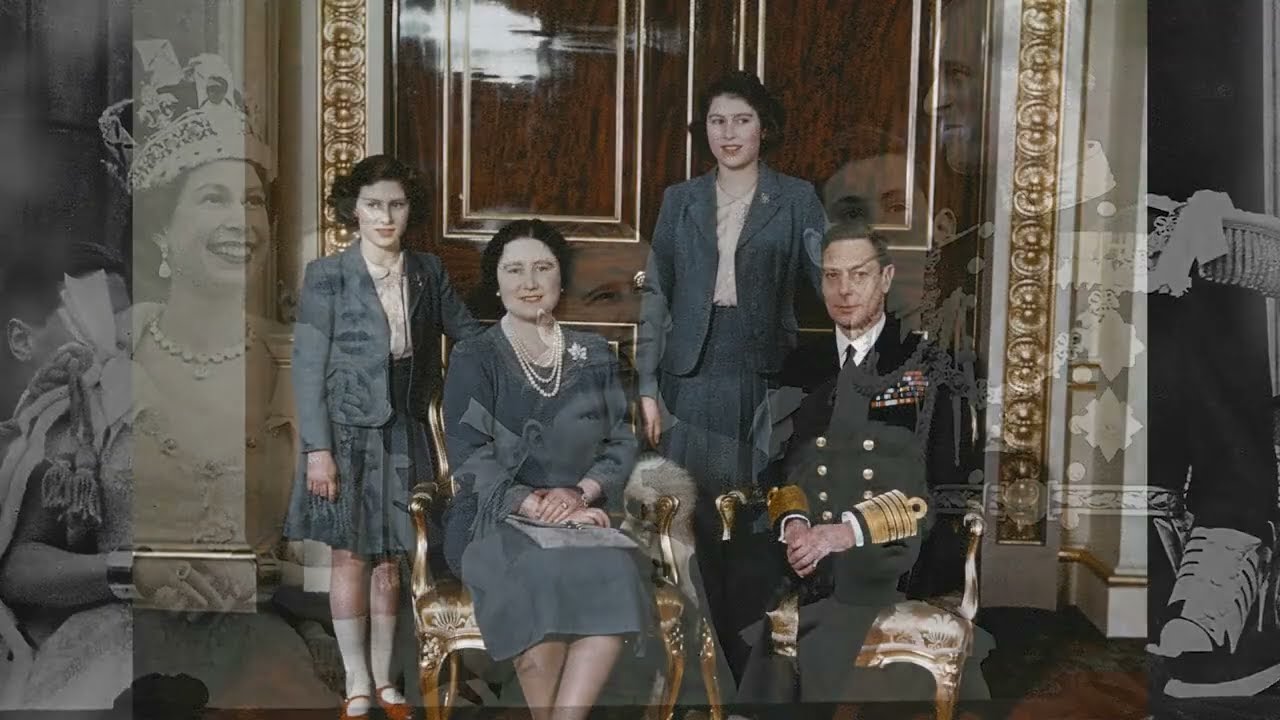
The central tragedy of Marion Crawford’s story is not the publication of The Little Princesses. The book was the catalyst. The tragedy is what happened after.
The exile that began in the autumn of 1950 and lasted without interruption, without reprieve, without a single moment of reconciliation, for the remaining thirty-eight years of her life.
She left Nottingham Cottage. The precise circumstances are blurred by the kind of discreet institutional erasure at which the palace excelled. No public announcement, no press release, no official statement, nothing that would create a record or invite questions.
What is known is this: by the autumn of 1950, Crawford was gone from Kensington Palace. The grace-and-favor residence that had been her reward for seventeen years of service was no longer hers.
The grounds she had walked every day during her years of service, the buildings she had worked in, the gardens where the princesses had played under her supervision, the corridors she had navigated with the confidence of someone who belonged, all of it was behind her. She went to Scotland. She went to Aberdeen, to a city far from London and far from the palace and far from everything that had defined her adult life.
She was forty-one years old. That age is worth pausing over, because it grounds the story in physical reality and strips away any temptation to treat Crawford’s fate as an abstraction. She was forty-one.
She had entered the York household at twenty-two or twenty-three, a young woman fresh from teacher training with her career ahead of her.
She had left royal service at thirty-eight or thirty-nine, having spent the years in which most women of her generation married, had children, built homes, and established the networks of friendship and community that would sustain them through middle age, inside a household that had absorbed her completely and then expelled her.
She had spent less than three years as a private citizen, three years in Nottingham Cottage, three years of adjustment in marriage, and the gradual discovery that the world outside the palace was less hospitable than the world inside it, before the publication and its consequences overtook her. And now she was forty-one, living in Aberdeen, cut off from every person who had mattered to her during the formative decades of her adult life.
She had no children. The seventeen years she had given to other people’s children had left no time for her own, and by 1950, the window was closing. She had a husband, George Buthlay, whose relationship to her inner world was partial at best, a man who understood the financial dimensions of her situation with clarity and the emotional dimensions with something less than that.
She had money from the book and the serializations, but money, as the palace understood intuitively and as Crawford was now learning through experience, could not purchase the thing she had lost. What she had lost was not income. It was not status, though she had lost that, too.
What she had lost was belonging. The daily, taken-for-granted knowledge that she was part of something, that she was known, that her presence was expected and her absence would be felt.
What she had lost was the right to be remembered with warmth by the people she had helped raise. What she had lost was seventeen years of emotional investment, erased as though the investment had never been made.
No member of the royal family spoke to her again. That sentence is simple enough to write. It takes less than two seconds to read aloud.
It is almost impossible to absorb in its full meaning. No member of the royal family spoke to Marion Crawford again after the autumn of 1950. Not once.
Not ever. Not in thirty-eight years.
Not Elizabeth, who became queen in February 1952, and who ruled for seventy years, and who owed a significant portion of her formation, her discipline, her sense of duty, her capacity for self-containment, her understanding of what it meant to carry a role larger than any individual personality, to the woman she now refused to acknowledge.
Crawford had taught Elizabeth to read. She had taught her history and geography and arithmetic. She had taken her to Woolworth’s and on the underground and to Girl Guide meetings.
She had sat with her through air raids. She had watched her fall in love. And Elizabeth, as queen, as the embodiment of the institution Crawford had served, never spoke to her again.
Never wrote to her. Never sent a message through an intermediary. Never acknowledged in any public or private way that Crawford’s years of service had meant anything at all.
Not Margaret, who had loved Crawford with an openness and directness that the institution had never quite managed to train out of her, and who complied with the family’s verdict despite whatever private grief that compliance cost her. Margaret’s silence is in some ways the hardest to reconcile with what is known about her temperament. She was not a woman who submitted easily to rules she found unjust.
She was not a woman who suppressed her emotions to satisfy institutional demands.
She would later push against the palace’s boundaries in ways that generated their own crises: the Townsend affair, the complicated marriages, the public struggles that made her one of the most sympathetic and most constrained figures in the modern monarchy. But on the matter of Crawford, she held the line. The family had spoken.
Margaret obeyed. And the governess who had been closer to her emotionally than almost anyone outside immediate family was left outside permanently, without appeal.
Not the Queen Consort, who had set the terms of the exclusion, and who maintained those terms with an absolutism that never wavered. Elizabeth Bowes-Lyon lived until 2002. She died at the age of 101.
In the fifty-two years between Crawford’s departure from Nottingham Cottage and the Queen Mother’s death, there was no softening, no private relenting, no quiet acknowledgement that the punishment might have been disproportionate.
The woman who had once described Crawford as part of the household’s intimate circle maintained, for more than half a century, that Crawford had committed an offense so grave that it could never be forgiven. The Queen Mother’s longevity makes the severity of the exclusion almost impossible to overstate. She outlived Crawford by fourteen years and spent every one of those years maintaining the same position she had taken in 1950.
Not George VI, who died in February 1952, less than eighteen months after Crawford’s departure from Nottingham Cottage. He did not use those eighteen months to send a note, a word, a quiet signal of acknowledgement. Whether he wanted to and was prevented by his wife’s position, whether he agreed with the exclusion, whether the declining state of his health left him without the energy or attention for such matters, is not known.
What is known is the silence.
The king who had given Crawford the cottage and the medal and the pension, the king whose household she had helped sustain for seventeen years, died without making any recorded attempt to moderate the punishment his family had imposed on the woman who had raised his daughters.
The completeness of the severance is the thing that demands attention, because it is the thing that distinguishes Crawford’s punishment from ordinary estrangement. People fall out with families. Employees are dismissed.
Relationships end, sometimes bitterly, sometimes with lingering resentment that lasts for years. But the Windsors’ exclusion of Crawford was not an ordinary falling out. It was not an argument that escalated, a misunderstanding that hardened, a wound that might have healed with time and distance.
It was systematic. It was permanent. It was enforced not by one person’s anger, but by the collective will of an institution that had decided, as a matter of policy, that Crawford’s existence was to be treated as though it had not happened.
She was not merely unforgiven. She was unremembered. Not in the sense that people literally forgot her, because they did not.
But in the sense that the institution refused to grant her memory any official place in its narrative.
She had been there. She had served faithfully for seventeen years. She had shaped the daily lives of two princesses who became among the most important women of the twentieth century.
And the family’s response was to behave as though none of it had counted, as though the years and the devotion and the affection had been a clerical error that could be corrected by refusing to speak of it.
The asymmetry of the outcome is where the story’s emotional weight concentrates, and it needs to be felt in full. The children Crawford had helped educate went on into history. Elizabeth became queen on the 6th of February, 1952, at the age of twenty-five.
She presided over the transformation of the British Empire into the Commonwealth. She navigated constitutional crises, political upheavals, personal scandals, and the relentless modernization of public life with the discipline and self-possession that Crawford had helped instill.
Margaret became one of the most photographed, most discussed, most constrained women of her generation. Glamorous, intelligent, trapped by the institution in the ways that would generate their own tragedies and their own sympathies. Both sisters lived public lives of extraordinary visibility, surrounded by people, by staff, by the attention of millions.
Neither acknowledged, publicly or privately, the woman who had been for seventeen years the most constant adult presence in their daily lives outside their parents.
Crawford, meanwhile, was in Aberdeen. She had been pushed outside the story. The woman who had helped make the Windsor domestic image livable for children, who had taken them to Woolworth’s, ridden the tube with them, managed their wartime fears, organized the Guide troop, supervised their homework, watched them grow from small girls in the nursery of Piccadilly into young women preparing for lives of public duty, was living in a Scottish city where nobody knew her as anything other than the governess who had been discarded by the royal family.
The identity that had defined her for her entire adult life, Crawfie, the beloved, the trusted, the indispensable, had been confiscated by the institution that had bestowed it. What remained was Mrs. Buthlay, a woman in her early forties in Aberdeen, with a husband and a pension and a best-selling book and a medal she could not wear and a past she could not claim and no world left to belong to.
The immediate aftermath of the exile settled into a pattern that would define the rest of Crawford’s life: isolation, the absence of reconciliation, and the gradual erosion of the public sympathy that the book had initially generated. In the weeks and months after leaving Nottingham Cottage, Crawford appears to have held onto the belief, or the hope, or perhaps only the inability to accept the alternative, that the break was not permanent. That the family would relent.
That seventeen years of devoted service counted for something that could not be permanently canceled by one act of publication.
That belief, if it existed, was sustained by nothing except Crawford’s own refusal to accept the evidence accumulating around her. No message came from the palace. No intermediary reached out.
No quiet signal was sent through the social networks that connected the court world to the wider British establishment. The silence was total, and it remained total. And with every passing week and month, it became harder to interpret as anything other than what it was: a sentence without an expiry date, imposed by an institution that did not forgive because forgiveness would establish a precedent, and precedent was the thing the institution feared above all else.
The practical dimensions of Crawford’s new life in Aberdeen were a sharp contrast to the world she had left. She and Buthlay settled into a domestic routine that bore no resemblance to the palace life she had known. There were no footmen, no household schedules, no royal engagements to prepare for, no princesses to teach.
There was instead the ordinary fabric of a middle-class Scottish marriage: housekeeping, meals, the daily management of a life that had no external structure beyond what Crawford and Buthlay imposed on it themselves.
For a woman who had spent seventeen years inside one of the most structured environments in the world, where every hour had its purpose, and every day had its rhythm, and every role had its clear, unambiguous function, the absence of structure must have been disorienting. She was a teacher without students, a governess without a household, a woman whose professional identity had been so completely absorbed by the institution she served that when the institution withdrew, the identity collapsed with it.
Crawford still had her pen. She still had the Goulds’ interest. She still had the public’s residual curiosity about the royal family, and she still had the practical need to earn money, because Nottingham Cottage was gone, and the life she had imagined building inside the palace’s orbit had been destroyed.
And whatever the book had earned, it would not last forever. So she did the only thing she knew how to do with the only asset she had left. She kept writing.
She took on a regular column for Woman’s Own, providing commentary and observation on royal events for a readership that was willing to treat her as an authority. She began work on follow-up books, shorter, less substantial works about Queen Mary, about Queen Elizabeth II, about Princess Margaret, trying to build a career on the foundation of her seventeen years of inside knowledge.
It was a logical strategy. It was also a fatal one. Because every word she published after The Little Princesses confirmed the palace’s judgment that she was incorrigible, that the violation was not a single lapse but an ongoing pattern, and that the punishment was justified.
The writing career that Crawford attempted to construct in the early 1950s was itself precarious, because it depended on a resource that was finite and depreciating with every passing year: her first-hand knowledge of the royal household. She had left service in 1947. By 1952, her direct experience was five years out of date.
By 1955, it would be eight years out of date.
The princesses she had known were growing into women she did not know. The household she had described was evolving in ways she could not observe from Aberdeen. The political and social landscape of the monarchy was shifting.
Television was transforming the relationship between the crown and the public. The new queen was establishing her own style of sovereignty. The world Crawford had inhabited was becoming historical rather than current.
She was a woman trying to sell currency that was losing value with every passing season. And the moment that currency finally ran out, the moment she could no longer write from genuine knowledge and had to rely instead on inference, guesswork, or the reheating of old material, the career would collapse. And the collapse would be public, and it would be humiliating.
That collapse arrived on the 16th of June, 1955, and it came not as a grand catastrophe, but as a small, humiliating error that exposed with brutal clarity how far Crawford had drifted from the world she claimed to know. Her column in Woman’s Own for that week described, in the confident insider prose that her readers had come to expect, the spectacle of Trooping the Colour and the pageantry of Royal Ascot: the Queen in the carriage, the horses on parade, the hats and the crowds and the rituals that marked the English summer season.
The descriptions were vivid. The tone was assured. The details were specific enough to suggest the authority of someone who was there, or at least who knew people who were.
And both events had been canceled. A national rail strike had forced the postponement of Trooping the Colour and disrupted Royal Ascot, and Crawford, writing from Aberdeen, hundreds of miles from London and further still from the world of the palace, had not known.
She had described events that had not happened, in confident and specific prose, for a national readership. She had filed copy about royal occasions she had not attended and that had not taken place, and the magazine had published it. And the discrepancy had been discovered not by the editorial staff, but by readers who knew, because they read newspapers, what Crawford apparently did not.
Whatever credibility Crawford had retained as a commentator on the royal family, whatever residual authority her seventeen years of service had lent to her byline, was destroyed in a single issue of a weekly magazine. The incident was devastating not merely because it was embarrassing, though the embarrassment was acute, but because of what it revealed about the completeness of Crawford’s isolation.
She was not in London. She had not been in London for five years. She was not in contact with anyone inside or near the palace.
Not a single source. Not a single informant. Not a single former colleague willing to pick up the telephone and relay basic information about public events.
She had no friends in the household who might have called to say that Trooping the Colour had been postponed and Ascot disrupted.
She was writing about the royal family from a position of total disconnection, producing copy that was indistinguishable from imagination because it was, in the most literal sense, imagined. A description of events that existed only in her memory of how such occasions normally proceeded, applied to a week in which the normal had been overridden by a rail strike, and which she had not bothered or been able to verify.
The governess who had once known what Elizabeth ate for breakfast, who had sat in on the princess’s constitutional history lessons, who had been present for the private life of the monarchy for nearly two decades, was now guessing about events that had been reported in every newspaper in the country. The distance between the woman who had ridden the underground with the future queen in 1939 and the woman who described a cancelled parade as though it had taken place in 1955 was the precise measurement of everything she had lost.
The fallout was swift and final. The Woman’s Own column ended. Crawford’s career as a royal commentator, the only career available to her, the only use she had found for the knowledge and the name recognition that the publication of The Little Princesses had given her, was finished.
The follow-up books she had published in the intervening years, the works on Queen Mary, on Elizabeth II, and on Princess Margaret, had sold modestly at best. Each one thinner and less authoritative than the last. Each one a diminished echo of the first book’s intimate specificity.
The market for Crawford’s insider knowledge had been sustained by the illusion that she remained, in some sense, connected to the world she described. The Woman’s Own debacle shattered that illusion publicly and permanently. With the column gone and the books exhausted and her reputation as a reliable commentator destroyed, Crawford had nothing left to sell.
The asset she had traded her world for, her first-hand knowledge of the royal family, the seventeen years of accumulated intimacy that had once made her the only person in the world who could write what she had written, was spent. The currency had been devalued to nothing by time, distance, and a rail strike. She was forty-six years old.
She had been exiled for five years. She had more than thirty years still to live.
And the question that would define those remaining decades was already taking shape, though Crawford may not yet have understood it in those terms: what happens to a person when the role that gave them meaning has been permanently removed? When the community that gave them belonging has permanently expelled them? And when the one thing they tried to build from the wreckage has collapsed in public?
The answer in Crawford’s case was retreat. Slow, comprehensive, and eventually total. She withdrew from public life.
She stopped writing. She stopped, as far as the available record shows, making any further attempt to re-establish contact with the royal family or to maintain a presence in the world of royal commentary.
The hope that the breach might heal, the hope she appears to have carried through the early 1950s, sustained by nothing but her own refusal to accept the evidence accumulating around her, was gone. What replaced it was something quieter and more corrosive: the understanding that the silence was permanent, that the family would never relent, and that she would spend the rest of her life defined by a single decision made in her late thirties and its consequences.
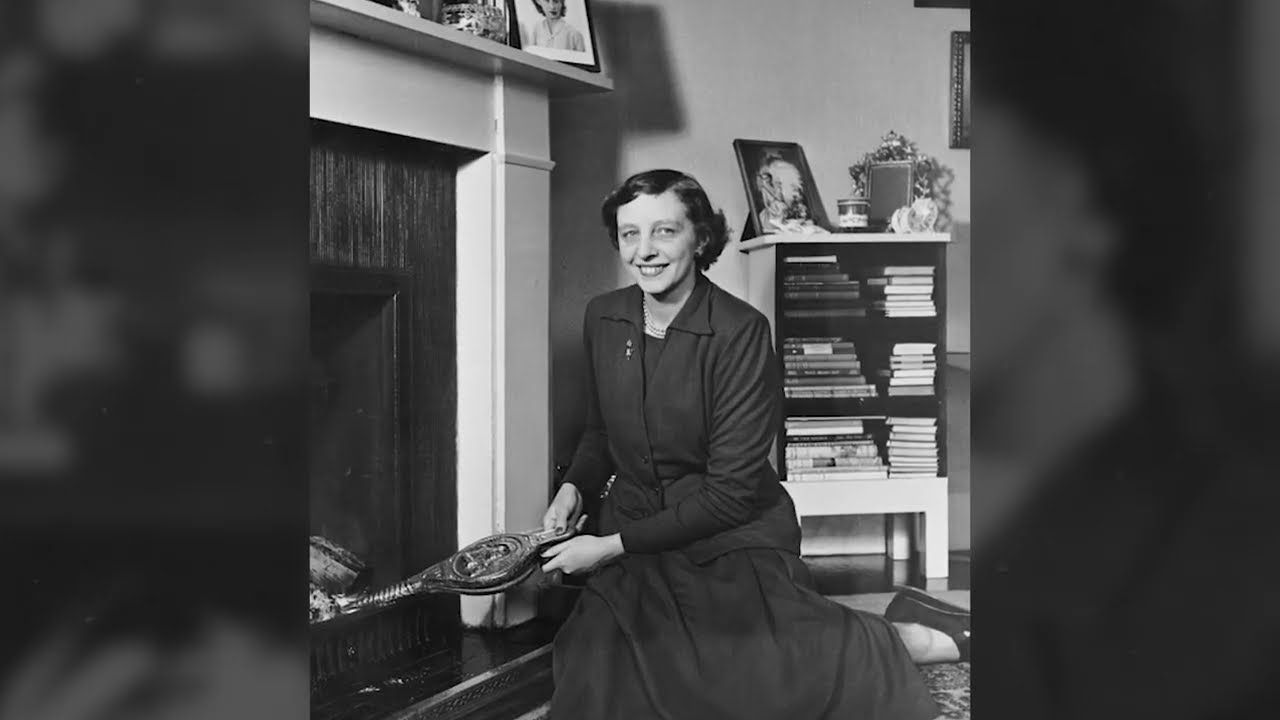
Aberdeen became her world, and its boundaries contracted year by year. The city that had been a retreat became a terminus. She and Buthlay lived quietly, without public profile, without connection to the court world that had once defined her existence, without the social networks that most people her age had spent decades cultivating.
There were no more magazine columns to write, no more books to publish, no more public identity to maintain.
The years accumulated in the way that years do when nothing happens. Not with the dramatic punctuation of events, but with the slow, grinding accumulation of days in which the most significant thing that occurred was the absence of the things that had once given those days meaning. The 1950s became the ’60s.
The ’60s became the ’70s. Britain changed around Crawford in ways that she could observe but not participate in. The end of rationing, the rise of television, the cultural revolution of the ’60s, the economic turbulence of the ’70s, the transformation of the country from a fading imperial power into something newer and less certain.
She remained in Aberdeen through all of it, a fixed point in a changing landscape, defined by a punishment that had been imposed in 1950 and that showed no sign of expiring.
Television, more than anything else, must have made the exile excruciating, because television brought the royal family into Crawford’s sitting room in a way that no other medium could. She could watch the Queen’s Christmas broadcast and see the face of the girl she had taught to read. She could watch news coverage of state occasions and see the woman she had taken on the underground presiding over the rituals of the crown with a composure that Crawford had helped form.
She could watch Margaret on screen, glamorous, constrained, visibly struggling with the limitations of her role, and remember the child who had climbed into her lap and refused to behave and made faces through banisters. The television showed Crawford the lives she had helped shape, proceeding without her, year after year, in a public that she could see but could not reach.
It was, in its way, the most refined form of exclusion the modern age could produce. Not absence, but enforced spectatorship. She could watch.
She could not participate. She could not respond. She could not even send a letter that would be acknowledged.
Elizabeth II’s reign continued decade after decade. The serious child Crawford had known becoming the most recognizable sovereign in the world. Her face on every coin and every stamp.
Her image in every newspaper. Her Christmas message an annual ritual that connected the monarchy to millions of households.
Elizabeth navigated the Suez crisis of 1956, the decolonization of Africa, the constitutional evolution of the Commonwealth, the growing intrusiveness of the media, the personal crises that would multiply in later decades: her children’s troubled marriages, the fire at Windsor Castle, the death of Diana. With the discipline and self-containment that were her defining characteristics and that Crawford had watched forming in the schoolroom at Buckingham Palace forty years earlier.
Margaret’s life unfolded in ways Crawford could only follow from a distance, through newspapers and television and the public narrative that bore no resemblance to the private Margaret she had known in the nursery. The Townsend affair, Margaret’s love for the divorced Group Captain Peter Townsend, a crisis that the palace managed with the same insistence on institutional priorities over personal feeling that had governed Crawford’s own punishment, played out in the press during the mid-1950s.
Margaret chose duty over love, renouncing Townsend in a public statement on the 31st of October, 1955, declaring that she had been mindful of the Church’s teaching that Christian marriage is indissoluble. Crawford, watching from Aberdeen, must have recognized something in the pattern. Another woman inside the Windsor system being asked to sacrifice personal desire for institutional necessity.
Another individual being consumed by the code.
Margaret’s marriage to the photographer Anthony Armstrong-Jones in 1960, the birth of their two children, the subsequent divorce in 1978, and her gradual withdrawal from the vivid, glamorous public life she had once inhabited. Crawford watched it all from outside, without the ability to offer comfort or perspective or the simple acknowledgement that she understood, perhaps better than most, what it meant to be shaped and then abandoned by the institution that had claimed to value you.
The Queen Mother remained a fixture of national affection throughout these decades. The most popular member of the royal family by most measures, celebrated for her warmth, her resilience, her apparent ability to enjoy life with an enthusiasm that defied both age and circumstance. In private, she remained unyielding on the matter of Crawford.
The years did not soften her position. The passage of decades, the 1960s, the ’70s, the ’80s, did not produce the mellowing that Crawford might once have hoped for.
The woman who had described Crawford as having gone off her head in 1949 maintained that assessment effectively for the remaining fifty-three years of her life. The Queen Mother’s refusal to acknowledge her former governess lasted longer than most marriages, longer than most careers, longer than most feuds that anyone could name. It was a master class in institutional discipline, sustained across more than half a century without a single documented moment of doubt or regret.
George Buthlay died in 1977. Crawford was sixty-eight years old. The man who had been her husband for thirty years, the man whose practical instincts had helped precipitate the crisis that ended her palace life, the man who had seen commercial value where Crawford had seen affection, the man who had been both her companion in exile and, in the palace’s judgment, the architect of her downfall, was gone.
Whatever the marriage had been in its later years, companionate, strained, habitual, sustained by proximity rather than passion, shaped by the peculiar isolation that the couple shared, his death left Crawford alone in Aberdeen in a way she had not experienced before. She was a widow approaching seventy, without children, without extended family of any visible significance in the biographical record, without friends who had survived the social quarantine of 1950, without the daily presence of another human being in the house.
The isolation that had been her condition since the autumn of 1950 was now, with Buthlay’s death, complete in every dimension: social, professional, familial, and domestic. She was, in the most literal sense, alone.
The depression that followed, or that had been building for years, perhaps decades, beneath the surface of a life constructed from endurance rather than fulfillment, is documented in the biographical sources with the restraint that such matters deserve and with the specificity that honesty requires. Crawford suffered depression. The condition was not a brief episode or a manageable bout of low mood.
It was a sustained, debilitating affliction that colored her final years and that led, on at least two occasions, to suicide attempts.
Those attempts must be stated plainly, without euphemism, because they are part of the story’s cost and because softening them would diminish the reality of what Crawford endured. She was a woman in her seventies and eighties, living alone in Aberdeen, cut off from every person and every institution that had given her life meaning and purpose. And the weight of that isolation, compounded by decades of unrelieved exclusion, by the knowledge that the children she had raised would never acknowledge her again, by the daily reality of growing old alone with memories that nobody in her life wanted to hear and that the institution considered stolen property, brought her to the point where continuing seemed less bearable than stopping.
She survived both attempts. She continued to live. But the life she continued to live was shaped by the absence of everything that had once made it livable.
Crawford died on the 11th of February, 1988, in Aberdeen. She was seventy-eight years old. She had been exiled from the royal family for thirty-eight years, more than twice as long as she had served them.
She had outlived George VI by thirty-six years. She had outlived the world she had inhabited by nearly four decades.
And the family whose emotional life she had once managed, whose children she had raised, whose private moments she had witnessed and later described with affection and care, sent no flowers to her funeral.
The detail, the absence of flowers, is so stark that it barely requires commentary. It is the entire story compressed into a single omission. A bouquet of flowers would have cost the palace nothing.
Nothing in money, nothing in institutional capital, nothing in precedent. It would not have implied forgiveness. It would not have constituted an acknowledgement that Crawford had been right to publish.
It would simply have been a recognition that a woman who had served the family for seventeen years and who had died alone in Aberdeen deserved the minimal courtesy of being noticed.
The palace chose not to. The Queen chose not to. The Queen Mother, who was eighty-seven years old in 1988 and who would live for another fourteen years, chose not to.
Margaret, who was fifty-seven and who had once loved Crawfie with an openness that the institution had spent four decades suppressing, chose not to. The absence was collective. It was deliberate.
And it said, with a finality that no words could improve upon, what the institution believed Crawford deserved for breaking the code. Nothing. Not even after death.
The cultural afterlife of Crawford’s story began slowly and gathered force as the decades passed and the events of 1950 receded far enough into history to be examined without the heat of contemporary scandal. For years after her death, Crawford remained what the palace had intended her to be: a cautionary tale, a name invoked as a warning to servants and staff about the consequences of speaking out of turn.
In the language of the court and the British press, to “do a Crawfie” became shorthand for the ultimate act of household betrayal, a phrase that encoded the palace’s version of the story so efficiently that it required no elaboration and permitted no ambiguity. The person who did a Crawfie was, by definition, disloyal, ungrateful, and deserving of whatever punishment the institution chose to impose.
The phrase survived for decades. It was used, reportedly, to caution members of the household staff well into the late twentieth and early twenty-first centuries, long after the woman it referred to had died in obscurity. The fact that it existed at all tells you something essential about the thoroughness of the palace’s narrative control.
Crawford had been reduced, in institutional memory, from a complex human being with legitimate claims and genuine affection to a single cautionary verb, a warning sign, a shorthand for treachery.
The first significant reassessment came in the form of a television documentary, “Crawfie: The Royal Nanny Who Wouldn’t Keep Mum,” produced for Channel 4 and broadcast on the 26th of June, 2000, fifty years after the publication of The Little Princesses and twelve years after Crawford’s death.
The documentary treated Crawford not as a traitor, but as a subject worthy of serious journalistic attention. A woman whose story raised genuine and unresolved questions about the relationship between loyalty and self-expression, between institutional power and individual voice, between the monarchy’s right to privacy and the right of those who served it to narrate their own lives.
It was the first time the British public had been invited, in a mainstream broadcast format, to consider the possibility that Crawford’s punishment had been disproportionate to her offense. And the response suggested that the cultural mood had shifted considerably since 1950. The deference that had sustained the broadsheet condemnation of Crawford was weaker.
The public’s willingness to question the monarchy’s treatment of its servants and its family members had grown. Crawford was beginning to be seen not solely as the woman who had betrayed the royal family, but also, and perhaps more compellingly, as the woman the royal family had destroyed.
In 2016, the Netflix series The Crown dramatized Crawford’s story in the episode titled “Scientia Potentia Est” — knowledge is power — with the Scottish actress Sarah Vickers playing the governess. The episode was framed around the young Queen Elizabeth’s growing anger at the inadequacy of the education she had received, an anger directed partly at Crawford and partly at the system that had deemed a thorough education unnecessary for a princess.
The framing was dramatically effective, placing Crawford at the center of a debate about what the monarchy owed the women who served it, what those women were permitted to know, and what happened when the gap between what they were given and what they needed became impossible to ignore. The Crown reached a global audience of tens of millions, and its portrayal of Crawford, sympathetic, recognizably human, caught between genuine affection for the girls she had raised and the institutional ruthlessness that would eventually consume her, introduced her story to a generation that had no living memory of the original scandal.
What the series captured was the emotional core: a woman who loved the children she raised and who was punished for the act of saying so in public. What it necessarily simplified, as dramatizations must, was the complexity of Crawford’s motives, the ambiguity of Buthlay’s role, and the institutional logic that made the punishment feel, from inside the palace, not cruel, but structurally necessary.
More recently, the Australian playwright Melanie Tait’s stage production, “The Queen’s Nanny,” opened in Sydney in 2024, taking the cultural reappraisal a step further by explicitly recentering Crawford as the protagonist of her own story, rather than a supporting character in the monarchy’s narrative. The play treated Crawford’s experience as a question about power, voice, and the ownership of memory. Who has the right to narrate the lives they have lived inside an institution?
And what happens when that right is claimed by the individual and denied by the institution that claims ownership of the experiences of everyone who enters its orbit?
The play was critically well received in Australia and represented, in its way, the completion of a trajectory that had been building for decades. From scandal object to cautionary tale to tragic figure to recovered human being. The subject of legitimate dramatic and historical inquiry rather than merely a name invoked as a warning.
That trajectory is itself a form of vindication, though it is a vindication that Crawford did not live to see. A posthumous recognition that the story she tried to tell in 1950 deserved to be told, and that the punishment she received for telling it deserved to be questioned.
What remains of the story as of the present day is telling in ways that the participants themselves could not have anticipated and that illuminate, with a clarity that only time can provide, the enduring tension between institutional memory and individual truth.
The Queen Mother died on the 30th of March, 2002, at the age of 101, having maintained her refusal to acknowledge Crawford for more than half a century. A period of silence so sustained that it outlasted the Cold War, the decolonization of Africa, the fall of the Berlin Wall, and the transformation of the monarchy from a Victorian institution into a modern one. She never relented.
Not once. Not publicly, not privately, not in any way that has been documented. The woman who had once described Crawford as part of her household’s intimate circle died having spent fifty-two consecutive years treating Crawford as though she had never existed.
Queen Elizabeth II died on the 8th of September, 2022, at the age of 96, at Balmoral Castle in Scotland, not far in the geography of the country if not of the heart from the city where Crawford had lived and died. She had reigned for seventy years. She had become the longest-serving monarch in British history.
She had navigated crises that would have destroyed lesser institutions and lesser individuals. And she had never, in any public or private way that has been recorded, acknowledged the woman who had taught her to read, who had taken her to Woolworth’s, who had supervised her Girl Guide badges, who had sat with her through the Blitz, and who had helped form the disciplined, self-contained character that sustained her through seven decades on the throne.
Princess Margaret died on the 9th of February, 2002, almost exactly fourteen years after Crawford and just seven weeks before the Queen Mother, at the age of 71, after years of declining health that had seen her suffer a series of strokes and withdraw progressively from public life. She had spent her adult life navigating the impossible space between royal duty and personal desire. And the parallels with Crawford’s story, the gap between what the institution demanded and what the individual needed, the price extracted for transgression, the loneliness that followed, are difficult to ignore, even if Margaret herself would never have drawn them.
Both women discovered, in different ways and at different costs, that the House of Windsor’s capacity for institutional warmth was matched by its capacity for institutional severity. Margaret complied with the family’s verdict on Crawford for the entirety of her adult life. Whether she carried any private grief about that compliance, whether she ever spoke of Crawfie to her children, whether she thought of the governess in her own final years of illness and withdrawal, those are questions that died with her.
Margaret’s two children survive her. David Armstrong-Jones, the 2nd Earl of Snowdon, is 64 years old. Lady Sarah Chatto is 62.
They are the living inheritors of a family story that includes, somewhere in its margins, a governess who helped raise their mother and their aunt and who was erased from the official record for describing what she had seen. Whether they carry any memory of Crawford beyond the public narrative, whether Margaret ever spoke of her to them in private, is not known.
The royal institution itself continues under Charles III, navigating the same tension between privacy and public appetite that destroyed Crawford seventy-six years ago. The code of silence that the Queen Consort enforced with such rigor has been eroded by time, by tabloid culture, by the willingness of later figures, most notably the Duke and Duchess of Sussex, to speak publicly about their own experience of the institution in ways that would have been unimaginable in 1950.
But the erosion is incomplete. The institution still regards disclosure from within as a threat. The language may have changed.
Tell-all memoirs are now discussed in the vocabulary of media rights and mental health rather than loyalty and treason. But the underlying dynamic has not. The palace still believes it owns the narrative of its own private life.
The people who have lived inside it still discover, when they attempt to tell their own stories, that the institution’s capacity for exclusion has not diminished.
Crawford’s place inside the official memory of the monarchy remains thin, odd, and revealing. The royal family website, as of this writing, still mentions Marion Crawford in the diary of events for the early life of Queen Elizabeth II, acknowledging her in a single line as the woman who supervised the princess’s education. The institution cannot quite erase her, because she was too present in Elizabeth’s formative years to be omitted from any honest account of the Queen’s childhood.
But the same page gives Crawford an incorrect year of death, listing it as 1999 rather than the actual date of 1988.
That error, small, bureaucratic, the kind of mistake that reveals institutional indifference rather than institutional malice, captures the entire story in miniature. She is there. She is acknowledged.
But she is not carefully remembered. The institution that punished her for describing its private life with affection and accuracy cannot bring itself to record the basic facts of her own life correctly. She exists on the official page as a half-presence, named but not honored, included but not respected, mentioned in the timeline of a queen’s childhood but not granted the simple dignity of a correct death date.
It is the final, unintended expression of the Windsor code. She cannot be fully erased because she mattered too much. But she will not be properly remembered, because remembering her properly would mean acknowledging what was done to her.
The inheritance that mattered most inside the House of Windsor was never money or land or title. It was silence. The code that passed from George V’s wartime rebranding through the abdication crisis and the Queen Consort’s domestic absolutism and into Elizabeth’s own understanding of duty was, at its core, a code of silence.
The belief that the private life of the monarchy belonged to the monarchy, and that anyone who attempted to narrate it from the outside, however lovingly, was committing an act of trespass.
Crawford helped create the emotional world in which Elizabeth learned that code and Margaret learned her place beside it. She helped make the Windsor domestic image warm enough to sustain public affection and controlled enough to survive public scrutiny. And when she tried, after seventeen years of service, to describe that world in her own words, the institution she had helped sustain turned on her with a completeness that left nothing.
Not a telephone call. Not a letter. Not a bouquet of flowers at a funeral in Aberdeen.
This is not a story about a greedy governess who sold the royal children. It is a story about what monarchy asks of the people who stand nearest to it. Intimacy without authorship.
Devotion without ownership. Memory without voice. Marion Crawford gave those things for seventeen years.
She asked for her voice back once. And the family she had helped raise never forgave her for it.