The 1985–1986 Mafia Commission Trial marked a historic attempt by federal prosecutors to dismantle the leadership of the American Mafia by targeting its ruling body, known as the Commission, a criminal council established by prominent crime families to settle disputes and coordinate illegal activities across New York. Prosecuted under the Racketeer Influenced and Corrupt Organizations Act, the case indicted the bosses of the five New York crime families—the Gambino, Genovese, Lucchese, Colombo, and Bonanno organizations. The prosecution was led by U. S.
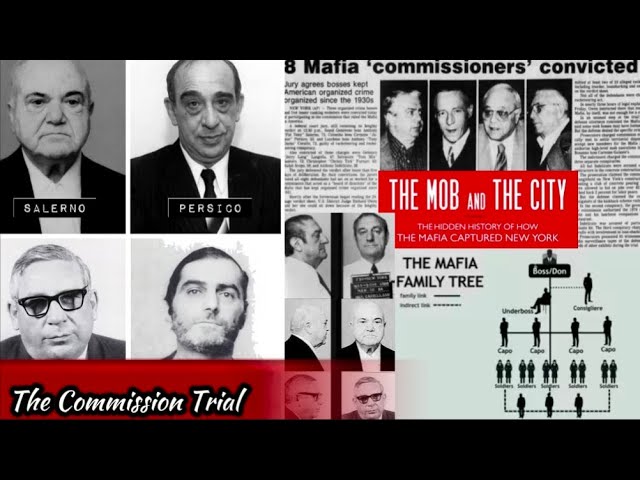
Attorney Rudolph Giuliani, who declared, “Our approach is to wipe out the five families. ”
Formally titled United States v. Salerno, the trial ran in the U. S.
District Court for the Southern District of New York from February 25, 1985, to November 19, 1986. Eleven high-ranking mob figures faced charges including extortion, labor racketeering, loansharking, and murder-for-hire, with prosecutors relying on wiretaps, informants, and decades of FBI investigative work. Time magazine called the case “the case of cases,” describing it as possibly the most consequential attack on the Mafia’s infrastructure since the dismantling of Chicago’s Mafia leadership in 1943. The investigation gained crucial momentum in 1983, when the FBI uncovered wiretapped conversations revealing Ralph Scopo’s involvement in extorting money from New York contractors.
Scopo, president of the Cement and Concrete Workers District Council from 1977 until April 1985, used his authority to demand payments from cement contractors in exchange for construction contracts and labor peace. The scheme centered on the “Concrete Club,” an exclusive network of contractors selected by the Commission to handle projects valued between $2 million and $15 million. In exchange for inclusion, contractors paid a kickback of two percent of each contract’s value to the Commission. Genovese family member Anthony Salerno covertly maintained controlling interests in companies including S&A Concrete and Transit Mix Concrete Corp, further solidifying organized crime’s grip on New York’s construction industry.
A major breakthrough came through an unexpected source. Anthony “Tony Ducks” Corallo inadvertently handed the government a treasure trove of evidence. For years, Corallo and his trusted lieutenant Salvatore Avellino dominated the waste hauling industry on Long Island, stifling competition through intimidation. The New York State Organized Crime Task Force enlisted the help of Robert Kubecka, a garbage hauling business owner from Suffolk County who had resisted mob control since the 1970s.
In 1982, Kubecka agreed to wear a hidden recording device during meetings with mob associates. While he could not directly access Avellino, his recordings convinced a judge to authorize a wiretap on Avellino’s home phone. Agents then discovered Avellino served as Corallo’s personal chauffeur. In a daring 1983 operation, investigators installed a listening device inside the dashboard of Avellino’s Jaguar while he attended a dinner dance with his wife.
The bug captured hours of candid conversations between Corallo, Avellino, and other mobsters, revealing the Commission’s intricate hierarchy and internal dynamics. This intelligence was handed to federal prosecutors and provided the foundation for the trial. On February 25, 1985, nine Mafia leaders were indicted and arrested. The defendants included Paul Castellano, boss of the Gambino family; Anthony “Fat Tony” Salerno, head of the Genovese family; Anthony Corallo, leader of the Lucchese family; Philip “Rusty” Relli, boss of the Bonanno family; and Aniello Dellacroce, the Gambino family’s underboss.
Also charged were Colombo family acting boss Gennaro “Jerry Lang” Langella, Lucchese underboss Salvatore “Tom Mix” Santoro, Lucchese consigliere Christopher “Christy Tick” Furnari, and Colombo family soldier Ralph “Little Ralphie” Scopo. The charges encompassed narcotics trafficking, loansharking, illegal gambling, labor racketeering, and extortion targeting construction companies. Two additional Mafia leaders were added to the case by July 1, 1985, and all pleaded not guilty to a second wave of racketeering charges. Violence soon followed the indictments.
Dellacroce succumbed to cancer on December 2, 1985. Two weeks later, on December 16, 1985, Castellano was brutally assassinated, marking a pivotal moment in the bloody struggle for control of the Gambino family. In late 1986, Colombo hitman and FBI informant Gregory Scarpa alleged that Carmine Persico and Gambino boss John Gotti supported a plan to assassinate lead prosecutor Giuliani, but the rest of the Commission ultimately rejected the idea. The Bonanno family had been expelled from the Commission earlier in the 1980s following the Donnie Brasco undercover infiltration.
This removal ironically shielded Bonanno boss Philip Relli from being implicated in the Commission trial, though he later faced separate labor racketeering charges. Defense attorneys, after reviewing the overwhelming evidence, understood their slim chances of acquittal. Attempts to negotiate plea deals with Giuliani were met with unyielding terms requiring guilty pleas to the most severe charges, which carried life sentences. Defense teams then crafted a controversial strategy.
They acknowledged the mafia’s existence and the Commission’s role but argued that being a member or boss was not inherently criminal. The approach initially outraged defendants, as it breached the Mafia’s code of omertà, but lawyers convinced them that outright denial was futile. The defendants reluctantly agreed, provided they were not required to personally admit the Mafia’s existence in court. During opening statements, attorney Samuel Dawson, representing defendant Salvatore Santoro, made a groundbreaking acknowledgment in open court.
He told the jury, “There is no question that the Mafia exists and has members,” but challenged whether mere membership automatically meant a defendant committed the charged crimes. It marked the first time the Mafia’s existence was openly admitted in court. After six days of deliberations, the jury reached its verdict on November 19, 1986. Eight defendants were found guilty of racketeering.
Anthony Indelicato was convicted separately of murdering mob boss Carmine Galante. On January 13, 1987, Judge Richard Owen delivered harsh sentences. Salerno received 100 years and a $240,000 fine. Corallo received the same.
Santoro was given 100 years and a $250,000 fine, as was Furnari. Persico, Langella, and Scopo each received 100 years and $240,000 fines. Despite Salerno being labeled the Genovese family boss during the trial, a stunning revelation emerged afterward. Vincent “the Fish” Cafaro, Salerno’s longtime confidant turned informant, disclosed to the FBI that Salerno had been a front for the true boss, Vincent “the Chin” Gigante, and that the deception had been in place since 1969.
According to investigative journalist Selwyn Raab in his book Five Families, this revelation did not undermine Salerno’s conviction or sentence. Raab explained Salerno was tried and convicted for specific criminal actions, not merely for being the alleged boss, making the outcome an enduring blow to organized crime. The Commission trial marked a turning point in the history of organized crime in the United States. It was the first successful effort to dismantle the Mafia’s leadership structure, severely weakening its influence.
The convictions created a power vacuum within the five families, leading to infighting and diminished coordination. The trial also demonstrated the effectiveness of the RICO Act as a legal weapon, setting a precedent for future prosecutions and signaling the beginning of the Mafia’s decline in American society.