A single gunshot on a New York street in 1957 did not kill Frank Costello. It grazed his head, leaving him shaken but alive. Yet that one bullet accomplished what years of open warfare could not: it ended his reign without a single battle. Costello, known as the “prime minister” of the underworld, had built his power not on violence but on deep political connections and influence that reached into law enforcement and city government.
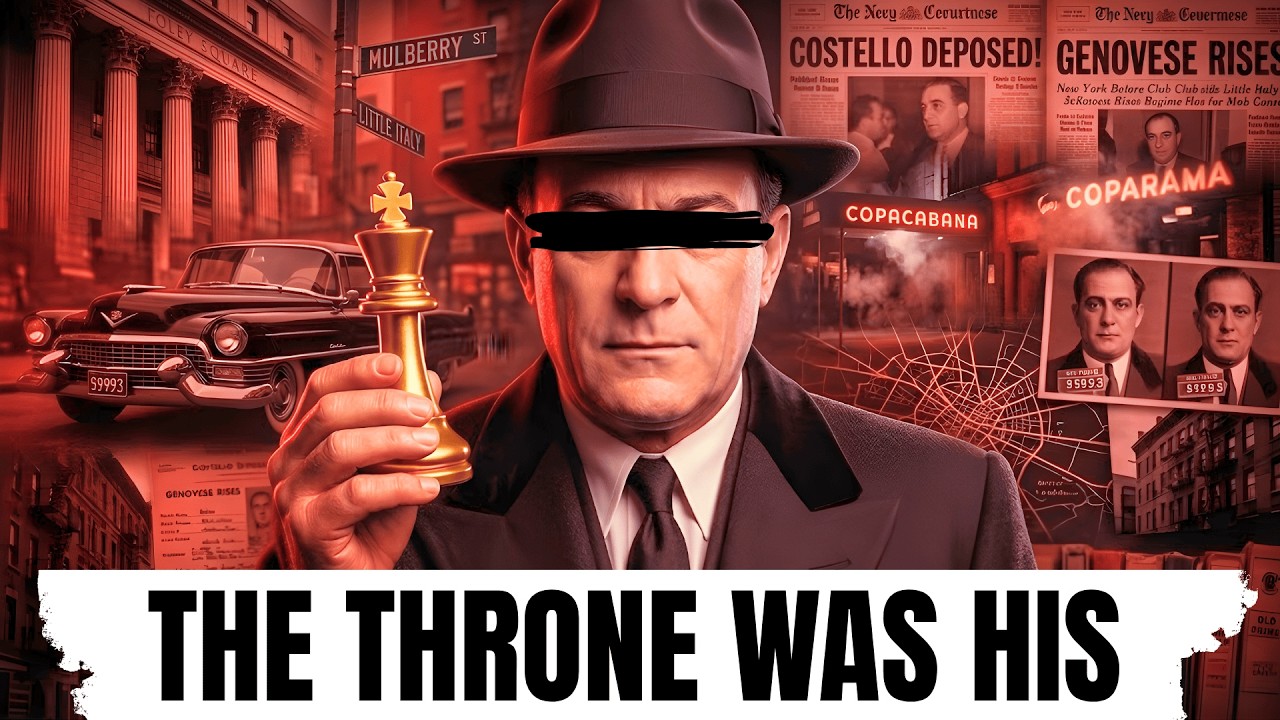
He was considered untouchable. The shooting was never meant to take his life. It was a message, delivered with enough precision to prove that the man behind it could have taken everything at any moment. The architect of that message was Vito Genovese.
Unlike Costello, Genovese operated entirely from the shadows. He gave no speeches, sought no attention, and rarely appeared in headlines. His strategy was built on patience, not force. He did not attack his rivals when they were strong; he waited until their guard was down and their power rested more on reputation than reality.
Genovese had spent years quietly reshaping the underworld. Alliances shifted, loyalties bent, and key positions were filled with men who owed him favors. No battles were fought, and no public confrontations occurred. There was just a slow, deliberate tightening of control that left Costello isolated before he ever realized what was happening.
When the shot was fired outside Costello’s residence, the meaning was clear to everyone who understood the language of power. It was not chaos. It was control. Costello survived, but he understood the warning.
There would not be a second one. What stunned the underworld was his response. Costello did not retaliate. He did not rally his allies or start a war.
He stepped down voluntarily. He recognized that he had been outplayed not in strength, but in strategy. With Costello removed, Genovese rose to the top of one of the most powerful crime families in America. His control was absolute, and the system that had once been shared now bent around him.
He had redefined how power could be taken, without noise, without headlines, through precision alone. But absolute control created new dangers. Other families grew wary, not of how he had risen, but of how much he now held. Fear spread, and they moved first, not with bullets but with a carefully constructed trap.
A narcotics case, built with precision, was assembled against him. Genovese was arrested, tried, and sentenced. The man who had manipulated the system from within was now confined by it. His empire remained, and his influence lingered, but his personal power was gone.
His legacy, however, did not disappear. Genovese proved that power belonged not to the strongest or the loudest, but to the one who understood the system deeply enough to reshape it without anyone noticing. He showed that an empire could fall without a war, and that a king could be removed without being killed.
In the end, his name remained, not as a memory of chaos, but as a lesson in the invisible nature of control.