
LONDON — Princess Margaret learned her 16-year marriage was over not from her husband, but from a private secretary who telephoned her at Kensington Palace in March 1976 to inform her that Lord Snowdon wanted out, according to a detailed account of the royal marriage that portrays the photographer as a man who waged a campaign of private cruelty while the palace machinery protected appearances at the expense of the woman inside them.
The message was not delivered face to face. It was not spoken across a table or whispered in a doorway by the man she had married before 2,000 guests at Westminster Abbey and 20 million television viewers. It was formalized by intermediaries before it was ever spoken aloud, a detail that captures precisely what the marriage had become: an administrative arrangement conducted through secretaries, solicitors and the institutional buffer of the royal household.
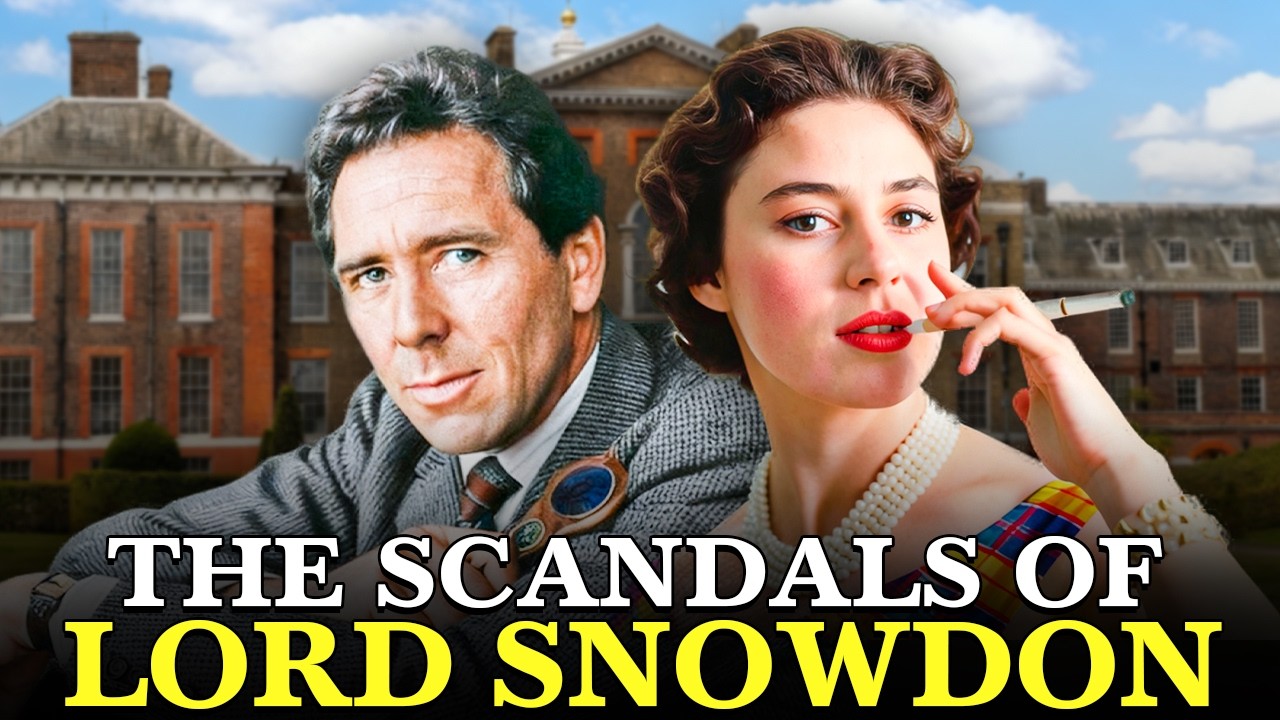 Margaret, then 45, did not cry. She did not plead. According to accounts drawn from those closest to her, she told her private secretary, Lord Nigel Napier, that it was the best news he had ever given her — a line of exhausted, bitter relief from a woman who had spent years searching her own drawers for evidence of her husband’s contempt.
That contempt, the account alleges, was not impulsive but architectural. Lady Anne Glenconner, Margaret’s lady-in-waiting and closest friend, later described notes that Tony Armstrong-Jones left for his wife in drawers, inside books, and tucked among her gloves and stationery. One message told her she looked like a Jewish manicurist and that he hated her.
The method was worse than the content. These were not insults hurled in the heat of an argument, where anger at least acknowledges the other person’s presence. They were ambushes, designed to be discovered in solitude, when Margaret was alone with her thoughts and her husband was elsewhere.
The cumulative effect was to make her feel unsafe in her own home.
The princess of the United Kingdom, one of the most photographed women in the world, could open a drawer in Kensington Palace and find among her own belongings a note from her husband telling her he hated her. All the ceremony, all the staff, all the private secretaries and equerries offered no protection against the person closest to her.
The palace could manage her schedule, her wardrobe and her public engagements. It could not manage what happened inside her marriage, because the marriage was supposed to be the one space where management was not required. Tony turned that space into a theater of contempt, and she had no audience to appeal to and no protocol for survival.
The humiliation was not confined to written notes. In one scene that crystallized everything, Tony was hospitalized at the London Clinic and Margaret came to visit him as his wife. She arrived to find Lady Jacqueline Rufus Isaacs already at his bedside, already occupying the position that should have been Margaret’s.
Standing in the hospital room, confronted with the physical evidence of her own displacement, Margaret reportedly said something to the effect that she could nurse him herself — a line devastating precisely because it sounds not furious but plaintive, not commanding but diminished. A princess of the blood reduced to competing for access to her own husband’s sickbed.
The affairs ran alongside the notes. Tony’s infidelities were numerous, sustained and conducted with a boldness suggesting he was not especially concerned about discovery. He maintained relationships from his premarital life, formed new attachments, and exercised a sexual freedom he had always claimed as his right within a marriage whose constraints made reciprocal behavior nearly impossible.
The asymmetry was savage. Tony’s affairs were exercises of appetite, conducted with confidence bordering on indifference to exposure because he understood that the institutional machinery surrounding his wife would protect him. Margaret’s attachments, by contrast, were acts of survival — brief respites from the daily experience of being married to someone who had made clear she was unwanted.
The Queen knew. Elizabeth II was not a woman who missed things, and she had access to staff reports and the quiet observations of courtiers whose job was to notice when the royal household’s foundations were shifting. But knowing and acting are different things when you are the sovereign, and Elizabeth’s position was structurally impossible.
She could not intervene in Margaret’s marriage without acknowledging that it was failing, and public acknowledgment would create the very crisis that royal protocol existed to prevent. So she watched. She sympathized in the constrained way royal sympathy is expressed — a telephone call, a concerned word, an invitation to Balmoral carrying the unspoken subtext of refuge.
The Queen Mother maintained her own position. She belonged to a generation for which marital unhappiness was not a reason for divorce but a reason for better behavior at dinner. If Margaret described the notes in the drawers, the response would almost certainly have been sympathy laced with the expectation of endurance.
One bears it. One carries on.
The photograph that ended the pretense was taken in February 1976 on Mustique, in the kind of Caribbean light that makes paradise look like paradise. Margaret and Roddy Llewellyn, 17 years her junior, together in swimwear on a beach. No embrace, no kiss — nothing that would have scandalized a viewer who did not know who these people were.
But everyone knew. The woman was Princess Margaret, Countess of Snowdon, youngest sister of the Queen, married, a mother, a member of the most visible family in the world. The man beside her was not her husband.
He was untitled, unknown to most of the British public, and obviously not there in any capacity that could be explained away as professional.
The photograph was published by the News of the World, and within hours the careful architecture of discretion that had held the Snowdon marriage together in public — years of silence, managed appearances, institutional tact — lay in pieces. The private war had become public, and neither Margaret nor Tony nor the institution was ready.
The formal announcement came on March 19, 1976. The language was palace language: precise, bloodless, designed to convey information without emotion and to close down inquiry rather than invite it. The couple had mutually agreed to live apart.
 There were no plans for divorce proceedings.
The statement used the word “mutually,” which was technically accurate in that both parties had by then accepted the reality of the situation, and deeply misleading in that it implied a symmetry of decision-making that did not exist. Tony had wanted out. Margaret had been told she was being left.
The institution had drafted the language.
The public read it in their morning newspapers and drew their own conclusions, which were largely that Margaret — glamorous, difficult, indiscreet Margaret — had brought this upon herself by conducting an 𝒶𝒻𝒻𝒶𝒾𝓇 with a younger man in the Caribbean while her husband was elsewhere being patient and long-suffering. The narrative was unjust, and she knew it.
She had endured years of Tony’s cruelty — the notes, the lovers, the humiliations, the hospital bedside, the slow dismantling of her confidence — and the public believed she was the unfaithful one. She had been the one left, and the public believed she had been the one leaving. The gap between perception and reality was vast.
The institution had no interest in closing that gap, because closing it would have required acknowledging what had actually happened inside the marriage. That acknowledgment would have been far more damaging to the monarchy’s image than the neat, managed story of a mutual separation. So the palace language stood, and Margaret absorbed the cost.
Tony moved toward Lucy Lindsay-Hogg and the life he had been constructing in parallel for years. He was, by all accounts, relieved. The marriage had been a constraint, and constraints were what Tony had spent his entire life refusing.
With the separation formalized, he could live openly with Lucy and continue his professional career.
Margaret remained at Kensington Palace, publicly humiliated, privately devastated beneath a performance of resilience. Her relationship with Roddy continued, but stripped of the privacy that had made it bearable. Every appearance together was noted, every holiday scrutinized.
The press now treated her with a prurience that fed on the Mustique photograph.
Her drinking increased. That fact appears consistently across the biographical record and should be stated plainly. She drank more as her marriage worsened, and the drinking was both symptom and accelerant — dulling the pain while making her more volatile, more unpredictable, more difficult for those around her to manage.
She smoked heavily.
She was not well. That is the simplest and most important thing to say about Margaret in this period. She was not well emotionally.
She was not managing the stress of her life with the resilience she had once possessed, and the systems that should have supported her were designed to manage appearances rather than treat causes.
The palace did not have a mechanism for acknowledging that a princess was unhappy. It had a mechanism for ensuring that her unhappiness did not become visible. Those are not the same thing, and the difference between them is the space in which Margaret suffered for years while the institution maintained its composure.
On May 24, 1978, Princess Margaret’s divorce case appeared in the Supreme Court of Judicature daily cause list for hearing in the London Divorce Court, courtroom 44 of the Queen’s Building. It was listed 20th in a batch of 28 cases. The hearing was expected to take only a couple of minutes.
After the wedding at Westminster Abbey, after the carriage procession, after the television cameras and the applause and the fantasy of modern royal romance, the marriage ended in a queue. One case among many, one more dissolution in a building designed to process them efficiently. The law doing what the law does when every human detail has been pressed flat.
The decree nisi was granted that May. By July the divorce was finalized. It was the first divorce of a senior British royal in the modern era, and even then the language around it remained curiously clipped, as though the establishment still hoped brevity might limit significance.
 But significance does not work that way.
On December 15, 1978, Snowdon married Lucy Lindsay-Hogg. There are moments in family histories when time itself behaves like an insult, and this was one of them. July, the divorce completed.
December, the remarriage. The speed said what Tony did not have to say aloud: the next arrangement had already been waiting.
By the following year there would be a daughter, Frances, a new household, new rooms, new photographs. The old pattern merely transferred into a fresh set of names. Within 18 months of the wedding, Tony had begun another long 𝒶𝒻𝒻𝒶𝒾𝓇 with the journalist Anne Hills, as though even the woman who had replaced Margaret could not contain him.
The children were watching. David was 14 when the separation was announced, Sarah just 11. They had already lived through years of atmosphere, of tension, of silence, of their parents’ separate worlds coexisting under one royal roof.
But separation and divorce were different. They put dates onto things that had been felt rather than named.
For children born into publicity, there is a particular brutality in watching the country narrate your family before you have the language to narrate it to yourself. Both would turn away from the public spectacle that defined their parents’ union and toward quieter vocations — David to furniture making and design, Sarah to painting and the fine arts.
Their parents had lived their marriage as theater. The children would spend their adult lives avoiding the stage. David trained as a craftsman in wood, opened a workshop in Dorking in 1985, and built a company associated with bespoke furniture and highly finished British luxury.
He made things that held together.
Sarah trained at Camberwell and the Royal Academy schools and has long exhibited under the name Sarah Armstrong-Jones rather than trading heavily on royal styling. In 2024, she became president of the Royal Ballet School, a role carrying a direct line back to her mother, who had loved ballet and served as the school’s president for years.
Margaret never remarried. She had once been denied a marriage she wanted, then had endured one that degraded her. Marriage had already revealed both of its faces.
There was no reason to expect she would trust it a third time. What followed was a narrower, lonelier life than the public often understood.
Her health deteriorated slowly, then unmistakably. Heavy smoking, long years of drinking, emotional strain and simple bad luck all played their part. In February 1998, while at her holiday home on Mustique, she suffered a mild stroke.
A year later, she severely scalded her feet in a bathroom accident, badly affecting her mobility.
Further strokes followed in 2000 and 2001. By then, the image of Princess Margaret that had once dominated the culture — the dazzling younger sister, the witty beauty, the woman at the center of the room with a cigarette holder in her hand — had been replaced by a sadder, more physically vulnerable figure, often in a wheelchair.
On February 9, 2002, Princess Margaret died at the King Edward VII Hospital after a further stroke. She was 71. Her children, Lord Linley and Lady Sarah Chatto, were at her side.
The official announcement was brief, as official announcements always are, but the image that remains is not official at all.
It is of the son and daughter who had grown up inside the marriage that defined her adult life, standing at the end of the story with her when almost everyone else from the opening chapters was gone. That is one of the ways family works even after damage. People may not be able to save one another from history.
 They still arrive at the bedside.
Snowdon’s aftermath followed the pattern one might have predicted. His marriage to Lucy produced a daughter, Frances, in 1979. For a time that new household seemed to promise what the first had not delivered: steadiness, domesticity, a second chance.
But the essential fact about Tony had never changed. He was still Tony.
In the late 1990s, while working with Country Life editor Melanie Cable-Alexander, Snowdon fathered a son, Jasper, born in April 1998. Lucy moved out. Divorce proceedings were set in motion.
The public by then was no longer surprised. That may be the most damning thing that can happen to a man’s reputation.
The old secret of Polly Fry, born in 1960 to Camilla Fry, finally hardened into documented fact in 2004 when a DNA test confirmed that Snowdon, not Jeremy Fry, was her biological father. That revelation reached back across 44 years and altered the beginning of the story from the far end.
It meant that even before the wedding to Margaret had properly settled, another child already existed in the outer ring of his life. Another compartment, another private truth, waiting decades to become public. When people describe Snowdon as complicated, that is what they usually mean.
But complication can become too polite a word.
He was not merely complex. He was structured around secrecy, and secrecy always leaves someone else carrying the weight. None of this erased his work.
Snowdon remained in the artistic sense significant. The National Portrait Gallery describes him as a photographer, filmmaker, designer and campaigner for disability rights.
His portraits of politicians, artists and members of the royal family helped define the look of postwar British public life. He campaigned for disabled people with seriousness shaped in part by his own experience of polio. He was in professional terms much more than Princess Margaret’s husband, and it would be dishonest to pretend otherwise.
The difficulty is that talent does not cancel damage. The world is full of gifted people who leave wreckage in private. Snowdon belonged to that old and very crowded category.
He died on January 13, 2017, at his home in Kensington, aged 86. By then Margaret had been gone for almost 15 years.
He left behind a body of work, a public reputation, children from different chapters of his life, and a trail of relationships that still resisted tidy explanation. Death can simplify a biography on paper. It does not necessarily simplify it in memory, and the memory of this marriage remains stubbornly unresolved.
What remains physically is scattered. Kensington Palace still stands, but not as the private world the Snowdons once inhabited. Nymans remains with its wider estate under National Trust care.
And on Mustique, Les Jolies Eaux still exists, transformed now into a rentable legendary villa, a royal refuge converted into luxury history.
That may be the most modern fate possible for such a place: the site of private joy and public 𝒔𝒄𝒂𝓃𝒹𝒶𝓁 repackaged as experience. The cultural afterlife of Margaret and Snowdon has been vigorous, which is another way of saying the public has never stopped wanting this story in forms it can consume.
The most revealing image, in the end, may still be the smallest one. Not Westminster Abbey, not Mustique, not the court list. A note hidden in a drawer.
A private insult placed where only one person would find it. The whole story is in that gesture: the public grandeur outside the room, the private cruelty inside it.
And the long silence required to keep the two from touching — a silence the palace maintained for as long as silence was possible, and which Margaret carried alone until the very end.