Sir Alan “Tommy” Lascelles, the courtier who served four British sovereigns and secretly despised the king he was sworn to protect, confessed in a private diary that he wished the heir to the throne would break his neck riding to hounds — a sentiment Prime Minister Stanley Baldwin admitted he shared.
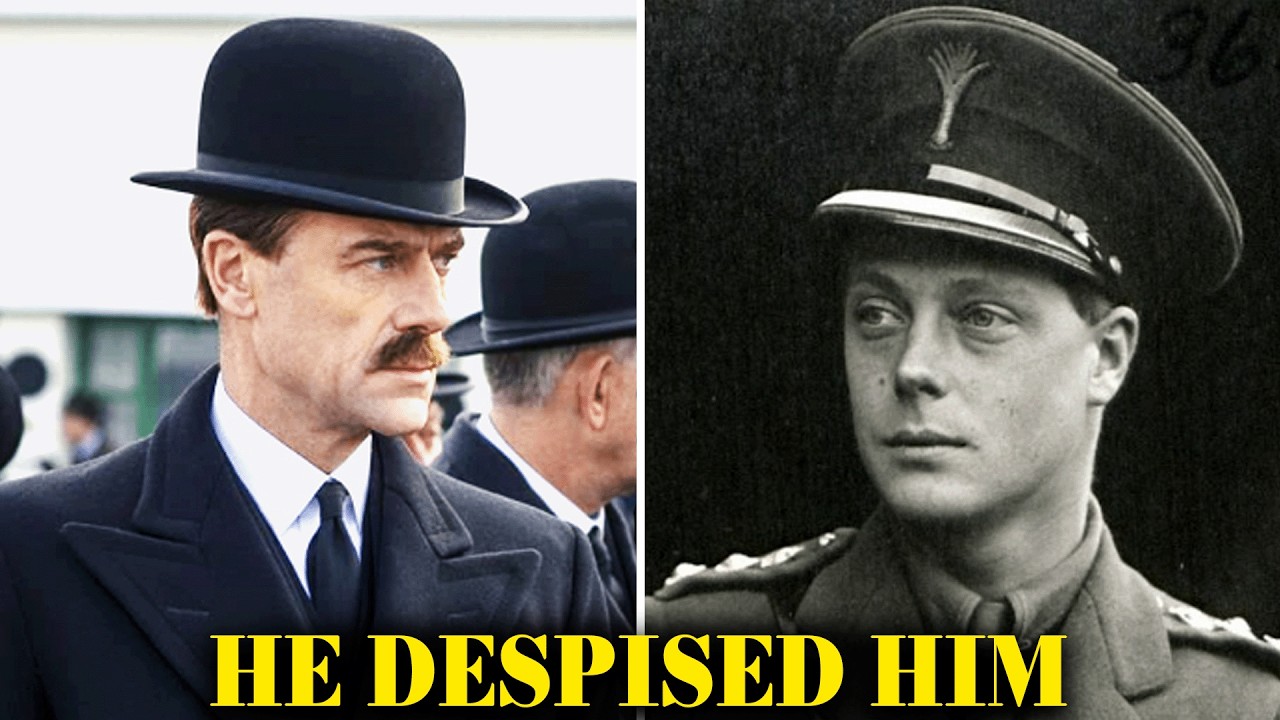
The extraordinary exchange, recorded in the winter of 1927 and preserved in the Royal Archives, exposes the private contempt at the heart of the British monarchy during its most dangerous century.
Lascelles, who died in 1981 at Kensington Palace, spent fifty years deciding in private which royal lives the British public would be allowed to see. He never gave a single interview. He never spoke his mind aloud.
He left everything in ink.
Born on April 11, 1887, at Sutton Waldron in Dorset, Alan Frederick Lascelles was the sixth child of the Honorable Frederick Lascelles, a younger son of the fourth Earl of Harewood. The family name carried a pedigree reaching into the marrow of the English aristocracy, but younger sons inherited very little indeed.
They inherited the name. They inherited the manner. They inherited the expectation that they would find something useful to do with their lives because nobody was going to leave them a fortune.
The household at Sutton Waldron was comfortable rather than grand, a place where gentle poverty was managed with pride and discretion. The boy learned early that appearance and reality were two separate accounts that had to be balanced with care.
He was sent to Marlborough College, then to Trinity College, Oxford, where he read modern history — the one subject that would prove to be his entire life preparation in disguise. He absorbed the machinery of constitutions, the relationship between crown and parliament, the slow evolution of power from the personal to the constitutional.
In August 1914, the guns opened fire across Europe. Lascelles joined the Bedfordshire Yeomanry as a junior officer, served on the Western Front, and came home decorated with the Military Cross for gallantry. He never spoke about it afterwards.
The war fixed in him a quiet, immovable conviction that he owed the country something his own survival had not yet paid. That conviction would govern every decision he made for the next half century.
In 1920, he married Joan Thesiger, daughter of Lord Chelmsford, then Viceroy of India. The match gave Lascelles entry into the highest circle of imperial administration. He spent eight months as his father-in-law’s aide-de-camp in the heat of the viceregal lodge in Delhi.
It was in India that he first learned how a great house actually functioned behind its ceremonial face. Delhi taught him that power was not a matter of waving and smiling. It was a matter of paper, timing, memory, and the willingness to be unseen.
When the post of assistant private secretary to the Prince of Wales came up in 1920, Lascelles wrote to the Lord Chamberlain and asked to be considered. He was 33 years old, dark-haired, sharp-eyed, a cousin of the Princess Royal by marriage, a captain with a soldier’s medal and an Oxford degree.
He thought he was going to work for the most popular young man in the world. He thought he would spend his life serving a radiant future king. He underestimated everything, including his own capacity for disgust.
The Prince of Wales in 1920 was the most famous young man on earth. Edward, the heir to the British throne, was on the cover of every newspaper from Toronto to Sydney. He flew his own airplanes.
He drank cocktails. He wore the kind of suits English tailors copied for the next decade.
Tommy Lascelles walked into the office at York House at St. James’s Palace on a gray morning in 1920, was given a desk and a sheaf of correspondence, and a quiet warning from the senior private secretary Godfrey Thomas that the work was not always easy.
Within a fortnight, he understood that the work was not even what he had been told it was. The prince did not read his red boxes, the state papers that held the business of empire. The prince was rarely in the office.
The prince was visibly in love with a married woman called Freda Dudley Ward.
The entire household had organized itself around the prince’s moods rather than around the prince’s duties. That first year was a revelation to a man who had taken the crown seriously all his life.
Lascelles watched the heir to the throne treat the machinery of government as an interruption to his pleasures. Watched him charm the crowds and bore the bureaucrats. Watched him treat the red boxes with the cheerful contempt of a man who had never had to work for anything in his life.
The admiration Lascelles had brought through the door of York House began slowly and almost against his will to curdle into something far more complicated. He kept a diary, as his kind did, and in its early pages the disappointment is already visible beneath the proper phrasing.
He noted the appointments postponed, the papers unread, the mornings lost to golf and the nights lost to parties. He began to take notes the way a lawyer takes notes at a deposition, and those notes became the record by which decades later historians would measure the true character of a king.
The diary was not a confession or a rebellion. It was a discipline, a daily act of self-governance inherited from the careful households of his childhood. It became the central fact of his inner life.
He wrote down what he saw, what he thought, what he knew of other men’s secrets in volumes that would fill a small library. He wrote with the particular clarity of a man who has decided that posterity must be served even when the present is corrupt.
What the prince was destroying, in Lascelles’s careful judgment, was the monarchy itself. The crown in those years rested on a delicate constitutional fiction — the idea that the sovereign stood above politics, above 𝒔𝒄𝒂𝓃𝒹𝒶𝓁, above the appetites of private life.
That fiction required enormous effort to maintain. It required servants like Lascelles to deflect, to delay, to smooth, to keep the newspapers ignorant and the politicians reassured. Every party the prince attended, every married woman he courted, every obligation he skipped made that work harder.
The prince’s romantic life was not merely a personal matter. It was a constitutional hazard, because the heir to the throne could not marry without the permission of the crown in Parliament, and every entanglement with a married woman threatened to explode into public 𝒔𝒄𝒂𝓃𝒹𝒶𝓁.
Freda Dudley Ward was the first great entanglement. Lascelles watched the 𝒶𝒻𝒻𝒶𝒾𝓇 progress with mounting alarm, watched the young woman be treated almost as an unofficial consort, and noted with horror that the prince seemed to regard the danger as part of the entertainment.
Those early years also taught Lascelles something about the men around the throne, and the lesson was not a flattering one. The courtiers were a mixture of the devoted, the ambitious, and the sycophantic, and too many had built their entire careers on telling the prince exactly what he wanted to hear.

They laughed at his jokes, excused his absences, arranged his pleasures, and called it service. Lascelles, watching from the second desk, concluded that the palace was full of men who had misread the word loyalty as the word flattery, and he resolved to be the exception.
He began quietly to do the thing that flatterers never did — to tell the prince privately and with perfect courtesy that he was heading for trouble. He warned him about the company he kept. He warned him about the women he pursued.
He warned him that the newspapers were beginning to take an interest that no amount of charm could diffuse.
The prince listened, nodded, thanked him, and then went out and did exactly what he had been warned against. The quiet cycle of warning and disregard became the template of their entire relationship.
By the mid-1920s, the heir’s reputation, so carefully burnished in the empire’s newspapers, was beginning to acquire a second, truer portrait — the portrait of a man who had never been required to finish anything in his life.
The tours went on, brilliant and exhausting, and on every tour Lascelles had a front row seat for the gap between the public performance and the private reality. He watched the prince charm Adelaide and Melbourne and Ottawa and Buenos Aires, and he watched him return from each triumph not restored but hollowed out.
The prince was not entirely a villain, and Lascelles, a fair man even in his contempt, never pretended otherwise. Edward possessed genuine gifts — an instinct for the common touch, a talent for being seen to care, a warmth that the stiff old court could never manufacture.
That was precisely the tragedy. The gifts were real, and they were being spent on pleasure instead of on the institution that needed them. Lascelles, who had given his own talents to the institution with no expectation of reward, watched the waste with the particular anger of a man who had seen the same thing squandered in the trenches.
By the late 1920s, the tension inside him had hardened into certainty. He had concluded in the privacy of his own judgment that this man would lose the throne or wreck it. That conclusion was not born of spite.
It was born of nine years of evidence collected the way a doctor collects symptoms until the diagnosis became unavoidable.
The decision came to a head in the early weeks of 1929. Lascelles, then 41, sent a note to the prince asking to be allowed to resign. When the prince, alarmed, sent Gerald Trotter to talk him out of it, Trotter was refused in turn.
So the heir to the throne summoned the rebellious assistant to see him in person. And the assistant walked up and down the room and told the future king of England, in his own later words, exactly what he thought of him and of his whole scheme of life.
He told him that if he carried on the way he was going, he would lose the throne of England. It was not a shouting match. Nobody threw anything.
There was no written prophecy left on a desk and no 𝒹𝓇𝒶𝓂𝒶 staged for effect. There was a man pacing a room, speaking quietly and steadily to a prince who sat and listened.
In that calm exchange, Lascelles did the one thing that his entire caste regarded as unforgivable — he told the heir the truth about himself in plain, unmistakable terms. He told him that his private life would ruin him, that his contempt for duty would be his undoing, and that the crown he was so careless with would be taken from him.
The prince received it with the grace he could always produce when he wanted something. He thanked Lascelles, promised to reform, asked him to stay. And Lascelles, being a servant of the institution rather than a man of ambition, agreed to remain a while longer out of loyalty to something larger than his own exhaustion.
The moment passed. The promise was not kept. Within months the prince was back to his old habits, and Lascelles, having delivered his warning and seen it dissolve, understood that the warning had never stood a chance.
He left the household finally in the autumn of 1929, a resignation dressed up as a move to other duties the way such exits were always managed in that world. He was spent, privately relieved, and convinced that he had done what he could.
He settled into a quieter life, believing that the crisis, if it came, would come without him in the room. He could not have been more wrong. The monarchy had not finished with him, and the man he had despised from the second desk was about to become king.
King George V died on the night of January 20, 1936, at Sandringham, and the empire passed into the hands of the man Lascelles had spent nine years trying to save from himself. The new king’s first act was to set in motion the machinery of his own destruction.
Within months he was on the telephone to the woman he had been pursuing for years — the American divorcée he would never be permitted to marry. The household Lascelles had left was scrambling to manage a monarch who had no interest in being managed.
That American woman was Wallis Simpson, and her arrival in the story completed the prediction Lascelles had made in that pacing room in 1929. He had not then known her name, but he had known her type — the glamorous, commanding woman who offered the prince the private understanding that flattered his ego and indulged his weakness.
By the spring of 1936, Edward VIII was conducting his reign around the needs of his relationship, and the court, the government, and the empire were all left to watch the slow, magnificent, entirely predictable collapse.
Lascelles did not need to be in the palace to see it happening. He read the reports, heard the talk, and understood that the crisis he had prophesied was unfolding exactly on schedule. The peculiar thing was that he felt no triumph at being right.
What he felt was the weariness of a man who had spent a decade watching a fire about to start and had been unable to stop it.
When the crash came in the freezing days of December 1936, it came with the particular completeness that only a long-ignored warning can produce. The abdication crisis has been retold so often that its shape is familiar, but the part Lascelles played in it is rarely told because he played it from the shadows where he had always lived.
He was consulted as the man who knew the heir better than anyone, and he gave his advice plainly the way he had given it in 1929. He advised that the king could not keep both the throne and the woman, that no constitutional way existed to let the crown and the marriage coexist, and that the monarchy would survive the loss of one king more easily than it would survive the destruction of the crown’s reputation.
By December 7, the king had begun to talk privately of renunciation. By December 9, he had instructed his solicitor to prepare the documents of abdication. On December 10, at Fort Belvedere, he signed the instrument in the presence of his three brothers, who countersigned as witnesses.
The instrument was carried to Westminster and laid before Parliament on the 11th. And on the afternoon of December 11, 1936, at 25 minutes to two, the king ceased to be king and his shy, stammering brother became George VI.
That night, the man who had been Edward VIII made the most famous broadcast in the history of the British monarchy, speaking from Windsor Castle to tell the country that he could not carry the heavy burden of responsibility without the help and support of the woman he loved.
 He said goodbye, sailed for France the next morning, and was created Duke of Windsor by his brother. And in the private secretary’s office at Buckingham Palace, a quiet courtier listened to the broadcast and wrote in his diary one of the shortest entries in the whole of his secret record.
He wrote that what they had feared for so long had come at last, and that it had been, in every particular, exactly as he had always known it would be.
The abdication is where most tellings of this story stop. But the full scale of Lascelles’s judgment of Edward only becomes visible when you follow the aftermath — the long, bitter afterlife of the man who had been king.
The Duke of Windsor, handsome, aggrieved, and unemployed, spent the rest of his life demanding recompense for the throne he had thrown away. It fell to servants like Lascelles to manage the impossible task of keeping him satisfied without letting him back into the life he had forfeited.
The Duke’s conduct after 1936 confirmed everything Lascelles had ever written about him. He married Wallis in France in June 1937, a ceremony from which the entire royal family remained pointedly absent. Then he set about negotiating the price of his silence — the titles, the money, the recognition, the endless demands for his wife to be called Her Royal Highness.
When war came in 1939, the Duke’s conduct took on a darker color. Churchill, who liked him, offered him the governorship of the Bahamas, and he went. But his movements through Spain and Portugal on the way to the posting would be the subject of historical investigation for fifty years.
There were the famous meetings with figures who stood close to the enemy, the Marburg file, the documents that British intelligence eventually seized and brought to England, and the grim task of explaining that the brother who had been king had behaved under strain in ways that no loyal servant cared to describe in full.
Lascelles was the man who handled the aftermath of that file, and his handling of it tells you everything about his method. He did not rage. He did not leak.
He read the documents, understood their significance, and set about the slow, careful business of making sure that their contents never destabilized the crown in wartime.
He buried the worst of it in the Royal Archives, where it would sit sealed and guarded for decades. He did it so quietly that most of the country never knew how close the institution had come to another wound the war did not need.
That was the pattern of Lascelles’s whole second career. He had spent the first part of his life warning against Edward, and he spent the rest of it managing the consequences of the warning being ignored. He became the institutional memory of the crisis, the man who knew exactly what the erstwhile king was capable of.
His rise during the war followed the logic of that indispensability. In 1943, in the middle of the conflict that would decide the fate of the free world, he was appointed private secretary to the new king, George VI — the very position of the highest trust in the royal machine.
The man who had spent nine years at the second desk and then resigned was now the first. And the king he served was precisely the sort of sovereign he had always believed the monarchy required: dutiful, modest, hardworking, and deeply aware that the crown was a trust rather than a toy.
The wartime private secretariat was the engine room of the crown. Lascelles sat at the center of the weekly audiences between the king and the prime minister, Winston Churchill, took the notes that would later become a primary historical source, and helped carry the throne through the darkest years of the century.
It was grueling work performed in a palace dimmed against bombing and emptied of its treasures. It was exactly the kind of work Lascelles had spent his entire life training for — the work of keeping the institution alive while the world burned around it.
He remained private secretary to George VI until the king’s own premature death in February 1952, and then he served the new Queen Elizabeth II in those first difficult years of her reign.
It was under her that he produced the document for which historians know him best — the memorandum of 1950 setting out what would come to be called the Lascelles Principles, the unwritten rules governing when a monarch may refuse a request from the prime minister.
The irony was complete. A man who had spent his career in the shadows had written a public doctrine with his name on it. The principles were, in essence, the distilled wisdom of a lifetime spent watching the crown nearly destroy itself.
They held that a sovereign faced with a request that threatened the constitution must be given time to reflect, that parliament must have the chance to consider, that the people must have the chance to speak, and that a monarch who acted in haste would damage the very institution he was sworn to preserve.
They were the written form of the advice Lascelles had given in a pacing room in 1929, given now to the whole of the constitutional future.
His last great act of institutional management concerned another royal romance — the doomed love of Princess Margaret for Peter Townsend, the divorced royal equerry. In the 1950s, the younger sister of the young queen fell in love with a man the establishment could not let her marry.
Once again, the machine Lascelles had spent a lifetime maintaining was asked to destroy a private happiness for the sake of public credibility. Once again, a royal appetite collided with constitutional reality, and once again, the institution chose the institution.
Lascelles, by then keeper of the Royal Archives as well as the queen’s most seasoned advisor, was the man who made plain to Margaret what the choice would cost her. She would have to renounce her rights of succession, her income, her place in the family to marry the man she loved.
The princess made her statement in 1955, announcing that she would not marry Townsend. And Lascelles, like so many men of his kind, did what he saw as his duty and paid for it with his reputation.
The public never forgave him — or rather, the sentimental public decided that he had been the villain of that story. The cold courtier who had crushed a princess’s happiness to protect an institution they did not understand.
The criticism stung him more than he let on, because he had not invented the rules and he had not enjoyed enforcing them. But he would not defend himself in public, and the diary recorded the cost in scattered lines of quiet weariness.
The story of Margaret and Townsend became the story in which Lascelles’s own generation turned on him, and he accepted it without a word of self-justification.
So the pattern that binds his entire life together becomes clear. He served the institution with perfect fidelity, and the institution required him again and again to break the hearts of the people he served.
He warned the heir and was ignored, and the warning came true. He buried the Duke’s worst secrets and was thanked with nothing. He enforced the rules against the princess and was vilified for it.
And through all of it, he wrote in the diary steadily, year after year, the record that would outlive everyone — including the verdicts of the sentimental public that judged him.

The diary is the truest key to the man, and it is the reason this story can be told at all. Lascelles wrote down what he saw, what he thought, what he knew, in fifty volumes that he left to be opened after his death. Historians have spent the decades since going through them like miners going through a seam of gold.
Those volumes contain the unguarded judgments he would never speak aloud, including the judgments about Edward that make this story possible — the record of a servant who secretly despised the king he was sworn to serve, and who said so only in ink.
He retired from the queen’s service in 1953, after more than thirty years in and out of royal households, and spent his last decades in a grace-and-favor apartment at Kensington Palace, still writing, still observing — the institutional memory of the institution made flesh.
He outlived nearly all the actors in his story. He outlived the old king, the abdicator, the shy brother, the young queen’s early reign. And he kept, until the last, the discipline of the diary.
He died on August 10, 1981, in his apartment at Kensington Palace, after asking on the morning of the day he died to be raised in his bed so that he could see the garden one last time. He looked at the garden for a long while, closed his eyes, and did not speak again. By the afternoon he was gone.
The memorial service, held months later at the Queen’s Chapel of the Savoy, was attended by the Queen he had served, by the Queen Mother, and by Princess Margaret — who sat at the back, did not look at the coffin, and left immediately afterwards, alone in her car.
The judgments we have inherited about the man who was Edward VIII owe more to Tommy Lascelles than almost anyone realizes. Nearly every account of the abdication, every portrait of the restless king, every diagnosis of why he lost the throne flows downstream from the record Lascelles kept in his fifty volumes and the advice he gave in that pacing room half a century earlier.
He did not merely witness the crisis. He was its most accurate chronicler. And chroniclers, as any historian will tell you, get to decide how the story is remembered.
Yet he would not have wanted the credit, because credit was a form of self-advertisement, and self-advertisement was a form of failure in his code. He believed that a gentleman served and kept his word and did not make other people clean up a mess he had created for amusement.
He believed that the monarchy was an institution worth protecting even when it meant protecting it from its own members. And he believed, to the end, that the people who judged him harshly simply did not understand what was at stake.
Whether they were wrong is a question he left to history — in writing.
So the strange story ends with a servant who despised the king he swore to serve and served the institution all the more faithfully because of that contempt. He did not despise the crown. He despised the man who was wearing it and spending it.
And he made that distinction the whole organizing principle of his life.
It is a peculiar kind of loyalty — the loyalty of the man who loves the office so much that he will fight its most careless occupant to preserve it. And it is perhaps the only kind of loyalty the British monarchy ever truly understood.
The question that remains, as with all lives lived in the shadows, is whether the institution was worth the price the people paid for it. The king lost his throne. The shy brother lost the quiet life he had built.
The young princess lost the man she loved. And the courtier lost his reputation. All of them consumed by the machinery they were trying to preserve.
Tommy Lascelles looked at that machinery every day for fifty years, recorded what he saw, and kept his own judgment to himself until the ink could speak for him.
He had been right about Edward years before anyone wished to hear it. And he had not hated him because he was weak. He had feared him because weakness, surrounded by rank, beauty, money, obedience, and applause, could look exactly like destiny.
That fear, and the contempt that grew from it, is the secret heart of this story. The reason that a man sworn to serve a king could spend his life working against that king’s destruction. He served him in every public sense — protected him, advised him, carried his secrets — and privately wished, as he once confessed to a prime minister, that the next king would break his neck.
The confession was not cruelty. It was clarity. The clarity of a man who had seen the whole catastrophe coming and who knew that the only honest position for a servant who loved the institution was to hope that the man would never get the chance to finish destroying it.
In the end, the record in his own hand is the monument he would have wanted. And it is the reason his name, almost unknown during his life, is now inseparable from the story of the monarchy he served.
Those fifty volumes, sitting now in the Royal Archives, have made him a kind of co-author of the modern history of the crown — the quiet man at the edge of every famous frame, the shadow that gave the picture its structure.
He would have denied wanting any of it. Then he would have straightened the papers and carried on.
So the next time you see a photograph of the handsome Duke, or read an account of the abdication, or watch a film about the princess who gave up the man she loved, remember the man who was standing just outside the frame.
He was the one who knew the truth before it was safe to know it, who wrote it down when no one else would, and who spent his entire working life managing the family that had once been his childhood’s romantic dream.
He was Sir Alan Lascelles — Tommy to his friends — and he secretly despised the king he was sworn to serve. That is the true inheritance of the man who kept the palace’s darkest secrets. The man who decided in private which royal lives the British public would be allowed to see.
He left us not a confession, but a record. Not a verdict, but an archive. And he trusted the future to do what he would never do himself — judge the king he served.
Whether the institution was worth the human price is the question he left deliberately open. And it is the question this whole story has been asking in every telling. It is the question that will always meet a man who loved the crown more than he ever loved any single man who wore it.