Alan Frederick Lascelles, the palace official whose iron discipline shaped the modern British monarchy across four decades of constitutional crisis, died at Kensington Palace in August 1981 at the age of 94, leaving behind a legacy that historians now recognize as far more consequential than the ceremonial title of private secretary suggests.
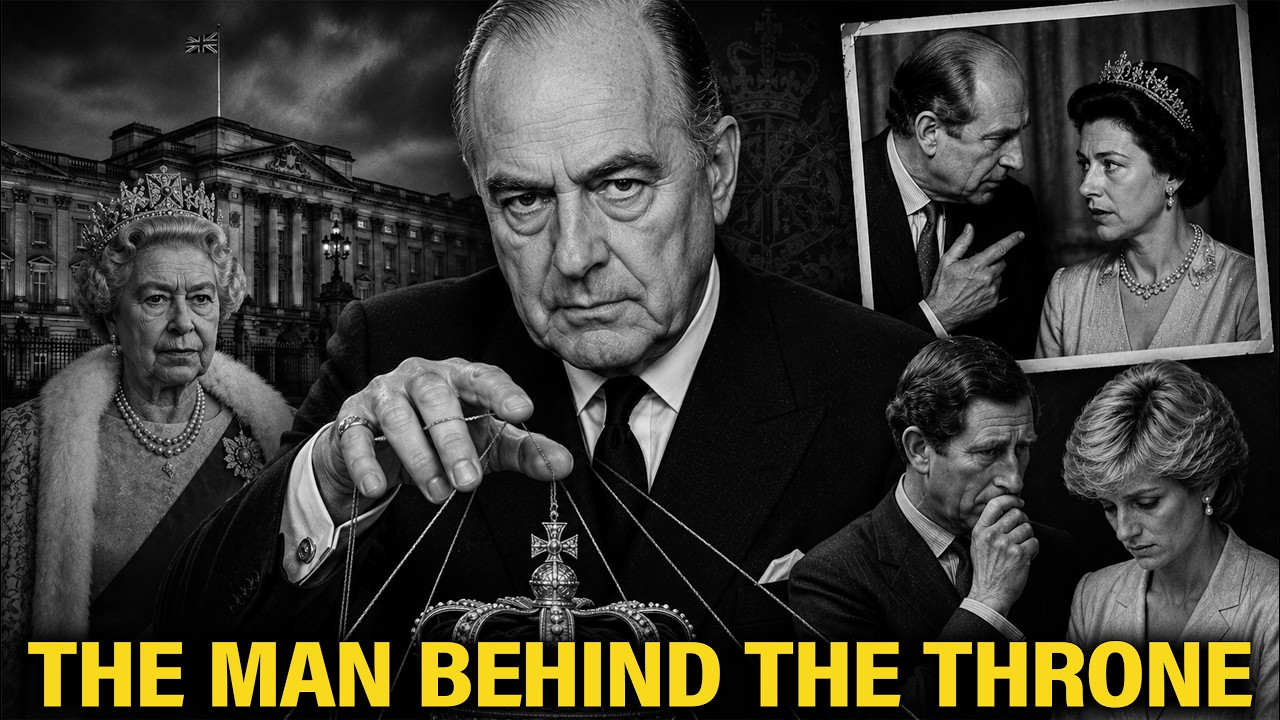
Tommy Lascelles, as he was known from childhood, was not a man who protected the crown in the decorative sense. He controlled it. Quietly, without credit, and with an iron grip dressed in perfect manners, he built the invisible architecture that kept the British monarchy from collapsing under the weight of its own contradictions.
His story begins in 1929, when he sat down and wrote a resignation letter that would define the rest of his professional life. The file in front of him was not thick. It did not need to be.
He had spent nearly a decade inside the Prince of Wales’s household, watching a pattern take shape that no amount of paperwork could fix.
The Prince of Wales, later King Edward VIII, was a man who had been adored since birth, celebrated across every corner of the empire, and handed the most glittering public role in the English-speaking world. He treated all of it like a costume he was already tired of wearing.
Lascelles had kept the machinery running. He guarded the schedule, absorbed the chaos, drafted the letters, and smoothed over the messes that a charming and careless prince left scattered behind him like broken crockery. He did all of it well.
He was by most accounts exceptional at it.
Then he walked away. He cited differences, which in the vocabulary of the British establishment was roughly equivalent to saying the building was on fire. He stood up, packed his conscience, and left the future king behind.
Most men who work that close to that much power spend decades excusing what they see. Lascelles spent a decade watching, then left before the wreck. That alone should tell you everything about the man.
But he did not simply leave. He came back. He returned when the institution needed him most, stepped into the ruins of a broken reign, and spent the rest of his professional life doing something far more complicated than protecting the crown.
He controlled it the way a doctor controls a patient who would otherwise walk off a roof.
Born in April 1887 in Dorset, Lascelles was the youngest child and only surviving son of a family whose blood was excellent and whose finances were somewhat more complicated. His grandfather had been the fourth Earl of Harewood. His mother’s family was established.
The name meant something. The money was never quite equal to the name.
That gap shaped him more thoroughly than any schoolroom. Children who grow up where rank and resources pull in slightly different directions tend to develop one of two habits. They either pretend the gap does not exist or they learn to be more useful than anyone else in the room.
Lascelles developed the second habit with remarkable efficiency.
He was called Tommy from childhood, a nickname his father gave him because he had a large head and a narrow body and the combination apparently put the old man in mind of a tadpole. He kept the nickname for life. He was not a man who flinched from indignity when the indignity was honest.
He went to Marlborough on a scholarship rather than Eton. He hated Marlborough. From there, he went to Trinity College, Oxford, studied classics, and emerged into a Britain that did not immediately have an obvious place for young men of good blood, moderate income, and sharp minds who preferred institutions to commerce.
Before the First World War took hold, he tried various respectable paths and found them unsatisfying. What he discovered was that he did not enjoy selling himself. He liked structures.
He liked rooms in which people said less than they meant and expected everyone around them to understand more than had been spoken.
Then came the war. Lascelles served in France with the Bedfordshire Yeomanry, rose to captain, and won the Military Cross. Survive real danger, and it tends to shorten your patience for decorative foolishness.
He came home from the front with an inner authority that no drawing-room title and no amount of inherited rank could have supplied.
After the war, he went to India as aide-de-camp to George Lloyd, the governor of Bombay, who happened also to be his brother-in-law. India at that level was the British Empire at full ceremonial volume. He saw how power dressed itself for dinner.
He saw how rank moved through a room.
In Delhi, he also met Joan Thesiger, the eldest daughter of the Viceroy of India, Lord Chelmsford. Joan had once shot a tigress with a single clean shot, which gave you a reasonable sense of the company he had joined. They married in March 1920.
That same year, Lascelles was appointed assistant private secretary to the Prince of Wales. The position sounded grand. It was in practice something closer to advanced containment work.
The Prince of Wales at that moment was the most celebrated royal in the world. He was handsome, modern in manner, emotionally accessible in public, and capable of making an ordinary man in a factory in Sheffield or a digger in Queensland feel that the heir to the throne had genuinely noticed him.
Lascelles saw all that. He was not blind. He could admire the Prince’s gift the way you admire a very sharp knife with full attention to the fact that a very sharp knife in careless hands tends to cut whoever reaches for it next.
What he began to see in the daily machinery of the household was not charm. It was pattern. The Prince was energetic when engaged, evasive when bored, and constitutionally unable to treat paperwork as though it had anything to do with him personally.
He liked affection and resisted authority.
The years accumulated. The tours were brilliant, the crowds enormous, the speeches adequate, the paperwork handled mostly by other people. Edward traveled to Canada, Australia, South Africa, Argentina, the United States.
In each place he drew crowds the way weather draws attention.
By the mid-1920s, Lascelles had reached a conclusion that most people in proximity to power spend entire careers finding excuses to avoid. The trouble was not circumstantial. The trouble was character.
Character as a diagnosis is the most uncomfortable thing a courtier can arrive at because it offers no remedy.
He also had a wife and three children by then. His son John was born in 1922, his daughter Lavinia in 1923, another daughter Caroline in 1928. There were school fees ahead.
Walking away from a glittering royal post was not a theatrical gesture available to a man with those particular domestic mathematics. He walked away anyway.
In 1931, he went to Canada as secretary to the Earl of Bessborough, the new governor general. Ottawa was a long way from London in most senses, but it was still viceregal, still ceremonial, still the kind of work for which Lascelles was exceptionally fitted.
Canada also showed him something important about monarchy that you could not easily see from a London drawing room. The crown was not just a family. It was a set of symbols living in multiple places at once, adapting constantly to different politics, different feelings, different versions of what British authority meant.
By the mid-1930s, the situation in Britain had turned from uncomfortable to alarming. George V was aging. His health was failing in ways that palace language could soften but could not fix.
The arithmetic of succession was becoming impossible to avoid.
In 1935, an invitation arrived. Would Lascelles return to royal service as assistant private secretary to King George V? He hesitated.
Hesitation in this case was not timidity. It was the kind of pause a very experienced swimmer makes before reentering a river whose current he knows too well.
He returned in autumn 1935. Within weeks, the old king was failing visibly at Sandringham. In January 1936, George V died.
In the space of a breath, the prince Lascelles had resigned from in exhaustion and disgust became King Edward VIII.
What followed during 1936 was one of the most bizarre years any British palace had endured since the 17th century, and Lascelles watched it from somewhere very close to the center. Edward as king was Edward as prince with the volume turned up.
Wallis Simpson was present everywhere. Her divorce proceedings from Ernest Simpson moved through 1936 with the slow inevitability of a machine that had been set in motion and could not be stopped by wishing it would stop. Edward wanted her close.
He wanted the family to receive her.
Stanley Baldwin was Prime Minister. Baldwin was not a dramatic man. He looked and sounded like a solid and not especially imaginative English country gentleman, which was one of the more effective disguises a sharp political operator has ever worn.
The Church of England, of which the sovereign was the earthly head, did not permit remarriage in church for a divorced person whose former spouse was still living. Wallis Simpson’s first husband was alive. Her second, Ernest, would shortly also be alive and divorced from her.
The morganatic proposal was the last serious attempt to find a path that did not involve catastrophe. It was, in essence, a suggestion that Edward might marry Wallis in a form that made her his wife without making her queen. The Dominions were asked.
The opinions were not favorable. The scheme dissolved.
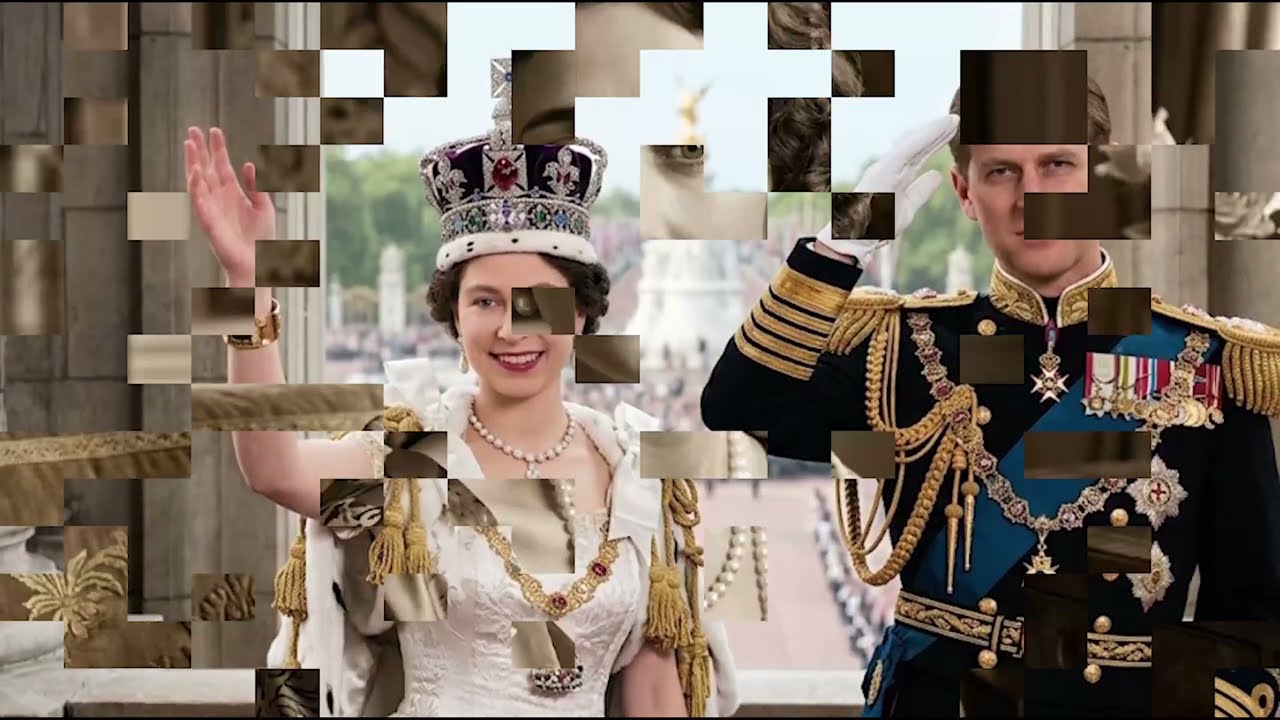
What was left was the only choice the institution had space for: the crown or the woman. Edward chose the woman. On December 10, 1936, he signed the instrument of abdication at Fort Belvedere in the presence of his three brothers, including Bertie, who had not asked for the throne.
The next day Parliament completed the legal change. Edward ceased to be his majesty. Bertie became George VI.
Princess Elizabeth, 10 years old, moved from being a well-brought-up royal child in a relatively sheltered branch of the family to being heir presumptive.
That evening Edward gave his famous radio broadcast, the one with the line about the heavy burden of responsibility and the woman he loved. Lascelles would have heard it and recognized immediately what it was doing. It was not merely a resignation, it was a reframing.
It took an institution, a government, a church, a prime minister, a family, and several dominions that had spent months managing a constitutional crisis and cast them as the cold apparatus standing between two human hearts. It was beautifully phrased. It was also a final act of the same character Lascelles had watched at close range for nine years.
The monarchy that remained was George VI, a man who had spent his entire adult life expecting to be neither prominent nor central and who now found both conditions forced upon him simultaneously. He had a stammer that made public speaking miserable.
Lascelles saw all of that. He also saw the difference that mattered most. George VI had weaknesses, yes, many of them.
But his weaknesses made him more serious rather than less. Burden made a man usable in a crisis, vanity did not.
By 1943, Lascelles had risen from assistant private secretary to private secretary to the sovereign, the principal position, the one from which all the real management of access, influence, paper, and palace atmosphere flowed.
At the center of everything was the war. Germany had bombed Buckingham Palace in September 1940. The King and Queen stayed in London.
George VI gave broadcasts that showed him not as a man lifted above anxiety by rank, but as a man who had climbed through anxiety by effort.
Lascelles stood close to all of it. He managed the flow. He protected access to the king.
He made sure that wartime demands on the royal family did not tip from useful symbolism into hollow performance. He understood the difference between the crown serving the nation and the nation consuming the crown.
In 1952, George VI died at Sandringham at 56, worn down by decades of strain, by smoking, by the war, and by the peculiar physical cost of carrying a role that demanded everything and promised nothing in return except the satisfaction of having done it.
Princess Elizabeth was in Kenya with her husband Philip when the news arrived. She had gone to sleep a princess, she woke a queen. That transition, in its brutal administrative speed, was monarchy at its most ruthlessly efficient.
Lascelles, back in Britain, moved without hesitation into the work such moments require. Proclamations, councils, messages, arrangements, household changes, the endless moral labor of keeping family distress from becoming public confusion.
Elizabeth was 25. She was serious, self-controlled, and demonstrably prepared to accept the terms that Edward had refused. Lascelles had watched her grow up in the shadow of the abdication’s consequences.
She did not need the performance of sacrifice to feel the weight of obligation. She simply picked it up.
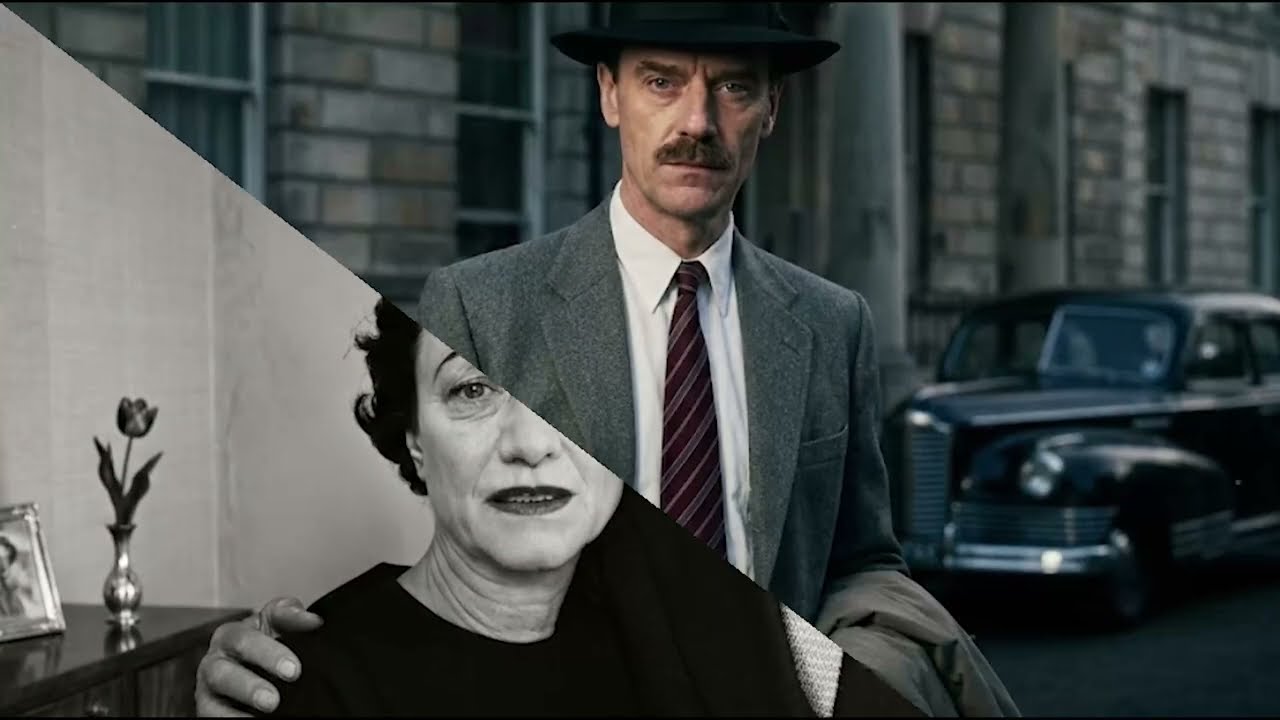
The coronation preparations fell substantially within Lascelles’s remit. June 2, 1953, Westminster Abbey. He had been through enough royal ceremony to know that its value was not decorative.
It was how an institution taught the public to feel continuity.
There was also the television question. The ceremony had never been broadcast. Some at the palace feared it would cheapen the mystery.
Lascelles was too intelligent to fight a century that had already bought a television set.
What mattered was not whether cameras came in, but whether the ceremony remained fully itself in their presence. That was what happened. Elizabeth II rose to the day so completely that the cameras did not flatten the ceremony.
She carried it into the living rooms on her own terms.
The coronation was also Lascelles’s last act at the center of palace life. He retired at the end of 1953. He refused a hereditary peerage, which was so entirely in character that the refusal functions almost as a second signature.
The Lascelles Principles, published under the pen name C S Ne X in 1950 while he was still serving as private secretary, had been his most public contribution to the constitutional architecture he had spent a career quietly building.
The argument was precise. A Prime Minister had the right to request a dissolution of Parliament. The Sovereign had the right to refuse that request if three conditions applied: if Parliament was still capable of carrying on, if an election would damage the national interest, and if another government could be formed without an election.
He had turned the ambiguity of unwritten constitutional convention into something close to a framework. He had done it from inside the palace under a pseudonym while serving the monarch on whose behalf the principle would one day need to operate. It was Lascelles at his most complete.
Essential, invisible, and making the rules.
He lived on through the 1950s, 1960s, and into the 1970s and 1980s, watching from the margin as the monarchy moved through each decade’s particular challenges. Elizabeth II became over time the kind of sovereign whose longevity and consistency accumulated into something almost geological.
Tommy Lascelles died in August 1981 at Kensington Palace, aged 94. He had outlived three sovereigns. He had served two.
He had resigned from one future king and helped steady two actual ones through the hardest years the 20th century palace produced.
The publication of his diaries and letters after his death gave historians a window into the inner workings of the royal household across the most consequential decades of its modern existence. The voice in those pages was sharp, dry, funny in the manner of a man who found public attention personally offensive.
He had never wanted to be a public figure. He had wanted to be useful at the highest available level, which in his particular world meant useful to an institution rather than to a personality. That distinction was the whole philosophy.
He was not a romantic about the monarchy. He was not a cynic about it either. Both positions are available in large quantities to anyone who has spent time near power without actually possessing it.
Lascelles managed a third thing, which was to believe in the institution without believing in the people inside it uncritically.
He could think a king was weak and still work to make that king’s reign succeed. He could think a prince was unfit and still manage his household for nine years before walking away. None of these recognitions interfered with what he did because what he did was always in service of the same fixed point.
The office outlasted the person. The institution outlasted the reign. The crown was older than anyone wearing it and it would be there long after they were gone.
Tommy Lascelles did not protect the crown. He was more ambitious and more useful than that. He controlled it from inside, in pencil, without a sound.