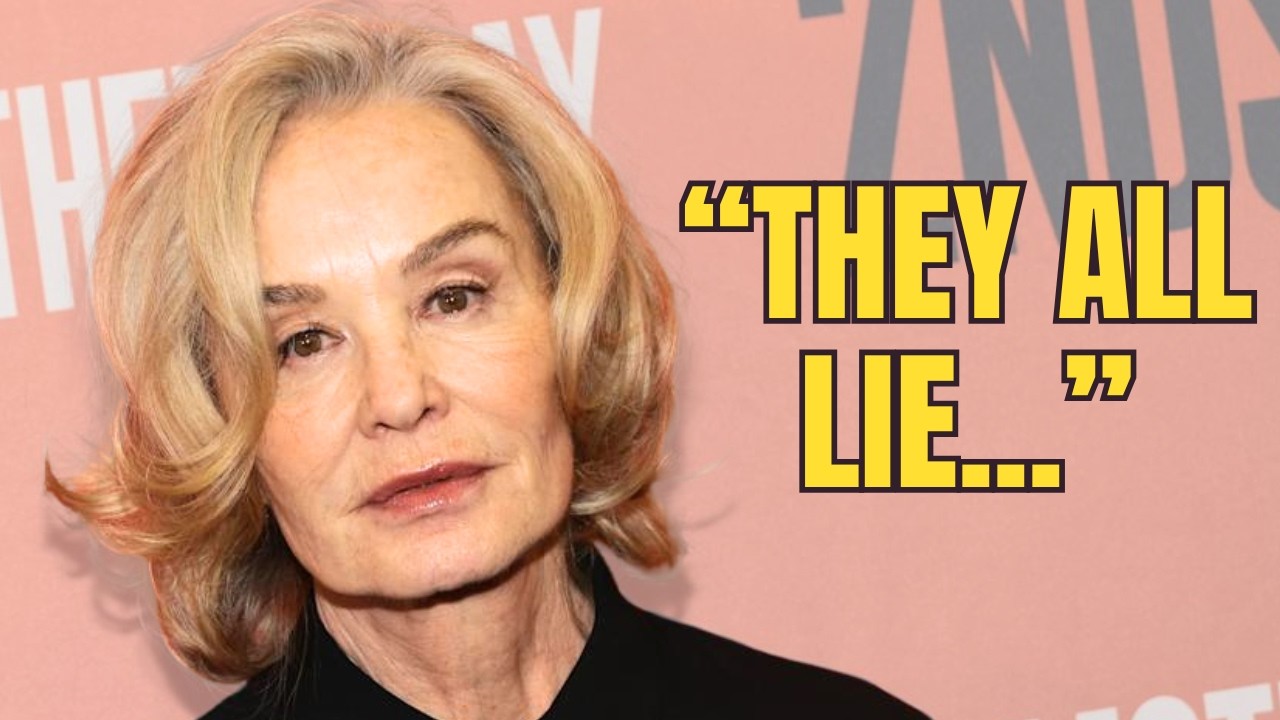
The silence that followed her final curtain call on American Horror Story was deafening, a void that fans spent years trying to fill with speculation and rumor. Now, the truth has emerged, and it is far more personal, and far more profound, than any behind-the-scenes feud or creative disagreement.
Jessica Lange did not walk away from the franchise that resurrected her career for a new generation because of a fight with creator Ryan Murphy. She left because she recognized, with the unflinching clarity that has defined her five-decade career, that she had given the show everything she had to give, and the cost of staying was the very life she had fought to build for herself.
 To understand the exit, you must first understand the entrance. Lange was not a trained actress when she stumbled into the audition that would change her life. She was a broke, 114-pound former model with no connections, walking into a cattle call for a giant ape remake.
She told Vanity Fair that she walked in with a “foolhardy” belief that she could do anything, a belief that was immediately tested by the brutal reality of the production.
The nine-month shoot for King Kong was an exercise in isolation. She spent her days acting opposite a mechanical hand or a blank wall, relying on mime techniques she had studied in Paris to conjure emotion from nothing. The studio, hungry for a marketing angle, compared her to Marilyn Monroe, a label that deeply upset her.
“She was a tragic figure who led a tragic life,” Lange said at the time, rejecting the comparison outright. The film was a hit, but critics dismissed her as a lucky model, and she didn’t work for three years.
That forced hiatus was her salvation. She returned to New York and studied seriously with acting teachers Sandra Seacat and Mira Rostova, determined to learn the craft she had stumbled into. The turning point came in 1982, a year that saw her deliver two of the most iconic performances of her generation.
She played the doomed Frances Farmer in Frances, a punishing role that pushed her to the edge of a breakdown, and then, as a form of recovery, she took the completely opposite role of a vain soap opera diva in Tootsie. The Academy nominated her for both, a feat only one other actress in history had managed, and she won Best Supporting Actress for Tootsie.
 It was on the set of Frances that her personal life detonated. She was involved with Mikhail Baryshnikov, but an on-set connection with Sam Shepard, who was married at the time, snowballed into a 27-year partnership. The affair was tumultuous, costing her a two-year silence with Baryshnikov, but it produced two children and a bond she described as unshakable.
Motherhood, she has said, reordered her entire sense of self. “It opened my heart and made me a different person,” she told AARP Magazine. “Every move you make is with someone else in mind.”
By the time Ryan Murphy came calling in 2011, Lange had already achieved the triple crown of acting, an Oscar, an Emmy, and a Tony. She had nothing left to prove. She agreed to American Horror Story for a single season, thinking it would be an interesting experiment.
“I’ve never done this kind of television before,” she told Deadline. As Constance Langdon, she found a character that reminded her of the extreme, uncompromising roles she had chased in her youth, and audiences responded instantly.
Murphy, recognizing he had found a muse, began building entire seasons around her. Sister Jude, Fiona Goode, and Elsa Mars followed, each one a masterclass in controlled chaos. She sang David Bowie’s “Life on Mars” live on set, delivering a performance that became a fan favorite.
 She won two Emmys, a Golden Globe, and a SAG Award. But the commitment was brutal. “It ends up being a lot of time during the year being committed to something,” she told Entertainment Weekly in 2013.
“This is a 6-month commitment every year. That will be 4 years in a row. I want to have more time to myself.”
The decision was not made in anger. She was careful to praise Murphy and the show. “I feel like I got the best of it in those first four seasons,” she told Bustle.
“Great characters. It was exciting to do.” She simply recognized that the story she had to tell inside that show had reached its natural end.
She had played four remarkable characters, and at her age, with an already overflowing career behind her, she was not willing to keep signing away half of every year indefinitely.
 Murphy didn’t let her go entirely. For 2018’s Apocalypse, he talked her into a brief return by appealing to her instincts. “He’s talking about the relationship with the children and a 10-page monologue, the drunkenness, and the death,” she explained to The Wrap.
“He hits all the scenes that would make it interesting for me to come back.” She returned for two episodes as Constance, gave fans the closure they wanted, and stepped away again for good.
Her reasons for pulling back from acting altogether are just as clear. She has been openly critical of the modern blockbuster model, telling The Hollywood Reporter that the emphasis has shifted from art to satisfying stockholders. She pointed at the comic book franchise model and the frantic editing style that rarely lets a camera hold on an actor’s face.
“That kind of filmmaking drives me crazy,” she said. By 2023, she told the Telegraph that she didn’t think she would act much longer, though she has continued taking select projects.
The through line of her entire career is a woman who has always known exactly what she had to offer, and who has never been willing to give away a single ounce more of it than she personally chose to. She survived the isolation of King Kong, the critical dismissal, the personal turmoil of her affair with Shepard, and the relentless grind of a hit television series. She left American Horror Story not because the work stopped being good, but because she had spent an entire career learning exactly how much of herself any single project was allowed to take before she needed to reclaim it.
That is not retreat. That is the same instinct that got a broke unknown girl a shot at King Kong in the first place. It is the instinct of a woman who has always known her own worth, and who has never once been willing to compromise it for the sake of a schedule, a studio, or a franchise.
She walked away from the horror tent with her head held high, carrying the same quiet certainty she has carried her entire life, a certainty that the most important role she ever played was the one she wrote for herself.
 He did not yet realize he was already inside one, and that he had not been given the script.
 He was not a man chasing Hollywood ambition. He was a soldier doing his duty until the evening a mutual acquaintance arranged for him to escort fifteen-year-old Shirley Temple to a gathering at the home of producer David O. Selznick.
 That is the narrative the public received. But another question deserves asking. What does it feel like to have your worth defined publicly as “the husband of”?
 The third name on the list was Marlon Brando, and this one cuts deepest because of what Widmark watched happen to a nineteen-year-old actress named Maria Schneider. In 1972, on the set of Last Tango in Paris, Brando and director Bernardo Bertolucci rewrote an intimate scene between themselves the morning of the shoot. They did not tell Schneider.
 It does not buy virtue. It does not buy character. It does not buy the right to be remembered as a decent human being.
 Struthers, best known for her role as Gloria Bunker on All in the Family, has spent decades deflecting questions about her own behind-the-scenes struggles. Now, breaking a silence she maintained for over fifty years, she connects her personal war stories to the Eagles’ fractured legacy, insisting that Meisner’s hate list was not an anomaly but a survival mechanism. “When you are the quiet one in a room full of sharks, you don’t fight with your fists,” Struthers said in an exclusive interview.
 Struthers is careful to clarify that she and Reiner eventually reconciled, and she holds deep affection for him. But she uses their friction to illustrate a broader point: the entertainment industry is built on a hierarchy that crushes the vulnerable. This is where her story dovetails with Meisner’s most painful revelation regarding manager Irving Azoff.
 Struthers also addresses the Joe Walsh segment of the transcript, where Meisner felt culturally replaced as the band shifted to a harder sound. “Randy was the high, soaring voice of the Eagles,” Struthers noted. “But when the sound changed, he was told, implicitly, that he was no longer needed.
:max_bytes(150000):strip_icc():focal(1003x320:1005x322)/all-in-the-family-Rob-Reiner-Sally-Struthers-Carroll-OConnor-Jean-Stapleton-baby-011625-a2e568705d9f43788f39dc1ddab0c62d.jpg) Struthers’ decision to speak now, at 72, mirrors Meisner’s own late-in-life confession. She says there is a freedom that comes with age, a realization that the career is over and the legacy is what matters. “I’m not afraid anymore,” she said.
Struthers’ decision to speak now, at 72, mirrors Meisner’s own late-in-life confession. She says there is a freedom that comes with age, a realization that the career is over and the legacy is what matters. “I’m not afraid anymore,” she said.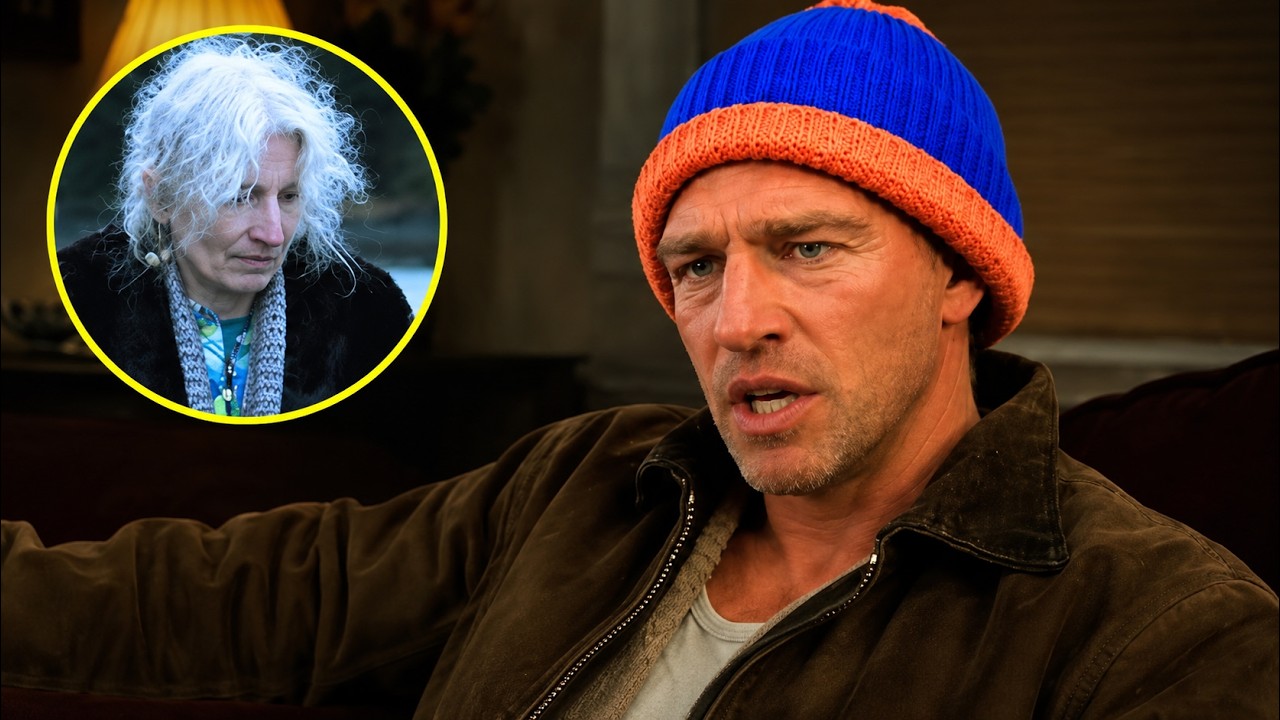
 Matt Brown grew up not just in the Alaskan wilderness, but in the shadow of a persona crafted for the cameras. He was the stoic, capable eldest brother, the one who built cabins with his bare hands, who hunted to feed his family, who protected the pack. But behind the lens of Discovery Channel’s hit show, the reality was starkly different.
 The reaction from the public has been swift and powerful. Social media is flooded with tributes that are now tinged with a new level of grief. Fans are not just mourning the loss of a reality TV star; they are mourning the loss of a man whose pain mirrored their own.
 In his final moments, Matt Brown was not the fierce hunter of the Alaskan wild, but a man hunting for peace within himself, and he found it only by finally admitting the pain that had been chasing him his entire life.
 There is an uncomfortable truth here for the industry and for the viewers: we consume these lives as content, but we rarely stop to consider the human toll. Matt’s story is a warning about the danger of making trauma into entertainment. He lived his life in a fishbowl, and when he finally admitted how much he hated the currents inside that bowl, it was too late for him to swim free.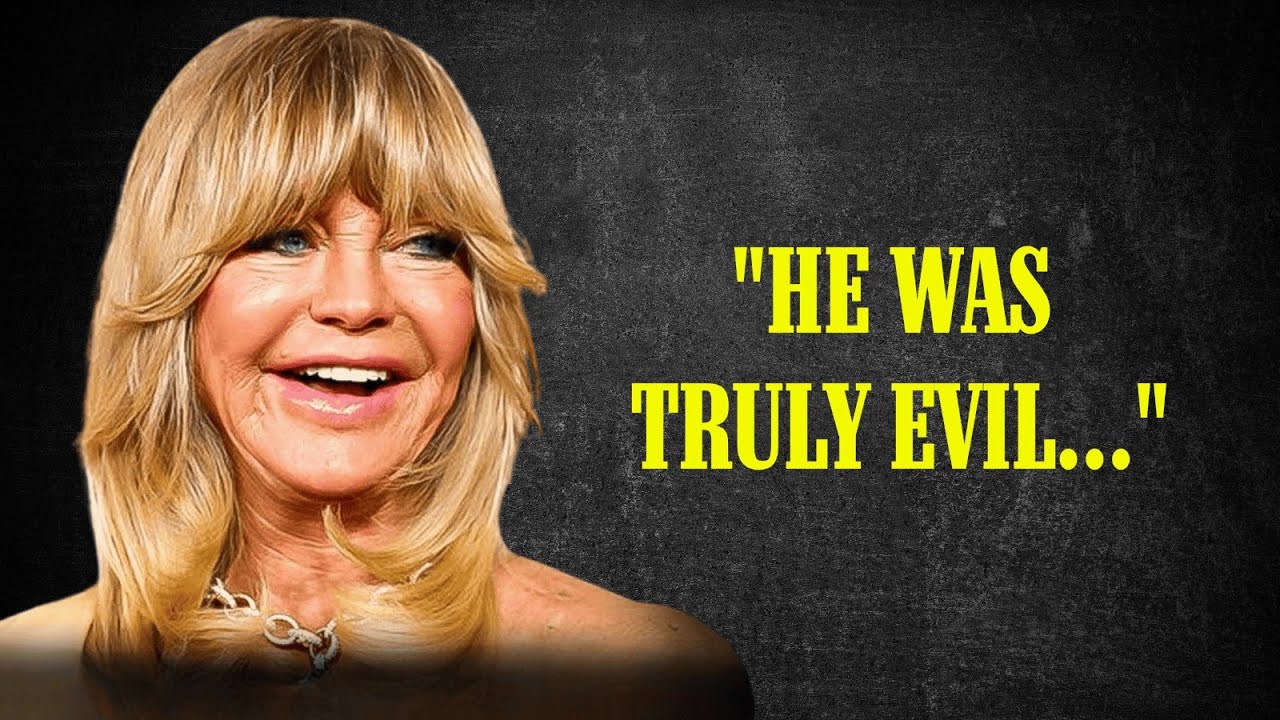
 The list, which she has kept private for years, includes some of the most celebrated names in cinematic history. From comedy legends to Oscar-winning dramatic actors, Hawn alleges that each one crossed a line that she could never forgive. She describes a pattern of behavior that ranged from public humiliation to calculated professional sabotage, all of which she says she absorbed with a polite smile while quietly vowing never to collaborate with them again.
 She finished the scene with calm precision, thanked them politely, and walked out. She later told her agent she would not fight for respect in a room full of men who had already decided she was a joke.
 The final name on her list is perhaps the most shocking of all: Kirk Douglas, the Hollywood legend. Hawn recounts a panel discussion in the late 1990s where Douglas greeted her by kissing her hand and telling her she hadn’t aged a day, sweetheart. She says the condescension continued throughout the discussion, as he interrupted her three times, finished her sentences, and corrected her thoughts.
 Reaction to her interview has been swift and divided. Some have praised her for finally telling the truth, while others have questioned the timing and the veracity of her claims. Representatives for Murray, Beatty, Hoffman, Chase, Penn, and the estate of Kirk Douglas have not yet issued public statements.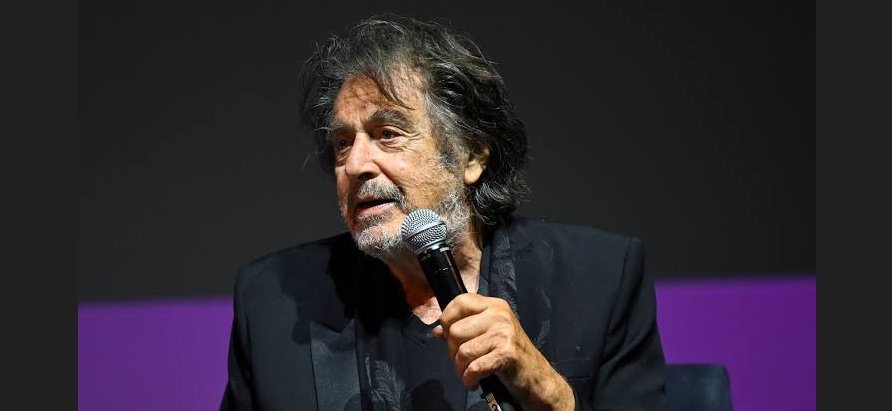
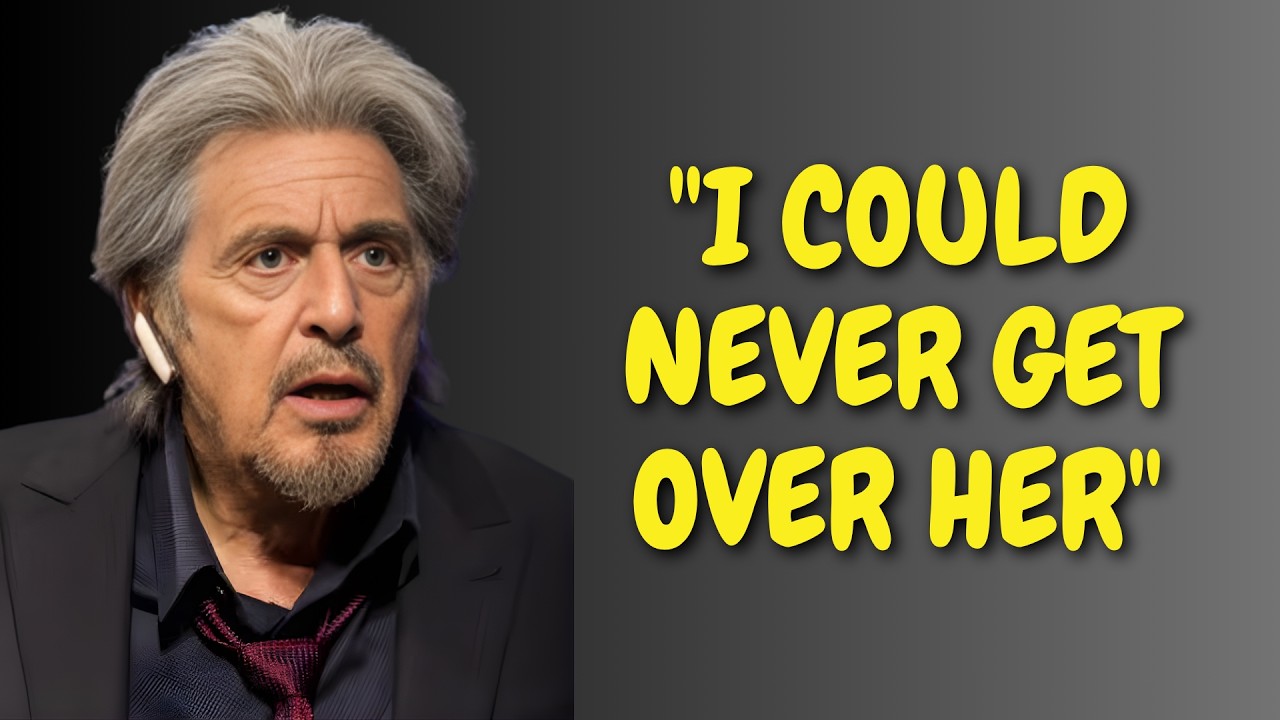 She died when Pacino was just 22, as he was beginning his uncertain journey toward acting. That loss, he says, became the shadow that followed every performance, the unspoken grief that made Michael Corleone’s collapse feel so real. “I’m still here because of my mother,” he wrote in his memoir, a testament to her sacrifice.
 Before the fame, there was Jill Clayburgh, the woman who believed in him when he was still a struggling actor in New York theater. They met in the late 1960s, both hungry artists barely surviving. Jill, a Barnard graduate with radiant intelligence, supported him through lean years, even helping him financially.
 Tuesday Weld, the enigmatic blonde once hailed as Hollywood’s golden rebel, entered his life during the filming of Serpico. Their connection was electric but complicated. Pacino was drawn to her independence, her refusal to conform.
 “My kids give my life balance,” he said. Beverly gave him the best gift of all: a reason to slow down.