On the night of July 14th, 1881, a single gunshot in a pitch-black bedroom supposedly ended the life of the most wanted man in the American West.
His body was examined, identified, and buried the next morning.
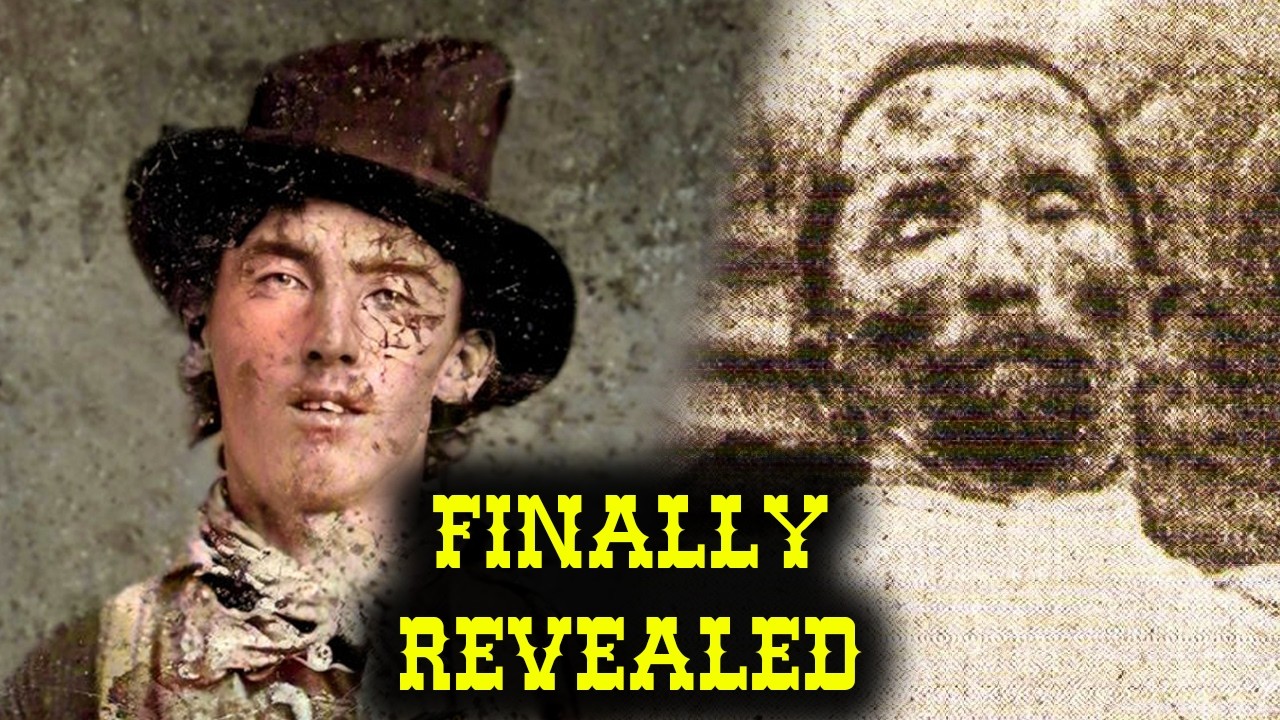 Case closed.
Except 69 years later, an old man in Texas stood up and said, “That wasn’t me.”
Here is what makes this story unlike any other death in frontier history.
The killing happened in total darkness.
The shooter couldn’t even see his target clearly.
The most famous outlaw death in American history happened essentially blind.
And this isn’t just about one outlaw.
The story of Billy the Kid shaped the entire mythology of the Wild West.
The dime novels, the movies, the gunslinger archetype.
If the official story is wrong, one of America’s founding myths unravels.
Billy the Kid is credited with 21 kills.
The real number, somewhere between four and nine.
The legend was already a lie before the body was cold.
By the end of this story, you’ll know exactly what happened in that dark room, and you’ll understand why, more than a century later, people are still digging up graves trying to prove the wrong man was buried.
Why was Billy the Kid unarmed and asking for a butcher knife in the middle of the night when the most dangerous lawman in New Mexico was hunting him?
What was he actually doing there?
And in 1950, a 71-year-old man named Brushy Bill Roberts walked into the governor’s office in Santa Fe with scars on his body and details only Billy could know, and asked for a pardon.
Was he a con man, a lunatic, or something else entirely?
To understand how a single gunshot became the most disputed death in frontier history, let me take you back to the world that created Billy the Kid.
Now, let me take you back to 1870s New Mexico where a teenage orphan was about to become a legend.
New Mexico Territory in the 1870s is not a state.
It is barely governed.
Federal authority extends as far as the nearest army post and beyond that, law is whatever the man with the most guns says it is.
The territory is a patchwork of cattle ranches, mining camps and settlements clinging to river valleys in an ocean of desert and mesa.
The nearest railroad is hundreds of miles away.
Justice is local, personal, and often fatal.
This is the world that creates outlaws, not because men are born bad, but because the system rewards violence and punishes weakness.
Cattle rustling is practically an industry.
Murder trials are theater.
Sheriffs are political appointees who serve whichever faction put them in office.
Into this world steps a boy with no family, no money, and no reason to follow rules that don’t apply to him.
Henry McCarty is born around November 23rd, 1859 in New York City, about as far from the frontier as a person can get.
His mother Catherine dies of tuberculosis when he is 14.
His stepfather shows no interest in raising him.
Within a year, the boy is on his own drifting through the mining towns of Silver City, New Mexico.
Here is the single detail that defines the young Billy the Kid.
Everyone who meets him remarks on the same thing, not his violence, but his charm.
He is likable, funny, quick with a grin.
He can talk his way into a card game, out of a bar fight, and through a sheriff’s office door.
He is also, by his mid-teens, a petty thief who sleeps in back alleys and steals laundry.
He is not yet dangerous.
He is simply desperate.
The world Billy enters is dominated by a single economic machine, the Murphy-Dolan clique.
Lawrence Murphy and James Dolan controlled the dry goods monopoly in Lincoln County.
They own the store.
They hold the government beef contracts.
And they have the sheriff in their pocket.
If you’re a rancher in Lincoln County, you sell your cattle to Murphy-Dolan at their price, or you don’t sell at all.
It is a feudal arrangement wearing a cowboy hat.
But in 1877, a young Englishman named John Tunstall rides into Lincoln with money, ambition, and a plan to break the monopoly.
He opens a rival store.
He hires cowboys.
He retains a lawyer named Alexander McSween.
And faithfully, he takes a liking to a teenage drifter named Henry McCarty, giving him a job and something the boy has never had, a sense of belonging.
Tunstall is cultured, educated, and catastrophically naive about the kind of men he is challenging.
Murphy and Dolan have not built their empire by tolerating competition.
They have built it by eliminating it.
And in Lincoln County, elimination is not a metaphor.
The question is not whether violence will come.
The question is what happens to a teenage orphan who finally found someone who treated him like a human being when that person is taken away.
What Billy the Kid does next will echo for 140 years.
Before the war even begins, Billy kills for the first time.
He is 17, maybe 18.
In a saloon in Bonita, Arizona Territory, a blacksmith named Frank Cahill, a known bully who has been tormenting Billy for weeks, pins the smaller teenager to the ground.
What happens next is disputed in the details, but not in the outcome.
Billy pulls a pistol and shoots Cahill in the belly.
Cahill dies the next day.
Billy doesn’t wait for a trial.
He escapes custody and rides east into New Mexico.
He is not yet Billy the Kid.
He is just another frontier teenager with blood on his hands and nowhere to go.
He finds John Tunstall.
For a brief moment, he finds a home.
What happens next will set New Mexico on fire.
On February 18th, 1878, a posse of Murphy-Dolan men, operating under a dubious court order, rides out to seize Tunstall’s cattle.
They find Tunstall on the trail.
They shoot him off his horse.
Then they shoot his horse.
Then, according to witnesses, they place Tunstall’s head on his saddle as a grotesque display.
Billy is not present, but when word reaches him, something breaks.
The boy who charmed saloon owners and joked with ranch hands becomes someone else.
He joins a group of Tunstall loyalists who call themselves the Regulators.
Their stated purpose is to serve warrants on Tunstall’s killers.
Their actual purpose is revenge.
The Lincoln County War has begun, and Billy the Kid, the name starts sticking now, is at its center.
The next 6 months are a cascade of ambushes, gunfights, and political maneuvering.
In April 1878, the Regulators track one of Tunstall’s alleged killers to Blazer’s Mill.
The resulting shootout is chaotic.
Billy survives, but a man named Buckshot Roberts kills the Regulators leader, Dick Brewer, with a rifle shot through a doorway.
The Regulators lose their commander.
Billy steps further into the void.
Then comes the Battle of Lincoln, July 1878.
It lasts 5 days.
McSween’s faction barricades itself inside buildings while the Murphy-Dolan men and a detachment of soldiers surround the town.
On the final night, McSween’s house is set ablaze.
As the flames drive men into the open, bullets meet them in the yard.
Alexander McSween dies in the firelight, unarmed, pleading.
Billy, trapped in the same burning house, sprints through the back door into the darkness, firing as he runs.
In the chaos, he kills Robert Beckwith.
He is one of the few regulators to survive the night.
The war is over.
The Murphy-Dolan faction has won.
Billy has nothing left, no employer, no cause, no legal protection.
Governor Lew Wallace, the same man who will later write Ben Hur, arrives in New Mexico and offers amnesty to combatants willing to testify.
Billy takes the deal.
He meets Wallace in person, provides testimony, and waits for his pardon.
It never comes.
Wallace, consumed by his literary ambitions and repulsed by the frontier’s politics, quietly lets the promise expire.
Billy, betrayed by the one authority figure who might have saved him, returns to cattle rustling and outlawry.
He kills Joe Grant in a Fort Sumner saloon in 1880, a gunfight that starts when Grant drunkenly tries to shoot Billy with his own revolver, and the weapon misfires.
Billy does not hesitate.
The confirmed solo 𝓀𝒾𝓁𝓁 count now stands at four, Cahill, Grant, and the two deputies he will 𝓀𝒾𝓁𝓁 during his coming escape.
 But the legend is already inflating the number far beyond reality.
And then the man who would 𝓀𝒾𝓁𝓁 him arrived in Lincoln County, a man Billy the Kid already knew.
Pat Garrett is not a stranger.
He is a former bartender, a tall, quiet man who once shared drinks with Billy in Fort Sumner.
Now he is the newly elected sheriff of Lincoln County, and he has one mandate from the territorial establishment, bring in Billy the Kid.
Dead or alive, winter 1880.
Garrett knows Billy’s habits.
They shared a social circle in Fort Sumner not long ago.
Garrett, the man who once drank with the Kid, now rides through the same territory with a posse and a warrant.
He knows Billy is running with a small gang, rustling cattle, and hiding among the Hispanic communities around Fort Sumner who shelter him.
Billy speaks fluent Spanish.
He dances at their bailes.
He is, to the people of Fort Sumner, not a monster, but a neighbor, charming, generous, and reckless.
Garrett sets a trap in December 1880, staking out a road near Fort Sumner.
When Billy’s gang rides into the ambush, gunfire erupts.
Tom O’Folliard, Billy’s close friend, is shot from his horse and dies in agony.
Billy escapes into the frozen night, but Garrett is patient.
Days later, he corners Billy and the remnants of his gang at a rock house called Stinking Springs.
Charlie Bowdre steps outside and is shot dead.
Garrett’s men mistake him for Billy.
Cold, hungry, and out of options, Billy surrenders.
He reportedly tells Garrett, with that famous grin still in place, that he’d have fought it out if he had any choice.
He is taken to jail in chains.
Most stories end here.
This one is about to take a sharp turn.
Billy is tried in Mesilla, New Mexico Territory, in April 1881 for the murder of Sheriff William Brady during the Lincoln County War.
It is the only murder trial in which Billy is formally convicted.
The trial is swift.
The sentence is death by hanging to be carried out in Lincoln.
Billy is transported back to Lincoln and held under guard in a room above the courthouse, the same building that was once Murphy’s store, the headquarters of the faction that started the war.
The irony is thick.
The Outlaw awaits execution in the house of his enemies.
Two deputies are assigned to guard him around the clock.
James Bell and Robert Olinger.
Bell is regarded as decent, even sympathetic to Billy.
Olinger is the opposite, a cruel man who taunts the prisoner, showing him the loaded shotgun and telling Billy it is the weapon that will 𝓀𝒾𝓁𝓁 him if he tries anything.
This is the scene that transforms Billy from a regional Outlaw into a national legend.
The details remain debated in their specifics, but the outcome is beyond dispute.
On April 28th, 1881, while Olinger is across the street eating lunch, Billy asks to be taken to the outhouse behind the courthouse.
Deputy Bell escorts him shackled at the wrists and ankles.
What happens on the stairs as they return is the point of contention.
Some accounts say Billy slipped one hand free of his small-wristed shackles.
Others say he grabbed a pistol hidden in the outhouse.
Either way, the result is this.
Billy gets a gun.
He shoots James Bell.
Bell staggers down the stairs and collapses in the yard.
He dies within minutes.
Billy, dragging his ankle chains, hobbles to the window.
He picks up Olinger’s own shotgun, the very weapon the deputy had used to taunt him.
Across the street, Olinger hears the shot and comes running.
He looks up at the second floor window.
Billy is standing there, silhouetted, holding the shotgun.
According to witnesses, Billy says something.
Accounts vary, but the gist is unmistakable.
A farewell.
He fires both barrels.
Olinger drops dead in the street.
What follows is surreal.
Billy, still shackled, calmly asks a townsman to bring him a pickaxe.
He spends nearly an hour chipping away at his leg irons on the courthouse balcony while the town watches.
The clang of the pickaxe against the iron echoes through the Lincoln street, and no one intervenes.
Some accounts say people brought him food.
When the chains finally break, he takes a horse and rides out of Lincoln at a leisurely pace.
He does not gallop.
He does not panic.
He reportedly sings as he rides away.
The escape is audacious, cold-blooded, and electrifying.
It makes Billy the Kid the most famous fugitive in the American West.
Newspapers across the country carry the story, and it makes Pat Garrett, the sheriff whose prisoner just murdered two deputies and strolled out of town, look like a fool.
Garrett now has one objective.
Not justice, not duty, redemption.
For nearly 3 months, Billy hides in and around Fort Sumner.
He should run to Mexico, to Colorado, anywhere, but he doesn’t.
Fort Sumner is home.
His friends are there.
A woman named Paulita Maxwell, Pete Maxwell’s sister, may be the reason he stays.
Garrett hears the rumors.
On July 14th, 1881, he rides to Fort Sumner with two deputies, Thomas McKinney and John Poe.
They arrive after dark.
Garrett goes directly to Pete Maxwell’s ranch, not to the saloons, not to the roads, to the bedroom of a man who knows every face in Fort Sumner.
If Billy is in town, Maxwell will know.
Garrett enters Maxwell’s bedroom.
He sits on the edge of the bed in the dark.
Maxwell is lying down.
They speak in low voices, and then footsteps on the porch.
A figure appears in the doorway.
He is not wearing boots.
He has no gun belt.
He is carrying a butcher knife in one hand.
He came to cut meat from a hanging carcass.
He steps into the room and sees a shape he doesn’t recognize.
He whispers into the darkness, “¿Quién es? ¿Quién es?”
Who is it?
Pete Maxwell’s bedroom, July 14th, 1882.
One, approximately midnight.
The room is dark, no lamp, no candle.
The only light comes from a faint wash of moonlight through the window and the distant glow of a fire outside where Maxwell’s servants are camped.
Garrett is sitting on the edge of Maxwell’s bed, his back to the door.
His pistol is holstered.
He has been asking Maxwell in a low voice whether Billy is in town.
Maxwell is nervous.
He knows the answer is yes, but is terrified of the consequences of saying so.
The air is hot and still.
This is high desert summer.
The smell of the room is stale bedding, dust, and the faint sweetness of the peach orchard just outside the window.
Through the thin walls, the murmur of Garrett’s two deputies on the porch.
Then the murmuring stops.
Imagine sitting on the edge of a bed in total darkness waiting to ask a question that might get you killed.
Billy has been visiting a friend’s house nearby.
He is hungry.
 He walks to Maxwell’s porch to cut a piece of beef from a carcass hanging on the north side.
He is wearing stockings, no boots.
He carries a butcher knife.
He may or may not have a small self-cocking revolver.
Accounts differ, but he is functionally unarmed for a gunfight.
He does not know Garrett is in Fort Sumner.
He does not know two deputies are sitting on Maxwell’s porch in the shadows.
As Billy steps onto the porch, he nearly stumbles into Deputy John Poe, whom he doesn’t recognize.
This startles him.
He backs toward Maxwell’s open bedroom door, knife raised, asking the men on the porch, “Ken S? Ken S?”
They don’t answer.
He retreats through the doorway into the dark bedroom.
He sees a shape on the bed, Maxwell.
He sees another shape sitting.
He doesn’t know who it is.
He steps closer.
He asks again, this time to Maxwell, “What happens next?”
Takes less than 3 seconds.
Maxwell hears the voice.
He knows it instantly.
He leans toward Garrett.
In some accounts, he grabs Garrett’s arm and whispers, “That’s him.”
Garrett has been sitting in the dark for minutes, his eyes partially adjusted.
He can see a silhouette.
He can see the outline of a man in stockinged feet, a knife glinting faintly in the trace of moonlight, but he cannot see the face.
He has to make a decision based on the word of a frightened rancher whispering in the dark.
He does not hesitate.
Garrett draws his Colt single-action revolver.
Billy, hearing the movement, says something.
Maxwell later recalls it as one final “Ken S?” or perhaps just an exclamation.
Garrett fires.
The first bullet strikes Billy in the chest, just above the heart.
The muzzle flash fills the room with a split second of white light, the only moment either man fully sees the other.
Billy falls.
Garrett fires a second time.
The second shot misses, striking the headboard of Maxwell’s bed, sending splinters into the wall.
The entire exchange, from Maxwell’s whisper to Billy hitting the floor, takes no more than two or three heartbeats, a flash, a body falling, then silence.
What followed was not a showdown, but an execution, and the victim didn’t even know it was happening.
In three heartbeats, the most famous fugitive in the West was dead.
The age of the frontier outlaw ended in a dark bedroom, not in a blaze of glory.
Garrett scrambles off the bed and out the door.
He is shaking.
Maxwell lunges out of bed and follows.
On the porch, deputies McKinney and Poe nearly shoot Garrett as he stumbles through the doorway.
They heard the shots and don’t know what happened inside.
Garrett tells them he thinks he shot Billy the Kid, but he isn’t sure.
The room is still dark.
No one wants to go back in.
They wait.
Minutes pass.
Someone brings a candle.
They hold it to the window from outside, angling the amber light into the room.
On the floor, a young man lies on his back.
He is still.
The butcher knife is near his hand.
His stockinged feet point toward the door.
He is dead.
Pete Maxwell’s bedroom has become the most famous crime scene in the history of the American West.
By morning, Fort Sumner knows.
The Hispanic community, the people who sheltered Billy, danced with him, fed him, comes to see the body.
There is no doubt among those who knew him.
The women of Fort Sumner wash his body and dress him for burial.
A coroner’s jury of six local men is convened.
They examine the corpse.
They confirm the identity.
This is William Bonney, known as Billy the Kid.
The New York-born orphan who charmed his way across the territory is dead at approximately 21 years old.
Contemporary newspapers in Santa Fe, Las Vegas, and across New Mexico report the death within days.
No one in Fort Sumner, not Maxwell, not the deputies, not the community members who knew Billy personally, disputes the identification.
Not one.
The body is Billy’s.
Six jurors say so.
Billy is buried the next day in the Fort Sumner military cemetery alongside the two men who died riding with him.
Tom O’Folliard, shot by Garrett’s posse in December, and Charlie Bowdre, killed at Stinking Springs.
Three graves in a row.
No headstone initially, just wooden markers that will rot and shift over the decades in the New Mexico summer heat, eventually making the exact grave location uncertain.
This small fact, the shifting graves, will matter later when people try to exhume the body.
But in July 1881, no one questions whose bones lie in the ground.
For decades, Billy the Kid is dead.
There is no controversy.
Garrett publishes his account in 1882, and it becomes the foundation of the legend.
The dime novels multiply.
The myth grows.
Billy becomes the eternal boy outlaw, forever young, forever dangerous.
Frozen at 21.
The real human being, the orphan, the charmer, the man who stayed in Fort Sumner because he was in love, disappears beneath the legend.
And for 69 years, no one seriously suggests that Pat Garrett shot the wrong man.
Then, in 1950, an old man walks into the governor’s office in Santa Fe with a remarkable story.
And this is where history gets strange.
The year is 1950.
In Hico, Texas, a small town about 100 miles southwest of Dallas, a 70-year-old man named Ollie Brushy Bill Roberts has been telling anyone who will listen that he is Billy the Kid.
He says the killing in Fort Sumner was staged, a body double, a deal with Garrett, a cover-up.
He says he escaped that night and lived under aliases for nearly seven decades, drifting through Mexico, working odd jobs, and keeping his mouth shut.
Now, at the end of his life, he wants one thing, the pardon that Governor Lew Wallace promised back in 1879, the broken promise that haunted Billy throughout his short, violent life.
Roberts contacts a writer named William Morrison who helps him arrange a meeting with New Mexico Governor Thomas Mabry.
Roberts shows scars he claims match Billy’s injuries, his weathered hands pulling at his shirt to reveal old wounds for a skeptical governor.
He recites details about the Lincoln County War, names and dates and places.
He describes events that only someone who was there could know, or so he claims.
He is old, weathered, partially blind, but his story is specific, and for a moment, people listen.
Roberts appears before Governor Mabry.
The meeting is brief and does not go well.
Mabry examines the old man, listens to his story, and denies the pardon.
The governor’s office issues no formal statement explaining why, but the implication is clear.
They do not believe him.
Roberts returns to Hico.
On December 27th, 1950, he suffers a massive coronary and dies.
He is buried in Hico.
A marker at his grave identifies him as Billy the Kid.
The town to this day maintains a Billy the Kid museum in his honor.
The question the story leaves behind is irresistible.
What if?
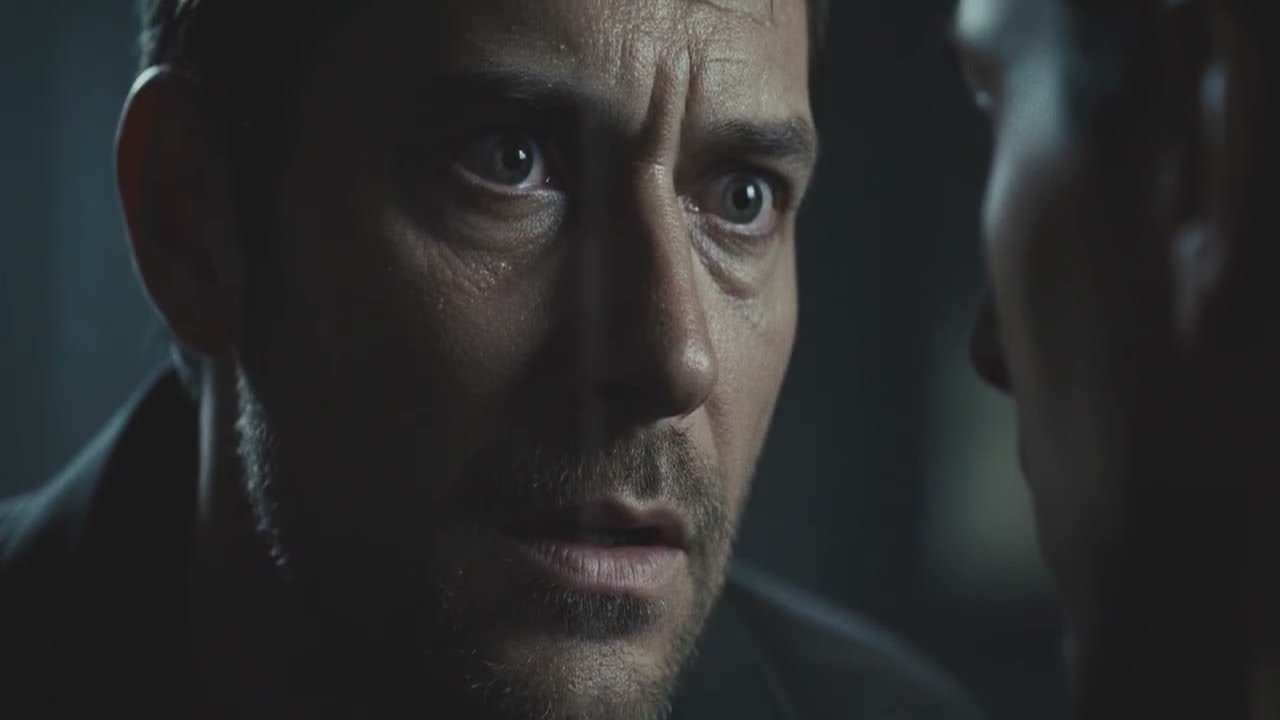 It’s a great story.
But is any of it true?
Let’s look at the evidence and watch it fall apart.
So, we have two stories.
In one, a 21-year-old outlaw dies on the floor of a dark bedroom, identified by six jurors, mourned by his community, and buried beside his friends.
In the other, that outlaw walks out of Fort Sumner alive, lives seven more decades in obscurity, and dies an old man in a small Texas town, still asking for a pardon he was promised when he was 19.
Both stories cannot be true, and the answer matters not because Billy the Kid’s life or death changed the course of nations, but because of what the debate reveals about how we build legends, and how desperately we want them to be more than they are.
We want Billy to escape.
We want the boy outlaw to beat the system one last time.
That desire is powerful, but desire is not evidence.
The daring escape that had humiliated the law just weeks before his death, the charm that made him beloved, the youth that made him tragic, all of it creates the emotional gravity that pulls people toward the conspiracy.
Because if Billy could 𝓀𝒾𝓁𝓁 two deputies and stroll out of a courthouse singing, surely he could escape a dark bedroom, too.
Right?
And this is where the conspiracy theory meets its end.
Let’s examine what the evidence actually says.
Begin with the strongest refutation.
Six men examined Billy’s body in Fort Sumner the morning after the killing.
These were not strangers.
They were local men who knew Billy personally.
The six men who had already confirmed his identity did so under oath.
Their finding was unambiguous.
No contemporary source disputes it.
Not Garrett, not Maxwell, not the deputies, not a single member of the Fort Sumner community.
The only people who dispute it are those who came along decades later armed with theories rather than testimony.
Then there is the age problem.
Roberts claimed to have been born in 1859, the same year as Billy but people who met Roberts in the 1940s and 1950s consistently described the man who looked significantly older than his claimed years.
Dental records and physical features don’t match the single authenticated tintype photograph of Billy the Kid, the one small faded image that is our only confirmed visual record.
Roberts appeared older, heavier, and taller, a different body entirely.
When pressed on details of the Lincoln County War, Roberts made errors, wrong names, wrong sequences, wrong details about events Billy would have known intimately.
A man who actually fought in the war would not confuse these facts.
Roberts’ knowledge was broad but shallow, consistent with someone who had read Garrett’s book and the dime novels, not someone who had lived the events.
The old man from Hico knew the legend.
He did not know the history.
For Roberts’ story to be true, the entire fabric of the 1881 record would have to be fabricated.
Garrett’s posse would have had to be complicit in a cover-up.
Pete Maxwell would have had to lie under oath.
Six jurors would have had to falsely identify a body double.
An entire community, the women who washed Billy’s body, the friends who attended his burial, would have had to participate in a conspiracy of silence lasting decades, and not one of them, not ever, broke that silence.
In a frontier community where secrets had the half-life of a campfire, this level of coordinated deception is, to put it simply, impossible.
But what about the science?
In 2003, someone tried to settle this with DNA.
Investigators attempted to exhume remains from the Fort Sumner Cemetery and compare DNA with confirmed relatives of Henry McCarty.
The effort was hampered by the same problem that has plagued the grave site for over a century.
The wooden markers had shifted.
The exact location of Billy’s grave was uncertain, and the remains that were tested could not be definitively linked to any specific burial.
The DNA test was inconclusive, but crucially, it did not support the survival theory.
It did not prove Roberts was Billy.
It did not disprove the 1881 death.
It simply added ambiguity to a question that the historical record had already answered clearly.
Clearly, the six jurors who examined the body in 1881 remain more reliable witnesses than a degraded DNA sample from a shifted grave more than a century later.
Roberts’ supporters also point to a photograph allegedly showing Billy the Kid decades after his supposed death.
The photo’s provenance is disputed.
The resemblance is subjective, and no photographic expert has authenticated it as depicting the same person shown in the famous tintype.
A Rorschach test, not evidence.
Roberts is not alone in his claim.
Minor theories allege Billy died in 1950s Chile as John Miller or in various other locations based on unverified photos and circumstantial scars.
All are rejected for the same reason.
They cannot overcome the coroner’s inquest, the eyewitnesses, and the contemporary record.
Pat Garrett wrote his account of the killing in 1882.
The book, ghostwritten by a journalist named Ash Upson, inflated Billy’s 𝓀𝒾𝓁𝓁 count to 21, one for each year of his life.
It was a poetic conceit, not a historical fact.
The actual tally, as established by serious historians, was four confirmed solo kills and up to five shared kills.
But the inflated legend Garrett had crafted served its purpose.
It made Garrett the man who killed the most dangerous outlaw in the West, and it set the stage for Billy’s transformation into an archetype.
Garrett, however, does not profit much from the myth.
His later career is a slow decline.
He serves as a customs collector, ranches unsuccessfully, and becomes entangled in disputes.
On February 29th, 1908, Garrett is shot and killed on a road outside Las Cruces, New Mexico, under circumstances that remain debated to this day.
The man who killed Billy the Kid dies violently, too.
The West does not let its legends go quietly.
Billy the Kid died on July 14th, 1881 in a dark bedroom at the age of 21.
Brushy Bill Roberts died on December 27th, 1950 in a small Texas town at the age of 71.
They were not the same person, but the question remains, why do we so badly want them to be?
Billy the Kid has been the subject of more than 50 films.
He has appeared in novels, television shows, video games, and operas.
There are Billy the Kid museums in Fort Sumner and in Hico, Texas, both claiming to tell the real story, both drawing tourists who want to stand where the legend stood.
The town of Hico still sells Brushy Bill Roberts merchandise.
Fort Sumner still charges admission to the grave site.
The conspiracy theory survives because it serves a narrative need that the truth does not.
The truth is abrupt and ugly.
A young man walked into a dark room, was shot by someone he couldn’t see, and died on the floor.
There is no final showdown, no blaze of glory, no last stand.
The most famous outlaw of the American West died asking for a butcher knife.
The myth of survival, the idea that Billy fooled them all, rode into the sunset, and lived to old age, gives the story the ending we feel it deserves.
It is the ending of a movie, not of history.
And we prefer movies.
Billy the Kid was not a Robin Hood.
He was not a freedom fighter.
He was a product of a broken system, an orphan in a lawless territory, who attached himself to a faction in a commercial dispute, and killed people when it suited his survival.
He was charming, yes.
He was brave, certainly.
He was also a cattle rustler and a murderer.
The book that built the myth, Garrett’s self-serving biography, was fiction dressed as fact, and every retelling since has added another layer of varnish to a story that was already distorted.
What’s remarkable is not that Billy killed or was killed, but that the machinery of American myth-making seized on a 21-year-old petty criminal and turned him into an archetype, the eternal rebel, the boy who never grows old, the outlaw who can’t be caught.
He was caught.
He was killed.
And we’ve been refusing to accept it ever since.
We began this story in a dark room.
A single gunshot that echoed for 140 years.
A body on the floor.
A case that should have been closed before breakfast, and yet 69 years later, an old man stood up in Texas and said, “That wasn’t me.”
And for a moment, just a moment, people believed him.
Not because the evidence supported it.
Not because the history allowed it, but because the story of Billy the Kid, dead at 21 on the floor of Pete Maxwell’s bedroom, is too small for the legend we built around him.
History doesn’t give us the endings we want.
It gives us the endings that happened.
The evidence is clear.
The six jurors were right.
The community that mourned him was not deceived.
Billy the Kid died on July 14th, 1881, asking who was sitting in the dark.
He never got an answer.