
The thin air of the Bolivian Andes does something strange to sound. It carries it for miles, muffled and distorted, before letting it die against the rocky slopes. On the night of November 6th, 1908, the residents of the remote mining settlement of San Vicente heard two sounds that would haunt the world for over a century: first, agonized screams, and then, two sharp, final gunshots.
When the sun rose the next morning, Bolivian authorities entered a small adobe hut and found two men dead, each shot through the head. They were buried within hours in unmarked graves, with no photographs, no fingerprints, and no identification. On the strength of that single, evidence-free moment, the world declared the notorious outlaws Butch Cassidy and the Sundance Kid dead.
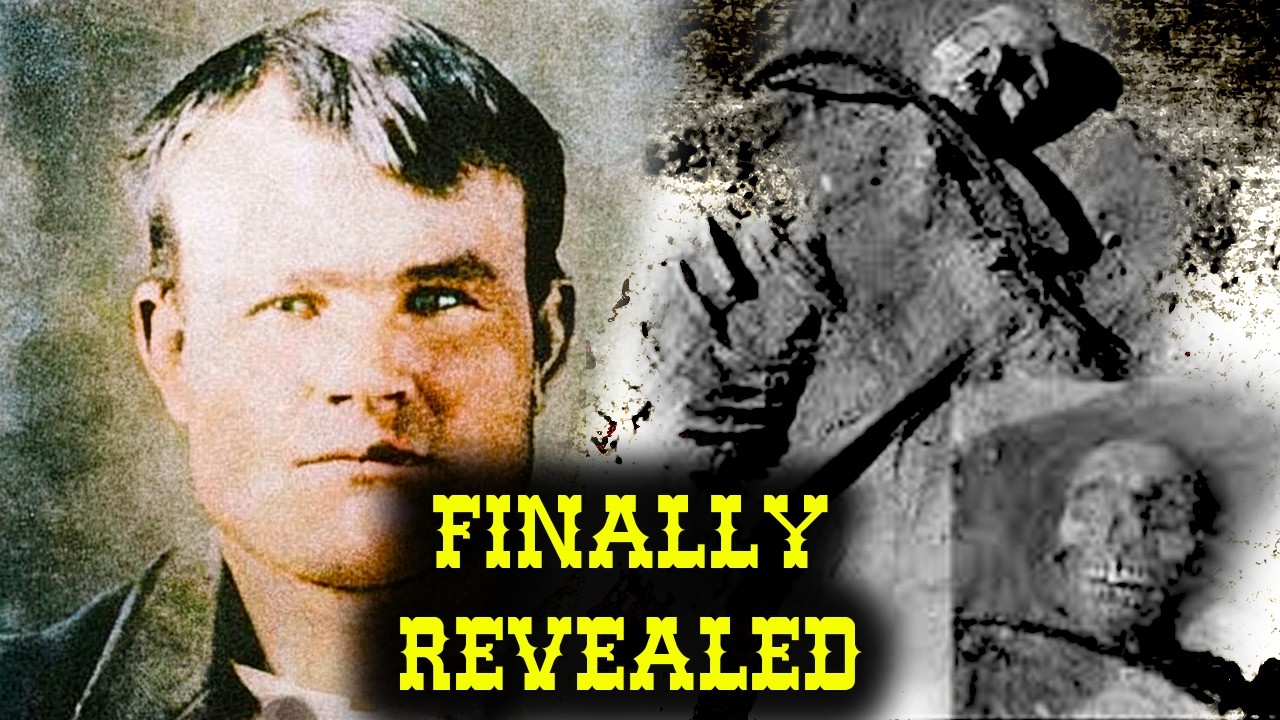 But a century of research, bitter academic disputes, and a persistent family conspiracy theory have left a question that refuses to die: did the two men buried in that Bolivian dust bowl actually include the legendary outlaws, or did the real Butch Cassidy walk away from his own grave and return to the United States to live out his days in secret?
The official story, the one that has been cemented in history books and immortalized in a Hollywood film that won four Academy Awards, is a grim tableau of desperation and loyalty. According to this narrative, Robert Leroy Parker, known to the world as Butch Cassidy, and his partner Harry Alonzo Longabaugh, the Sundance Kid, had been cornered by a Bolivian patrol after a life of crime that spanned two continents. The shootout that followed was not the heroic, guns-blazing last stand depicted in the 1969 movie starring Paul Newman and Robert Redford.
Instead, it was a long, agonizing siege in a cramped mud hut at 12,000 feet, where the air was so thin that every breath burned. As darkness fell, the shooting stopped. The patrol, a ragtag group of poorly trained conscripts, pulled back, waiting for dawn.
Inside the hut, the two outlaws were alive but trapped, their options reduced to capture or a final, terrible act. The screams that pierced the midnight silence were, according to this theory, the sounds of a mortally wounded Sundance Kid, and the two gunshots that followed were the mercy killing and subsequent suicide carried out by Cassidy, a man who had spent his entire criminal career trying desperately to avoid taking a life.
It is a powerful, tragic, and cinematically perfect ending. It is also a version of events built entirely on sounds heard through adobe walls by terrified miners hiding in their homes. No one saw what happened inside that hut.
No one entered it until the next morning. The entire theory of a suicide pact rests on the testimony of people who were not in the room, who did not witness the act, and whose accounts of the gunfight itself are riddled with contradictions. There are no police reports from the scene, no military after-action summaries, and no photographs of the bodies.
The descriptions of the dead men’s possessions vary wildly between tellings, and even the date of the incident was uncertain in early reports. The fog of war is one thing, but the fog of a gunfight in a remote Andean mining town with no journalists, no cameras, and no official records is something else entirely. The most famous outlaw death in American history rests on a foundation of oral accounts that cannot even agree on basic facts.
The speed with which the bodies were disposed of is perhaps the most damning detail of all. Within hours of the discovery, the two men, whoever they were, were in the ground. No personal effects were cataloged, no letters or identification papers were archived, and no forensic evidence was preserved.
The Bolivian authorities sent word that two foreign bandits had been killed, not that Robert Leroy Parker and Harry Alonzo Longabaugh had been captured and neutralized. The names were attached later, by a single man: Percy Seibert, a mining official who had befriended the Americans at the Concordia tin mines. Seibert was brought to the scene and asked to confirm the identities.
He did. He told the authorities that the two dead men were the Americans from Concordia, the ones known as Cassidy and Sundance. With that single statement from a single man, the case was closed.
The Pinkerton National Detective Agency, which had spent thousands of dollars and hundreds of man-hours hunting the Wild Bunch across the American West and into South America, accepted the report without conducting a single independent verification. No agent traveled to San Vicente. No attempt was made to exhume the bodies.
The agency simply closed the file.
But here is the problem with that tidy conclusion: the Pinkertons themselves were already entertaining the possibility that these men could simply vanish. Years earlier, they had been tracking Etta Place, the enigmatic woman who traveled with Cassidy and Sundance to South America. She was a schoolteacher, or perhaps she was not, and her disappearance from the historical record around 1906 was never explained.
The Pinkertons noted in their files that her vanishing encouraged the idea that Cassidy and Sundance might have done the same. If one member of the trio could simply cease to exist, why not all three? Etta’s fate remains one of the strangest loose threads in the entire saga, a mystery that has never been solved.
 And if the outlaws were capable of orchestrating their own disappearance, why would they choose a violent, agonizing death in a Bolivian hut over a quiet escape?
The most persistent and detailed challenge to the official story comes not from conspiracy theorists or opportunistic impostors, but from Cassidy’s own blood family. In southern Utah, the Parker family, who later used the name Betenson, maintained for decades that Butch had come home. Lula Betenson, Cassidy’s younger sister, went to her grave insisting that her brother walked back into the United States alive, that the entire Bolivia shootout was a staged death arranged by a friend who owed Cassidy his life.
The story she told was specific and detailed, centered on Percy Seibert. According to Lula, Cassidy had saved Seibert’s life and his wife’s life at some point during their time in Bolivia. The specifics of that act of heroism are lost to history, but the debt was real.
When the opportunity arose to repay it, Seibert seized it. Standing over two anonymous corpses in San Vicente, he made a calculated decision. He identified the bodies as Cassidy and Sundance, knowing full well they were not.
He did it because he knew that if the outlaws were declared dead, the Pinkertons would stop looking. The pursuit would end. Cassidy and Sundance could walk away and live the quiet, straight lives they had been seeking.
Cassidy himself, according to his sister, later said of Seibert’s decision, “He knew this was the only way we could go straight.” The emotional logic of this story is hard to dismiss. A man saves your life, and years later, you have a chance to save his.
What do you do? The story rests on a story, with no document, no letter, and no diary entry from Seibert confirming or denying it. The only source is Cassidy’s family repeating what they say Cassidy told them.
But it is a narrative that has never been debunked, and it stands in stark contrast to the flimsy evidence supporting the Bolivia death. Lula Betenson was Cassidy’s blood sister. She had nothing to gain from the story and maintained it until her death.
That is a different category of evidence than the claims of William T. Phillips, a Michigan man who appeared in the American West in the years following 1908 claiming to be Butch Cassidy. Phillips constructed an elaborate personal mythology around the claim, writing memoirs and telling stories that roughly matched known details of Cassidy’s life.
For a time, some people believed him. But historians have thoroughly debunked Phillips. His timeline does not match, and his details are wrong in ways that a real participant would never have gotten wrong.
William T. Phillips was not Butch Cassidy, but his existence proved something important: the idea that Cassidy survived was widespread enough to attract an impostor. That does not happen when a death is beyond doubt.
That happens when there is a crack in the story wide enough to walk through.
In the 1990s, two researchers decided to take the question seriously. Daniel Buck and Anne Meadows were not romantics. They were methodical, source-driven researchers who spent a decade combing through Argentine police files, Bolivian government records, mining company archives, and Pinkerton correspondence.
 Their goal was simple: prove once and for all whether Cassidy and Sundance died in San Vicente. What they found was a circumstantial case that pointed in the right direction. Argentine police files placed Cassidy and Sundance in Bolivia in the months before the shootout.
Mining records showed Americans matching their descriptions working near San Vicente. The timeline fit. The geography fit.
The general descriptions of the dead men, two American foreigners, fit. Buck and Meadows built a case that was, by the standards of century-old cold cases, remarkably detailed. They published their findings in True West magazine and spoke to the Los Angeles Times in January 1996.
The case for Bolivia was the strongest it had ever been. And then Buck said the words that should have ended the debate, but instead blew it wide open. Speaking to the Los Angeles Times, he admitted, “There’s never a final word.
You can only build circumstantial cases here. No one identified them when they were buried, and there are no photographs.” After 10 years of research, a decade of his professional life, the lead investigator for the Bolivia theory was publicly acknowledging that certainty was impossible.
The evidence was suggestive. It was not proof.
That confession is the key to understanding why this mystery has endured for so long. The strongest case for Cassidy dying in Bolivia, built by the most thorough researchers who ever tackled the question, ends with the researcher himself saying there is never a final word. That is not a conclusion.
That is a confession. Against this backdrop, the family claims take on a new weight. They are not backed by physical evidence, but neither is the official story.
Both versions of events are built on testimony, and the testimony of a man’s own sister, who claimed he came home and told her what happened, is arguably more compelling than the testimony of townspeople who heard screams in the dark and assumed the worst. The two most famous outlaws in American history either died in a forgotten hut or walked away from their own graves. And the ground still holds the answer.
In San Vicente, Bolivia, there is a small cemetery. It is dusty and remote, and very few tourists make the trip. There, among the graves of miners and villagers who lived and died in obscurity, there is a marker that reads, “Here lie Butch Cassidy and the Sundance Kid.”
No one verified that claim when the bodies went into the ground. No one has verified it since. The sign is not a fact.
It is a bet made by people who were not there about men they never identified.
The technology to settle this question has existed for decades. DNA testing could compare the remains in those graves to living descendants of the Parker and Longabaugh families. And yet, no exhumation has ever been conducted.
 The graves remain undisturbed, holding the answer to a question that no one has been willing to actually answer. Why? Is it a lack of political will, a lack of funding, or a fear of what the truth might reveal?
If the bodies are exhumed and the DNA does not match, the entire legend of Butch Cassidy’s death collapses. The Hollywood ending, the freeze-frame of Newman and Redford charging into a hail of gunfire, would be 𝓮𝔁𝓹𝓸𝓼𝓮𝓭 as a fiction built on a lie. If the bodies do match, the mystery is finally put to rest, but the romance of the story, the possibility that the outlaw escaped, would be extinguished forever.
Perhaps the world prefers the ambiguity. Perhaps the unmarked graves are more powerful as a symbol of uncertainty than they would be as a source of answers.
The story of Butch Cassidy endures because it refuses to resolve. He is the outlaw who may have died, the fugitive who may have escaped, the killer who may never have killed. Every thread leads to another question.
Etta Place, who vanished as completely as if the earth swallowed her. Percy Seibert, whose act of loyalty or fabrication sits at the center of everything. The unmarked graves that could answer every question and remain, after more than a century, undisturbed.
The Cassidy legend is not a story about what happened. It is a story about what we cannot prove happened. The version of this story that shaped American culture for 50 years, the one most people carry in their heads right now, is a Hollywood invention.
The real story is either quieter and more tragic or stranger and more audacious than anything a screenwriter ever imagined. In 1969, 20th Century Fox released Butch Cassidy and the Sundance Kid, starring Paul Newman and Robert Redford. The film was a sensation, four Academy Awards, one of the highest-grossing movies of the decade, and the single most powerful engine of the Cassidy myth ever created.
The final scene, a freeze-frame of Cassidy and Sundance charging out of a building into a hail of Bolivian gunfire, became one of the most iconic images in American cinema. It is also, in almost every detail, wrong. The film places the death in 1912.
It actually happened, if it happened, in 1908. The movie shows them bursting out of the building into a massive Bolivian army. The real force was a handful of poorly trained conscripts.
The film depicts a heroic, guns blazing last stand. The evidence, such as it is, points to a quiet, agonized death inside a sealed hut. Probably a mercy killing followed by suicide.
The freeze-frame ending, which generations of Americans picture when they think of Butch Cassidy’s death, depicts a moment that almost certainly never occurred.
The real ending, if the Bolivia theory is correct, was not a blaze of glory. It was two shots in the dark heard through walls by people who were too afraid to look. If the survival theory is correct, the real ending was even more audacious: two men who had been hunted across two continents simply walked away, leaving behind a friend’s lie and two anonymous corpses to serve as their headstones.
Either way, the story that captured the American imagination is a fabrication. The outlaw who prided himself on bloodless robberies, who charmed bank tellers and apologized to train passengers, either ended his life by putting a bullet through his best friend’s skull and then through his own, or he lived to see his own legend grow, watching from the shadows as the world mourned a man who was very much alive. The screams heard through adobe walls at midnight, the bodies buried by morning with no photographs, no fingerprints, no proof, the entire death of Butch Cassidy rests on the word of a handful of people in a mining town at the edge of the world.
His family says he came home. The evidence says maybe. The graves say nothing.
They have been saying nothing for more than a hundred years. And until someone is willing to open them, nothing is the only honest answer.


