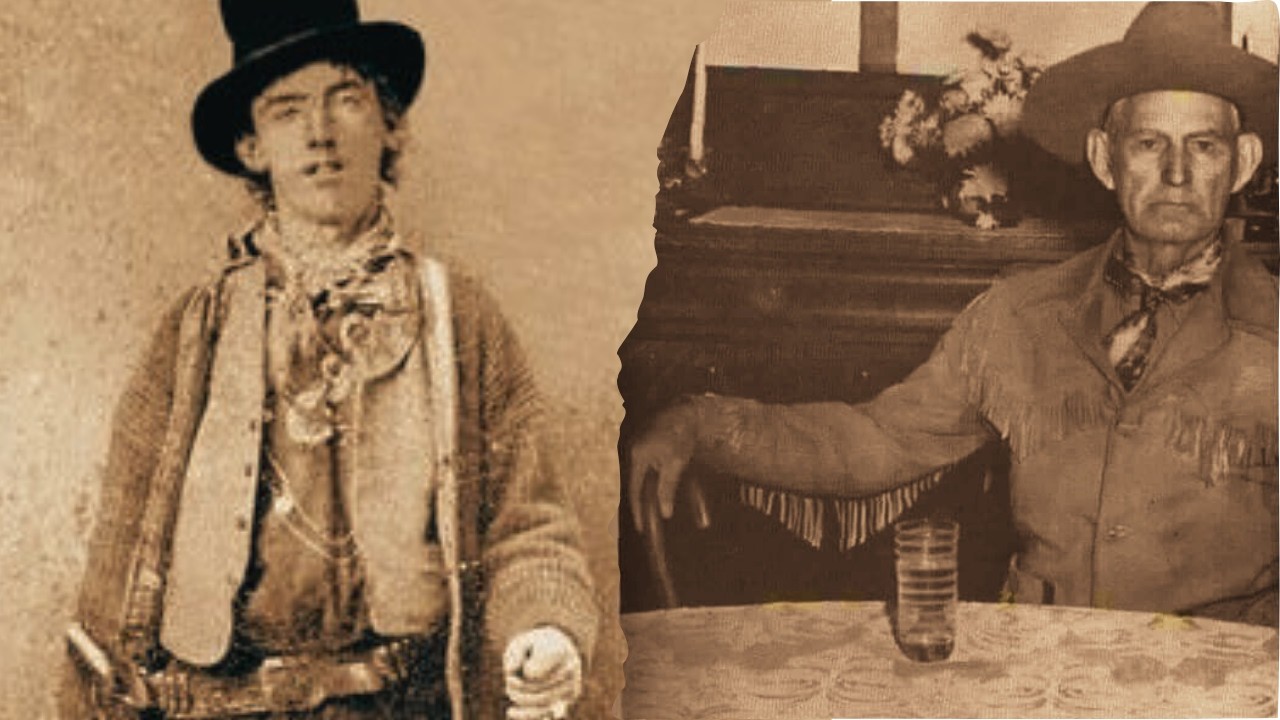
William Alexander Anderson Wallace, better known as Bigfoot Wallace, was one of the most enduring icons of the Texas frontier—a man of towering stature, battlefield courage, and a gift for storytelling that made separating fact from legend nearly impossible. Born in Lexington, Virginia, on April 3, 1817, Wallace spent an unremarkable childhood working on his father’s orchard. His life took a sharp turn in 1836 when he learned that his brother Sam and a cousin had been killed at the Goliad Massacre, in which Mexican General Santa Anna ordered the execution of more than 400 unarmed Texian prisoners who had surrendered under the belief they had been granted clemency. Wallace swore to exact revenge.
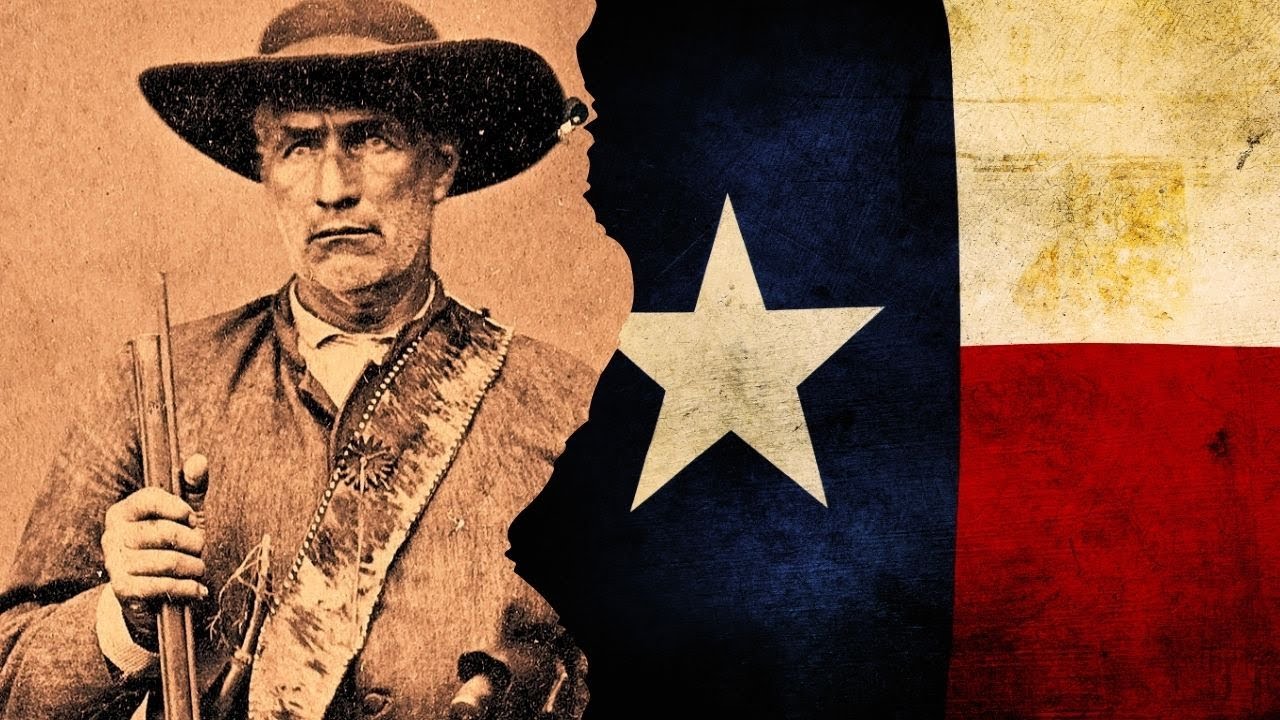
At just 19, he left Virginia for Texas, but by the time he arrived, the revolution was already over. He initially turned to farming, bouncing between La Grange, Austin, and San Antonio before his fighting days began. Even then, Wallace stood out physically. At roughly 6-foot-2 and around 240 pounds—well above the average male height of about 5-foot-7 at the time—he looked the part of a frontier giant.
His photos confirm he was an imposing figure, though historians have debated whether this stature directly led to his famous nickname. In 1842, Wallace finally got his chance to face the Mexican army. After two Mexican invasions of San Antonio that year, Wallace joined forces with Colonel Matthew Caldwell and famed Texas Ranger John Coffee Hays. He played an active role in the Battle of Salado Creek, where Texan forces repulsed several Mexican assaults.
A company of 53 militiamen under Captain Nicholas Mosby Dawson was intercepted by Mexican cavalry before joining the main force—only two escaped, with the rest killed or taken prisoner in what became known as the Dawson Fight. Wallace fought on, but he was not finished. Two months later, he signed on with the Somerville Expedition, which historian Joseph Nance later characterized as lacking energy and discipline, apparently undertaken more as a political move than a genuine invasion. When Somerville ordered the men home, a contingent of about 300 soldiers—Wallace among them—continued the campaign into Mexico under William S.
Fisher on what became known as the Mier Expedition. On Christmas Day 1842, they attacked the town of Mier. They were badly outnumbered, and after losing more than 60 companions, Wallace and the survivors surrendered. He later described the humiliation of laying down his arms in vividly harsh terms.
He and a few others attempted an escape, overpowering guards and fleeing into the desert, but they were recaptured within a week. Santa Anna personally ordered their execution. Mexican officers showed mercy by instituting a lottery instead of killing the entire group. They placed white and black beans in a jar—one black bean for every ten men—and each prisoner drew.
Those who pulled white beans were spared; the ten who drew black beans were executed by firing squad. Wallace drew a white bean. But his ordeal continued. He was taken to Mexico City, forced to work on chain gangs, and later transferred to Perote Prison, where he remained until his release nearly a year later.
He bore scars from his shackles for the rest of his life, writing to his father that he had undergone “more than I had any idea human nature could bear. ”
After returning to Texas, Wallace joined the Texas Rangers under John Coffee Hays. In the 1840s, these men were not the professional lawmen of later years; they were a ragtag collection of frontiersmen who learned guerrilla warfare fighting Comanche warriors and their allies. Wallace would later call one particular 1846 encounter his toughest battle.
After a Comanche war party struck settlements near San Antonio, Hays and his rangers tracked the warriors for days before setting up an ambush at a known watering spot along the Concho River near present-day San Angelo. When the Comanches arrived at dawn, the Rangers opened fire, killing men and horses alike. The Comanches rallied and charged repeatedly, nearly overwhelming the outnumbered Rangers, who were running low on powder and lead. Hays finally shot a principal chief out of his saddle, and the Comanche force broke off the attack.
During the Mexican-American War, Wallace served as a lieutenant in Captain Gillespie’s Texas Mounted Volunteers, which was another name for Texas Rangers attached to the U. S. Army. He saw action at the Battle of Monterrey, which cost the lives of some 120 Americans and more than twice as many Mexican soldiers.
Mexican forces came to call Wallace and his fellow Rangers “Los Diablos Tejanos”—the Texas Devils. By the 1850s, Wallace commanded his own Ranger company. His tracking skills were so highly regarded that he was called upon to capture escaped slaves headed for freedom in Mexico. It is a fact that sits uncomfortably alongside his own experience of forced labor.
Wallace knew what it was like to be held in bondage; his body still carried the marks of his shackles. Yet years later, he hunted down men and women fleeing their own enslavement. Historians have noted other troubling episodes. In early 1848, according to Gary Anderson’s account in “The Conquest of Texas,” Wallace led a contingent of rangers to attack a band of Lipan Apache who had previously been friendly with the Texans.
The Lipans had protested settler encroachment in the Medina River Valley, then departed vowing revenge after small parties returned and took livestock—including one of Wallace’s mules. Wallace waited until the Lipans thought they were safe, then gathered 30 rangers and stalked their village in a rugged valley at the head of the Frio River. His friend and biographer John Duval, who was present for the raid, recorded Wallace’s own words: he felt “compunctions of conscience” about the “bloody awakening” that would rouse his “old friends and allies” from their morning slumbers, but then dismissed those feelings when he remembered the “scurvy, rascally trick” they had played on him. Wallace knew these people.
The Lipans had joined the Texans during the revolution, scouted for the Rangers against the Comanches, and Wallace had even lived among them at one point. Yet over a stolen mule, he ordered an attack that killed 48 Lipan Apaches, only 21 of whom were warriors. According to his own account, Wallace tried to spare a young girl who recognized him and clung to his shirt, begging for mercy. He claimed she was shot by her own people in the chaos.
He said her final plea not to kill her parents brought him to tears and made him regret the attack, but he then wrote that “regrets are useless” and continued fighting until the Lipans broke and fled. Beyond his Ranger service, Wallace drove a mail coach between San Antonio and El Paso—a brutal 600-mile route through bandit country, hostile tribes, and unforgiving desert. At one point, natives stole his mules, stranding him hundreds of miles from the nearest settlement. According to legend, he stumbled onto a homestead days later, half-starved.
The only food available was eggs, and he reportedly ate 27 of them before continuing on to El Paso. When the Civil War broke out, Wallace remained in Texas guarding the frontier from Comanche and Kiowa raids. The threat was real: during the early 1860s, the frontier line was pushed back at least 100 miles, and some counties were nearly depopulated. Wallace eventually settled in South Texas in a community that came to be known as Bigfoot, about 40 miles southwest of San Antonio.
He never married and had no children, but he never lacked company. Travelers came from far and wide to hear him spin tales from his rawhide-bottom chair, pipe in hand, a mischievous glint in his eye. He was, by all accounts, a gifted storyteller who did not let the truth get in the way of a good yarn. Wallace died on January 7, 1899, at around 82 years of age.
He was later reinterred in the Texas State Cemetery, where he rests near Stephen F. Austin and other iconic figures of Texas history. The origins of his nickname remain uncertain. Three theories exist: his biographer Duval claimed Wallace earned it after defeating a giant Waco Indian named Bigfoot in a fight; historian Andrew Sowell suggested he was accused of a petty theft committed by a local Native American, and proved his innocence by placing his moccasined foot into the larger footprint of the real thief; and a third theory, perhaps the most likely, is simply that he had unusually large feet.
The legends surrounding Bigfoot Wallace even caught the attention of Robert E. Howard, creator of Conan the Barbarian. A devoted fan of Texas history, Howard wrote to H. P.
Lovecraft describing Wallace as “perhaps the greatest figure in Southwest legendary,” adding that “hundreds of tales of a regular myth cycle have grown up around him, but his life needs no myths to ring with breathtaking adventure and heroism. ”
The record presents a more complicated picture. Wallace was genuinely brave, hardened by years of war, imprisonment, and survival under extreme conditions. He faced Mexican soldiers, Comanche warriors, and the desert itself, and he lived to tell about it all.
But he also participated in brutal raids and brutally repossessed people who sought freedom. Texas historians and commentators continue to debate who he really was—a courageous frontiersman, a violent enforcer, or something in between.