The Wild West is often remembered through Hollywood images of gunfights and fearless lawmen, but the real history behind the name is rooted in something far more complex than dusty streets and fast-drawing outlaws. The era earned its nickname not only because of violence, but because it was a vast, undeveloped, and largely uncontrolled region where the environment itself posed the greatest challenge. In 1870, the U. S.
Census recorded Nevada’s population at just over 42,000 people spread across more than 110,000 square miles—fewer than one person for every two square miles. Families leaving established communities in Ohio, Pennsylvania, or New York crossed the Missouri River into a world without reliable roads, churches, schools, or communication networks. Many 19th-century mapmakers labeled the region the “Great American Desert,” reflecting how unfamiliar and intimidating the Great Plains appeared. The isolation shaped daily life in profound ways.
Settlers’ letters and diaries frequently described loneliness, homesickness, and emotional strain. One phrase that emerged during this period was “prairie madness”—never a formal medical diagnosis, but a widely used term for the psychological stress caused by long periods of solitude, endless horizons, harsh weather, and limited social interaction on isolated homesteads. Nature presented another constant challenge. The winter of 1886–1887, remembered as the “Big Die-Up,” demonstrated the frontier’s unpredictability.
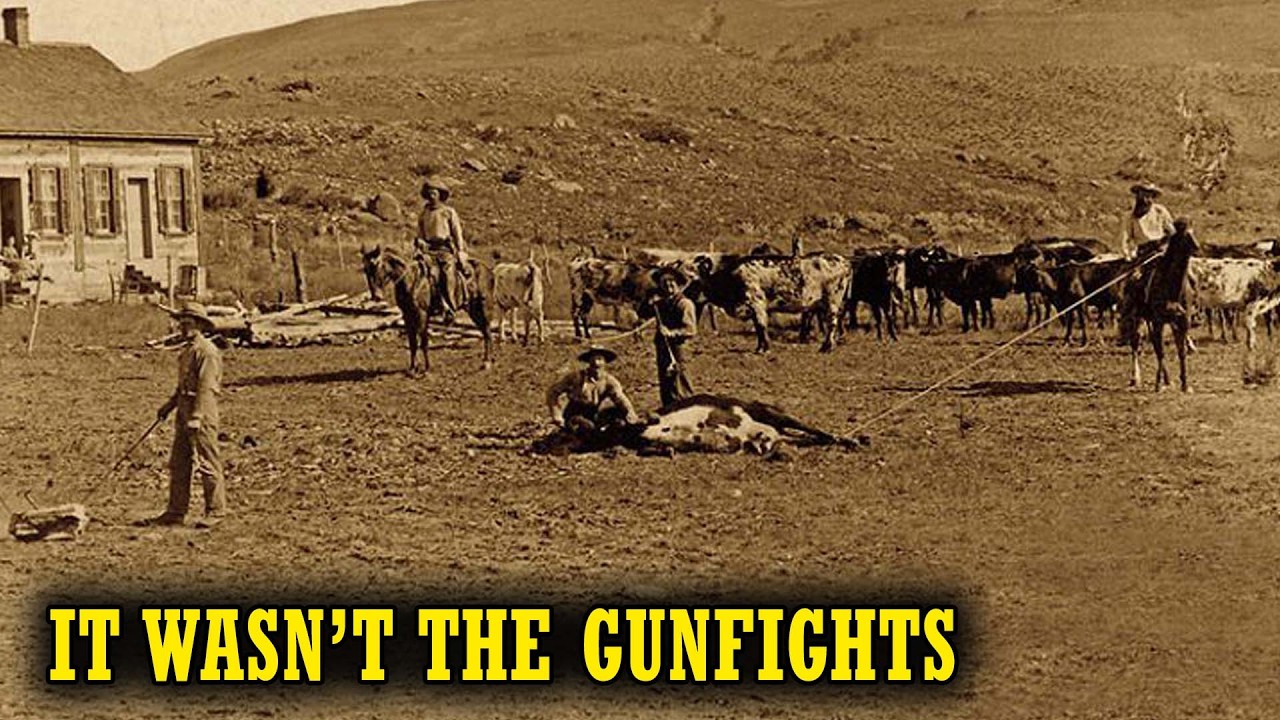
Severe storms swept across the northern plains, temperatures dropped to roughly 40 degrees below zero in some regions, and enormous snowdrifts blocked transportation. Hundreds of thousands of cattle perished, causing massive financial losses and reshaping the cattle industry toward fenced pastures and managed herds rather than unrestricted open-range grazing. The absence of effective law enforcement also defined the era. After the Civil War, the Western District of Arkansas was responsible for about 74,000 square miles of neighboring Indian Territory, yet historians estimate only roughly 200 deputy marshals served the district during much of the 1870s.
Each deputy was responsible for hundreds of square miles, and without telephones or rapid transportation, reporting a crime and reaching the scene could take days. Judge Isaac Parker, appointed in 1875, presided over the federal court in Fort Smith, Arkansas, which handled many criminal cases from Indian Territory. Over 21 years, his court processed more than 13,000 criminal cases. Historical records show he imposed 160 death sentences, with 79 executions ultimately carried out after appeals and commutations.
His reputation earned him the nickname “the Hanging Judge,” though historians note that many sentences reflected federal laws of the time. Deputy marshals faced extraordinary risks. According to records preserved by the U. S.
Marshal Service, more than 100 deputy marshals lost their lives serving in Indian Territory during the late 19th century. Compensation was modest—deputies were paid through a fee system based on warrants served, arrests made, prisoners transported, and mileage traveled. Because formal institutions could not always respond quickly, frontier communities sometimes organized vigilance committees. One of the best-known examples occurred in Montana Territory during 1863–1864.
Mining communities like Bannack and Virginia City faced repeated robberies, and residents suspected an organized group called “the Innocents” was responsible. Suspicion extended to Sheriff Henry Plummer, and frustrated citizens organized a committee that detained and executed 21 suspected members, including Plummer himself. Historians continue to debate the strength of the evidence, and the Montana vigilantes remain one of the most controversial episodes in frontier history—some argue they restored order, while others view their actions as a warning about bypassing legal safeguards. The frontier’s demographics added another layer of volatility.
Federal census records from 1870 and 1880 show an extraordinary imbalance between men and women in many western boomtowns. In Leadville, Colorado, during the late 1870s, men outnumbered women by roughly 11 to 1. In smaller mining camps across Nevada, Montana, and Idaho, the ratio could reach 20 to 1 or higher. With few families and children, social life centered on saloons, gambling halls, hotels, and brothels.
Dodge City, Kansas, supported more than two dozen saloons during the cattle-drive era despite having only a few thousand permanent residents. Alcohol played a major role in this culture, though quality varied considerably. Inexpensive homemade liquor earned nicknames like “rot gut,” “coffin varnish,” and “tarantula juice. ” Some low-cost whiskey was diluted or flavored with burnt sugar, molasses, or tobacco to improve its appearance.
The combination of heavy drinking, gambling, and economic uncertainty contributed to an atmosphere that newspapers frequently described as exciting and unpredictable. The Civil War also shaped the frontier. More than a million former soldiers returned to civilian life after the war, many carrying physical injuries, financial hardships, and emotional burdens. Conditions now associated with PTSD had not yet been formally identified, but diaries and military records describe recurring nightmares, anxiety, and difficulty adjusting to civilian life.
Thousands of veterans sought new beginnings in the West, bringing military experience and familiarity with firearms. The James-Younger Gang provides a well-known example. Before becoming outlaws, Jesse James and his brother Frank served as Confederate guerrilla fighters in Missouri under leaders like William Quantrill. The Lawrence massacre of 1863, during which more than 150 men and boys were killed in Lawrence, Kansas, remains one of the darkest episodes of the Civil War west of the Mississippi.
After the war, newspaper editor John Newman Edwards portrayed the James brothers as symbols of southern resistance, helping transform them into folk heroes for some readers. The war also accelerated firearms technology. The conflict encouraged widespread production of percussion revolvers, breech-loading carbines, and repeating rifles. Large quantities of military surplus entered civilian markets after the war, making weapons like the Colt Army Model 1860 and the Winchester Model 1873 increasingly available.
Manufacturing records show that hundreds of thousands of revolvers were produced during the late 19th century, many sold west of the Mississippi. Competition over land and resources led to the Range Wars. The Homestead Act of 1862 brought thousands of families west, and Joseph Glidden’s invention of barbed wire in 1874 transformed the landscape. Factories produced roughly 10,000 pounds of barbed wire in 1874; by 1880, annual production had climbed to well over 80 million pounds.
Fencing interrupted traditional cattle trails and restricted access to shared water sources, creating legal and economic conflicts. The Lincoln County War of 1878 in New Mexico Territory illustrates this pattern. Historians view the conflict as a struggle over economic influence rather than a simple contest between lawmen and outlaws. Competing business groups sought control of profitable government contracts to supply beef to military forts.
Merchants James Dolan and Lawrence Murphy controlled much of the county’s trade, while English rancher John Tunstall and attorney Alexander McSween hoped to establish competing businesses. After Tunstall’s death, his supporters, including a young cowboy named Billy the Kid, organized a group known as the Regulators. The conflict escalated into months of armed confrontations, culminating in the Battle of Lincoln, during which McSween’s house was surrounded and burned, and McSween lost his life. The Johnson County War of 1892 in Wyoming followed a similar pattern.
Large cattle companies represented by the Wyoming Stock Growers Association financed an armed expedition to investigate suspected rustlers and strengthen their control. At the KC Ranch, ranchers Nate Champion and Nick Ray lost their lives after a lengthy standoff. Hundreds of local residents organized opposition, and the crisis ended only after U. S.
cavalry arrived. Although legal proceedings followed, relatively few participants received lasting punishment. The Indian Wars formed another central part of frontier history. At the center stood the American bison, which provided food, clothing, tools, and cultural foundations for plains nations like the Lakota, Cheyenne, and Comanche.
Historical estimates place the bison population between 10 and 30 million before large-scale commercial hunting. The expansion of railroads during the 1860s and 1870s increased commercial access to the plains, and military leaders recognized that the disappearance of the bison would weaken tribal independence. Commercial hide hunting expanded rapidly after 1872, and by the mid-1880s, wild bison populations had declined to only a few hundred animals. The Treaty of Fort Laramie of 1868 recognized Lakota control over the Black Hills, but the 1874 expedition led by George Armstrong Custer confirmed the presence of gold, attracting thousands of prospectors despite federal treaty protections.
When negotiations to purchase the Black Hills failed, federal authorities ordered many Lakota and Cheyenne bands to report to reservations during the winter of 1876. This contributed to the Great Sioux War of 1876, which included the Battle of the Little Bighorn, where a coalition of Lakota, Northern Cheyenne, and Arapaho warriors defeated Custer’s battalion. Approximately 263 soldiers under Custer’s immediate command lost their lives. The final chapter of the Indian Wars is commonly associated with Wounded Knee Creek in December 1890.
Soldiers of the Seventh Cavalry attempted to disarm a band of Miniconjou Lakota led by Chief Spotted Elk. Gunfire erupted under circumstances historians continue to debate. Modern estimates indicate that between 250 and 300 Lakota, including many women and children, lost their lives, along with around 25 U. S.
soldiers, some likely from friendly fire. Many historians regard Wounded Knee as the symbolic end of the Indian Wars. The romanticized legend of the West grew alongside these events. Dime novels, sold for five or ten cents, combined real historical figures with fictional adventures.
Publishing firms like Beadle and Adams circulated millions of copies during the late 19th century, reaching readers in rapidly industrializing cities who viewed the frontier as a symbol of freedom and adventure. William Frederick Cody—known as Buffalo Bill—understood this transformation better than most. After working as a scout, buffalo hunter, and army guide, he became famous through highly fictionalized stories written by Ned Buntline beginning in 1869. In 1883, Cody launched Buffalo Bill’s Wild West, a traveling exhibition combining historical reenactments, horseback demonstrations, and marksmanship displays.
The production featured performers including Annie Oakley and, at one point, Sitting Bull. During the 1893 World’s Columbian Exposition in Chicago, historians estimate that approximately 18 million people attended the performances. Even as Cody presented the frontier to millions, the historical frontier was disappearing. In 1890, the U.
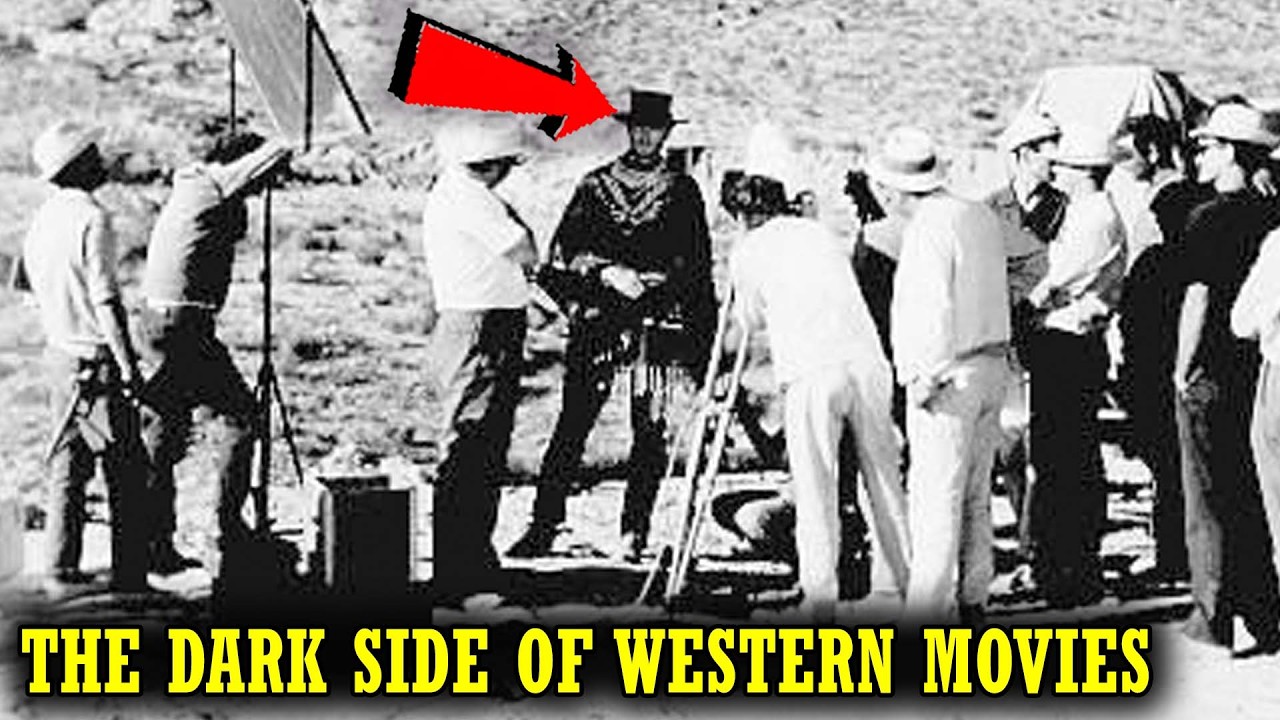
S. Census Bureau announced that a clearly defined American frontier line no longer existed because settlement had spread across the continent. The tragedy at Wounded Knee marked the closing chapter of the Indian Wars that same year. Yet the legend became stronger than ever—preserved through novels, newspapers, Wild West shows, and eventually motion pictures.
The West became known as wild not only because of what actually occurred there, but because generations of writers, performers, and filmmakers chose to remember it that way.