Bounty hunting in the Old West operated without GPS, surveillance cameras, or digital records, yet trackers still managed to locate dangerous fugitives across hundreds of miles of open territory. Their success depended on wanted posters, telegraph messages, hoof prints, local informants, and small details that most people overlooked. The real work of tracking outlaws rarely matched the Hollywood image of a lone stranger with a poster chasing a reward. Actual pursuits were usually organized by a combination of sheriffs, deputies, town marshals, U.
S. marshals, private investigators, railroad agents, express company detectives, and temporary volunteers. An ordinary citizen could join a search when a reward was offered, but that money did not automatically grant legal authority. Any arrest still had to follow state or territorial laws.
U. S. marshals and their deputies operated under federal court authority. They executed warrants, arrested suspects, guarded prisoners, and transported them over long distances.
Before federal deputies received regular salaries, much of their work was paid by fees for specific tasks, including warrant service. That system sometimes made formal law enforcement resemble bounty hunting because payment was tied to completing the job. County sheriffs frequently called on volunteer posses when they needed more men, better riders, or someone familiar with the local terrain. Railroad and express companies employed their own investigators because train robberies and stolen shipments cost them heavily.
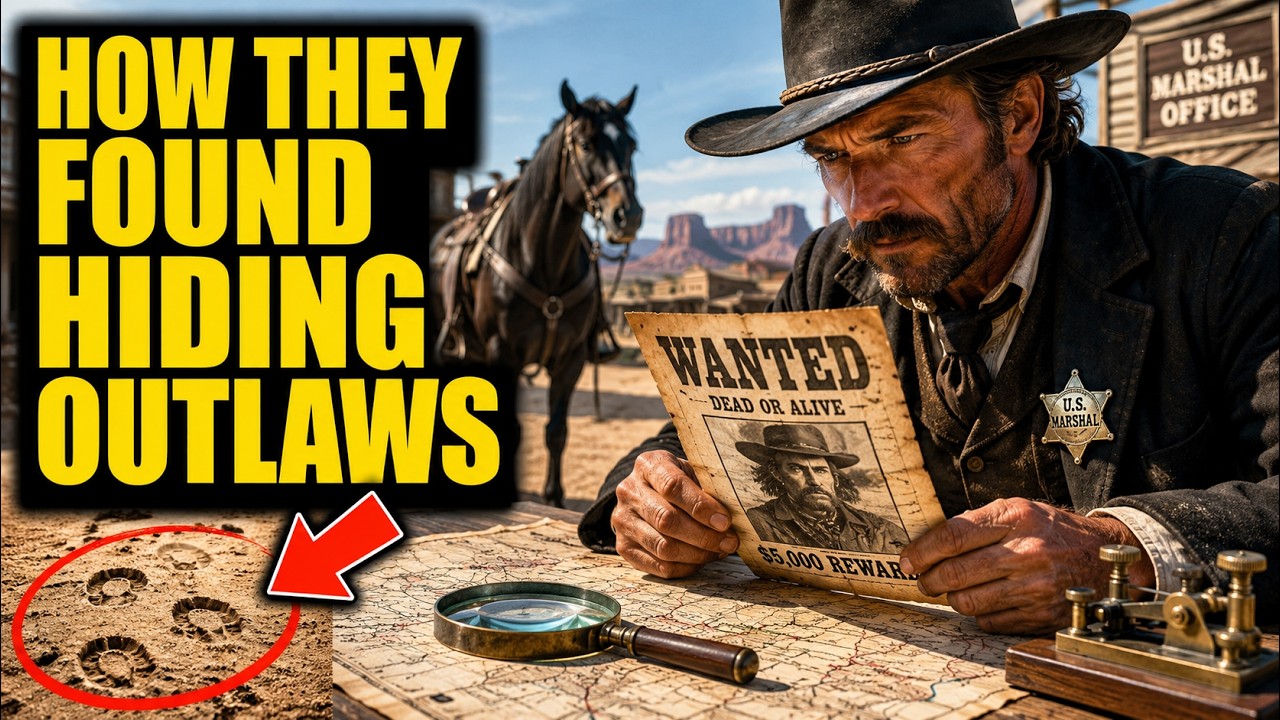
The most effective manhunters were not always famous gunmen. Many were patient investigators who understood paperwork, local connections, horses, travel routes, and the small mistakes people made while trying to disappear. A wanted notice was useful but not a magic map. Lawmen and private detectives relied on detailed descriptions that could be copied, mailed, printed in newspapers, or posted in public places.
A good notice listed a suspect’s age, height, build, hair, eyes, complexion, facial hair, scars, missing fingers, damaged teeth, accent, clothing, and known aliases. It might also describe the horse, saddle, weapons, relatives, associates, and towns connected to the fugitive. These details mattered because names were easy to change. An outlaw could introduce himself under a new identity, shave his beard, buy different clothes, or claim to be a cowboy looking for work.
But a scar, an unusual gait, an injured hand, or a distinctive voice was far harder to hide. Photographs became more useful in the late nineteenth century as detective agencies and police departments began collecting mug shots. Even then, a photograph could be old, blurry, or show a man with different hair or changed facial features. Investigators therefore compared multiple traits rather than relying on one image.
The telegraph transformed manhunts because information began traveling faster than a horse. After transcontinental lines were completed in 1861, a warning could reach another town before the wanted man arrived. A sheriff who learned that an outlaw was heading toward a train station could send a short message to officers, station agents, or company detectives along the route. The message might include an alias, physical description, clothing, companions, horse, and possible destination.
Instead of tracking every mile of the trail, lawmen could position people ahead of the fugitive. Railroads made this method even more effective. A detective could send a message forward, then board a train and cover ground that would have taken days on horseback. Telegraph operators and station agents became useful observers because they noticed unusual travelers, urgent messages, and people asking about train schedules.
The system had limits. Many remote settlements had no direct line. Storms, damaged wires, high costs, and vague descriptions could slow or ruin a search. An outlaw who avoided towns could evade the network for a time.
But the telegraph made isolated escape far more difficult. Most outlaws were found through people rather than footprints. A fugitive still needed food, water, shelter, fresh horses, news, and money. That meant talking to someone, and every conversation created a possible lead.
Investigators asked questions at livery stables, blacksmith shops, hotels, boarding houses, stage stations, general stores, farms, post offices, saloons, and railroad depots. These places functioned as informal travel checkpoints even without any official post. A stable hand might remember a tired horse with a particular brand. A blacksmith might have replaced a loose shoe.
A shopkeeper might recall a stranger buying food, ammunition, or a heavy coat. A hotel clerk might recognize an alias from a previous visit. Lawmen also checked relatives, former employers, friends, known associates, and suspected receivers of stolen goods. Informants shared information for many reasons.
Some wanted reward money. Others hated the outlaw, feared being charged with aiding him, or simply wanted trouble kept away from their community. Information was not always reliable. Personal grudges, rumors, and the desire to claim rewards produced false leads.
Experienced investigators looked for details that could be independently confirmed. If one witness described a gray horse and another remembered the same rider asking for the northern road, the two accounts became more useful together. Local support could work against a search as well. Friends might hide a fugitive, provide a fresh horse, or warn him that a posse was coming.
The hunt often became a contest over which side had the stronger network. Tracking the horse was often easier than tracking the rider. Horses had visible traits such as color, markings, scars, white patches on the face or legs, and unusual ways of moving. Saddles, blankets, bridles, and other gear could also stand out.
A fugitive could change his name in seconds, but replacing a horse and all its equipment took time, money, or another theft. Lawmen collected reports of stolen horses and passed descriptions to ranchers, stable owners, and officers in neighboring towns. They also studied hoof prints. The size and shape of a hoof, a worn shoe, a missing nail, or a broken edge could leave a repeating pattern.
A blacksmith might recognize his own recent work. Skilled trackers could sometimes tell one horse from another by measuring distances, depths, and small differences in the shoes. An animal’s needs also helped predict movement. A hard-ridden horse needed water, feed, and rest.
That pushed riders toward springs, streams, farms, settlements, and known water sources, especially in dry country. A group with extra horses moved differently from a lone rider on a tired animal. Changing horses could break a visible trail, but it usually created a new witness, a purchase, a theft report, or an abandoned animal. Tracking depended on many small signs rather than one perfect footprint.
Trackers studied hoof prints, boot marks, broken brush, bent grass, disturbed dust, moved stones, fresh ashes, food scraps, droppings, and places where animals had been tied. From those signs, they tried to estimate direction, group size, speed, and how recent the trail was. A sharp print in loose soil was likely fresher than one with crumbling edges. Moisture, wind, sunlight, and recent rain affected how quickly a trail faded.
A mark could not be judged the same way in every type of terrain. Overlapping tracks could show which rider had gone first. A long distance between hoof prints might indicate greater speed, while deep and uneven marks might point to a tired or heavily loaded horse. Skilled trackers did not make decisions based on a single piece of evidence.
They followed a pattern and checked it against the terrain and witness reports. Rocky ground, heavy rain, wind, cattle, and large crowds could destroy a trail. Rivers could hide tracks for a short distance, but riders still had to enter and leave the water somewhere. Mountain passes, canyons, and safe crossings narrowed the options.
Trackers sometimes moved ahead to the most likely exit rather than staying directly behind the fugitive. Local knowledge often mattered more than official rank. Native scouts, farmers, cowboys, hunters, teamsters, and guides frequently understood trails and terrain that an outsider had never seen. In 1866, the U.
S. Army received authority to enlist Native scouts, and men from various tribes later served as guides, trackers, guards, and interpreters. Army scouts were not the same as civilian bounty hunters, but their service showed why frontier search parties valued people who knew the land in detail. A skilled local tracker could identify the most practical water source, the safest pass, the condition of a road after a storm, or the route someone might choose during a certain season.
Language skills and knowledge of neighboring communities could also help separate a useful report from a misunderstanding. This expertise came from experience, careful observation, and deep familiarity with a specific area, not from a mysterious ability shared by all Native people. Different scouts served for different reasons, including pay, family interests, alliances, and conflicts with other groups. Lawmen sometimes hired or temporarily deputized local guides because a map could not show every spring, abandoned cabin, cattle trail, or hidden crossing.
The smartest manhunters did not only ask where the outlaw was. They asked what he would need later. A fugitive could avoid the main road, but he could not ignore his basic needs forever. Investigators mapped water sources, food, shelter, horses, money, and reliable help.
They noted family homes, former ranches, friendly towns, isolated cabins, criminal associates, places where stolen goods could be sold, and roads that crossed county lines. So-called outlaw trails were networks of ordinary roads, cattle paths, mountain passes, and stopovers used by everyone. Their advantage came from trusted connections and knowledge of the area, not from being secret routes known only to criminals. Watching a bridge, ferry, rail junction, mountain pass, or reliable spring was easier than watching hundreds of miles of open land.
Jurisdiction created problems. A sheriff’s authority usually ended at the county line, and extradition papers or new warrants might be required before a suspect could be returned from another state. U. S.
marshals had federal duties, but they still depended on communication and cooperation with local officers. Outlaws sometimes used borders to buy time. Crossing a border did not make them disappear, though. It created another set of roads, stations, officers, and witnesses.
Private investigators used methods that resembled quiet surveillance more than pursuit. Pinkerton agents and railroad detectives interviewed witnesses, watched suspicious communications, used false names, entered communities without announcing their purpose, and sometimes tried to infiltrate criminal networks. The goal was often to learn names, habits, meeting places, travel plans, and relationships before making an arrest. After the Civil War, Pinkerton operatives infiltrated the Reno Gang, which was involved in train robberies, and the agency collected photographs of known criminals.
Investigation files gathered physical descriptions, arrest warrants, reward offers, correspondence, newspaper clippings, and reports from agents in different cities. This created a larger picture than the memory of a single sheriff. Agencies exchanged messages between offices, allowing a lead in one state to be compared with information from another. Undercover work was risky and far from perfect.
An operative could be exposed, fed false information, or trapped by a source with divided loyalties. The Pinkerton agency’s pursuit of the James brothers became a major failure, proving that a large organization, strong reputation, and extensive records did not guarantee success. The useful part of undercover work was not the disguise itself but the ability to observe without alarming the target, build a list of associates, and confirm information before the fugitive changed his plans. Finding a possible suspect was only part of the task.
A lawman still had to confirm identity, make a legal arrest, and connect the prisoner to the reward or warrant. Because aliases were common, officers compared multiple details at once. They checked face, height, scars, hands, teeth, voice, accent, clothing, companions, horse, papers, and any available photograph. One match could be coincidence.
Several matches made identification far stronger. During the late nineteenth century, police departments and detective agencies began compiling mug shot collections, often called rogues’ galleries. Fingerprints were not yet a routine tool for most Old West fugitive hunts, so visual identification and witness testimony remained essential. Once officers believed they had the right man, a sheriff or marshal might organize a posse, temporarily deputize local men, watch the roads, and approach when the suspect was away from his supporters.
Reward notices usually required specific proof and could contain conditions tied to arrest, conviction, or delivery to the proper authority. A claimant could not always collect simply by pointing at an arrested man. Mistaken identity, outdated descriptions, false reports, weak warrants, and arguments over who deserved payment complicated cases. Even after arrest, deputies might have to transport the prisoner by horse, stagecoach, wagon, or train while protecting court papers, witnesses, and physical evidence.
The pursuit ended as a legal procedure when the suspect, warrant, and supporting information were brought before the court with authority to hear the case.