Frank Stillwell was not the most famous outlaw of the American frontier, but his name became permanently tied to one of the darkest chapters in Tombstone, Arizona history. For a brief period, he wore a badge as an assistant deputy sheriff in Coochis County, yet he was also accused of stage robbery, connected to the violent cowboy network, and named among the suspects after Morgan Herp was assassinated. His story illustrates how messy the line between lawman and outlaw could become in the Old West, where a man could move between legitimate business, local law enforcement, and an outlaw company without fully belonging to any one side. Stillwell’s connections ran through mining, freight, saloons, livery stables, and stage travel.
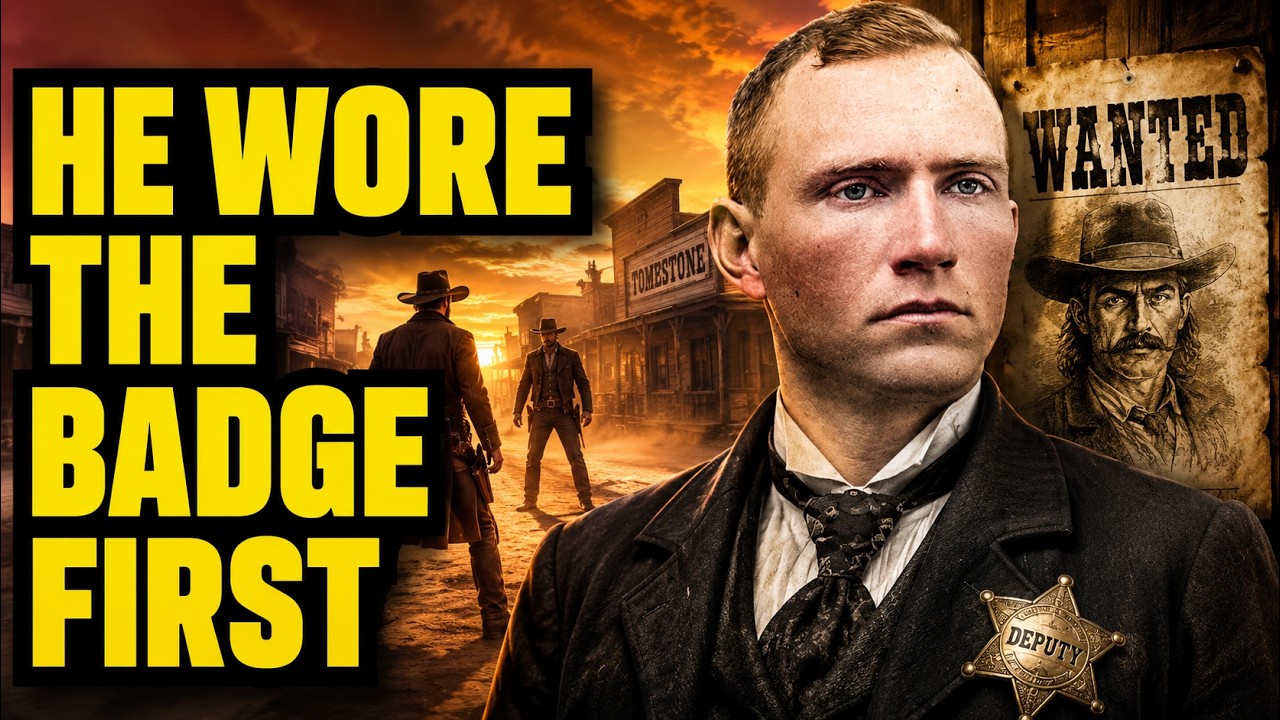
These were not random trades. In the Arizona Territory, those businesses stood close to money, movement, horses, weapons, and information. A livery stable owner knew who was arriving, who was leaving, who had cash, who needed a horse, and who was nervous. Such a man could make honest money, but he could also learn things that criminals wanted to know.
That duality is one reason his reputation darkened beyond what the official record alone showed. He was accused in serious cases, but not every accusation ended in conviction. Even when courts did not convict him, his name kept surfacing near violent disputes, around men connected to the cowboys, and in stage robbery accusations. That pattern, rather than a single proven crime, is why his name survived.
. In the Old West, reputation worked like currency. A man’s name could open doors, close mouths, scare witnesses, or make enemies back down. Frontier towns did not always have strong institutions.
Courts and sheriffs existed, but the distance between a crime and a conviction could be enormous. Witnesses could disappear. Friends could provide alibis. Evidence could be weak.
Local alliances could shape testimony. In that environment, reputation sometimes outweighed court proceedings. Stillwell’s reputation followed him before the famous Herp events even began. In the late 1870s, he was connected to deadly incidents in Arizona, though one case was treated as self-defense and another accusation did not result in an indictment due to insufficient evidence.
To the public,ender pattern mattered more than legal outcomes. His name kept appearing at the pressure points of frontier life: mining disputes, stage coach trouble, cowboy connections, lawman rivalries, and eventually theater Herp conflict
The word cowboy carried a dangerous meaning around Tombstone in the early 1880s. It often referred to a loose circle of men accused of cattle rustling, stage robberies, threats, and attacks. They were not an organized gang with one leader, but a frontier network held together by favors, fear, and mutual protection.
Some men were friends, some business partners, some helped with horses, alibis, jobs, information, or shelter. That structure made them difficult to stop. If one man was arrested, another could attest he was elsewhere. If a witness talked, others pressured him.
If a robbery occurred, the trail could vanish into ranches, mining camps, border roads, and saloons. This environment gave men like Stillwell room to operate and made lawenforcement’s job far harder, as law and crime were not always separated by a clean line
Stage coaches were prime targets because they carried more than passengers. They transported mail, money, valuables, payroll, business information, and travelers from mining towns. In southern Arizona, stage roads connected silver camps, railroad points, settlements, and supply routes.
Whoever controlled knowledge of those routes understood where money moved. Stage robbery attacked the trust that allowed frontier towns to grow, making it a serious crime. Stillwell’s work with livery stables placed him at a center of movement, where people rented animals, changed teams, asked about road conditions, and passed news. Such a position offered insight into travel routes and schedules.
While many livery owners were legitimate, for a man already surrounded by suspicion, that access raised troubling questions
In September 1880, the Sandy Bob stage robbery near Tombstone and Bisbee pulled Stillwell deeper into the Herp conflict. One reported clue involved a robber supposedly using the word sugar while discussing money, a detail connected to Stillwell because some believed he spoke that way. Another clue involved a bootprint found near the scene, linked to a repaired boot heel believed to belong to him. These clues illustrated how frontier law enforcement operated before modern investigation, but they also showed its weakness.
A word raised suspicion, but it was not proof. A bootprint was not enough by itself. Charges against Stillwell and associate Pete Spence were eventually dropped. To the Hersps, this looked like another sign that cowboy-connected men were behind serious crime.
To the cowboys, it looked like the Hers were weaponizing the law against their enemies. That gap in perception made every arrest personal and every dropped charge a new argument
Stillwell’s connection to Pete Spence was central. Spence moved in the same cowboy circles and was also tied to stage robbery accusations and later suspicion around Morgan Herp’s death. The two men’s repeated appearance together in the record reveals how outlaw networks functioned.
Associates provided alibis, paid bonds, passed information, or offered places to stay. Such support made frontier justice harder to deliver. It also made fear spread faster. A lawman threating one man had to consider the men behind him.
When the feud turned deadly, those associations became lethal
A lesser-known detail complicates Stillwell’s legend. He was not present at the famous gunfight near the Okay Corral. Reportedly in custody in Tucson on federal charges at the time, he was not among the men fighting there. His absence does not diminish his importance.
He was part of the tension preceding the gunfight and of the revenge cycle afterward. The gunfight itself did not settle anything. Billy Clanton and the Mcllor brothers were killed, the Herps and Doc Holiday survived, but their positions grew more dangerous. The cowboys sought blood in response, while the Hers saw an ongoing threat.
Tombstone became a town where every move was watched. Stillwell’s role was that of a pressure point, not a main fighter, his arrest, connections, and reputation helping create the unstable atmosphere
Morgan Herp’s killing in March 1882 transformed Stillwell’s life more than any prior accusation. Previously, he had survived suspicion, been released, and remained in circulation. But Morgan’s death became personal for Wyatt Herp.
A coroner’s jury named several suspects, including Stillwell. He was a suspect, not a man convicted for the killing, but that distinction offered no protection. Wyatt believed Stillwell was involved, and that belief dictated what happened next. Wyatt, Virgil, and Morgan had all worn badges, but after Morgan’s murder, Wyatt’s actions turned to revenge.
Supporters saw a man hunting his brother’s killers after the system had failed. Critics saw a man taking the law into his own hands. Stillwell’s existing reputation, his ties to Pete Spence, his involvement in the stage robbery case, and his cowboy associations placed him near the top of Wyatt’s list. Reputation that had once worked in his favor now worked against him
In March 1882, Wyatt Herp and his allies were escorting Virgil Herp, who had been wounded months earlier, and family members after Morgan’s death, fearing further attacks.
Reports placed Frank Stillwell and Ike Clanton in Tucson around the same time. Some accounts claim the Hersps believed Stillwell and others were waiting near the train with violent intent. Other details suggest Stillwell may have tried to flee once the Herp party appeared. The record includes testimony and later statements, but historians still debate the full truth.
What is clear is that Stillwell was found dead near the tracks, marking the beginning of Wyatt Herp’s vendetta. Warrants were issued for Wyatt and others connected to the killing, showing the law did not simply approve. Stillwell may have had a terrible reputation, but his death still carried legal consequences. Wyatt’s side saw it as striking back at Morgan’s killers, while local authorities treated it as a killing outside legal process
Stillwell’s death did not end the cowboy problem.
It became the first major step in Wyatt Herp’s Vendetta Ride, a string of hunts and accusations that moved Tombstone’s story from a town feud intoone of the Old West’s most famous revenge sagas. Stillwell’s name survived because he sits at the intersection of several legendary threads: the Herp story, the cowboy network, stage robbery cases, the lawman world, and the Tucson vendetta. He was not famous enough for every detail of his life to be documented, nor infamous enough to be reduced to a cartoon villain. The record is mixed, marked by unproven accusations and stories shaped by enemies and later tellers.
His danger came not from a simple legend, but from movement, access, and association. He moved through business, law enforcement, cowboy circles, and the stage road economy, and everywhere he went, suspicion followed. His story reveals a deeper truth about the frontier:outlaws were not always hiding on the edges of town. Sometimes they were woven into its daily business, knew the sheriff, had protecting partners, and understood the roads better than those chasing them.
They could be arrested, released, and back in circulation before the public felt safe. Frank Stillwell represents that kind of outlaw, one who did not appear a stranger to the system, but part of it. He could be a deputy, a stable owner, a saloon partner, a stage road figure, and a suspected cowboy associate. That combination made him more frightening than a man known for a single crime.
In the Old West, the most dangerous outlaw was not always the man standing far outside the law, but the man who knew exactly how close he could stand to it