On the morning of April 9, 1892, a force of roughly 50 hired mercenaries surrounded a cabin in Johnson County, Wyoming. Their target was Nate Champion, a 34-year-old cowboy who was alone inside, and they had been paid $5 per day plus a $50 bounty for every man they killed. Champion was the first name on a death list drawn up by wealthy cattle barons who intended to wipe out their small-ranching competition. The attack was the culmination of a long and bitter feud in Wyoming during the cattle boom that followed the Civil War.
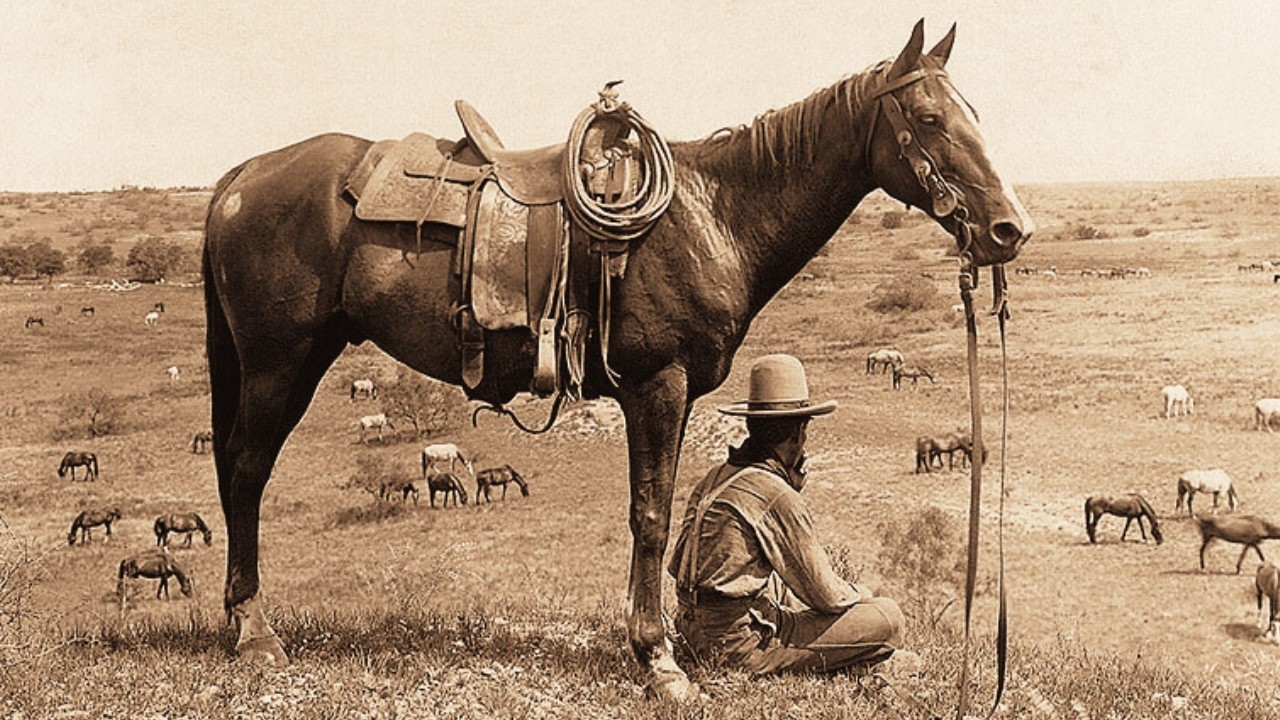
Rich investors from New York, Boston, London, and Scotland poured money into vast ranching operations that dominated the territory. These powerful men formed the Wyoming Stock Growers Association, known as the WSGA, and used their influence to control roundups, cattle shipments, and even the territorial government. Their members included senators, judges, and the acting governor, and they gathered at the exclusive Cheyenne Club to conduct business. The cattle barons grazed their herds on public land that they did not legally own, and when homesteaders began claiming that same land under the Homestead Act of 1862, the barons viewed them as trespassers.
The disastrous winter of 1886–1887, known as the great die-up, killed up to 80% of the open-range cattle and bankrupted many operations. Out-of-work cowboys then filed claims on land their former bosses had used for free, and the WSGA responded by blacklisting them, rigging the roundups against small operators, and accusing them of cattle rustling. The accusations quickly turned deadly. In 1889, the WSGA lynched two homesteaders, including a woman, on trumped-up charges.
In 1891, a horse trader named Tom Wagner was lynched by masked men, and two small ranchers, John Tisdale and Orley Jones, were ambushed and killed near Buffalo. Tisdale had been buying Christmas presents for his children, and Jones was purchasing lumber to build a cabin for his new bride. Nate Champion, originally from Texas, had worked his way north as a trail hand and earned a reputation as a top cowboy. His father had been sheriff of Williamson County, and his family was known for toughness.
Champion filed on his own spread, and for that alone he was branded a rustler by the cattle barons. There is no evidence he ever stole cattle, but he did help organize a separate roundup in defiance of the WSGA, which made him a target. Five months before the final siege, on November 1, 1891, a group of gunmen burst into Champion’s cabin while he slept. He pulled a pistol from under his pillow, killed one attacker, and forced the others to flee.
The second attempt on his life was planned more carefully, with the hired killers waiting for daybreak outside his cabin. On the morning of the attack, Champion was not alone. Fellow cowboy Nick Ray was with him, along with two fur trappers who happened to be passing through. The trappers stepped outside first, and the mercenaries let them go.
When Ray stepped out to see what had happened, he was shot and collapsed near the door. Champion braved the gunfire to drag Ray back inside, and the siege began. For hours, the invaders poured gunfire into the cabin while Champion fired back to keep them at bay. During a lull, he grabbed a pencil and paper and began documenting the attack.
He wrote that bullets were coming in like hell and that Nick was still alive. Later, he noted that Nick had died around 9:00 and that he saw smoke from the stable. He wrote that he felt lonesome and wished someone were there to watch all sides at once. Around 3:00, the attackers fired on a man in a buck wagon and a man on horseback who passed in the distance.
That man was Jack Flag, another small rancher and a friend of Champion’s, who managed to escape and reach Buffalo to raise the alarm. The invaders had lost the element of surprise, but for Champion it was too late. Champion wrote that the attackers had fired the house and that he intended to make a break when night came if he was still alive. The mercenaries shoved a wagon full of burning hay against the cabin, and the flames spread quickly.
Champion scrawled his final message: “The house is all fired. Goodbye, boys, if I never see you again. ”
He burst from the cabin with his guns blazing and was killed moments later. Accounts differ on how many attackers he wounded or killed, with some saying two were wounded and others claiming he killed as many as four.
Everyone agreed that he died fighting. Even Frank Canton, one of the men who helped orchestrate the attack, admitted, “He came out fighting and he died game. ”
Champion’s stand had bought time for Jack Flag to spread the alarm. Sheriff Red Angus of Johnson County formed a posse of about 200 angry men, and the hunters became the hunted.
Champion’s killers were forced to take refuge on a nearby ranch, where they were besieged for three days. Just as the posse was preparing to use dynamite, the U. S. Army arrived from Fort McKinney.
A WSGA ally had contacted a senator who woke the president in the middle of the night to request troops. The invaders were taken into custody, but mostly for their own protection, and they came and went as they pleased. When Johnson County tried to prosecute them for murder, money and political connections got the charges dropped. Not a single person was ever convicted for Nate Champion’s murder.
One of the Texas gunmen, George Tucker, later gave a candid assessment. He admitted that they were in Wyoming as paid assassins for the big ranchers and that they had politics and money on their side, but not the law. The cattle barons and their hired guns escaped justice, but their power was broken. Voters in Wyoming kicked them out of office in the following election, and by 1893 the once-untouchable WSGA was forced to open its books to smaller ranchers.
The cattle barons are now remembered as villains, while Nate Champion is remembered as a hero. His sacrifice allowed the little men to win the war. The lesson, according to some, is that ordinary people have more power than they realize, and that sticking together, voting carefully, and withholding support from those who abuse power can bring down even the most wealthy and connected.