The air inside the freezing Caserne Heights barracks in Verdun was thick with the weight of a collapsing front, but the silence that followed George Patton’s flat, almost casual declaration was heavier still. It was December 19th, 1944, and the room full of the Allied high command had just been asked the only question that mattered: how soon could someone attack to relieve the trapped 101st Airborne at Bastogne? The cautious answers had trickled in—a week, ten days, a logistical impossibility—until Patton pushed back his chair and stood, promising three divisions in 48 hours.
The laughter that followed was nervous, disbelieving, but the promise, against all odds, was kept.
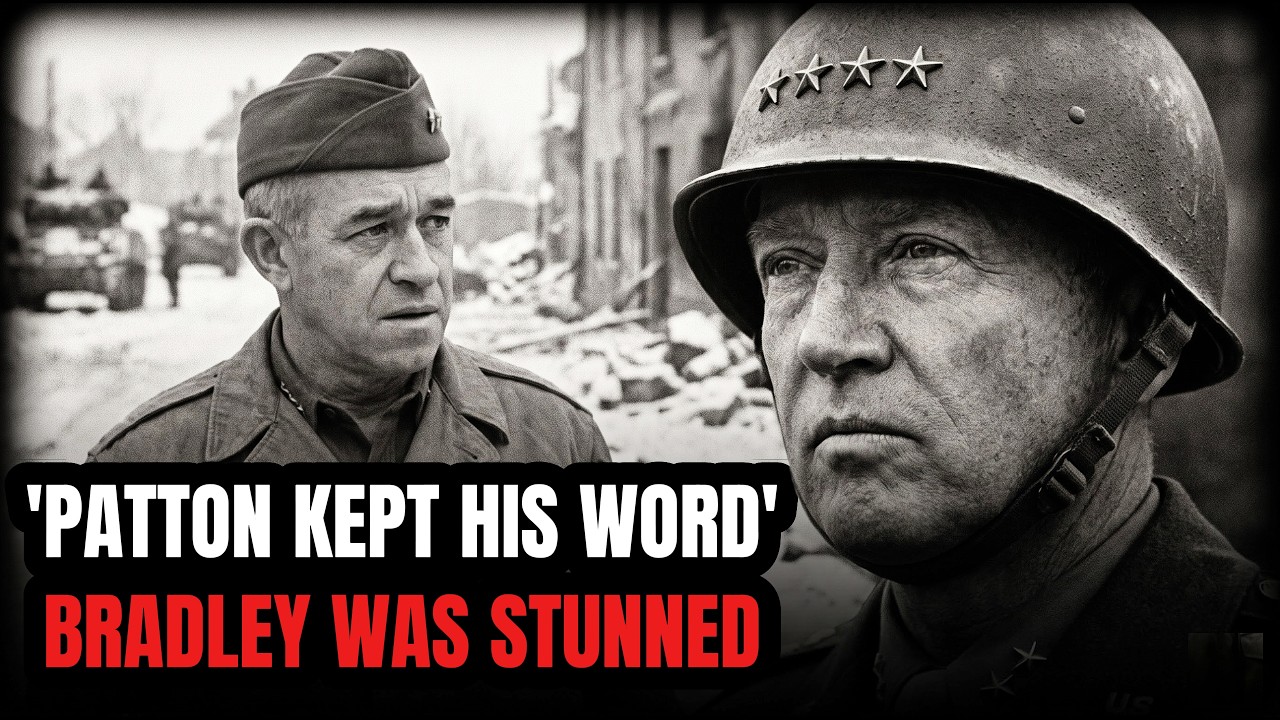 Now, weeks later, in the aftermath of the greatest gamble of the European theater, the quiet words spoken between Omar Bradley and George Patton have emerged as the defining epitaph of the operation. According to Patton’s personal diary and Bradley’s postwar reflections, the commander of the 12th Army Group pulled his old friend aside after a decoration ceremony in the rubble of Bastogne and delivered a verdict that still echoes in military history: the Third Army’s response was the most brilliant operation of the entire war. For Bradley, a man of immense restraint and methodical caution, the admission was a seismic shift in how he viewed the impulsive, theatrical general who had just pulled off the impossible.
The journey to that private moment began with a desperate phone call on the night of December 18th. Bradley, hunched over reconnaissance summaries in his Luxembourg headquarters, watched the situation reports worsen by the hour as German forces flooded through the Ardennes. The intelligence assessments he had trusted—which had labeled the sector unsuitable for a major offensive—had collapsed entirely.
He picked up the phone and called Patton, who was buoyant about his own momentum toward the Saar. Bradley cut him off with the news of the massive German breakthrough and demanded the 10th Armored Division be sent north immediately. Patton pushed back, arguing that losing the division would squander a month of grinding combat, but Bradley’s insistence carried the weight of a collapsing front.
Patton relented, but he did not simply curse his luck; he began to plan.
What separates Patton from every other commander in that Verdun room is what he did in the hours between that phone call and the conference. While other staffs were still absorbing the shock of the offensive, Patton’s intelligence officer, Colonel Oscar Koch, had already flagged the unusual concentration of German reserves opposite the Ardennes weeks earlier—a report dismissed by Supreme Headquarters as impossible. On the night of December 18th, Patton called his own staff together and ordered them to prepare not one, but three contingency plans for a pivot north: an attack with three divisions, one with four, and one with six.
By the time morning came, the plans were not theoretical exercises; they were movement orders waiting on signatures.
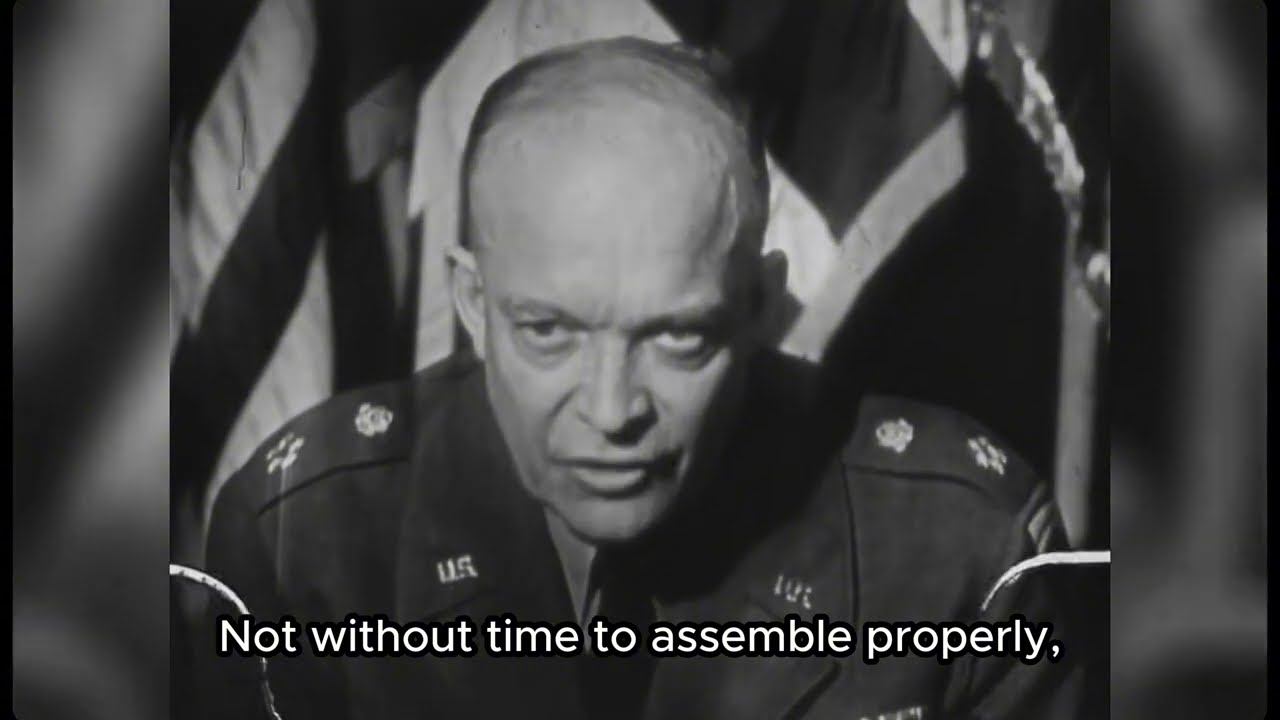
The conference at Verdun opened with Eisenhower’s directness landing like steel: the situation should be regarded as an opportunity, not a disaster. He pointed to Bastogne, a crossroads where seven major routes converged, now besieged by German armor. When Eisenhower turned to Patton and asked how soon he could attack north with a substantial force, Patton rose and walked to the map with the confidence of a man stepping into a familiar role.
“Three divisions, December 22nd, 48 hours,” he said. The room erupted in skeptical laughter and raised eyebrows. Even Bradley felt the pull of doubt, whispering that Patton had to be bluffing.
He wasn’t. Montgomery argued for a methodical response in January, but Eisenhower made the call: Patton attacks from the south on the 22nd.
 The next three days were not one dramatic moment but thousands of small decisions made under crushing pressure. Third Army numbered roughly a quarter million soldiers, already engaged in combat elsewhere, and every mile of the pivot fought against the environment itself. Roads were narrow and slick with ice; intersections became traps of freezing rain; military traffic clogged every route as units retreated and redeployed.
Fuel trucks had to move alongside combat units, because if fuel movement failed, the entire maneuver stopped in place. Artillery shifted from firing into the Saar to firing north, supply dumps were abandoned or repurposed overnight, and signal networks were rewired in motion. Temperatures fell well below freezing, killing batteries and seizing engines, while frostbite began appearing in men who had been fighting in milder conditions just days earlier.
But Patton’s obsession with training and his intolerance for slack began to pay for itself. Units moved with real efficiency, not perfectly, but with urgency and cohesion intact. By December 21st, all three divisions sat in positions south of Bastogne, aligned for an attack that would begin exactly on schedule.
The following morning, the counterattack opened with the 4th Armored Division leading, pushing north into terrain built for defense—frozen forests, narrow roads, and villages that became strong points with a handful of determined men and one anti-tank gun. The weather grounded air support, and progress was measured in yards, not miles. Inside Bastogne, the defenders lived on a different kind of clock, counting shells remaining and bandages left, while Brigadier General Anthony McAuliffe’s one-word reply to a German surrender ultimatum—“Nuts!”
—became legend. Legend, however, does not refill ammunition pouches or clean infected wounds.
On December 23rd, the weather finally broke. Allied aircraft returned with brutal effect on German positions, and transport planes dropped supplies over Bastogne, parachutes blooming like a sudden miracle. The morale surge was immediate, not because the siege ended, but because the defenders knew they had not been forgotten.
South of the town, the 4th Armored kept grinding forward through defenses that refused to break. Inside Combat Command B, a name emerged that history would remember on its own terms: Lieutenant Colonel Creighton Abrams, an aggressive and unflinching officer whose presence felt like an engine revving higher. By December 26th, the pressure to break through had become suffocating, and orders came down from Patton directly: reach Bastogne regardless of cost.
Abrams organized a task force around Company C of the 37th Tank Battalion, backed by armored infantry from the 53rd. The plan was simple to describe and brutal to execute: drive straight up the road toward Bastogne, roughly four miles through whatever German force stood in the way. Midafternoon, the column surged forward, Shermans and halftracks charging directly into fire.
 German anti-tank guns snapped at them from hidden positions, but the column did not stop. It pushed like a wedge, infantry clearing houses and roadblocks one room at a time. Late afternoon on December 26th, the lead tank reached the American perimeter.
An identification panel went up, and engineers and paratroopers who had been waiting for days recognized friendly armor coming from the south. The news spread through Bastogne faster than any radio message could travel. The ring had cracked.
When confirmation reached Bradley that Patton had broken through, the relief hit him physically, but it was closer to amazement. Patton had only promised to begin the attack within 48 hours, not to complete the relief that fast. Even accounting for that distinction, what Third Army had just done felt almost unreal: an entire army pivoted under pressure, fought through prepared winter defenses, and reached its objective in a time frame most professionals considered flatly impossible.
Bradley called Patton personally, offering congratulations. Patton deflected it exactly the way he always did, insisting the 101st never needed rescuing—that Third Army simply opened a door so they could keep fighting.
The relief of Bastogne did not end the Battle of the Bulge. Fighting ground on for weeks as German forces tried to reclaim ground and the Allies compressed the bulge from both sides. But the German timetable never recovered, and resources were diverted at the exact moment the offensive could least afford it.
For Bradley, the episode became something more personal than a battlefield report: a recalibration of a man he thought he already understood completely. Bradley, diplomatic and methodical, and Patton, fierce and impulsive, had been old friends since West Point, professional opposites in almost every other way. Bradley had defended Patton through controversies that could have ended his career, believing that Patton’s aggression, dangerous as it was, could win fights that caution simply could not.
Bastogne vindicated that belief completely.
On January 14th, 1945, Eisenhower traveled to Bastogne to award decorations and formally recognize what the defenders endured. Cameras captured handshakes and medals being pinned, the public face of unity and victory against a backdrop of ruined buildings and snow. But the moment that actually mattered to Bradley never made it into any of those photographs.
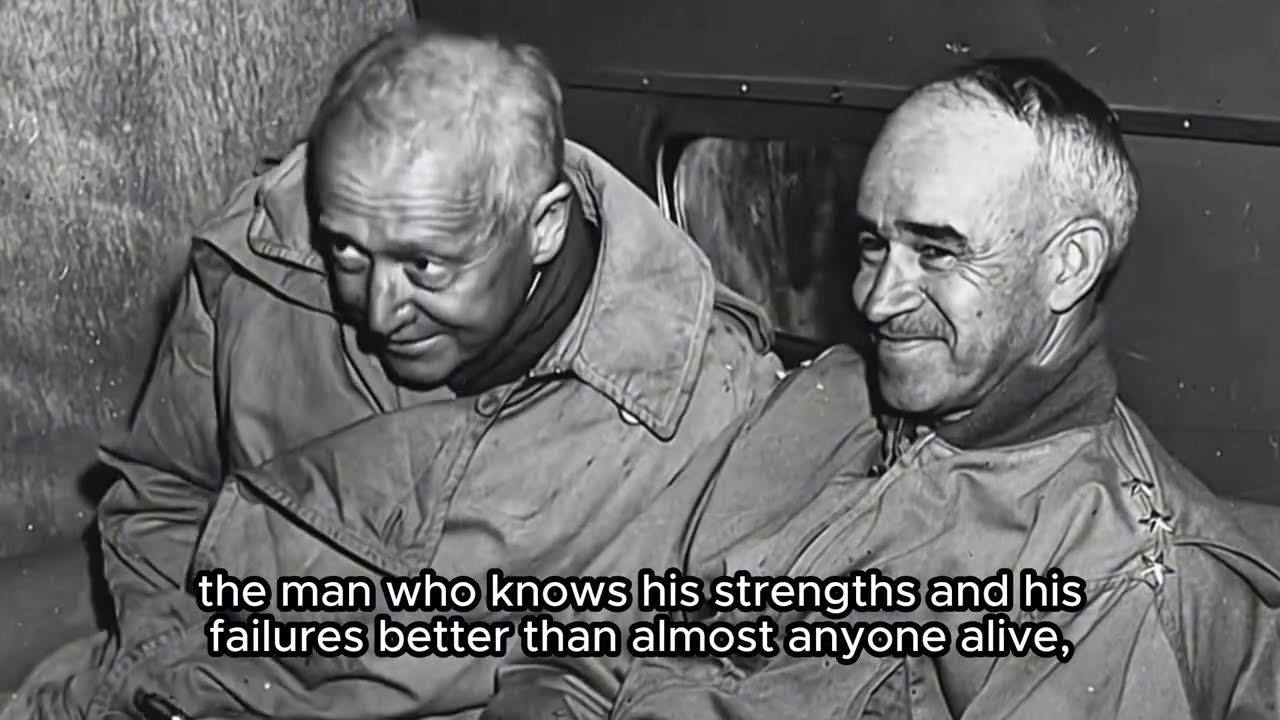
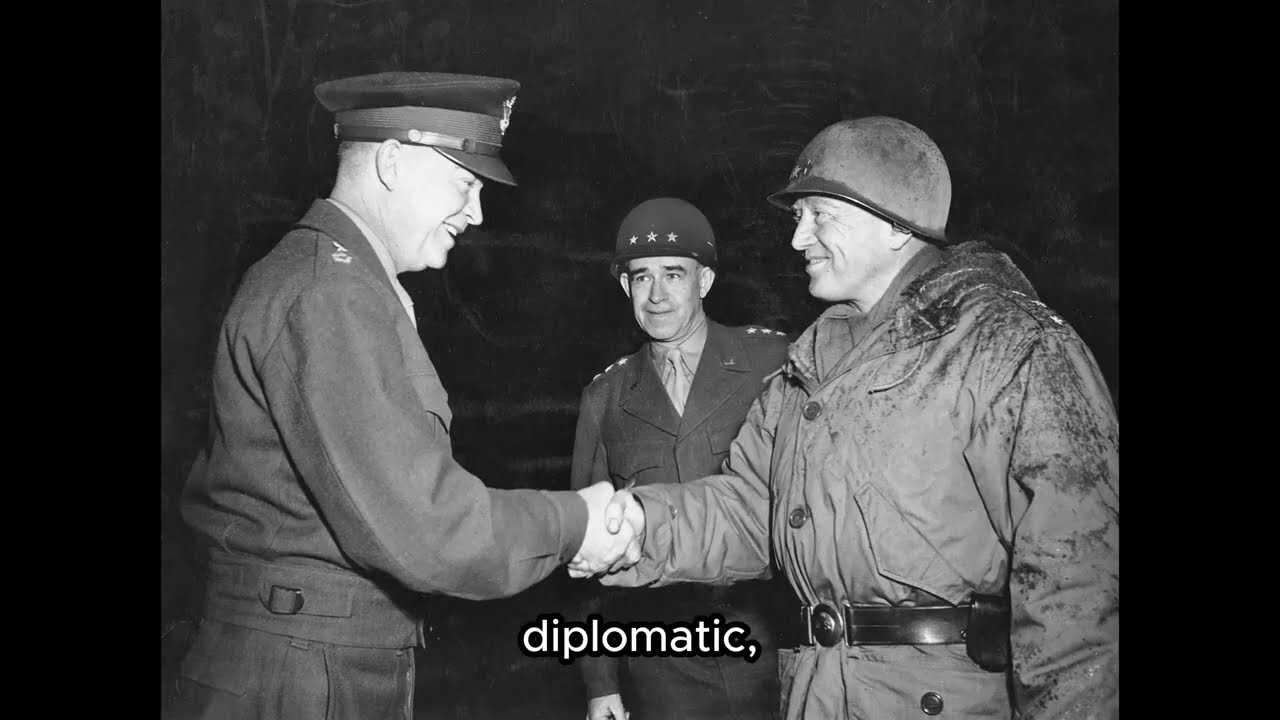 After the ceremony, away from the microphones, Bradley pulled Patton aside. What he said next, recorded later in Patton’s own diary and echoed in Bradley’s postwar reflections, landed with the full weight of professional truth from a man who almost never indulges in it. The Third Army’s response at Bastogne, Bradley told him, was the most brilliant operation of the entire war.
Historians, he added, will be studying it for generations. Coming from Bradley, a man built almost entirely out of restraint, it was about as close to open awe as he ever allowed himself to sound.
In the years that followed, as memoirs were written and reputations hardened into legend, Bradley returned to that week again and again. He wrote that Patton’s finest hour may well have arrived in that response: turning an army on a dime, driving it through terrible weather into desperate combat, and delivering exactly what he had promised in a freezing room in Verdun. It began in the simplest way—a cold room, a question nobody at that table wanted to answer honestly.
How soon can you attack? Men around that table answered with timelines that felt safe. Patton answered with a timeline that felt insane.
The silence that followed was not only skepticism; it was fear. Fear of what happens if he failed, and fear of what it means if he actually succeeded. Patton never promised Bastogne would be relieved in 48 hours; he promised he could start the attack in 48 hours.
He kept that promise exactly. But by the time the tanks finally reached Bastogne on December 26th, 1944, the distinction hardly mattered to anyone still alive to see it. What mattered was that an army turned in winter, struck north into the teeth of German armor, and broke open a siege that was one bad week away from becoming a symbol of Allied defeat.
It became instead exactly what Eisenhower had insisted it could be back in that freezing room at Verdun: not a disaster, but an opportunity. And the one operation Omar Bradley of all people would spend the rest of his life calling brilliant.