Angelo Sepe, a 42-year-old killer trusted by Jimmy Burke and one of the few Lufthansa heist crew members to survive the massacre that followed, was found dead in his Bensonhurst, Brooklyn basement apartment on July 18, 1984. He had been shot multiple times in the head. Next to him lay 19-year-old Joanne Lombardo, killed by a single execution-style shot through the mouth. A loaded gun sat untouched on a nearby table.
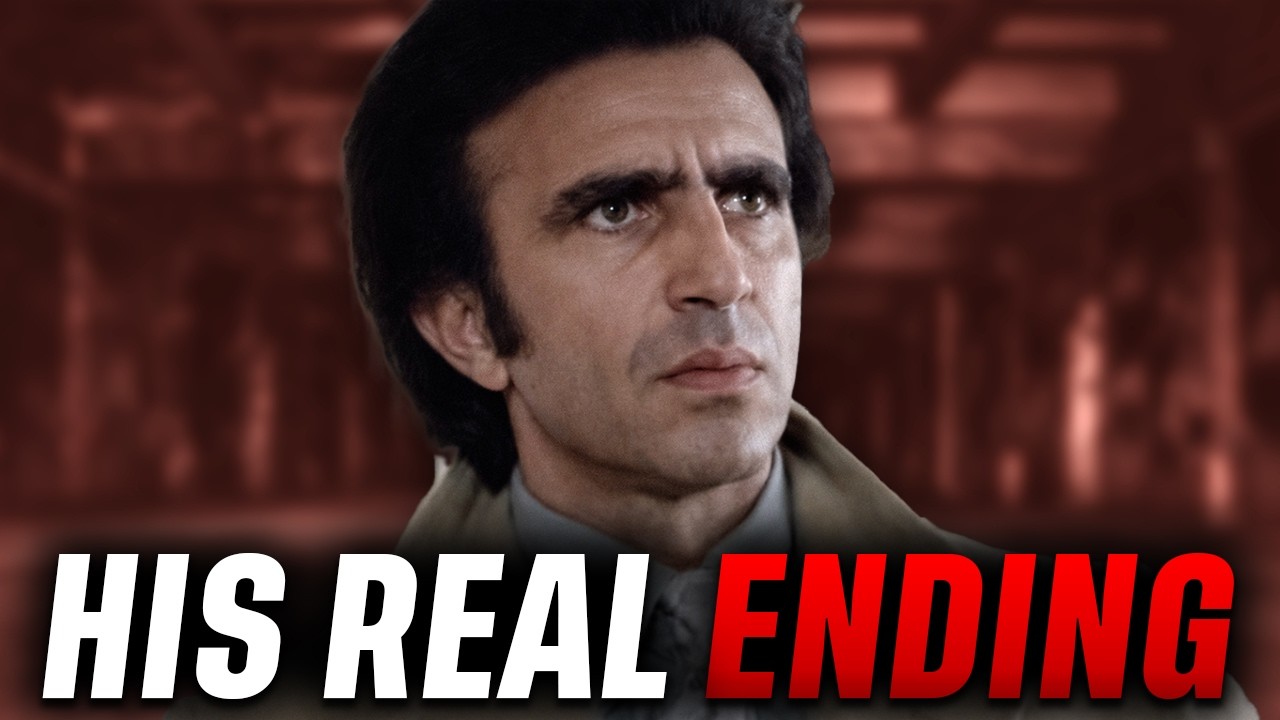
The men who killed him were sent by his own organization, the same network he had robbed, killed, and protected with silence for more than two decades. The murder was staged to look like a drug deal gone wrong, with drug paraphernalia scattered around the room. Police found the bodies at 8:10 a. m.
The case was never solved. Sepe’s life was the real story behind the character Frankie Carbone in Goodfellas. In the film, Carbone is nervous comic relief, a man humiliated at a Christmas party, told to make coffee to go while the real men talk, and eventually found dead in a meat truck like a scarecrow. The movie presents him as a punchline with a memorable death scene, a minor character meant to show how disposable the crew members were.
The reality was dramatically different. Angelo Sepe was a certified killer, a Lufthansa robber, and one of the most trusted enforcers in Jimmy Burke’s crew. He outlived almost every person connected to the $6 million score, not through luck but through discipline, silence, and a willingness to do whatever Burke needed done. Born in Queens in 1941, Sepe grew up in a working-class neighborhood in Ozone Park.
By age 14, he had his first arrest. By his early 20s, his record included petty larceny, burglary, bank robbery, and assault, totaling 14 arrests before he turned 30. There was a lesser-known side to him as well. Sepe loved animals, particularly strays and injured creatures.
Neighbors recalled seeing the hardened criminal carefully wrapping a broken bird’s wing with tape and Popsicle sticks. His home became a sanctuary for rabbits, birds, and turtles, the same hands that could kill without hesitation spending evenings nursing injured sparrows back to health. In the early 1970s, Sepe caught the attention of Jimmy Burke, known as Jimmy the Gent. Burke ran hijacking and fencing operations out of Robert’s Lounge in South Ozone Park.
Not Italian, Burke could never be formally inducted into a crime family, but he was connected to the Lucchese family through capo Paul Vario. He had two gifts that made him more dangerous than most made men: he could corrupt almost anyone, and he could turn broken, desperate men into precision instruments. That is what he did with Sepe. Burke taught him how to hijack trucks, how to intimidate victims into silence, how to move stolen goods through a network of fences, and how to kill without hesitation.
Sepe was not a reluctant student. He was eager. Inside the crew, Sepe found a close friend in Tommy DeSimone, the real man behind the Joe Pesci character. The real DeSimone was 6’2″, meticulously groomed, styled his hair like Errol Flynn, and carried two pearl-handled pistols.
Sepe and DeSimone were inseparable. They hijacked together and killed together. According to Henry Hill’s testimony, they even accepted murder contracts while incarcerated, carrying out hits for mob bosses doing time alongside them. Sepe became valuable to Burke for three reasons.
He was loyal, quiet, and would do whatever needed to be done without being asked twice. In Burke’s world, those qualities were worth more than ambition or intelligence. On December 11, 1978, Sepe was inside the black Ford Econoline van that pulled up to the Lufthansa cargo terminal at JFK Airport. He was one of six masked men who pulled off the largest cash robbery in American history at the time.
His specific job was intimidation and control, making sure every person in the terminal understood that playing hero would get them killed. The crew took control of the employees, threatened the night shift manager that his family would die if he did not cooperate, and emptied the vault of 72 cartons containing $5. 8 million in untraceable cash and $850,000 in jewelry. The job took under 30 minutes, with no shots fired and no alarms triggered.
The operation unraveled when Parnell Stacks Edwards, left behind to crush the getaway van, got high and fell asleep at his girlfriend’s apartment instead. The van was towed two days later and forensic technicians lifted fingerprints. Burke’s paranoia ignited. He decided the crew was a liability and began eliminating everyone connected to the heist.
Sepe became his primary instrument for the cleanup. Seven days after the robbery, Sepe and DeSimone walked into Stacks Edwards’ apartment. Trusting his crewmates, Edwards opened the door. DeSimone shot him six times.
Martin Krugman, the bookmaker who connected the inside man to Burke, went next. According to Henry Hill, Burke and Sepe killed him, dismembered his body, and scattered the pieces. Krugman’s body was never found. Other crew members died in quick succession, shot execution-style, burned, or vanished.
By the summer of 1979, nine people connected to the heist were dead or missing. Sepe was still alive. He survived because he followed the rules. He did not buy a flashy car.
He did not flash money. He kept his mouth shut and remained useful. As long as Burke needed a problem solved, Sepe stayed alive. DeSimone did not follow the rules.
In January 1979, he walked into a house in Queens believing he was finally being made, becoming an official member of the Lucchese family. Instead, the room was full of unfamiliar men. He understood what was happening as the door closed. He was shot multiple times.
His body was never found. The Gambino family had collected a long-standing debt for the murder of Billy Batts. Sepe lost his best friend and could not say a word about it, because in the mafia you do not avenge unauthorized hits. You accept them and move on.
Sepe did exactly that. When the FBI arrested him in early 1979 on a parole violation, they could not make the Lufthansa charges stick. Too many witnesses were dead. He was released by the end of the year.
For five years, Sepe appeared to have made it. By 1984, he was 42, a criminal lifer living in a basement apartment in Bensonhurst. He kept a loaded gun nearby. He had reportedly told associates something that sounded like prophecy: when his time came, his own people would kill him.
In early 1984, Sepe made a fatal mistake. He robbed a drug dealer, beat him up, and took thousands of dollars in cash and cocaine. The dealer paid protection money to the mob, either to a powerful captain in the Colombo family or a Lucchese-affiliated dealer, depending on the account. The specific family did not change the math.
When a protected earner is violated, the protection becomes worthless, and the revenue stream collapses. The mob cannot allow that. Sepe had to die, not because he was an informant or because he knew too much, but because he had violated the one rule that exists above all others in organized crime: you do not touch someone under family protection. On the morning of July 18, 1984, someone knocked on his basement apartment door.
Multiple shooters entered and killed him quickly. His girlfriend, who had nothing to do with the life, was killed as well. The loaded gun on the table was never touched. Edward McDonald, the federal prosecutor who had chased the Lufthansa crew for years, told the New York Times that investigators believed Sepe was one of the gunmen in the robbery.
They had arrested him in February 1979 but could not build a case because so many people with relevant information had been killed. Now Sepe was dead too, the 11th person connected to Lufthansa to die. The case remained officially unsolved. Not a single dollar of the $6 million was ever recovered.
Sepe’s story ends not with a cinematic death in a meat truck, but in a Brooklyn basement with two bodies, an unsolved police report, and a 19-year-old girl killed because she was next to the wrong man on the wrong morning. After 25 years of criminal service, 14 arrests, and years in prison, he was killed by the same organization he had given everything to, because he robbed one drug dealer who paid the right people. He knew it was coming.
He had said so himself: when his time came, his own people would kill him.