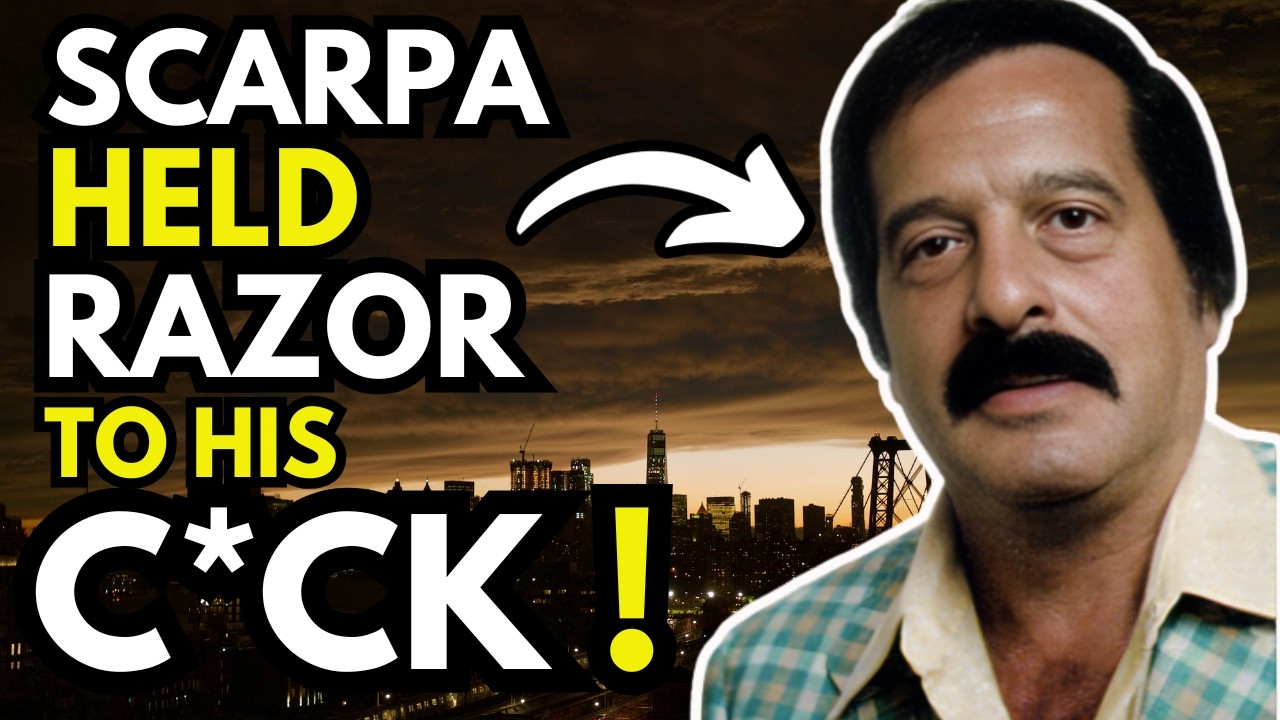
In 1964, the FBI reportedly turned to a feared Colombo crime family mobster, Greg Scarpa, to torture Ku Klux Klan members into revealing the location of three missing civil rights workers in Mississippi. The case became known as the Mississippi Burning affair, inspiring the famous 1988 film, although the real story was far darker than what appeared on screen. The three activists, James Chaney, Andrew Goodman, and Michael Schwerner, disappeared weeks after President Lyndon Johnson signed the Civil Rights Act into law. Their disappearance put Johnson in a politically vulnerable position, as civil rights leaders challenged him to enforce the very law he had championed.
According to mob historian Eric Dezenhaltical, whom I interviewed for this article, Johnson turned to FBI Director J. Edgar Hoover, his neighbor and close friend, demanding action. Hoover assured him, “I got you covered, “but the FBI had no idea how to find the missing men. Local Mississippi authorities, aligned with segregationist views, refused to assist federal agents.
To break the case, the FBI turned to Scarpa, who had been secretly working as an informant since around 1960. According to Dezenhaltical, Scarpa traveled south, located a television repair shop owned by an alleged Klan member, held a gun to his mouth, and forced him to reveal where the bodies were buried in an earthen dam. Scarpa relayed the information to the FBI, who paid him for it. Johnson, with memos and tapes showing his willingness to do whatever was necessary, approved extremes measures, although he almost certainly was never told a mobster had been deployed.
Hoover presented the breakthrough to Johnson as the result of crack forensic work. The FBI has never officially confirmed Scarpa’s involvement in the 1964 case. When Dezenhaltical researched his book,Wiseguys and the White House,he spoke to former FBI officials on background who refused to confirm that account. However, those same sources were far more willing to acknowledge Scarpa’s role in a second, related incident in 1966, when an African-American civil rights activist named Vernon Dahmer was murdered in Mississippi.
According to Dezenhaltical, Scarpa was unequivocally sent south again, and it was almost certain he was involved in finding those responsible for Dahmer’s death. In that instance, Scarpa reportedly had to return to the scene after receiving bad information, allegedly using a gun and a razor to the genitals of a Klan member to extract accurate details. Scarpa’s girlfriend at the time, Linda Schiro, claimed she was present during the1964 Mississippi operation, though Dezenhaltical cautioned her recollection may have conflated the two incidents, as she wasn’t considered a slam dunk witness. .
Because Hoover refused to reveal how the FBI obtained its intelligence, grand juries were kept in the dark. As a result, no one was ever prosecuted for the murder of the three civil rights workers. Instead, only civil rights violations were pursued, and those charges came years later, in the late 1960s or early 1970s. In the Dahmer case, prosecutions did take place.
Scarpa’s legacy remains deeply complicated. Despite his violent role in helping break Klan cases, he was not a civil rights crusader. Years later, suffering from stomach problems caused by chewing aspirin all day, he needed a blood transfusion. He refused to go to a New York hospital, fearing he might receive blood from African-Americans or other minorities.
Instead, he insisted his crew donate blood for him. One crew member, unknowingly carrying HIV through syringe use, infected Scarpa, who later died of AIDS complications. His FBI handler, agent Lin DeVecchio, was later tried in connection with murders tied to his relationship with Scarpa, though the case was thrown out after it emerged Scarpa’s girlfriend had mixed true tips with fabricated information
. Dezenhaltical argues officials felt pressured to use Scarpa because they were desperate and had few other options.
In that era, leaks were far rarer than today, and the cover-up worked for decades. He contrasted the domestic operation with modern practices, noting that while the CIA often works through proxies overseas, direct collaboration between federal law enforcement and a made Mafia member in a domestic murder investigation would be almost unthinkable today. Asked whether Johnson knew he had deployed a mobster, Dezenhaltical said no, believing Hoover told the president only that forensic work had cracked the case, echoing a similar deception Hoover used during World War II when Mafia figures helped secure ports and Nazi saboteurs were captured.