
The de Havilland Mosquito, an aircraft the Royal Air Force initially ridiculed and nearly cancelled three times, has reemerged in historical accounts as one of the most versatile and lethal combat machines of the Second World War — a wooden plane that outran every fighter of its era and bombed Berlin on 220 consecutive nights.
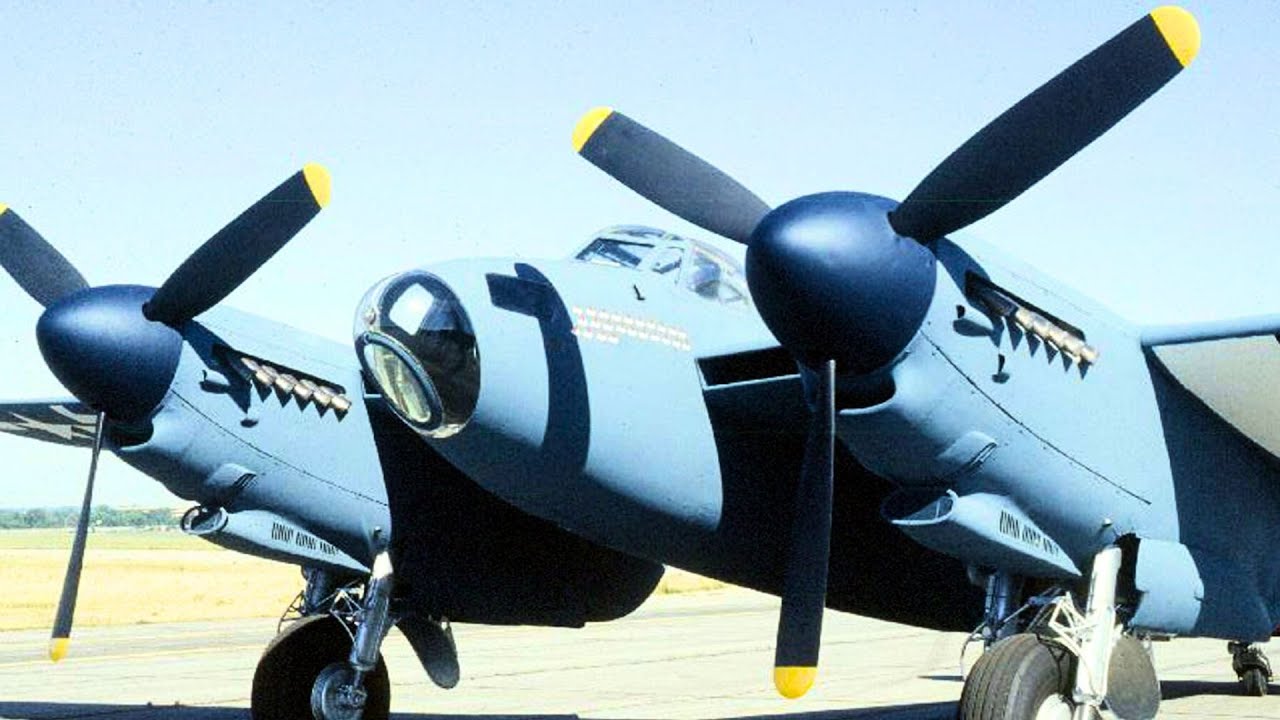
The story of the “Wooden Wonder,” as the twin-engine bomber became known, is a case study in how radical thinking defeated bureaucratic resistance. In an age when military aircraft were built heavy with armor and defensive guns, Geoffrey de Havilland and his son proposed the opposite: a fast, unarmed bomber made almost entirely of timber.
The Air Ministry was appalled. Lord Beaverbrook, the Crown’s production manager, tried three separate times to shut the project down. Each order was never committed to writing, and the manufacturers simply ignored it.
The project survived largely because Air Marshal Sir Wilfred Freeman championed it so stubbornly that critics dubbed it “Freeman’s Folly.”
De Havilland’s logic was brutal in its simplicity. Speed, not guns, would be the Mosquito’s armor. Powered by two Rolls-Royce Merlin engines, the aircraft could reach roughly 400 miles per hour and carry up to 4,000 pounds of explosives.
Nothing in the sky at the time could catch it.
The material choice was equally pragmatic. Wood was not a strategic war resource, so it was plentiful while aluminum and steel were rationed. Timber had structural properties comparable to those metals, and Britain possessed an entire nation of skilled woodworkers — furniture makers, cabinet builders, luxury auto coachbuilders and piano manufacturers — who could be converted into subcontractors almost overnight.
The airframe used a composite construction of tiny fibers carried in cellulose or polymer, a mixture with strength and lightweight qualities comparable to modern carbon and graphite fiber materials. The exterior was covered in doped fabric, producing a sleek, rivet-free surface that cut drag. Battle damage could be patched in the field.
Internally, the aircraft was coated with traditional marine varnishes. A unique combination of urea glue and formaldehyde formed a waterproof bond stronger than the wood itself — a critical detail, since ordinary casein glue would have failed in the warm, humid climates of Southeast Asia.

Not everyone was convinced. When U. S.
General Hap Arnold sent Mosquito blueprints to America in April 1940, five manufacturers reviewed the concept and all were skeptical. Beechcraft delivered the most contemptuous verdict, declaring the airplane had “sacrificed serviceability, structural strength, ease of construction and flying characteristics” in pursuit of an unsuitable material.
Beechcraft was wrong. The first prototype flew in November 1940, proved faster than frontline fighters, and held that title for two and a half years. The Air Ministry was so impressed that it ordered 150 examples of the untried aircraft by December.
The Mosquito became operational in September 1941.
It was not an easy plane to master. Its power-to-weight ratio, wing loading and a minimum control speed of 172 miles per hour made engine failure potentially fatal. Pilots learned to pull up at 200 yards from the runway’s end.
Pilot Bill Sweetman described it as “a slightly nervous thoroughbred” that could perform impressive feats in courageous hands but would occasionally deal out a kick or a bite.
The Royal Air Force ultimately ruled the Mosquito too valuable to entrust to anyone. Only the most experienced pilots, those with the finest airmanship, were permitted to fly it. The design branched into three lines — bomber, fighter and photo reconnaissance — producing 40 variants by war’s end, 33 during the conflict and seven afterward.
Its operational record was unmatched in diversity. The two-crew unarmed bomber flew missions in every theater of the war. It served as the most productive photo reconnaissance aircraft of the conflict, a fighter-bomber, a night fighter fitted with an eight-gun nose battery, a high-speed courier, a weather reconnaissance platform, a pathfinder and target marker for heavy bombers, a multi-engine trainer and a high-speed target tug.

Later versions mounted a mighty cannon and eight rockets. The Mosquito also became the most effective extreme low-altitude intruder of the war and was employed as a decoy in deception operations against the Luftwaffe. Thousands of routine bombing sorties followed, particularly low-altitude “nuisance raids” — hit-and-run tactics the British media exploited to maximum effect.
Berlin was a frequent target. The missions were nicknamed the “Berlin Express,” and at one point Mosquitoes bombed the German capital 220 nights in a row. The aircraft had the range to reach the city and the altitude to release its payload at 35,000 feet.
One famous raid took place in January 1943, during the Nazi Party’s 10th anniversary celebrations. Three Mosquitoes arrived precisely on schedule to interrupt the radio transmission at 11 a. m.
, before Hermann Göring could deliver his speech, throwing the broadcast into chaos. The Nazis rescheduled to that afternoon, only to be interrupted again, cutting off Joseph Goebbels mid-address.
Göring, head of the Luftwaffe, was left seething with admiration. “It makes me furious when I see the Mosquito,” he said. “I turn green and yellow with envy.
The British, who can afford aluminum better than we can, knock together a beautiful wooden aircraft that every piano factory over there is building. They have the geniuses and we have the nincompoops.”
The Mosquito was also a skilled espionage machine. Its low-altitude capabilities let it roam German skies picking up messages from agents behind enemy lines who used a precursor to the cell phone.
But the aircraft became legend first and foremost for precision raids. By 1944, hundreds of French Resistance fighters were imprisoned in Amiens, northern France. On February 19, 200 men and women were scheduled for execution.
 The Allies refused to let it happen.
Operation Jericho was an ingenious plan, meticulously projected to breach the wall surrounding the prison. The geography, the architecture and the timing were calculated with precision. The bombing had to occur exactly when the prisoners were in the yard and the guards were at lunch — a dangerous tactic that could 𝓀𝒾𝓁𝓁 the very people it aimed to save.
When the Resistance fighters learned of the plan, they were willing to risk their lives rather than remain at the mercy of the Nazis. That morning, pilots were briefed: breach the walls and let the prisoners escape. A second squadron was assigned to bomb the guards during their lunch break.
Weather conditions were terrible, but because the execution was imminent, the pilots lifted off anyway. Flying at nearly 15 feet, the Mosquitoes struck the walls, freeing 255 Resistance fighters and neutralizing 50 guards.
In the war’s aftermath, the Germans realized the Royal Air Force could bomb any site it chose across occupied Europe. The psychological impact matched the physical one.
Everyone loved the Mosquito. Pilot Max Sparks captured the sentiment: “It is wrong to say it’s a legend, because legend suggests it wasn’t real, and the Mosquito was certainly reality.” Pilot Aubrey Hillard put it more personally: “It was a love 𝒶𝒻𝒻𝒶𝒾𝓇.
I thought when I finished flying that was it. I never flew another aircraft again after the Mosquito.”
The aircraft that bureaucrats tried to 𝓀𝒾𝓁𝓁 three times became one of the most feared and admired machines of the Second World War — proof that the most radical ideas, not the most conventional ones, are often the ones that break records and win wars.