VERSAILLES, France — At approximately 6:30 p. m. on December 26, 1944, the telephone rang on the desk of the Supreme Commander of the Allied Expeditionary Forces in the east wing of the Chateau de Versailles.
General Dwight David Eisenhower, 54, had not slept more than three hours a night for ten consecutive nights. He was smoking his 80th Camel cigarette of the day. Twenty thousand American soldiers were surrounded and freezing to death at Bastogne, 130 miles east of his desk.
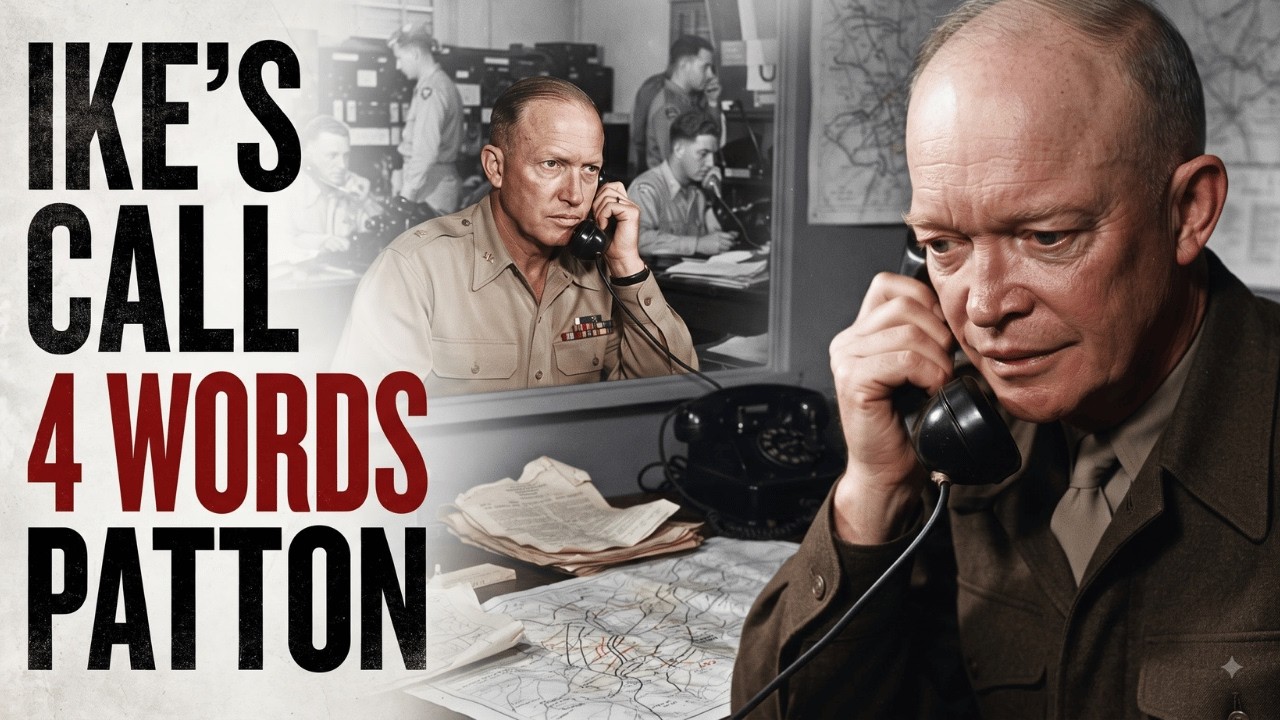 The call came from Lieutenant General Omar Bradley at 12th Army Group headquarters in Luxembourg City. Bradley communicated that Patton’s Third Army had broken through the German encirclement of Bastogne at approximately 4:50 that afternoon. The German siege was broken.
The 20,000 American defenders were safe.
Kay Summersby, Eisenhower’s 36-year-old personal secretary and driver from County Cork, Ireland, stood in the adjacent office. Through the open door, she watched the supreme commander receive the news. She would later write in her 1948 memoir, “Eisenhower Was My Boss,” that he did not speak for a full minute after receiving the report.
When he was finally able to speak, his voice was thick with emotion. He said only two words: “Thank God.”
The moment marked the culmination of ten days of crisis that had begun in the pre-dawn darkness of December 16, 1944, when approximately 250,000 German soldiers supported by 2,600 artillery pieces and 950 tanks launched the counteroffensive that Adolf Hitler had personally designed as Germany’s final major offensive of the Second World War.
The attack struck the thinly held American line in the Ardennes forest. The first reports reached Supreme Headquarters Allied Expeditionary Forces at Versailles at approximately 7:30 a. m.
on December 16. Eisenhower’s initial assessment was that the German attack was a limited spoiling operation. He was mistaken.
The intelligence failure would haunt Eisenhower for the rest of his life. Major General Kenneth Strong, the British Army intelligence officer at SHAEF, had submitted reports throughout the autumn of 1944 identifying German armored concentrations in the Eifel region. Eisenhower had judged the buildup to be defensive preparation for the expected Allied assault on the Ruhr.
The German buildup had been an offensive preparation for the counterattack that began at 5:30 a. m. on December 16.
The first 18 hours of the offensive produced what American historians would later document as strategic paralysis. Lieutenant General Courtney Hodges at Spa, Belgium, commander of the American First Army, retreated to his private quarters and did not appear at the evening briefing. His chief of staff, Brigadier General William Kean, directed the initial American defensive response in Hodges’ place.
On the evening of December 16, Eisenhower ordered the release of the SHAEF strategic air reserves. The American 82nd Airborne Division under Major General James Gavin, then refitting at Sissonne, France, and the American 101st Airborne Division under Brigadier General Anthony McAuliffe, then refitting at Mourmelon, France, were directed to reinforce the American line. The 101st was ordered to Bastogne.
The 82nd was ordered to Saint-Vith.
Summersby watched Eisenhower make the decision at approximately 10 p. m. on December 16.
He was sitting at his desk with a cigarette burning in the ashtray and a cup of coffee cooling beside it. He signed the order without hesitation. He told her the decision was one he did not want to be forced to make, but that he was making because he had no alternative.
He did not sleep that night.
On December 17, at the crossroads village of Baugnez near Malmedy, Belgium, elements of the German 1st SS Panzer Division under SS Obersturmführer Joachim Peiper captured approximately 120 American soldiers of the 285th Field Artillery Observation Battalion. Peiper’s men marched the captured Americans into an open field and machine-gunned them. Eighty-four American soldiers were killed.
The event became known as the Malmedy Massacre.
Eisenhower learned of it on the morning of December 18. Summersby would describe his reaction as personally affected, visibly angered, briefly silent, and returning to the tactical situation with increased personal determination. The massacre would harden American resistance across the entire Ardennes front.
On the morning of December 18, Eisenhower decided to convene an emergency meeting of his senior American commanders at the French military barracks at Verdun. The Caserne des Jardins Fontaine was a French army barracks constructed in the 1890s, located approximately two miles from the center of the fortified town on the Meuse River. The meeting room was an old French officers’ mess containing a long wooden table, approximately 12 chairs, a single pot-bellied stove, and topographical maps of the Ardennes arranged on the wall.
The meeting began at approximately 11 a. m. on December 19, 1944.
The attendees were Eisenhower, 54; Lieutenant General Omar Nelson Bradley, 51, commander of the 12th Army Group; Lieutenant General Jacob Devers, 57, commander of the 6th Army Group; and Lieutenant General George Smith Patton Jr. , 59, commander of the Third Army, along with their principal staff officers.
Eisenhower opened the meeting. “The present situation is to be regarded as one of opportunity for us and not of disaster,” he said. “There will be only cheerful faces at this conference table.”
Patton laughed. “Hell, let’s have the guts to let the sons of bitches go all the way to Paris,” he said. “Then we’ll really cut them off and chew them up.”
The remark was not appreciated. Eisenhower moved to the business of the meeting. He briefed the attendees on the tactical situation, the American reinforcements ordered to the Ardennes, and the decision that Bastogne was to be held.
He turned to Patton.
 “George,” he said, addressing Patton directly, “I want you to command this move — under Brad, of course. When can you attack?”
Patton had been preparing for this question for six weeks. He had received intelligence briefings identifying the German buildup opposite the Ardennes. He had ordered his Third Army G3, Colonel Halley Green Maddox, to prepare contingency plans for a 90-degree pivot from the eastward attack toward Frankfurt to a northward attack toward whatever point the Germans might attempt to reach.
He answered Eisenhower’s question with four words: “December 22nd. Three divisions.”
The room went silent. The American officers present were in a state of stunned disbelief. Bradley thought Patton was joking.
Devers thought Patton was exaggerating for effect. Eisenhower, who had known Patton for 32 years, understood that Patton was serious.
Patton continued. “This time the crowd has stuck his head in a meat grinder,” he said, “and this time I’ve got the handle.”
Eisenhower approved the plan. Patton walked out of the meeting room and telephoned his chief of staff, Major General Hugh Gaffey, at Nancy. He communicated the code phrase Gaffey had been awaiting for 72 hours: “Play ball.”
The 90-degree pivot of the Third Army began.
Eisenhower returned to Versailles that evening. Summersby met him at the East Wing office. She saw him arrive at approximately 8 p.
m. , sit at his desk, light a cigarette, and look at his maps for a full hour without speaking. She did not disturb him.
On the morning of December 20, Eisenhower received two pieces of news. The first was that the United States Senate had confirmed his promotion to General of the Army, the five-star rank created by Congress on December 14, 1944. He was the fourth American general to receive the rank, after George Marshall, Douglas MacArthur, and Henry Arnold.
At 54, he was the youngest.
Summersby was in the outer office when the news arrived. She would describe Eisenhower’s reaction as personally muted — receiving the news without visible emotion, briefly acknowledging her congratulations, and returning immediately to the tactical situation reports.
The second piece of news, which arrived in the late morning of December 20, was that the German penetration had effectively separated Field Marshal Bernard Law Montgomery of the British 21st Army Group from the American First Army under Hodges and the American Ninth Army under William Simpson on the northern shoulder of the German bulge. Communications between Bradley at Luxembourg City and Hodges at Spa had been cut.
Eisenhower made the decision that would produce the bitterest American command controversy of his European campaign. He ordered the American First and Ninth Armies placed under the temporary operational command of Montgomery. Bradley telephoned Eisenhower within the hour.
Summersby could hear Bradley’s voice through the closed door. Bradley was angry, raising his voice, arguing that the transfer of American armies to British command was an insult to the American army and to himself.
Eisenhower listened. He did not interrupt. He responded briefly and in measured tones.
He hung up the telephone and returned to the maps.
On December 21, Eisenhower wrote in his personal diary a single sentence preserved in the Eisenhower Papers at the Eisenhower Presidential Library in Abilene, Kansas: “This is the shortest day. How I pray that it may by some miracle mark the beginning of improved weather.”
The fog that had covered the Ardennes since December 16 had not lifted. The American Ninth Air Force could not fly. The American forces at Bastogne could not be resupplied from the air.
The Third Army advancing north from Nancy could not receive air cover.
At approximately 11:30 a. m. on December 22, at the American forward outpost of the 327th Glider Infantry Regiment of the 101st Airborne Division on the eastern perimeter of Bastogne, four German officers approached under a white flag of truce.
They carried a typewritten ultimatum demanding the unconditional surrender of the 20,000 American soldiers inside the town.
The ultimatum was carried up the American chain of command to the basement of the Heintz Barracks in the center of Bastogne, where Brigadier General Anthony McAuliffe, 46, sat at his field desk and read the letter. He said one word: “Nuts.”
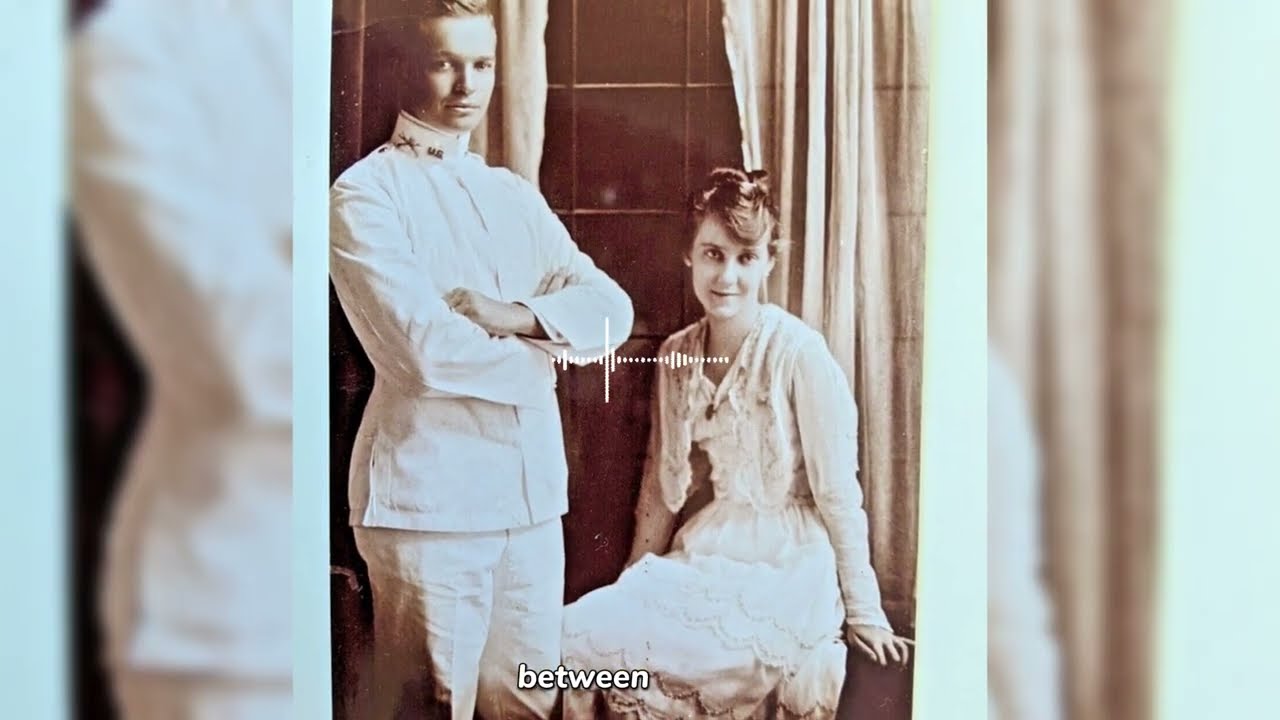 The reply was typed on a piece of American Army stationery. It read in its entirety: “To the German commander: Nuts. The American commander.”
The news of McAuliffe’s reply reached Eisenhower at Versailles at approximately 3 p. m. on December 22.
Summersby brought the news to the inner office. She would describe Eisenhower’s reaction as the first moment of genuine humor she had witnessed from him since December 16. He laughed.
He read the single word again. He laughed again.
On the morning of December 23, the weather cleared. A high-pressure system moved south from the Soviet Union across the eastern European plain and reached the Ardennes region in the pre-dawn hours. The overcast lifted.
The fog dissipated. The sky over Bastogne, gray and closed for the entire week of the German offensive, was clear and blue.
Between the morning of December 23 and the evening of December 27, the American Army Air Forces flew approximately 13,113 sorties over the Ardennes region — the single most sustained air support effort of the American Army Air Forces in the European theater during the entire war. American transport aircraft dropped supplies on Bastogne beginning on the morning of December 23.
On Christmas Eve, Eisenhower remained at Versailles. He worked in the East Wing office. He ate his evening meal alone.
Summersby joined the staff at an improvised Christmas Eve gathering at the palace gymnasium, where a small tree had been erected despite Eisenhower’s earlier order that no Christmas tree be erected at Chateau Versailles until the 101st Airborne Division at Bastogne was safe.
At approximately 8:30 p. m. on December 24, in the ground-floor aid station of the Sarma building on the rue du Vivier in the center of Bastogne, German Luftwaffe bombs killed 28 American wounded soldiers and a Belgian civilian nurse.
The nurse’s name was Renée Lemaire. She was 30 years old, born in Bastogne in 1914, trained as a nurse in Brussels. She had volunteered to work in the American aid station because the American medical staff was severely understaffed.
She had treated approximately 350 American wounded soldiers in the first four days of the siege. She is remembered today in American military historiography as the Angel of Bastogne.
On Christmas morning, Summersby brought Eisenhower the report of the bombing. She would describe him as personally silent for a full minute after reading the casualty list. He told her the Christmas of 1944 was one of the most difficult Christmas days of his American Army career.
He worked through Christmas Day. He telephoned Mamie Eisenhower at the Wardman Park Hotel in Washington, D. C.
, at approximately 8 p. m. The call lasted approximately three minutes.
He wished her a Merry Christmas. He asked after their son John. He did not mention the Ardennes crisis.
On the morning of December 26, the American forces at Bastogne received supplies dropped by the American 9th Troop Carrier Command during the fourth consecutive day of clear weather. Simultaneously, 20 miles south of Bastogne, the 37th Tank Battalion of Combat Command R of the American 4th Armored Division under Lieutenant Colonel Creighton Williams Abrams Jr., 30, of Springfield, Massachusetts, was reaching the Belgian village of Assenois, three miles south of Bastogne.
Abrams ordered a coordinated tank and infantry assault. At approximately 3 p. m.
, American artillery fired approximately 4,000 rounds on the village in the 20 minutes preceding the tank assault. Company C of the 37th Tank Battalion, commanded by 1st Lieutenant Charles Pershing Boggess Jr. , 25, of Greenup, Illinois, led the advance in an M4A3E2 Sherman Jumbo assault tank named Cobra King.
Boggess broke through the northern edge of Assenois at approximately 3:30 p. m. and continued north on the approach road toward Bastogne.
At approximately 4:30 p. m. , he spotted American paratroopers in the woods.
He was cautious — the American command had received intelligence reports that German special operations troops under Otto Skorzeny had been infiltrating American lines in captured American uniforms since the first days of the offensive.
Boggess halted the tank and called out. One of the soldiers emerged and walked forward. “I’m Lieutenant Webster of the 326th Airborne Engineer Battalion, 101st Airborne Division,” he said.
“Glad to see you.”
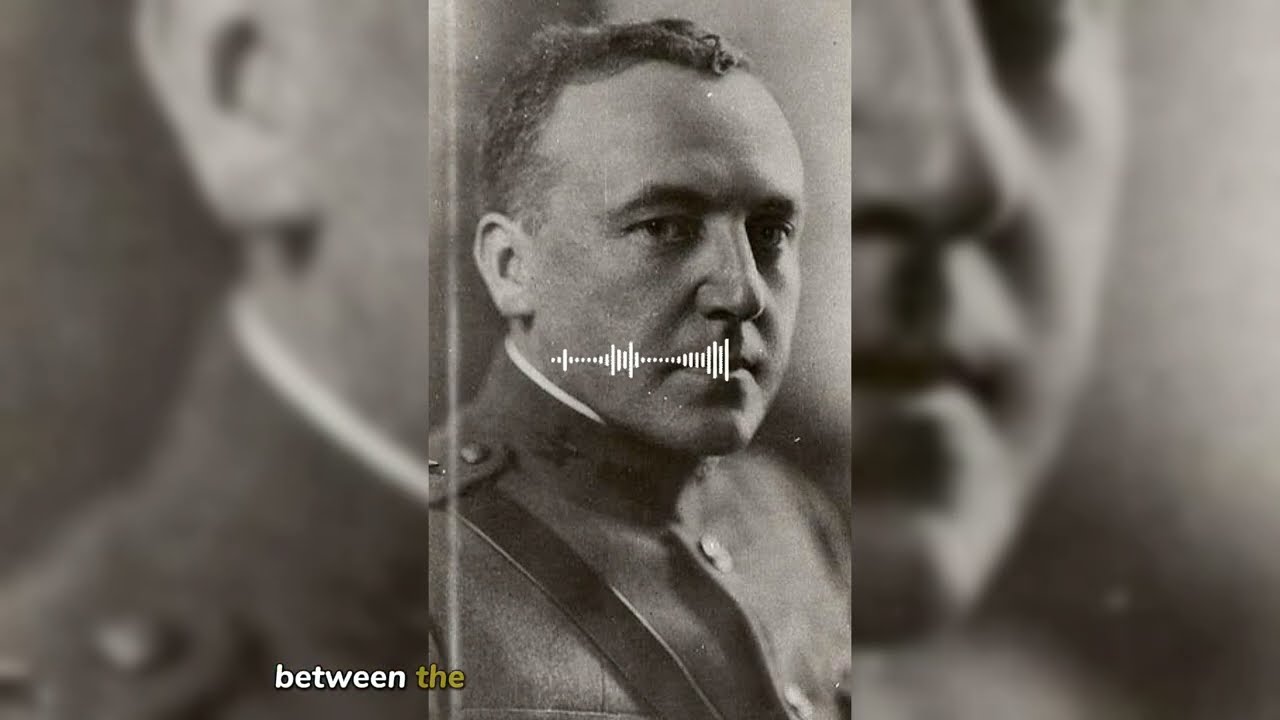 Boggess climbed down from the turret of Cobra King and shook Webster’s hand. The time was approximately 4:50 p. m.
on December 26, 1944. The German encirclement of Bastogne was broken.
The news was flashed to Third Army headquarters at Luxembourg City within the hour, then to 12th Army Group headquarters, then to Supreme Headquarters at Versailles. At approximately 6 p. m.
, the telephone rang on Eisenhower’s desk. The caller was Bradley.
Eisenhower listened. He did not speak immediately. Summersby, standing in the outer office, watched him through the open door.
She would write that the supreme commander of the Allied Expeditionary Forces stood silent at his East Wing office desk for a full minute. When he finally spoke, his voice was thick with emotion. He said only two words: “Thank God.”
He hung up the telephone and remained standing at his desk for another minute. He turned to Summersby. He told her that Patton had kept his promise from Verdun, that the 20,000 American soldiers at Bastogne were safe, and that the worst of the professional crisis was over.
He asked her to place a telephone call to General George Marshall in Washington. He spoke to Marshall for approximately five minutes.
Eisenhower hung up the telephone and returned to his desk. He sat down for the first time since Bradley’s call. Summersby brought him a fresh cup of coffee.
He drank it. He said that this Christmas would be a Christmas after all. He returned to the maps — but he did not, in Summersby’s later description, work through the evening of December 26 with the single-minded intensity that had defined the ten days between the 16th and the 26th.
He sat at his desk, smoked his cigarettes, drank his coffee. He was, in her description, at rest for the first time since the pre-dawn morning of December 16.
The Battle of the Bulge continued for another four weeks. By January 25, 1945, American forces had eliminated the German bulge and restored the American line to approximately the position it had occupied on December 15, 1944. American combat casualties in the six-week battle totaled approximately 89,000 men, including approximately 19,000 killed.
It was the single largest American battle of the Second World War.
Eisenhower commanded the Allied Expeditionary Forces through the final four months of the European war. He commanded the Rhine crossings in March 1945, the advance to the Elbe River in April, and the final surrender arrangements in early May. He accepted the formal German surrender at Reims on May 7, 1945.
Patton would die of injuries suffered in an automobile accident near Mannheim, Germany, on December 21, 1945 — exactly 360 days after Eisenhower had stood silent at his East Wing office desk at Versailles. He is buried at the Luxembourg American Cemetery at Hamm, Row 1, Grave 228, among the 5,076 American soldiers of his Third Army killed in the Ardennes and Rhineland campaigns.
Kay Summersby remained at SHAEF headquarters in Frankfurt, Germany, until June 1946. She came to the United States in the summer of 1946 and met Eisenhower briefly at the Pentagon. She never saw him again after 1946.
She wrote her first memoir, “Eisenhower Was My Boss,” in 1948. She died in London on January 20, 1975, at the age of 66, of lung cancer.
Dwight David Eisenhower served as Army Chief of Staff from November 1945 to February 1948, as president of Columbia University from June 1948 to December 1950, and as the first Supreme Allied Commander Europe of NATO from December 1950 to May 1952. He was elected the 34th President of the United States on November 4, 1952, and served two terms. He died on March 28, 1969, at Walter Reed Army Medical Center in Washington, D.
C. , at the age of 78.
He is buried at the Eisenhower Presidential Library and Museum in Abilene, Kansas, in the Place of Meditation, a small chapel constructed on the library grounds in the early 1960s. He is buried next to his wife, Mamie Dowd Eisenhower, who died on November 1, 1979, at the age of 82. And he is buried next to his firstborn son, Doud Dwight Eisenhower, who died on January 2, 1921, at the age of three years and three months, of scarlet fever contracted from a maid the family had hired during the autumn of 1920.
Three graves at Abilene, Kansas: an American general who commanded three and a half million Allied soldiers in Europe during the Second World War, his wife of 53 years, and their firstborn son who died at the age of three years and three months in January 1921 — 23 years before his father sent Patton’s Third Army north from Nancy to break the German siege of Bastogne, and 48 years before his father joined him in the Kansas earth.
The father who could not save his own three-year-old son from scarlet fever in 1921 was made responsible in December 1944 for the 20,000 American soldiers surrounded at Bastogne. He saved them. He saved them because he trusted the promise that George Patton had made at Verdun on December 19, 1944, in four words that the American officers present had not believed were possible: “December 22nd.
Three divisions.”
Patton kept the promise. The Third Army reached Bastogne at 4:50 in the afternoon of December 26, 1944. Bradley telephoned Versailles at 6:30 in the evening.
Eisenhower stood silent at his East Wing office desk for a full minute. When he could speak, he said only two words: “Thank God.”
Kay Summersby was in the adjacent office. She watched him. She wrote it down.