LONDON — Prime Minister Winston Churchill privately warned that Field Marshal Bernard Montgomery “must not make enemies of the Americans” after the British commander blamed United States forces for his failure to capture Caen, according to newly examined wartime records that expose a bitter rift at the heart of the Allied high command.
The confrontation, documented in the diary of Field Marshal Alan Brooke, Churchill’s Chief of the Imperial General Staff, reveals how close the Anglo-American alliance came to rupture seven weeks after D-Day as Montgomery’s armies remained stalled outside the Norman city he had promised to take within days of the invasion.
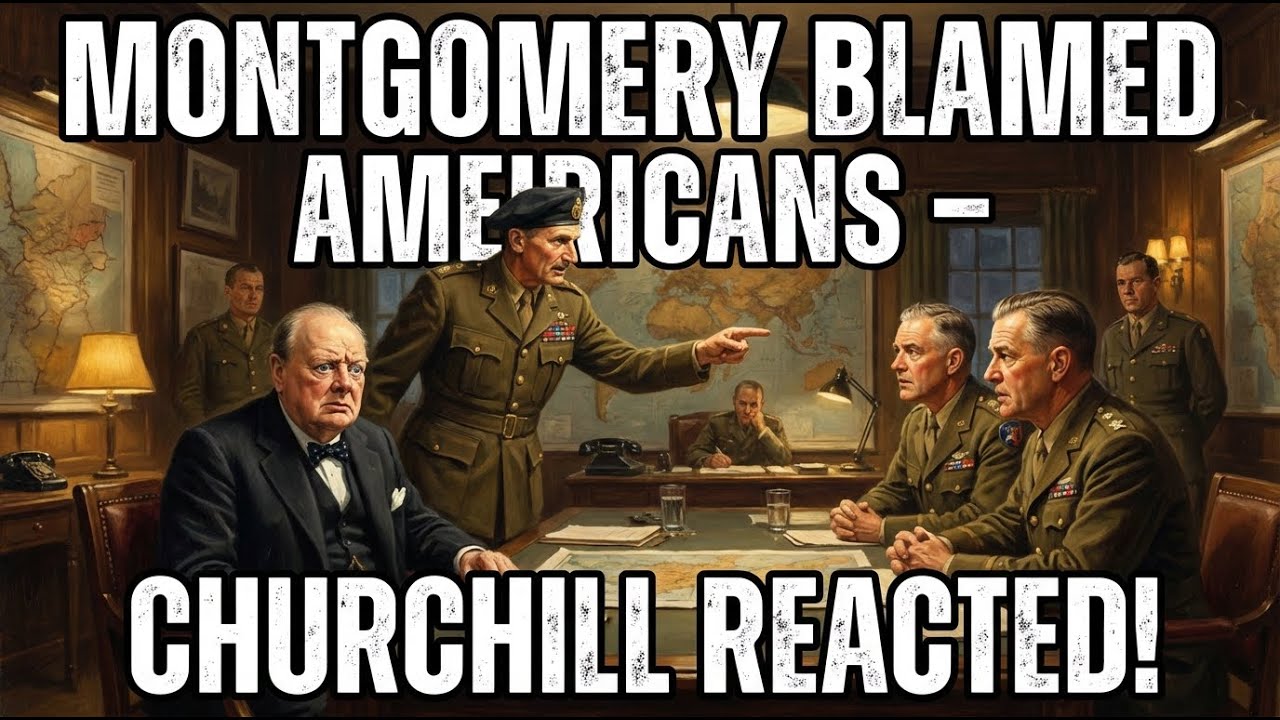 According to Brooke’s entry of July 26, 1944, Churchill reacted with alarm when Montgomery’s criticism of American generals reached him, telling his chief of staff words to the effect that Montgomery must not make enemies of the Americans because Britain depended on them utterly.
The warning came as Churchill’s frustration with Montgomery had already reached a breaking point. In a message to South African leader Jan Smuts on July 21, the Prime Minister wrote that Britain had paid a very heavy price in lives and equipment for Operation Goodwood and achieved very little, ending with the blunt verdict: “I am not satisfied.”
Churchill’s displeasure had been building for weeks. Brooke recorded on July 6 that the Prime Minister was “very unhappy” with the Normandy situation and questioned whether Montgomery was showing enough energy and urgency in his command of British and Canadian forces.
The military facts were grim. Caen, a key road and communications hub roughly ten miles inland from the British landing beaches, was supposed to fall on D-Day or within days. Instead, German troops fortified the city with tanks, artillery, trenches and defended villages, and the front barely moved through June and into July.
Montgomery’s response to the mounting criticism was twofold. He insisted his slow advance was deliberate, designed to draw German armored divisions toward the British and Canadian sector so that American forces could break out elsewhere. He also blamed the Americans, telling superiors that US troops were underperforming and that their failures were hampering his own operations.
 Brooke’s diary entry of June 27 recorded that Montgomery sent a message criticizing American commanders, claiming they had failed to capture Saint-Lô and that General Omar Bradley had not carried out assigned tasks. The remarks infuriated American commanders and transformed a tactical dispute into a crisis of trust within the Allied command structure.
General Bradley, in his 1951 memoir “A Soldier’s Story,” wrote that Montgomery appeared to be having it both ways — defending his own failures as strategy while attacking American efforts as weak. General George S. Patton was more caustic, writing in his diary on July 25 that Montgomery had sat in front of Caen for six weeks and was now blaming the Americans for his inability to advance.
The American forces Montgomery disparaged were fighting in the bocage, a nightmare landscape of dense hedgerows, narrow lanes and thick earth banks that made tank movement nearly impossible and gave German defenders every advantage. Their advance was slow, but it was real, and it came against determined resistance.
Operation Goodwood, launched July 18 with more than 750 tanks on a narrow front, was meant to deliver the breakthrough Montgomery had promised. It failed. British forces gained a few miles, suffered heavy tank losses, and stalled by July 20.
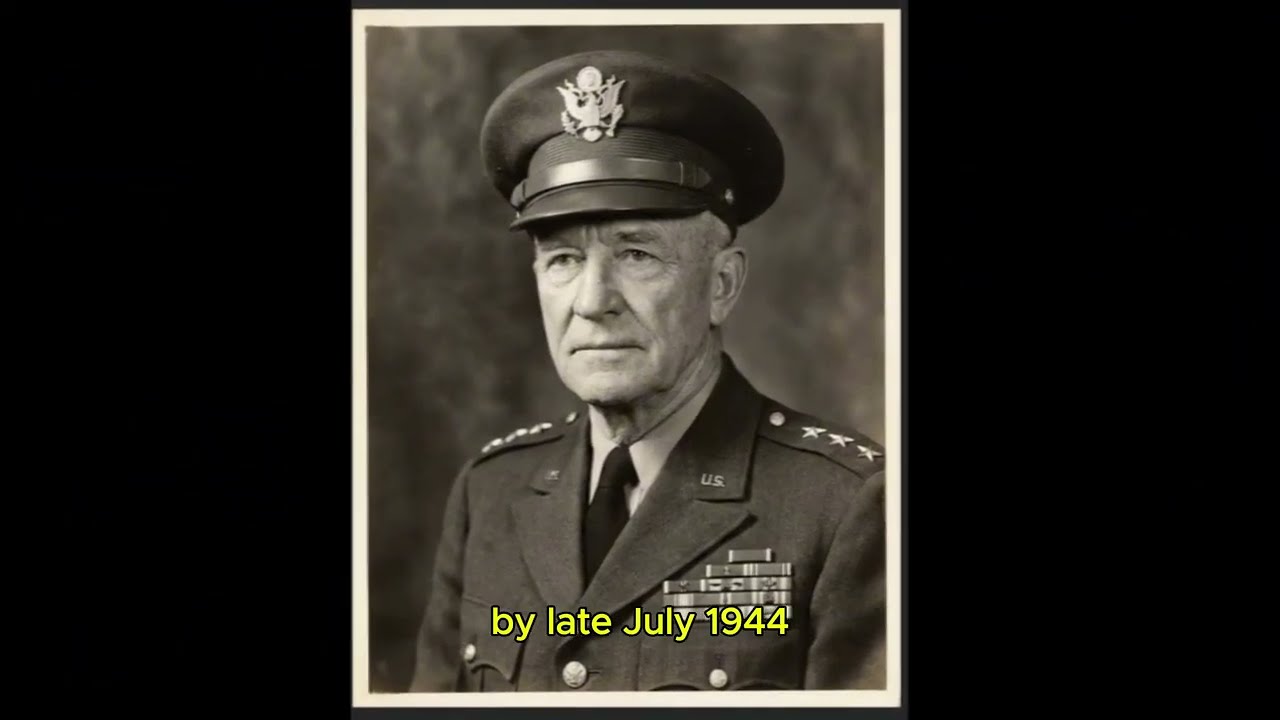 Montgomery then recast the operation as a limited effort designed merely to draw German forces — a shifting of explanations that Churchill found deeply troubling.
Brooke recorded Churchill’s growing skepticism in late July, noting the Prime Minister compared Montgomery unfavorably with Patton, remarking that Patton would not have sat in front of Caen for six weeks. Churchill admired bold, aggressive commanders and was losing faith in Montgomery’s cautious, methodical style.
Everything changed on July 25, when American forces launched Operation Cobra near Saint-Lô. The offensive smashed through German lines, and American units poured into the French countryside at speed. On August 1, Patton’s Third Army was activated and advanced hundreds of miles in weeks, liberating vast areas of France.
The American breakout demolished Montgomery’s argument that US failures were the cause of Allied stagnation. It also made his long stalemate at Caen look worse by comparison. Montgomery then attempted to claim credit, arguing that his operations had tied down German panzer divisions and made Cobra possible — an argument with some truth, but one American commanders rejected as dismissive of their own planning and sacrifice.
 Churchill’s response was a masterclass in political balancing. On August 2, he sent Eisenhower a warm congratulatory message praising the “brilliant” American advances, the fighting spirit and skill of US forces. The same day, in the House of Commons, he publicly praised Montgomery, telling Parliament that the Field Marshal’s operations had been conducted with great skill and had drawn the main weight of German armor to his front.
Privately, however, Churchill pressed Montgomery to stop making excuses and start delivering results. Brooke’s diary from early August records the Prime Minister saying Montgomery must stop the blame-shifting and produce real battlefield success. Yet Churchill never criticized Montgomery in public, knowing that attacking Britain’s most famous general would damage morale and create political peril at home.
The pattern would repeat. Montgomery later blamed the Americans for supply shortages in September 1944 and for setbacks during the Battle of the Bulge. Each time, Churchill intervened to protect the alliance while shielding Montgomery from public humiliation.
What Churchill said when Montgomery blamed the Americans reveals his deepest priority. The Anglo-American partnership was Britain’s lifeline. No general, however celebrated, could be permitted to endanger it.
The record shows a Prime Minister who valued the alliance above personal loyalty, who recognized American achievement even as his own commander tried to diminish it, and who understood that Britain’s future depended on American goodwill.
Historians caution that interpretations of these events vary, and the account rests on Brooke’s published diaries, official military records, Churchill’s correspondence, Bradley’s memoirs, Patton’s wartime diary and parliamentary records. All quotations are drawn from those verified sources. What remains beyond dispute is that in the summer of 1944, the fate of the Allied cause hung on a partnership that one general’s excuses nearly broke — and that Churchill refused to let it.