Historians and researchers are confronting a deeply unsettling portrait of Heinrich Himmler, the Reichsführer SS, whose meticulously documented daily routines reveal how the Holocaust was organized not through theatrical rage but through calm, relentless administration. New analysis of surviving diaries, appointment books, phone logs, and personal correspondence shows that the man who built the SS into a state within a state approached mass murder as a bureaucratic task, processed with the same methodical attention he devoted to his health regimens, his agricultural experiments, and his affectionate letters to his daughter.
The evidence, drawn from archives across multiple countries, paints a picture that scholars describe as simultaneously banal and horrifying. Himmler rose early, typically by seven or seven-thirty in the morning, in sharp contrast to Adolf Hitler’s notorious nocturnal habits. His mornings began with health rituals rooted in his lifelong hypochondria, a condition that plagued him with stomach cramps, intestinal disorders, and persistent headaches throughout his career as the commander of the most feared security apparatus in human history.
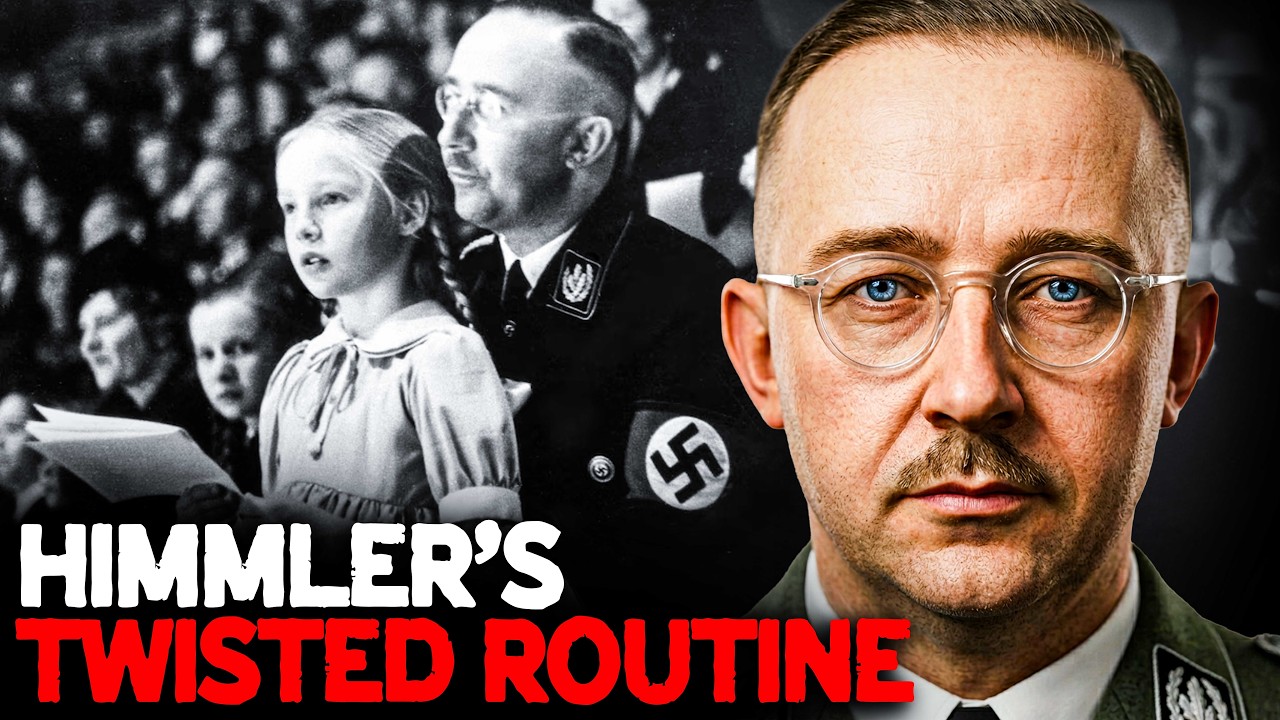 Central to his daily existence were the massage sessions administered by Felix Kersten, a Finnish-German physiotherapist who became indispensable to Himmler after his introduction in March 1939. Kersten’s memoirs, which survive in remarkable detail, record that Himmler depended on these treatments with an almost childlike intensity, summoning him at all hours and requiring his presence at field headquarters and estates across occupied Europe. The sessions became occasions for extraordinary conversations in which Himmler moved seamlessly between medieval German history, racial science principles, and anxieties about his own digestive health.
Kersten, who was not himself a Nazi and who used his position to negotiate the release of thousands of prisoners from concentration camps, recorded the chilling seamlessness with which the mundane and the monstrous coexisted in these sessions. On one occasion, Himmler would discourse at length on the Teutonic Knights and the mystical significance of Germanic tribal culture. On another, he would explain in calm clinical detail the racial principles he believed should guide German population policy in the conquered East.
After his morning health routines, Himmler devoted himself to correspondence, a compulsion that had begun in childhood and never left him. The sheer volume of his surviving letters is staggering, filling multiple volumes of collected SS documents that scholars have spent decades cataloging. He wrote to subordinates, foreign officials, scientists, farmers whose agricultural methods he admired, and old friends, maintaining a network of personal correspondence that functioned alongside his administrative empire.
Most striking to modern readers are his letters to his daughter Gudrun, born in August 1929, whom he called by the nickname Puppi. He arranged for her to be flown from Munich to Berlin for visits, phoned her daily with extraordinary consistency even during the most demanding periods of the war, and wrote warm, playful letters full of small observations about the natural world. These letters sit in archives alongside documents bearing his signature that ordered the deaths of hundreds of thousands of people.
His marriage to Margarete Boden, a divorced nurse several years his senior whom he wed in 1928, had cooled by the early war years into a formal arrangement. Himmler had begun an 𝒶𝒻𝒻𝒶𝒾𝓇 with his secretary Hedwig Potthast, who bore him two children, a son named Helge born in 1942 and a daughter named Nanette-Dorothea born in 1944. He maintained both households simultaneously with a logistical dedication that historians cite as evidence of his extraordinary capacity for emotional compartmentalization.
The farm at Gmund am Tegernsee, which he shared with Margarete, remained a continuing expression of his agronomy background. Throughout the war years, he maintained active correspondence about the management of the property, advising on chicken breeds, soil conditions, crop rotations, and livestock health with the enthusiasm of a man who, in another life, might have been a contented and moderately successful farmer in rural Bavaria.
By midday, Himmler’s schedule was dominated by meetings covering a bewildering breadth of subjects. On a single winter day in 1942, his appointment book might show a morning briefing on anti-partisan operations in occupied Yugoslavia, followed by a meeting with racial science officials about Germanization programs in the conquered East, followed by a conference call with Reinhard Heydrich about the administrative progress of what the SS called the final solution to the Jewish question.
Lunch was typically modest, reflecting his preoccupation with dietary theories and naturopathic health concerns. He experimented with vegetarianism at various points, not out of ethical conviction but out of his usual health anxieties. Wine and alcohol were consumed in moderation, distinguishing him from much of the Nazi leadership, where heavy drinking was practically institutional.
Afternoons frequently included inspection obligations. Himmler traveled extensively throughout the war, visiting SS units, concentration camps, racial settlement projects, and scientific installations across occupied Europe. He visited Auschwitz twice, the second visit in July 1942 being particularly significant because he personally observed the gassing process at Birkenau, watching the murder of a transport of Jewish deportees from the Netherlands before addressing the senior camp staff on the psychological burden they bore.
This speech, and variations he delivered on several other occasions, reveals something important about how he understood his own role. He did not deny what was happening. He described it with clinical directness, insisted on its necessity, but also acknowledged that it was psychologically difficult.
He framed the suppression of normal human responses not as moral failure but as a form of heroic sacrifice, a terrible but necessary burden that history had placed on the shoulders of the SS.
The late afternoon and early evening often brought what Himmler considered the more intellectually stimulating parts of his day. He maintained close contact with researchers working within the Ahnenerbe, the Ancestral Heritage Society he founded in 1935, an organization whose official purpose was to research the history and culture of the Germanic peoples and establish the scientific credentials of Nazi racial ideology. In practice, it ranged from genuine archaeological fieldwork to the most deranged pseudoscience imaginable.
Its researchers studied runes, Tibetan ethnic origins, medieval German architecture, and what they called the World Ice Theory, a cosmological hypothesis holding that most of the universe was composed of ice. Himmler took all of this seriously, funding it, supervising it, and corresponding with researchers about their findings with the enthusiasm of a man who genuinely believed he was participating in the recovery of a lost civilization.
His evenings were sometimes devoted to social obligations, dinners with senior SS officers, visits to the theater or opera, which he genuinely enjoyed. But more often his evenings continued the pattern of work, reading through reports and summaries prepared by his staff, dictating responses and instructions, and spending time with Kersten if another massage was warranted. He frequently read into the night, ranging across medieval German history, Roman history, biography, and scientific works on racial theory.
By ten or eleven in the evening, assuming no crisis demanded his attention, he would retire. He was not, like many of the Nazi leadership, a man who kept dramatically late hours as a matter of personal style. He went to bed at a reasonable time and rose the following morning to repeat the pattern day after day, week after week, year after year, through the entire arc of the Third Reich.
To understand the full scope of what Himmler managed on any given day, it is necessary to grasp just how vast his organizational empire had become by the peak of his power in 1943 and 1944. The title Reichsführer SS no longer captured it. He was also Chief of the German Police, a position consolidated in 1936 by merging the SS command structure with control of all German police forces, including the Gestapo and the criminal police.
He was Reich Commissioner for the Strengthening of German Nationhood, giving him authority over massive population resettlement and Germanization programs in occupied Eastern Europe. From August 1943, he was Reich Minister of the Interior, one of the most powerful governmental positions in the Nazi state. From July 1944, following the assassination attempt on Hitler, he was appointed commander of the Reserve Army, adding military command responsibilities to everything else.
The German police apparatus alone represented an organizational behemoth. Under the umbrella of the SS police system, there were the Geheime Staatspolizei, or Gestapo, Germany’s secret state police. There was the Sicherheitsdienst, or SD, the intelligence service of the SS.
There was the Kriminalpolizei, the criminal police. There was the Ordnungspolizei, the uniformed regular police. These categories subdivided into specialized units, regional commands, and dedicated offices employing hundreds of thousands of people.
Managing this apparatus required continuous attention to organizational structure, personnel matters, budget questions, inter-agency coordination, and the thousand administrative details that any large bureaucracy generates. Himmler attended to all of it with a thoroughness his subordinates consistently remarked upon. He was not a delegator by instinct.
He wanted to know what was happening at every level of his organization.
Then there was the Waffen SS, the armed military wing that had grown from a bodyguard force into an organization numbering nearly a million men by the end of the war, organized into dozens of divisions fighting on multiple fronts. Himmler retained a deep personal investment in the Waffen SS as the purest expression of his vision of an elite SS warrior caste, involving himself in questions of its composition, training standards, ideological formation, and recruitment.
The relationship between Himmler and Reinhard Heydrich shaped the day-to-day operation of the SS empire more than almost any other single factor. Heydrich, a tall, blonde, athletically built man with an extraordinary mind and a capacity for organizational ruthlessness exceptional even by SS standards, built the intelligence and security operations into a machine of terrifying efficiency. By 1939, he headed the Reich Main Security Office, the RSHA.
Himmler was simultaneously aware of Heydrich’s extraordinary abilities and quietly afraid of them. Several close associates recorded that Himmler respected Heydrich’s intelligence while harboring deep wariness about a subordinate who was in many ways smarter, more capable, and more ruthlessly effective than himself. Heydrich was also physically everything Himmler was not, seeming to embody the Aryan warrior ideal that Himmler so fervently promoted while personally failing to approximate it.
When Heydrich convened the Wannsee Conference in January 1942, the notorious meeting where senior Nazi officials coordinated the logistics of what would become the systematic murder of European Jews, he did so under Himmler’s authority. Himmler did not attend the conference himself, which has sometimes led to the mistaken impression that he was peripheral to it. He was not peripheral.
He was its organizational father.
The assassination of Heydrich in Prague in May 1942, when Czech paratroopers trained by British intelligence launched an attack on his car, was one of the genuinely significant shocks of Himmler’s wartime experience. He had lost his most capable subordinate. The SS response was savage even by occupation standards, culminating in the complete destruction of the Czech village of Lidice and the murder of its entire male population.
Himmler personally oversaw the response.
The replacement for Heydrich at the head of the RSHA was Ernst Kaltenbrunner, a massive, scar-faced Austrian who had none of Heydrich’s intellectual sophistication but compensated with a brutality so raw that even within the SS he was regarded as crude and frightening. Where Heydrich had been a collaborator of genius requiring careful management, Kaltenbrunner was a blunter instrument who implemented policy with a directness that required less sophisticated oversight.
One of the aspects of Himmler’s daily work that receives the least attention but deserves the most is his personal involvement in SS personnel management. He read personnel files. He involved himself in promotion decisions at ranks far below those where a head of organization would normally exercise personal judgment.
He paid attention to the personal lives and moral conduct of his senior officers in ways that mixed genuine paternalism with something closer to surveillance.
The SS honor code was one of Himmler’s most distinctive creations. He conceived of the SS not merely as a security and military organization but as a racial and ideological elite, a new aristocracy that would shape Germany’s future through the quality of its membership. This meant that SS membership came with extensive requirements enforced through a system of internal courts that handled disciplinary matters ranging from financial misconduct to sexual offenses to violations of racial laws.
Himmler sat at the apex of this judicial system and took a hands-on interest in cases that came to his attention. His personal involvement in SS disciplinary proceedings fills volumes of the archival record. He was particularly obsessed with what he considered the racial integrity of the SS.
Every member was required to document the racial ancestry of both himself and his spouse going back several generations, and this genealogical vetting was taken with genuine seriousness.
The racial settlement programs Himmler ran as Reich Commissioner for the Strengthening of German Nationhood consumed another major portion of his daily working hours. The program, established in October 1939 immediately after the conquest of Poland, was designed to implement a massive reorganization of the population of occupied Eastern Europe along racial lines. This meant the expulsion of hundreds of thousands of Poles and Jews from territories to be incorporated into the Greater German Reich.
It also meant the resettlement of ethnic Germans from the Baltic states, Volhynia, Eastern Galicia, and other areas into the vacated territories, and the identification of children in occupied territories deemed to possess sufficient Germanic racial characteristics to be taken from their families and raised as Germans. Himmler oversaw all of this with remarkable granularity, receiving population statistics, approving resettlement schedules, and corresponding with administrators about specific logistical problems.
The concentration camp system is where Himmler’s organizational genius took its most monstrous form. The camps, which had begun in 1933 with the establishment of Dachau as a detention facility for political prisoners, had by the early 1940s evolved into a vast network of facilities of different types and purposes spread across Germany and the occupied territories. There were the original concentration camps, the extermination camps, and hundreds of subcamps attached to industrial and agricultural operations.
Himmler was the ultimate authority over the entire system. The camps were administered through the SS Main Office of Economy and Administration, headed by Oswald Pohl, and Himmler received regular reports on every aspect of camp operations: prisoner numbers, mortality rates, economic productivity of prisoner labor, construction progress at new facilities, and the operational progress of the extermination programs. He approved major operational decisions and intervened personally in specific cases.
His visits to the camps were not frequent by any ordinary measure of executive oversight, but they were significant when they occurred. The July 1942 visit to Auschwitz has already been mentioned. He also visited Sobibor in February 1943, where he observed an extermination operation and reportedly ordered an acceleration of the killing pace.
These visits served multiple purposes, allowing him to satisfy his need for direct knowledge and communicating to camp staff that their work had his personal approval.
How Himmler processed the knowledge of what was happening in the camps remains one of the genuinely difficult psychological questions about him. Kersten’s memoirs record several occasions on which Himmler expressed what appeared to be genuine discomfort with the mass killings, describing the psychological burden of the work and occasionally raising the possibility that certain aspects of the program might be modified or limited. Scholars have debated extensively how to read these passages.
Were they evidence of genuine moral discomfort? Were they a form of performance designed to manage Kersten’s opinion of him? Were they the cognitive dissonance of a man who simultaneously believed in the ideological necessity of the exterminations and experienced normal human discomfort when directly confronted with mass death?
The answer is probably some combination of all three, and working out the precise proportions is impossible from the available evidence.
What is clear is that the discomfort, whatever its nature, was never sufficient to modify his behavior in any significant way. He continued to oversee the extermination program, to process the reports, to sign the orders, to visit the camps, and to frame the whole enterprise in the ideological language of historical necessity and SS duty. If he had doubts, he overcame them.
 If he felt revulsion, he suppressed it.
Himmler’s obsession with the occult and with Germanic mysticism is another dimension of his daily life that helps explain a great deal about his leadership style. He was not a straightforward materialist or pragmatic nationalist in the mold of many of his contemporaries. He was a true believer in a kind of racial mysticism that blended pseudoscientific racial theory with romantic medievalism, pagan Germanic mythology, and an occultist sensibility drawing on esoteric currents in early twentieth-century German culture.
The physical expression of this mystical vision was Wewelsburg Castle, a seventeenth-century triangular castle in the Büren district of Westphalia that Himmler leased in 1934 and subsequently developed at enormous expense as the ideological and ceremonial center of the SS. The renovation occupied his attention for years. He was personally involved in the architectural plans, the decorative schemes, the choice of artworks, and the ritual program to be hosted there.
He envisioned it as a kind of Camelot for the SS, a place where the senior leadership would gather annually for ceremonies blending military tradition with the invented rituals of his racial mysticism. He planned a round table room inspired by Arthurian legend, a crypt where fallen SS leaders would be commemorated, and various rooms dedicated to specific aspects of Germanic history that his Ahnenerbe researchers were excavating.
At Wewelsburg, he would walk the grounds, review renovation progress, hold discussions with small groups of senior SS leaders about ideological and historical questions, and engage in the kind of meditative brooding over the mystical significance of the SS that his busy administrative schedule rarely permitted. It was, in a sense, his spiritual office, a retreat from the relentless demands of running a genocidal empire.
His relationship with Hitler was the central fact of his political existence. He served Hitler with what appeared to be total personal loyalty and genuine ideological devotion, and Hitler trusted him enough to delegate extraordinary powers to the SS in a system where trust was scarce and power jealously guarded. Himmler reported to Hitler regularly, attended his conferences, listened to his monologues, and almost never disagreed with him directly.
His relationships with other senior Nazi figures were more complicated. Hermann Göring, as head of the Luftwaffe and economic czar, was in many ways his most significant institutional rival, having created his own intelligence apparatus that competed with Himmler’s services. They were outwardly cordial but inwardly suspicious, and Himmler’s daily work included managing the boundary between their domains with careful attention to where real power lay.
His relationship with Martin Bormann, Hitler’s personal secretary and the gatekeeper of access to the Führer, was one of the most carefully calibrated of all. Himmler understood Bormann’s importance and maintained an outwardly respectful and cooperative relationship, though both men were aware of the potential for their institutional interests to conflict. Joseph Goebbels, the Propaganda Minister, was someone Himmler regarded with personal distaste that he rarely expressed openly.
The question historians have most consistently wrestled with is when exactly the decision to systematically murder the European Jews was made and what Himmler’s personal role in that decision was. The documentary record is deliberately obscure, partly because the Nazi leadership used euphemistic language even in internal communications and partly because the relevant orders were largely given verbally rather than committed to paper in explicit form.
What is clear from the operational record is that by the summer of 1941, with the invasion of the Soviet Union underway and the Einsatzgruppen beginning their systematic killing of Jewish communities in the occupied East, a genocidal program was in operation with Himmler’s direct organizational authority behind it. The Einsatzgruppen were mobile killing units formed from RSHA personnel and organized by Heydrich under Himmler’s overall command.
They followed behind the advancing German army into the Soviet Union and began systematically shooting Jewish men, then Jewish women and children, then entire Jewish communities, working their way through occupied Ukraine, the Baltic states, and Belarus with a murderous efficiency that resulted in the deaths of over one and a half million people in the eighteen months following the invasion. Himmler received regular operational reports detailing the numbers shot in each action.
In August 1941, he witnessed a mass shooting action near Minsk, standing behind the execution squad and watching as Jewish civilians were shot into a pit. Contemporary accounts describe him reacting with visible physical distress, swaying and nearly collapsing at the sight of the carnage, and reportedly vomiting. But he recovered, addressed the men of the execution squad with a speech about their duty and their burden, and departed.
The killing continued.
His reaction at Minsk, combined with reports of the psychological toll that mass shooting was taking on the men of the Einsatzgruppen, who were showing rising rates of alcoholism and psychological breakdown, reportedly reinforced his interest in developing alternative killing methods less psychologically damaging for the perpetrators. The development of gas vans and later the static gas chambers using Zyklon B reflected a concern for the welfare of the killers rather than the killed.
The autumn of 1943 is perhaps the best period to examine in detail to understand what Himmler’s days were actually like at the height of the regime’s simultaneous military and genocidal peak. By October 1943, the military situation had deteriorated severely. Stalingrad had fallen in February, costing Germany an entire army.
The Allied landings in Sicily and then southern Italy had opened a new front in the Mediterranean. The Battle of the Atlantic had effectively been lost.
On October 4, 1943, Himmler delivered one of the most important speeches of his career to senior SS leaders gathered at Posen in occupied Poland. The speech was remarkable for its extraordinary explicitness. In front of an audience of the highest-ranking SS officers, Himmler spoke directly and openly about the extermination of the Jewish people in language that left nothing to the imagination, describing the program as a page of glory in German history that would never be written.
He acknowledged the mass murder directly, using the word Ausrottung, meaning extermination or eradication. He described the psychological burden placed on those who carried it out and praised them for their hardness in performing what he called an unpleasant duty. The Posen speech, of which recordings survive, is one of the most important historical documents of the Third Reich precisely because it demonstrates that the systematic murder of the Jews was understood and approved at the highest level of the regime.
The audience of senior SS leaders who heard Himmler speak those words applauded. They continued to serve. And Himmler returned to Berlin and to his desk and to the next day’s correspondence and meetings and massage sessions and dinner conversations and letters to Puppi, having delivered one of the most morally extraordinary speeches in the history of modern organized violence.
His inner life, to the extent that the evidence allows reconstruction, was dominated by a small number of obsessions that surfaced again and again. The Germanic past was one of these. He was genuinely captivated by the history of the pre-Christian Germanic tribes, by the Viking age, by the Teutonic Knights, and by the various romanticized versions of Germanic antiquity that nineteenth and early twentieth-century nationalist culture had produced.
His obsession with the Teutonic Knights deserves particular attention because it illuminates so much about the self-image he projected onto the SS. The Knights were a medieval German military religious order that had conquered and Christianized the pagan peoples of the Eastern Baltic and subsequently governed a substantial territory as a theocratic military state. To Himmler, they represented something close to an ideal, a brotherhood of warrior monks dedicated to the extension of Germanic civilization into the Slavic East.
The parallels to what he envisioned for the SS were not accidental. He explicitly modeled aspects of SS organizational culture on his understanding of the Teutonic Knights, from the concept of a sworn brotherhood with its own code of honor to the idea of expansion into and domination of the eastern lands. Wewelsburg was designed in part as the SS equivalent of the Knights’ great castle at Marienburg, a monumental headquarters that would embody the organization’s self-image.
His interest in alternative medicine and unconventional health practices was another consistent feature of his daily life. Beyond the Kersten massage sessions, Himmler maintained an interest in homeopathy, herbal medicine, and various naturopathic approaches that sat at odds with the conventional German medical establishment. He had extended conversations with Kersten about medicinal plants, about the therapeutic properties of various herbs, about the comparative health effects of different dietary approaches.
This alternative medical interest was connected in Himmler’s mind to the broader racial health project of the SS. He believed that the German people’s physical degeneration, which he took as an observable biological fact, was in part the result of corrupted medical practice and corrupted food production, and that restoring racial health required addressing not just racial mixing but also the environmental and dietary factors he believed influenced biological quality.
The SS economic enterprises were another major organizational commitment consuming significant portions of his administrative attention. From the late 1930s onward, the SS had been building an economic empire of considerable scope, encompassing quarries, brick factories, mineral water bottling operations, porcelain manufacturers, publishing houses, and various other commercial enterprises. Many of these enterprises used concentration camp prisoners as forced labor.
Himmler envisioned a future in which the SS economic enterprises, staffed by prisoner labor in the short term and by a settled Germanic peasant population in the long term, would be a major driver of the economic development of the colonized eastern territories. He imagined vast agricultural estates managed by SS Wehrbauern, soldier-farmers who would combine military readiness with productive agricultural work in the manner of the ancient Germanic warrior class.
His working style has been described by various subordinates as combining a passion for detail with a somewhat bureaucratic approach to decision-making. He relied heavily on his staff to prepare briefing materials and summaries of complex situations, but he read these materials carefully and engaged with them in ways that demonstrated genuine comprehension of the specific rather than just the general. His personal staff describe a man not given to sudden outbursts in the working environment.
His relationship with his personal adjutants and secretaries was marked by the specific combination of paternalism and surveillance that characterized his approach to the SS generally. He paid attention to their personal lives, inquired after their families, remembered details of their circumstances that a less attentive man would have forgotten, and cultivated a personal loyalty that went beyond the merely institutional. His secretaries describe a working atmosphere that was in many ways entirely ordinary.
The phone calls were a constant feature of Himmler’s working day. He conducted an extraordinary amount of business by telephone, not just with his own subordinates but with other senior Nazi officials, with field commanders of the Waffen SS, with regional SS and police leaders across occupied Europe, and with the various officials of the broader Nazi state with whom he needed to coordinate. His telephone log for any given day would show dozens of calls.
He was by the standards of the era an early adopter of the telephone as a primary administrative tool, using it with a facility that reflected both his organizational instincts and his awareness that verbal communication left less of a documentary record than written correspondence on matters where explicitness was something to be avoided. The question of what Himmler knew about specific corners of his empire at any given time continues to be debated.
What is not debatable is that Himmler knew in comprehensive overview terms exactly what his organization was doing. The extermination of the Jews was not a detail hidden from him by subordinates. He had sanctioned it, supervised it, visited it, described it publicly to his senior officers, and framed it in his personal ideological vocabulary with the thoroughness of a man who had thought through its justification carefully and completely.
By late 1943 and into 1944, with the military situation deteriorating rapidly, Himmler’s daily routine began to be increasingly dominated by the crisis of a losing war. The Eastern Front was in continuous retreat. Allied bombing was devastating German cities.
Intelligence reports painted an increasingly grim picture of German civilian morale and the regime’s declining authority. Himmler’s response was characteristically administrative, directing intensified surveillance and imposing harsher penalties for defeatism.
His health, never robust, declined noticeably under the pressure of these years. The stomach complaints that Kersten’s massages addressed became more frequent and more severe. He suffered from persistent headaches and what he described as nervous exhaustion, episodes in which the accumulated stress of managing his impossible administrative load manifested in physical symptoms that left him temporarily incapacitated.
Kersten’s diary records numerous occasions when Himmler was physically unwell.
By late 1943 and into 1944, Himmler began exploring with characteristic caution the possibility of using the SS extensive foreign contacts to open communication with the Western Allies about a negotiated peace. These explorations were tentative, deniable, conducted through intermediaries, and entirely unknown to Hitler. They represented a significant departure from the total loyalty that had characterized his relationship with the Führer.
His interest in using SS connections with neutral countries, particularly Sweden, as a channel for peace negotiations was facilitated by his long-standing relationship with certain Swedish and Swiss contacts who had access to Allied officials. The Swedish Red Cross representative Folke Bernadotte, a member of the Swedish royal family, became the most important of these intermediaries, and their meetings in 1945 represent one of the most extraordinary episodes in the story of the Third Reich’s collapse.
His response to the July 20, 1944 assassination attempt on Hitler was swift and far-reaching. Himmler was appointed commander of the Reserve Army within hours of the failed bombing, replacing the conspirators’ leader Claus von Stauffenberg and consolidating SS control over the military apparatus in Germany itself. His subsequent management of the investigation, arrest, and trial of the conspirators was characteristically thorough and characteristically brutal.
Over the following months, some two hundred people were executed for real or alleged involvement in the plot, with many subjected to particularly savage forms of execution intended as a statement about the fate awaiting those who betrayed the Third Reich. Himmler supervised this process with the same administrative attention he brought to everything else, and the investigation files his organization generated are among the most extensive documents of the Third Reich’s final year.
In January 1945, his responsibilities expanded still further when he was appointed Army Group Commander of Army Group Vistula, responsible for defending the line of the Vistula River against the massive Soviet winter offensive. This appointment was one of the most extraordinary decisions of Hitler’s final months, placing one of the most capable organizational administrators in the Reich in a position requiring operational military command skills that Himmler entirely lacked.
The results were predictably disastrous. Himmler proved completely unable to manage the competing demands of a fluid and rapidly deteriorating frontline situation. He issued orders that bore little relationship to the actual position of the forces under his command.
He held lengthy conferences that consumed time that should have been spent making decisions. He was physically unwell, spending significant periods at a sanatorium rather than at his command post.
By mid-March 1945, Hitler had become aware of the extent of Himmler’s failure as a military commander and relieved him of the army group command. His physical and mental state through the final months of the war was visibly deteriorating. The stomach cramps were more severe and more frequent.
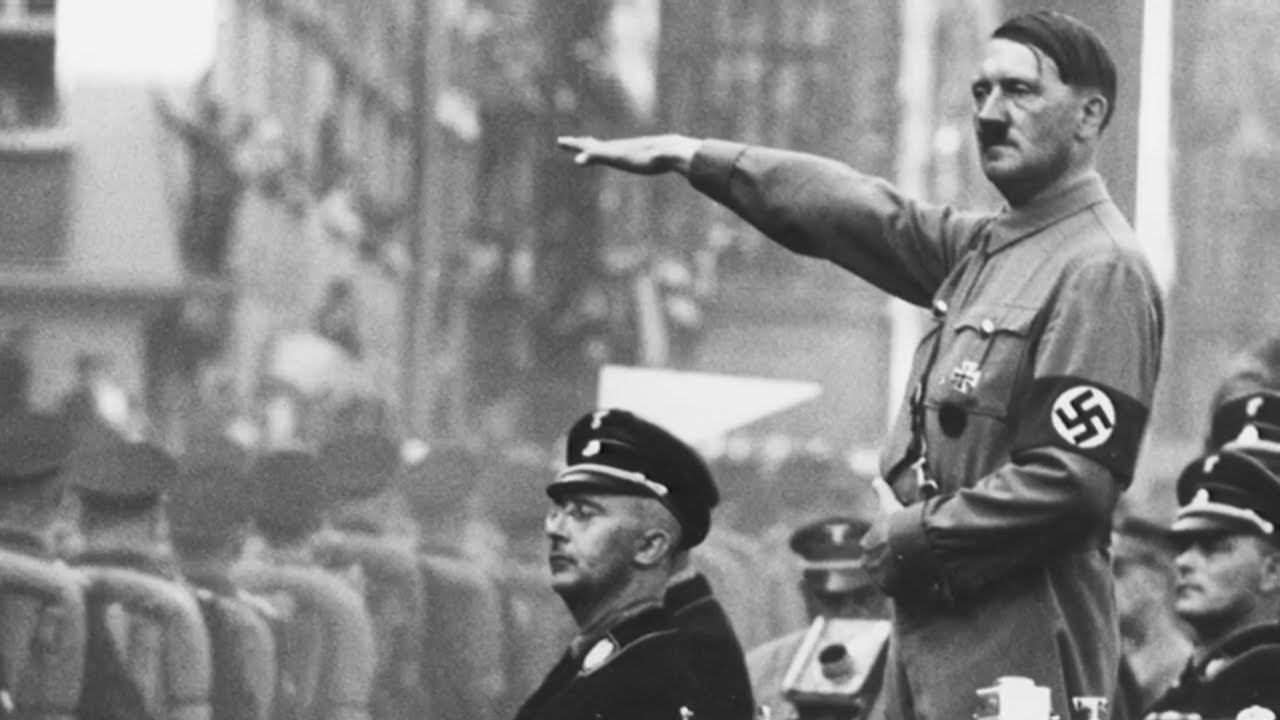 He was sleeping poorly. He was making decisions with less of his characteristic methodical care and more of the anxious improvisation that stress and exhaustion produce.
The meetings with Folke Bernadotte took place in February and April 1945, representing the final act of Himmler’s extraordinary capacity for self-delusion. Bernadotte was in Germany primarily to negotiate the release of Scandinavian prisoners held in German concentration camps. When Himmler arranged to meet him, ostensibly to discuss the prisoner question, he was in fact hoping to use Bernadotte as a channel to communicate with the Western Allied leadership about a separate peace.
The second and more significant meeting occurred on the night of April 23 to 24, 1945, in the Swedish consulate at Lübeck in the final days of the Reich. By this point, Berlin was virtually surrounded by Soviet forces. Hitler was confined in his underground bunker, and the Third Reich was measured in days rather than weeks.
In this dramatically reduced context, Himmler made his actual proposal to Bernadotte.
He was prepared to order German forces on the Western Front to cease resistance, allowing the Allied armies to advance eastward while the fighting against the Soviet Union continued. He described himself as a new German leader who could conduct negotiations with the Western powers and asked Bernadotte to convey this proposal to the British and American governments. Bernadotte recognized immediately that the proposal was without practical basis.
The Allied policy of unconditional surrender, reaffirmed at the Yalta conference earlier that year, allowed no room for the kind of partial arrangement Himmler was describing. And the idea that the Western Allies would accept Himmler, the most visible organizer of the Holocaust after Hitler himself, as a legitimate negotiating partner was simply not within the realm of the possible. Bernadotte conveyed the message, and the response was a flat rejection.
The consequences for Himmler were swift and catastrophic. When news of his unauthorized peace approach 𝓵𝓮𝓪𝓴𝓮𝓭, Hitler received it as an ultimate betrayal. He had tolerated and even trusted Himmler as his most loyal servant for more than twenty years.
To learn that his faithful Reichsführer had been conducting secret negotiations with the enemy without his knowledge or permission pushed Hitler into one of the most extreme rages of his final days.
He stripped Himmler of all his offices and positions. He ordered his arrest. He expelled him from the Nazi party.
In the last political testament he dictated before his suicide on April 30, 1945, Hitler denounced Himmler as a traitor and named him among those who had betrayed Germany in its final hour. The man who had built the SS, who had served Hitler with total loyalty for more than fifteen years, had been cast off and condemned.
With his position stripped and his arrest ordered, Himmler was on the run in the chaos of the Reich’s final collapse. Berlin fell to Soviet forces on May 2, 1945. German forces in northern Germany and Denmark surrendered on May 4.
The complete German surrender was signed on May 7 and came into effect on May 8. In this period of total collapse, Himmler had no fixed location, no meaningful organizational base, and no real plan.
He attempted to create a disguise for himself. He shaved his distinctive mustache. He put on the uniform of a Gestapo sergeant, a rank so far below his actual position as to be almost comic, and obtained forged identity papers in the name of Heinrich Hitzinger.
He planned to make his way south and west, perhaps to reach Switzerland or some other area where he could disappear and rebuild some kind of life.
On May 21, 1945, he was stopped at a British checkpoint near Bremervörde. The forged papers he was carrying were insufficient to pass inspection, and he was detained along with the other men in his group. He was taken to a British interrogation center at Lüneburg, where the combination of his distinctive physical appearance, his unusual manner, and inconsistencies in his documentation raised the suspicions of the British officers questioning him.
On May 23, 1945, Heinrich Himmler identified himself to his captors as Heinrich Himmler, Reichsführer SS. The British response was a mixture of shock and professional urgency. Himmler was one of the most wanted men in Europe, and the possibility of interrogating him about the full scope of the SS operations was enormously significant for the war crimes investigations already underway.
A medical examination was ordered.
The British Army doctor conducting the examination noticed that Himmler appeared to be concealing something in his mouth. Before the doctor could complete his investigation, Himmler bit down on a cyanide capsule he had hidden between his teeth. He lost consciousness almost immediately and died within fifteen minutes at approximately 11:15 in the evening of May 23, 1945.
He was forty-four years old.
His body was buried in an unmarked grave near Lüneburg whose exact location was deliberately kept secret by the British authorities. The grave has never been publicly identified, and there is no monument to Himmler anywhere in Germany or elsewhere. The man who built his career on the idea that the Germanic race must leave monuments to its greatness across the landscape of Europe departed the world without leaving behind any physical marker of his presence.
His death meant that he was never tried for his crimes at Nuremberg or anywhere else, though the evidence that would have been presented against him would have been overwhelming. The RSHA trial, one of the twelve subsequent Nuremberg trials conducted by the United States Military Tribunal, dealt with the crimes of the organization he had headed, and many of his subordinates were tried and sentenced in its proceedings.
Ernst Kaltenbrunner, who had headed the RSHA after Heydrich’s assassination, was tried before the International Military Tribunal at the main Nuremberg trial and hanged on October 16, 1946. Oswald Pohl, who had headed the economic administrative office that managed the concentration camps, was tried in subsequent Nuremberg proceedings and hanged on June 8, 1951. Heinrich Müller, who had headed the Gestapo, was never found after the war.
Rudolf Höss, the commandant of Auschwitz under whose administration more than a million people were murdered, was tried by a Polish court and hanged at Auschwitz itself on April 16, 1947. The machinery of justice, however incomplete, reached many of those who had operated the system Himmler built. But it never reached the architect himself, who escaped through an act of self-destruction that denied the world the satisfaction of a legal reckoning.
His wife Margarete survived the war and was arrested by American forces along with their daughter Gudrun in the final chaos of the Reich’s collapse. They were taken through a series of detention camps before being summoned to Nuremberg to provide testimony at the trials, and they were released in November 1946. Margarete Himmler lived until 1967, dying in relative obscurity in West Germany.
She never publicly disavowed her husband’s crimes.
Gudrun, the beloved Puppi to whom Himmler had written his warm letters, grew into one of the most determined defenders of her father’s memory in post-war Germany. She rejected entirely the historical consensus about his role in the Holocaust, maintained that he had been a good man who had been misunderstood and maligned, and devoted a significant portion of her adult life to working with an organization known as Stille Hilfe, or Silent Aid.
This secretive network provided support to former SS members facing trial, imprisonment, or extradition proceedings. It helped fugitive SS members evade justice, provided financial support to imprisoned SS convicts and their families, and worked through various channels to secure early releases and reduced sentences. Gudrun Himmler was one of its most dedicated members and was reportedly at various points one of its leading figures.
She remained until her death in May 2018, at the age of eighty-eight, one of the most unbounded defenders of the Nazi heritage in Germany. A woman who had been a child when her father’s crimes were committed and who spent eighty years refusing to accept what those crimes had been. Her refusal was not ignorance.
The historical record of what her father had done was available in extraordinary detail. It was a choice sustained through decades.
The question of Himmler’s legacy and what it means for how we understand the Holocaust and the Nazi state is one that scholars have been addressing for eight decades and will continue to address for the foreseeable future. He is in some ways the most important figure in understanding how the Holocaust was organized and carried out because he was the organizational architect of the machinery that made it possible.
Hitler provided the ideological authorization and the ultimate political direction. But Himmler built the system. He built the SS.
He built the Gestapo and the SD. He built the concentration camp network. He organized the racial settlement programs.
He supervised the Einsatzgruppen. He received the reports. He signed the orders.
He visited the camps. He spoke to his senior officers at Posen about the great work they were doing.
The Holocaust was not an abstraction to him. It was in the most literal possible sense his daily business. What does it tell us that the man responsible for all of this also wrote tender letters to his daughter, worried about his stomach cramps, attended the opera, kept a diary, raised chickens, maintained a meticulous appointment calendar, and approached each working day with the organized, methodical energy of a conscientious administrator?
It tells us something that is very difficult to hear and very important to understand. It tells us that the capacity for mass murder and the capacity for ordinary domestic tenderness are not mutually exclusive in human beings. It tells us that the qualities that make a person an effective administrator are morally neutral capacities that can be placed in the service of either the most constructive or the most destructive possible ends.
And it tells us that ideology sincerely held can provide the motivational framework that allows a person to spend their days organizing mass murder and then go home and phone their daughter and feel no contradiction between these activities. Himmler is sometimes described as the most dangerous Nazi because he was the most competent, the one whose organizational abilities made the murderous vision into operational reality.
The Holocaust required organization. It required bureaucracy. It required the patient construction of systems that could identify, classify, transport, concentrate, and 𝓀𝒾𝓁𝓁 millions of people across a continent.
That organization was Himmler’s contribution to one of the great crimes in human history. And it was a contribution made through the accumulation of individual working days, each one filled with correspondence and meetings and phone calls and meals and massage sessions and bedtime reading and letters to Puppi.
Each one adding another piece to the machinery of murder he was building and operating. The Nuremberg principles established after the trials articulated that following orders is not a defense for crimes against humanity. Himmler’s case makes a different and perhaps more troubling point: that he was not in any meaningful sense following orders.
He was giving them. He was creating the organizational structures within which the orders would be generated and executed.
He was the person whose daily administrative work turned racial ideology into systematic mass murder. He was in the truest sense the organizer. And the organizer’s culpability is not diminished by the fact that the organization’s work was conducted through bureaucratic channels rather than through personal violence.
The distance between Himmler at his desk reviewing a deportation schedule and the gas chamber at the end of that schedule’s operation was not a moral distance. It was merely a physical one.
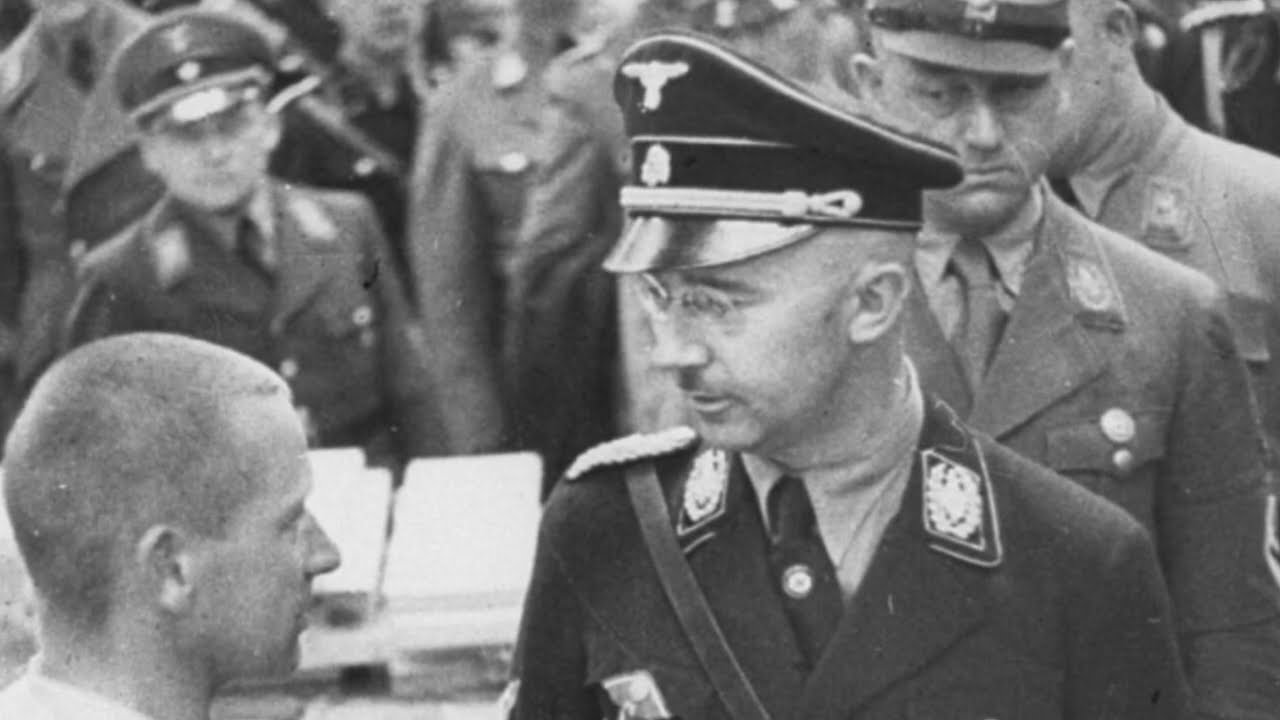 He ranks among the small number of people whose decisions and actions were so consequential for human suffering on a mass scale that they mark a kind of extreme in the catalog of modern evil. He was not a torturer, not a sadist in the obvious personal sense, not a man who derived visible pleasure from individual cruelty in the way that some of his subordinates did. He was something arguably worse.
An administrator of industrial-scale murder who viewed the whole enterprise with the calm rationality of a man overseeing a complex logistical operation. He built the machine. He maintained it.
He optimized it. And he did so as part of a working day that also included herbal tea and agronomy correspondence and calls to his daughter. The banal normality of his personal routines is not a mitigating factor.
If anything, it is the most disturbing fact about him because it makes it impossible to dismiss him as a monster in the sense that the word is often used, meaning someone recognizably different from ordinary human beings, someone whose evil is evident in their face or their manner or their daily life. Himmler’s daily life looked in most of its particulars like the daily life of a moderately successful, health-conscious, family-oriented, professionally organized bureaucratic official.
The difference was what the bureau was for. The difference was what the organization did with the memos and the phone calls and the appointment diaries and the neatly filed correspondence. And that difference was not a minor detail.
That difference was six million Jewish people and millions more Slavs, Roma, disabled people, political prisoners, and others whose extermination he had organized with the same methodical efficiency he brought to everything else.
The SS court system that Himmler maintained with such personal involvement throughout his years as Reichsführer was one of the most revealing expressions of his character and his values. He had designed a system of internal justice that claimed to hold SS members to a higher ethical standard than ordinary Germans, a special code of honor that required ideological purity, racial integrity, and personal rectitude in addition to professional competence.
He expelled men from the SS for dishonesty, for financial misconduct, for sexual behavior he considered incompatible with SS values, for racial violations, for what he viewed as weakness or cowardice. He maintained the organization’s internal discipline with a seriousness and consistency that bespoke genuine conviction that the SS was something morally significant, not merely an instrument of power but an order with authentic ethical commitments.
And yet this same organization was carrying out the Holocaust. The ethical commitments that Himmler maintained through his court system did not include any prohibition on the murder of millions of innocent people. They did not include any protection for the human dignity of those outside the racial categories that his ideology privileged.
They were a closed ethical system that recognized duties and obligations only within the tribe, only within the racial community, only within the SS brotherhood.
The banality of Himmler’s domestic life coexisted with the horror of his public role because in his moral framework these were not in tension. The Holocaust was not an exception to his ethical code. It was an expression of it.
His physical appearance was one of the things that most consistently confounded people who met him expecting to see evil made visible. He was of medium height, slightly built, with round-framed spectacles and a small mustache.
His face was consistently described as unremarkable, professorial, even mild. He looked, as many observers noted, more like a school teacher or a minor civil servant than the commander of the most powerful security apparatus in the world. This ordinariness of appearance became almost a cliché in accounts of him, but it was a genuinely significant fact because it confronted observers with the problem that evil is not always visibly marked.
The monster does not always look like a monster. Sometimes the monster looks like the man who might give you directions if you were lost in an unfamiliar city. Hannah Arendt’s famous concept of the banality of evil, developed primarily in relation to Adolf Eichmann but applicable across the Nazi leadership, applies to Himmler with particular force.
The bureaucratic personality, the administrative competence, the complete absence of visible internal conflict between professional function and personal morality.
These are the things that Arendt was pointing to, and in Himmler they are present in almost pure form. He was the banality of evil made organizational. He was the bureaucratic face of the Holocaust.
And what he did all day, the thing this account has tried to trace across the full length and depth of his career, was precisely that banality. The reports, the meetings, the correspondence, the phone calls, the appointments, the mass murder, the letters to Puppi, the herbal tea.
The accounts of those who served him, from senior SS leaders to junior secretaries, create a picture that is remarkably consistent in its broad outlines. He was, by the standards of the Nazi leadership, polite, methodical, and personally attentive. He remembered names, remembered details of personal conversations, asked after family members, and cultivated the kind of personal loyalty that comes from making people feel that they are personally known rather than merely functionally useful.
He was not prone to the dramatic outbursts that characterized Hitler, not given to the explosive rages that made Hitler’s inner circle a place of constant anxiety. He was calmer, more predictable, more organizationally rational than his master. He was also, beneath the politeness, deeply controlling.
His courtesy was genuine, but it was also instrumental, a tool for maintaining the network of personal loyalty and organizational discipline that the SS required.
When subordinates failed or disappointed him, the expression of his displeasure was usually formal and cold rather than explosive, a shift in manner that those who knew him recognized as more alarming in its way than shouting. His surveillance of his own organization was comprehensive. The SS internal intelligence functions, which monitored the loyalty and reliability of SS members themselves, were accountable ultimately to him.
This created an organizational culture of considerable tension beneath the surface courtesy, a performance of loyalty under the constant possibility of observation. Among his most senior associates, Karl Wolff deserves particular mention. Wolff served as Himmler’s chief of personal staff from 1933 to 1943, and his position gave him a uniquely close vantage point on the daily workings of the Reichsführer.
Wolff was present at meetings, accompanied Himmler on official visits, managed the flow of information to and from the Reichsführer’s office, and coordinated between Himmler and the other parts of the SS organizational structure. He later described Himmler as a man of extraordinary organizational efficiency, who could hold an enormous amount of detail in his head and who processed paperwork with a thoroughness that impressed even experienced administrators.
Rudolf Brandt, Himmler’s personal secretary and one of his most loyal subordinates, managed the enormous volume of correspondence that passed through Himmler’s office and served as one of the primary channels through which the Reichsführer communicated with the outside world. Brandt was tried at Nuremberg in the Doctors’ Trial and hanged in June 1948, convicted of his role in overseeing the medical experiments conducted on concentration camp prisoners.
His execution is a reminder that the people who handled Himmler’s correspondence, who typed his letters and filed his memos and managed his appointments, were not mere bystanders to the crimes of the SS. They were participants, however varying their degrees of personal initiative, in those crimes. The medical experiments conducted in the concentration camps under the aegis of the SS are another dimension of Himmler’s daily world that deserves attention.
He was personally interested in medical and scientific research, and the SS medical establishment conducted experiments on prisoners that ranged from investigations of high-altitude physiology and hypothermia survival to infectious disease research to racial science investigations to the deranged racial anthropological studies that Josef Mengele pursued with particular energy at Auschwitz. Himmler received reports on these experiments and in some cases specifically authorized or requested particular lines of research.
He corresponded with the researchers involved, expressed interest in their findings, and facilitated the use of concentration camp prisoners as experimental subjects through his authority over the camp system. The human cost of these experiments was staggering. Thousands of prisoners died or were permanently maimed in the course of procedures conducted without consent, often under conditions of deliberate cruelty in service of research questions that ranged from the scientifically dubious to the entirely fraudulent.
The prosecutors at the Doctors’ Trial at Nuremberg in 1946 and 1947 documented the experimental program in detail and convicted twenty of the twenty-three defendants. Seven were hanged. The trial established principles about the ethics of medical experimentation that became foundational to subsequent international law, including the Nuremberg Code articulating standards for voluntary consent in human experimentation.
These principles emerged directly from the examination of what Himmler’s SS had done.
The most important thing the evidence of his day-to-day existence tells us is that the Holocaust was not chaos. It was not improvised. It was not the result of uncontrolled violence that spiraled beyond any organizational frame.
It was the product of deliberate, organized, sustained administrative effort conducted through bureaucratic channels by people who showed up for work in the morning, processed their correspondence, attended their meetings, and went home in the evening.
The machinery of mass murder required the same administrative infrastructure as any other large-scale organizational enterprise: personnel management, budget management, inter-agency coordination, logistics, communications, reporting, and the thousand other details that make a large organization function. Himmler provided the organizational leadership, the institutional design, the administrative energy, and the ideological commitment that made that machinery work.
He did it through the accumulation of working days that looked in their surface texture very much like the working days of any senior executive in any large organization. The difference, the thing that made those working days extraordinary in the most terrible sense, was what the organization was doing. What it was doing was murdering people.
And he oversaw that day by day, report by report, signature by signature through fifteen years of one of the most carefully documented careers in the history of organized evil.
The records he left behind, the correspondence, the personnel files, the appointment diaries, the court proceedings, the operational reports, are among the most extensive and detailed documentation of organizational mass murder in existence. They survive in archives in multiple countries and continue to be studied by scholars who are still, eighty years later, mapping the full extent of what the SS under Himmler’s direction actually did.
In a deeply ironic sense, his obsessive administrative record-keeping, his insistence on documentation, his cultivation of meticulous organizational practice created the evidentiary record that makes it impossible to deny or minimize the crimes of his regime. The bureaucrat’s compulsion to document everything documented his own crimes in extraordinary detail. He never stood trial.
The cyanide capsule he had hidden in his mouth ensured that he escaped the legal reckoning his position would have made absolutely certain.
He was spared the experience of sitting in the dock at Nuremberg and hearing the evidence of his crimes read into the international record. He was spared the verdicts that would certainly have condemned him. He was spared the particular quality of historical exposure that the Nuremberg proceedings imposed on those who survived long enough to face them.
His death was instantaneous and private, which is more than can be said for the deaths he organized.
The question of whether justice was served is one that every honest account of Himmler must acknowledge as partially negative. He died before he could be held legally accountable in the way that the post-war world was organizing itself to hold perpetrators accountable. The fact that many of his subordinates were tried and in some cases executed is a partial response to this, but only partial.
The full accounting that Nuremberg was designed to provide, the complete historical and legal reckoning with the crimes of the Third Reich, was missing one of its most essential subjects. What is left is the record, the extraordinary, detailed, meticulously maintained record that his own bureaucratic genius created. The correspondence and the reports and the appointment diaries and the personnel files and the court proceedings and the operational summaries that document with terrible precision what Heinrich Himmler actually did all day.
He organized the Holocaust. He did it methodically, persistently, from behind a desk, through a telephone, over a massage table, between letters to his daughter, across fifteen years of working days that began with herbal tea and ended with bedtime reading and contained between those ordinary bookmarks some of the most consequential administrative decisions in the history of human evil.