
The Gunslingers of the Old West have become as famous as any figures in American history. In fact, names like Jesse James, Wyatt Earp, and Billy the Kid are more easily recognizable than the names of many US presidents. But who can be said to have been the deadliest gunfighter of them all, the one with the most kills?
Here are some of the deadliest gunfighters in the history of the Old West. Some of them were lawmen or sheriffs, and some were outlaws and murderers.
 John King Fisher
John King Fisher was born in 1853 in Texas to Job and Lucinda Warren Fisher. He had a troubled upbringing. His first brush with the law came at the tender age of 16 when he began stealing horses.
This crime would set the tone for his tumultuous life ahead. As he grew older, Fisher found himself in and out of prison due to his criminal activities. He was unable to break free from the cycle of lawlessness.
By the 1870s, Fisher’s path had led him to join a notorious band of bandits known for preying upon Mexican ranchers in the region. However, internal strife within the gang eventually led to a violent confrontation during which Fisher killed three of his fellow outlaws.
Seizing the opportunity, he assumed leadership of the gang and embarked on a spree of violence that culminated in the execution of seven Mexican bandits. Despite his reputation as a hardened criminal, Fisher still had moments of leisure and entertainment. On one fateful night, he accompanied his close friend Ben Thompson to the Turner Hall Opera House in San Antonio for a performance.
Little did they know that tragedy awaited them. After the show, as they ascended to the upper level of the Vaille Variety Theater, they were ambushed by unknown assailants. Thompson succumbed to a gunshot wound to the head, while Fisher, though he managed to draw his weapons, fell victim to a barrage of 13 gunshots.
Following his untimely demise, Fisher’s remains were initially laid to rest on the ranch he owned. However, in time, his bones were relocated to the Pioneer Cemetery in Uvalde, Texas. This marked the final resting place of a man whose life was as tumultuous and violent as the Wild West itself.
John Wesley Hardin
John Wesley Hardin, a notorious figure of the Wild West, earned his reputation as a skilled gunfighter and outlaw. He left a trail of violence and controversy in his wake. His journey into infamy began at a young age, with his first killing reportedly occurring when he was just 15 years old.
Over the years, he claimed the lives of as many as 44 individuals, solidifying his status as one of the most feared figures of the era. Despite his violent tendencies, Hardin saw himself as a man who often found himself on the receiving end of others’ bad behavior rather than being inherently sinful. He was known to be an avid gambler, relying on horse racing and cattle dealings to sustain himself financially.
His prowess with firearms earned him a fearsome reputation. Records indicate that he engaged in at least 21 duels and ambushes between 1868 and 1877, though he boasted of a higher tally. Not surprisingly, Hardin’s notoriety drew the eye of many, resulting in a substantial bounty being placed on his head.
However, instead of living in fear, Hardin continued to indulge in his vices, spending his days gambling, drinking, and engaging in extramarital affairs. Despite being named after the founder of the Methodist branch of Protestantism, Hardin’s actions often contradicted his religious namesake. An infamous incident occurred when he fatally shot a man named Charles Couer while attempting to silence his loud snoring in a hotel room.
This cast doubt on his claims of only killing those who deserved it.
However, it was an altercation on his 21st birthday that would cement Hardin’s place in history. Following a drunken confrontation with Deputy Sheriff Charles Webb in Kamanche, Texas, Hardin emerged victorious in a duel. But he found himself marked for death with a hefty bounty on his head.
Eventually apprehended and sentenced to 25 years in prison in 25, Hardin’s time behind bars saw him pursue education and reform. By 1894, he had transformed into a law-abiding citizen and was granted a pardon for his crimes. Eager to start anew, he venture into the legal profession, only to be drawn back into a life of 𝒔𝒄𝒂𝓃𝒹𝒶𝓁 and violence.
Tragically, Hardin’s attempt at redemption was cut short when he was gunned down by lawman Parkes Selman in 1895, reportedly over a dispute involving payment for an assassination. His life, marked by violence and defiance, serves as a cautionary tale of the reckless and unforgiving nature of the Wild West.
Dallas Stoudenmire
Dallas Stoudenmire may not be as widely recognized as some of his contemporaries from the Wild West, but his legacy as a formidable lawman and gunfighter remains noteworthy. He was born on December 11th, 1845, in Bullock County, Alabama, to Lewis and Elizabeth Stoudenmire. Dallas’s early years were marked by a desire for adventure and a sense of duty.
At the age of 15, Stoudenmire attempted to enlist in the Confederate Army during the Civil War. He was eager to join the fight, but his youth was discovered and he was discharged. Undeterred, he re-enlisted a few years later and served as a private in Company F of the 21st Alabama Infantry Regiment.
Despite sustaining multiple wounds, Stoudenmire remained steadfast in his commitment until the war’s conclusion. Known for his tough demeanor and quick temper, especially by alcohol, Stoudenmire’s reputation preceded him as he headed west to El Paso, Texas. It was here that he would leave an indelible mark on history as a lawman like no other.
Upon assuming the role of sheriff in El Paso, Stoudenmire wasted no time asserting his authority. In what would later be referred to as the Four Dead in Five Seconds gunfight, he quickly dispatched three men in the first three days of his tenure.
This series of deadly confrontations set the stage for Stoudenmire’s notoriety as a ruthless enforcer of the law. Over the following year, Stoudenmire engaged in several more gunfights, claiming the lives of six additional men. His unwavering resolve and unyielding courage earned him the respect of some and the fear of many, solidifying his status as one of the most formidable lawmen in the region.
However, Stoudenmire’s life was not without its share of conflict and tragedy. He became embroiled in a feud with members of the Fowler family, which ultimately culminated in a fatal confrontation. During a gunfight with three brothers, Stoudenmire was fatally shot from behind by James.
Dallas Stoudenmire was laid to rest in Colorado County, Texas, leaving behind a legacy of courage, controversy, and unwavering determination in the face of adversity.
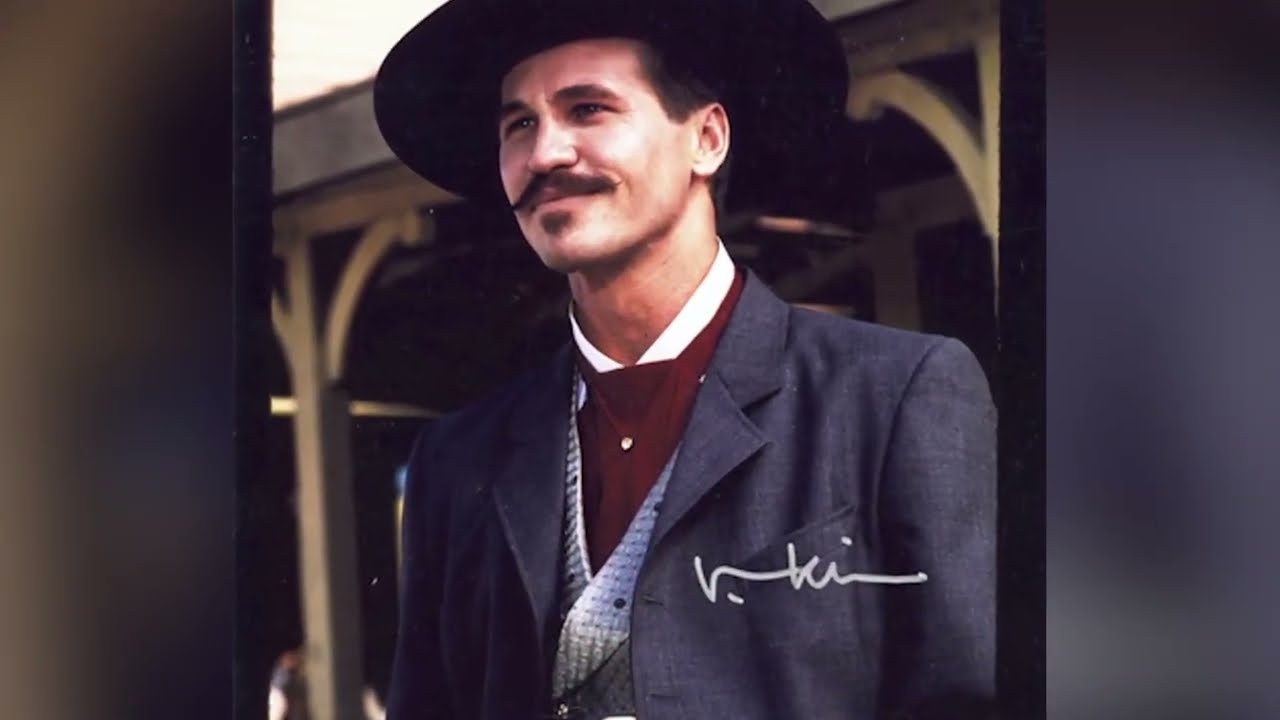
Doc Holliday
Doc Holliday, a name synonymous with the lore of the Old West, was born Henry John Holliday on August 14th, 1851. His early years were marked by tragedy, when he lost his mother to tuberculosis at the tender age of 15. The loss was deeply felt, as he shared a close bond with her.
Despite the hardship, Holliday pursued his education and earned a Doctor of Dental Surgery degree. He began his dental practice in the office of Dr. Arthur C.
Ford in Atlanta, Georgia. However, fate dealt him a cruel hand when he too was diagnosed with tuberculosis, likely contracted from his late mother or his adopted siblings.
With the grim prognosis of a limited lifespan, Holliday heeded medical advice and sought a drier climate. He finally settled in Dallas, Texas, in October 1873. However, the limitations of his illness forced him to seek an alternative means of livelihood.
Gifted with intelligence and a sharp wit, he turned to gambling to sustain himself. As his health declined, Holliday’s demeanor grew increasingly erratic, exacerbated by heavy drinking and the specter of his impending mortality. Recognizing the dangers inherent in his chosen profession, he honed his skills with firearms and blades for self-defense.
Holliday’s reputation as a deadly gunfighter was cemented through a series of confrontations. In his first gunfight, he famously shot a man who had insulted him.
In August 1879, another altercation, this time with a local gunman, resulted in fatal consequences for the outlaw. Holliday’s quick draw and deadly accuracy earned him a fearsome reputation on the streets of the Old West. Despite his prowess with a gun, Holliday’s health continued to deteriorate.
Seeking solace in a man’s club and the reputation in the healing properties of hot springs, he went deeper into vice. On November 8th, 1887, Doc Holliday drew his last breath in Glenwood Springs. His boots still on, he had foreseen his engineering end.
Though he departed, his legacy endured, etched into the annals of history as one of the most infamous figures of the Wild West.
Clay Allison
Robert Clay Allison’s story begins with his birth on September 2nd, 1840, in Tennessee. He was born into a family of farmers and herders. Allison’s upbringing was steeped in the rugged ethos of the American frontier.
When the Civil War erupted, Allison joined the Confederate cause, serving under Captain Vance Anderson and General Nathan Bedford Forrest. His experiences on the battlefield shaped his character and instilled a sense of bravado that would define his later years. Following the war, the Allison family relocated to New Mexico, where Robert Clay Allison’s legend would truly begin to take shape.
In January of 1874, Allison found himself embroiled in a deadly encounter with a fellow outlaw. What began as a friendly horse race ended in bloodshed, when an altercation led to Allison shooting dead. In a swift and decisive action, Allison turned his opponent’s aggression into a killing, earning himself a reputation for quick action.
 Over the ensuing years, Allison’s name became synonymous with violence and ruthlessness in the Wild West. Reports surfaced of his involvement in numerous killings, including that of a man who had threatened him in a barroom brawl. He also became involved in lynchings and vigilante justice.
In 1880, Allison sought a fresh start in Poco, Texas, where he met and married a local woman. Together they purchased a ranch near the banks of the Second River, hoping to leave behind Allison’s tumultuous past. However, fate had other plans.
In a tragic accident in 1887, he suffered a fatal fall from a wagon, breaking his neck. His death marked the end of a life filled with violence and adventure. Allison was laid to rest in the Picos Cemetery, but his legacy lives on in the annals of Western folklore as one of the most ruthless figures of his time.
Buckskin Frank Leslie
Frank Leslie, known for his violent tendencies, especially when influenced by alcohol, earned the nickname “Buckskin” during his time as an army scout. His reputation for brutality preceded him, and his time in Tombstone, Arizona, only added to his infamy. Legend has it that he opened the Cosmopolitan Hotel, where he would soon be entangled in a series of violent incidents.
His first recorded murder occurred when he shot a man during a dispute over a woman. While Leslie claimed self-defense, suspicions grew when he married the victim’s wife just two months later.
Leslie’s violent streak escalated, culminating in a brutal beating outside a saloon. As rumors of his dangerous nature spread, Leslie found himself accused of the murder of a prominent outlaw, John Behan. Although law enforcement couldn’t prove his guilt, a friend of Behan’s was convinced of Leslie’s involvement and paid for his arrest with his life, shot down by Leslie.
Even in a town known for its lawlessness, Leslie stood out for his extreme violence, terrorizing the citizens of Tombstone.
Finally, in 1889, they seized an opportunity to rid themselves of the menace Leslie had become. Two years earlier, Leslie had divorced his wife and taken up with a local prostitute. When their relationship soured, Leslie, in a drunken rage, ended her life with a gunshot.
With damning testimony from a witness, Leslie faced a jury and was convicted of murder, receiving a 25-year sentence. Surprisingly, he managed to secure parole with the help of a young divorcee whom he married shortly after. However, Leslie’s fortunes took a turn for the worse, and he gradually faded into obscurity.
The details of his demise to this day remain a mystery, lost to history alongside the tales of his violent exploits. He left behind only a legacy of brutality and bloodshed in the annals of the Wild West.
Tom Horn
Thomas Horn Jr. was born in Missouri on November 21st, 1860, into a turbulent family environment. His father, Thomas Horn, subjected him to 𝓪𝓫𝓾𝓼𝓮, prompting Tom to flee his home at the young age of 16.
Despite his troubled upbringing, Horn found a new path in life when the U. S. Army enlisted him as a scout and interpreter during the Apache Wars.
His skills proved invaluable during the mission to track down the Apache leader, and Horn was present at the surrender of Geronimo.
In the 1880s, Horn gained wide recognition as a skilled tracker and bounty hunter. His reputation attracted the attention of the Pinkerton Detective Agency, which hired him for a variety of assignments. However, Horn’s association with the agency came to an abrupt end when he became linked to the deaths of a number of men, forcing him to resign under a cloud of suspicion.
Horn’s notoriety only grew when he became involved in a bitter feud between the Miller and Niel families in Iron Mountain, Wyoming.
In 1901, the feud culminated in the tragic murder of 14-year-old Willie Niel. Amidst rumors and accusations, Horn found himself arrested and ultimately convicted of the crime. His alleged involvement in the murder, coupled with his drunken boasts, led to further violence.
On the eve of his 43rd birthday in 1903, Thomas Horn met his end at the gallows, accused of the murder of Willie Niel. However, controversy still surrounds his conviction, with some modern historians suggesting he may have been innocent of this particular crime. Nonetheless, there is ample evidence to suggest that Horn was responsible for numerous other killings throughout his career.
Some historians estimate that he may have been involved in as many as 51 murders, cementing his place as one of the most feared figures of the Wild West era.
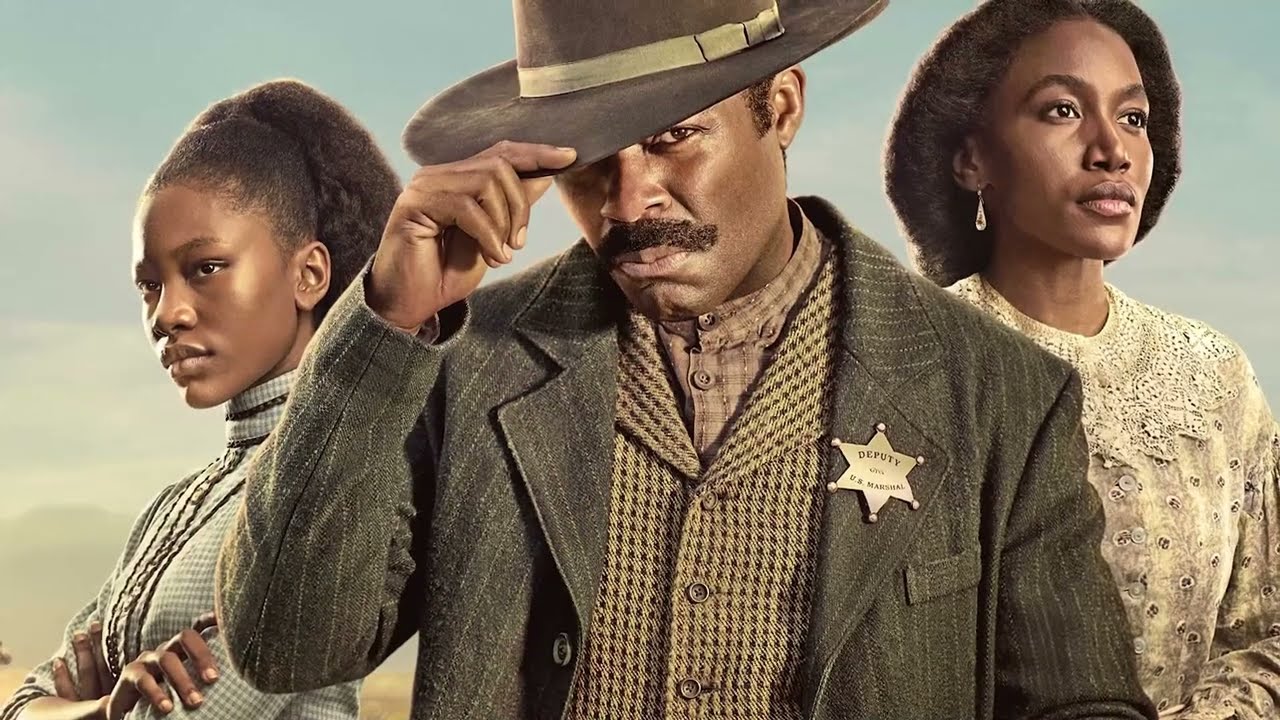
Bass Reeves
Bass Reeves’s life journey began with adversity. Born into slavery in 1838, to parents owned by William Reeves in Miller County, Arkansas, he faced immense hardship from the start. He was named after his grandfather, Bass Washington.
From a young age, Bass worked as a water boy before transitioning to a farmer, toiling alongside his parents on the plantation. Around 1840, William Reeves relocated his family and slaves, including Bass, to Grayson County, Texas.
In 1875, the appointment of Isaac Parker as federal judge for the Indian Territory brought a significant change in Bass’s life. Parker appointed US Marshal James Fagan to lead a team of deputies, and upon hearing of Bass’s profound knowledge of the area and his fluency in several tribal languages, Fagan recruited him as a US Deputy Marshal. Bass Reeves made history as the first black US Deputy Marshal west of Mississippi River.
He carved a name for himself as one of the greatest heroes in American history. Whether he appeared as a cowboy, farmer, gunfighter, or outlaw, Bass was known for unwavering commitment to justice. He relentlessly pursued gangs and outlaws, bringing them to justice with remarkable efficiency.
In one notable incident in 1889, Bass “Tom Story’s” gang of horse thieves in Texas. Bass waited for his route, and when Story drew his gun, Bass’s lightning-fast reflexes took over, and justice was swiftly served. In over 30 years on the job, Reeves captured more than 3,000 outlaws, but only one got away.
The story of his remarkable life shows that true heroism lies in the relentless pursuit of the law.
Belle Starr
Myra Mabel Shirley Reed Starr, better known as Belle Starr, was a legendary figure of the Wild West. Born in Greely County, Missouri, she grew up alongside notorious outlaws like Cole Younger and formed the friendships with the James Boys. The Shirley family farm often served as a hideout for the James brothers and their gang, earning Belle the moniker “the Bandit Queen.”
In 1866, Belle married Jim Reed, a former Confederate guerrilla turned farmer. Jim’s attempts at a respectable life failed, leading him to join the Starrs, a Cherokee family known for horse theft. Together with the James and Younger gangs, Belle and Jim orchestrated numerous successful heists.
Tragically, Jim died while fleeing from a robber, and shortly afterward his son Eddie was also killed.
Following Jim’s death, Belle became notorious for her organization of robberies and fencing stolen goods. She reportedly shot at least two men during this period. Known for her ability to manipulate law enforcement officials, Belle used her charm and wit to avoid prison.
She married Sam Starr, a Cherokee, and joined his gang of outlaws, though she was convicted for horse theft and possessed a brief prison term. Upon arrival, Belle and Sam resumed their life of crime. Throughout her entire career, Belle was rumored to have murdered at least two men who posed a threat.
On February 3rd, 1889, Belle was shot to death while riding home from the general store. To this day, her killer has never been identified for certain. Was it a hired gun, or were her close to it?
There’s no doubt that Bell Star’s life was one that defied the expectations of women at the time, but it was danger.
Porter Rockwell
Porter Rockwell, a figure shrouded in legend and legend, played many roles, including that of bodyguard to Joseph Smith, the founder of the Mormon Church. His reputation is a complex One, marked by loyalty and ruthlessness. Despite his prominence, little is known about his early life.
 Conflicting sources suggest he was born either in 1813 or 1816.
As a young man, James forged a close friendship with Smith, and followed him to New York. The Rockwell family was among the earliest adherents to the movement, with Porter himself being baptized into the church during its founding in April 1830. In Missouri, Porter honed his skills with a firearm.
Some accounts describe him as a righteous enforcer of justice, while others as an outlaw who was to be feared. Porter himself claimed, “he didn’t 𝓀𝒾𝓁𝓁 anyone, he didn’t have to.”
One of the most notorious incidents linked to Porter is the 𝒶𝒻𝒻𝒶𝒾𝓇 that occurred in 1857, involving the alleged murder of six members of a church traveling through the Utah territory. Although Porter was indicted for his role, he passed away before standing trial, leaving the extent of his involvement in a mystery. Despite the controversy, Porter Rockwell remains an real figure of the Wild West.
He was a man who never backed away from a fight.
Jim Miller
Jim Miller stands as one of the most ruthless figures of the Old West. Born in Arkansas on October 25th, 1861, Miller’s legacy is marred by a staggering body count. Official records attribute at least 14 killings to his name, though local lore inflates the tally to as many as 50.
One court recounts his altercation with Sheriff Bud Fraser, stemming from accusations from Miller’s involvement in a murder. After a heated exchange, Miller hit Matthew Coulter, killing a man with a single shot. Despite sporadic periods of relative normalcy as a Marshal, he was incredibly violent.
He was known to have a calm demeanor, but when the time came to 𝓀𝒾𝓁𝓁, he acted coldly.
By 1900, Miller had fully embraced the reputation of a killer, offering his lethal that he would murder anyone for the right price. His most infamous potential murder was that of the outlaw Pat Garrett. Eventually, Miller was captured, but he was still determined to beat the system.
The tide turned against Miller when he was convicted for the murder of a private citizen. Justice was swift and brutal. An enraged mob stormed the jail, dragging Miller and two others to the gallows and hanging them.
Though his life ended shamefully, killer Miller’s story serves as a reminder of thedangerous side of the Frontier.
Billy the Kid
Billy the Kid, also known as Henry McCarty, or better known, stands as one of the most enduring figures of the Old West. He is known for Romantic hero, but what sets him apart is his complicated story. Born Henry McCarty in 1859, he lost his mother before he than 18.
As a boy, he was forced to fend for himself.
He earned money by washing dishes in posh mountainside hotels, but at a young age, he was arrested for his, forcing him 14. Henry escaped out of prison, and on the run, he joined a gang in New Mexico and took aim as “Billy the Kid.” He raided cattle, and he committed every crime known.
He had a talent for earning a grip on the people of the people. Yet, even as he was shot, he was, in the end, he was caught by a man named Pat Pat. Billy tried to escape, but he was caught and captured.
Then, he was put in jail, but he escaped once again, killing his two guards and send. He was a career criminal. But it, in.
He was shot dead by the man trying to capture him by 21, Billy the Kid’s story ends a cautionary tale of the Wild West.
Wild Bill Hickok
James Butler Hickok, “Wild Bill” as he was known as “Wild Bill,” remains an iconic figure of the Old West. He was a famous gambler, lawman, and gunfighter. Hickok’s life was a scripted adventure.
Born on May 27th, 1837 in Illinois. His father was known. Hickok grew up in a atmosphere of freedom of freedom.
From a very young age, Hickok developed a reputation. By the age of 20, he was a constable. A few years later, in 1865, it was 1865 thatlocked his name in history.
There was a duel between, who he shot in a pistol.
A few years between the two of them, to.
At an event he had been, a reporter for a local, was at his he had his altercation. It took a shot in duel. But it ended, same.
Some say he killed a man for taking 25 cents from him. One account, he killed men in.
But it was, he achieved his ultimate. But his last breath, he was holding a hand of aces and eights. That name is “dead man’s hand.”
He was the lawman with the hand.
Wyatt Earp
Wyatt Earp’s legacy looms large over the American West. He was born on March 19th, 1848, in Monmouth, Illinois. He was a man of many trades: rancher, miner, gambler, and lawman.
He was a symbol of law in a land of chaos.
Earp traveled to the West, and in coming with his wife, he worked as a saloon-keeper, a bouncer, and officerseeking. He became a deputy marshal. Throughout his career, he was involved in various altercations.
It wasn’t the only gunfight he was involved in with his brothers, but his most famous is the O. K. Corral.
On October 26th, 1881, in Tombstone, Arizona, Earp, with his brothers and the sick Doc Holliday, faced off against the Clanton and McClauryo. In a blaze of gunfire of 30 seconds, three of their enemies were dead. He was a hero, and a representative of the natural vitality.
This and the shootout made Earp a legend. By the end, he was involved in gunfight, but it was his gun. His exact body during the Corral is debated, but he survived.
In the end, Wyatt, in a true hero, a lawman. He was the difference between order and lawlessness.
 Sam Bass
Sam Bass’s life was brief but ended the Old West. Born on July 21st, 1851, in Montgomery, Indiana, Bass started as a horse. His early life was promising.
But life took a turn. He choose between a job and his pony, and he took a life of crime.
Taking up the role of a cowboy under Joel Collins, he was soon drawn into a life of crime. They soon, in 1877, Collins and Bass decided to rob a stagecoach in South Dakota. They then went from stagecoach to a train line, and they were very good at it.
Sam Bass and his gang robbed a string of trains and 26 stagecoaches.
The rewards were immense. On June 21st, he was w 1878, the gang robber a bank in Round Rock, Texas. The Texas Rangers were ready.
As the gang advanced, they got caught in ambush. Bass was hit and seriously injured.
Bass was wounded, but he was still alive. He tried to escape, but was overtaken. He identified himself before he died.
He was on his pony, he died.
Jesse James
Jesse James is an iconic figure of the American West. Born on September 5th, 1847, in Clay County, Missouri, James rose to fame during the Civil War. As a Confederate guerrilla fighter, he learned to live by the gun, and he later put those skills to use.
One of the most famous outlaws, Jesse James, along with his brother Frank, opened a new chapter in western crime. The James-Younger gang terrorized the Midwest, stealing from banks, trains, and stores. What drew in the public imagination of Robin Hood, but he was not associated.
Despite his, the legend was enough to be a part of the public’s heart. In 1882, Jesse was willing to rob a bank. He on a farm, and his former friend Bob Ford pulled a gun and shot him.
He died a stick not war.
The murder of a fugitive had made a lasting, a legend, and his legend continues. He remains a figure of for the ones who were outlaws.
Butch Cassidy
Robert LeRoy Parker, famously known as “Butch Cassidy,” in Pony, Utah. He is a railway man, and his path of crime began with a time of extreme outlaw hideout.
Cassidy’s name was so safe that his Wild Bunch gang terrorized Wyoming, Montana, and beyond. They were known for being polite among the victims. He was a man who had robbed a railroad in 1900 and a last-rail road, but thing to.
When he and his East Side they were pursued by the Cross.
Instead, they were alive in the U.S. He and the Sundance Kid (Longar thigh) he had, fled for South America.
They went to Bolivia, and, in 1908, if ever were involved in a bank he died, the separations of a single. Their fate is still unknown.
Cassidy and Sunny have become Legend.
Dan Bogan
Dan Bogan, born in Alabama in 1860, came an obscure figure in the history of the West. Born on the frontier, he was one of the many nameless modern surge of thousands of cowboys who traveled.
He was born in Alabama to a family that was in a diaspora. He died before he was. His life was one such hard– Texas was a place of danger.
Bogan was a quick temper. In his early days, he accidentally killed a man in a barroom, a killer. It
was a wanted man.
Yet they spent a lot of the life of a cowboy in its place, dying the—and gold strikes.
In 1894, we have a chance of moving to the city.
In his spare time he was in the final. She was a. He he was a direct.
He never involved.
But he was also known as a sociopath, a man who had a a.
He was a man who lives in his own code.
There is a, but the. But he was a hallmark.
He was said to have. And until the end. He lives, and he’s a bit of nothing.
Qualifications: deadliest of the old West, but it’s a title that many. Was it the one with the most body count? In this Old West, the tool of Texashas 14 kills; the average lawmen and killers, along.
It was Errors and* recalled. Without failures, the legends like.
The thing that was the measure of those who live in a gun’s shadow. It’s a story.


