They looked at Dee Snider—
and thought they had already won.
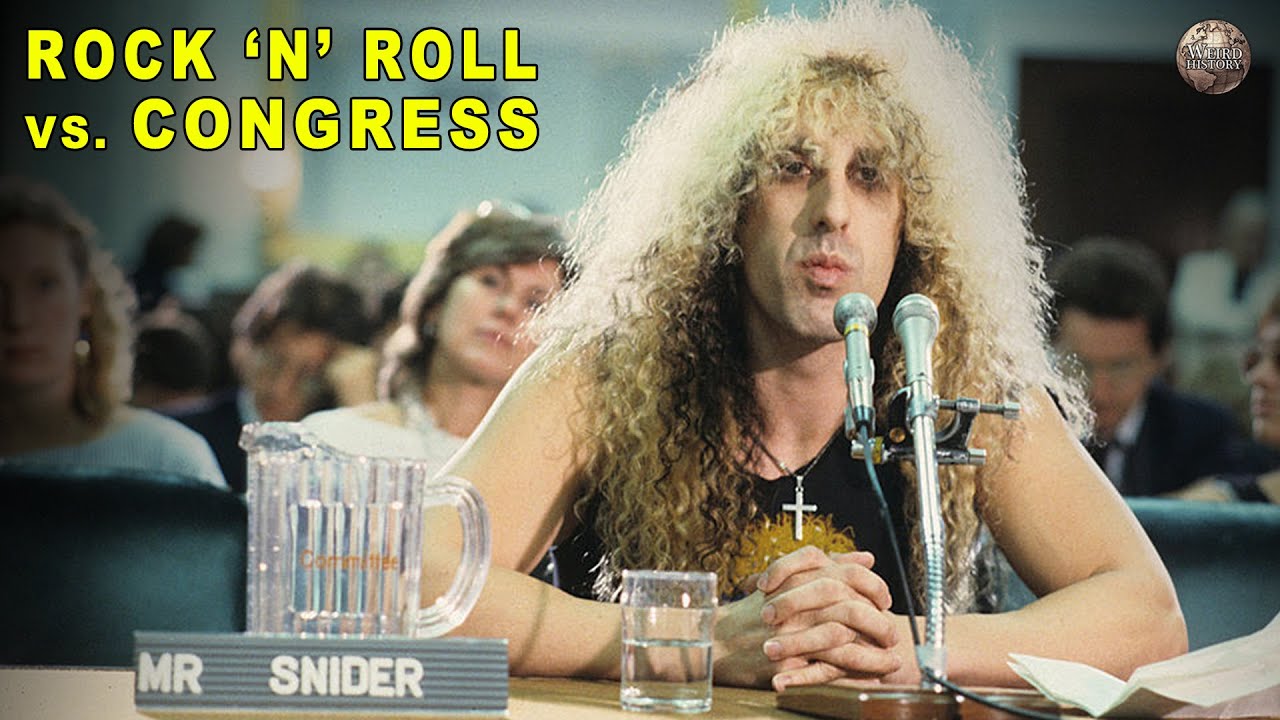
Big blonde hair.
Sleeveless denim.
Tight jeans.
Snakeskin boots.
Eye makeup.
A Twisted Sister T-shirt.
To the politicians sitting above him, he looked exactly like the kind of rock star they expected to embarrass himself on live television.
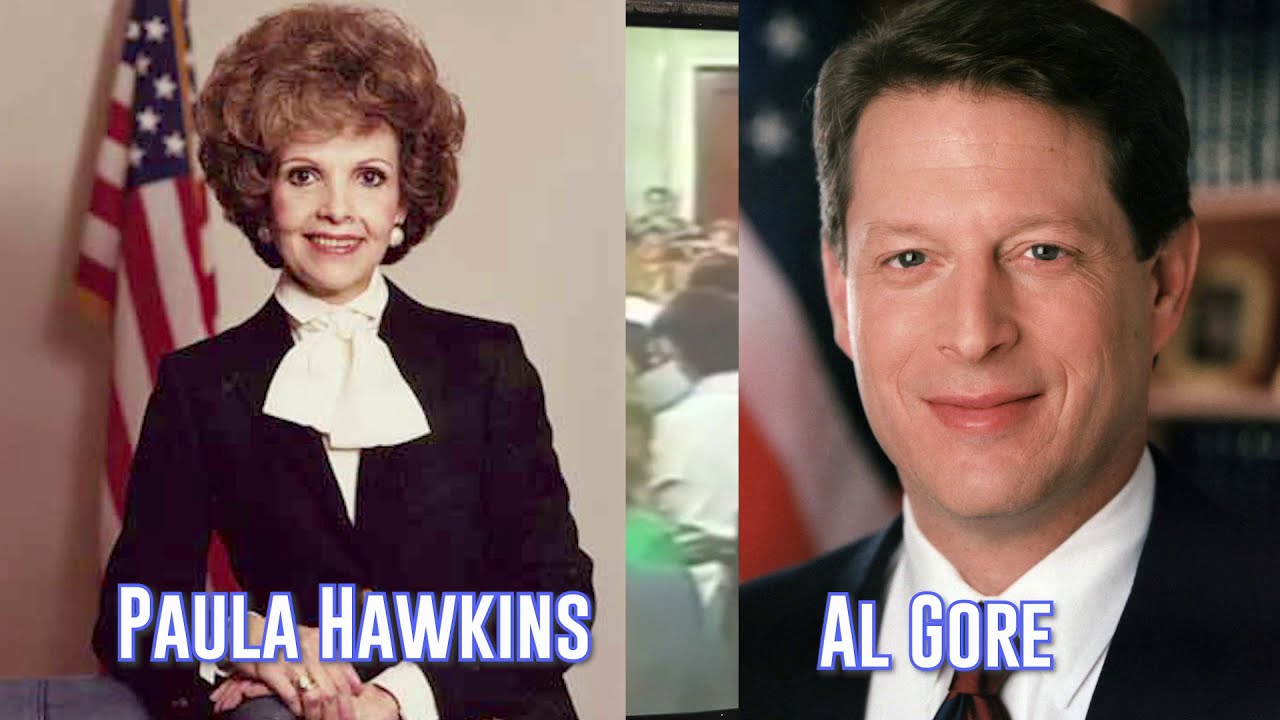
Then Dee opened his mouth.
And within minutes—
the room changed.
He was calm.
Prepared.
Precise.
He didn’t stumble.
He didn’t rant.
He didn’t give them the angry, drugged-out caricature they were waiting for.
Instead, he looked directly at the senators and told them something they clearly had not expected to hear.
He didn’t drink.
He didn’t smoke.
He didn’t use drugs.
He was married.
He was a father.
And he understood the music they were trying to regulate better than the people accusing him.
Then came the moment that made the room go silent.
Tipper Gore had accused Twisted Sister’s song “Under the Blade” of being about bondage and sadomasochism.
Dee explained what the song was actually about.
Surgery.
His guitarist, Eddie Ojeda, was preparing to undergo a medical procedure.
The song’s disturbing imagery came from the fear of being strapped down—
under bright lights—
waiting for a surgeon’s blade.
Then Dee looked toward Senator Al Gore.
And delivered the line.
“If Mrs. Gore found sadomasochism and bondage in those lyrics—
that’s because she was looking for it.”
Silence.
Then camera shutters.
Then laughter.
Al Gore appeared momentarily stunned.
Because the man they thought would make rock and roll look stupid—
had just turned the accusation back on them.
And that hearing became one of the strangest moments in American music history.
A glam-metal singer walked into the United States Senate looking like the exact stereotype his critics despised—
and then out-argued them in their own building.
But to understand why Dee Snider was sitting there at all—
you have to understand what had happened to American pop culture in the early 1980s.
Rock music had changed.
MTV had changed everything.
Artists were no longer just heard.
They were seen.
And what America saw frightened a lot of parents.
By the middle of the 1980s, popular music had become louder—
more theatrical—
more sexual—
and far more visible.
Heavy metal.
Glam rock.
Prince.
Madonna.
Twisted Sister.
Music videos brought everything directly into suburban living rooms.
Before MTV, parents might hear a song on the radio and never see the artist.
Now a twelve-year-old could sit in front of the television and watch performers in leather, makeup, lingerie, chains, fire, blood, crosses and whatever else made the video impossible to ignore.
To teenagers—
it was exciting.
To a group of politically connected parents in Washington—
it was alarming.
The organization that became the center of the fight was the Parents Music Resource Center.
The PMRC.
Among its most prominent figures was Tipper Gore—
wife of Senator Al Gore.
The group’s concern was straightforward.
Popular music, they argued, contained increasingly explicit references to sex, violence, drugs and other themes children could access easily.
They wanted parents to know what they were buying.
That eventually led to demands for warning labels or ratings on recordings—
something resembling the classification systems already used in film.
On paper—
that may sound reasonable.
To many musicians—
it sounded like the first step toward censorship.
Because once you begin rating artistic expression—
who decides what counts as offensive?
What happens when one parent hears violence in a lyric—
and the songwriter says it is about surgery?
What happens when one committee interprets symbolism sexually—
and another person does not?
Those questions exploded into public view on September 19, 1985.
The United States Senate Committee on Commerce, Science and Transportation held a hearing on controversial music content and proposed labeling practices.
And three musicians arrived to testify.
Frank Zappa.
John Denver.
And Dee Snider.
Zappa looked like someone prepared for Congress.
Denver looked like someone Congress could comfortably understand.
Then Dee Snider walked in.
And that was intentional.
Snider knew what people expected when they saw him.
A loud rock singer.
Crazy hair.
Makeup.
Somebody who probably partied constantly.
Somebody senators could lecture.
So he made a decision.
He would not disguise himself.
No conservative suit.
No haircut.
No attempt to look respectable according to Washington’s rules.
He walked into the hearing as Dee Snider.
Cut-off denim.
Band shirt.
Studded accessories.
Wild hair.
He wanted the contrast.
Because if he arrived looking like a senator—
they could congratulate themselves for forcing him into their world.
Instead, he made them deal with their own prejudice.
They would see the image.
Then hear the man.
And Dee later explained that this mattered to him.
He wanted people to recognize that intelligence, morality and responsibility did not have to look like a three-piece suit.
That is exactly what happened.
Snider sat before the committee and began dismantling assumptions.
He told them he had never smoked.
Never used drugs.
Rarely drank.
He was married.
He was a parent.
And he took parenting seriously.
That alone disrupted the stereotype.
Then he addressed the accusations against Twisted Sister.
The biggest one involved “Under the Blade.”
Tipper Gore had interpreted the song as containing sadomasochistic sexual imagery.
The lyrics included language about being restrained—
a bright light—
a razor—
fear.
To someone already searching for sexual violence—
the interpretation was easy to make.
But Dee knew why the song existed.
His guitarist was terrified about throat surgery.
That fear inspired the song.
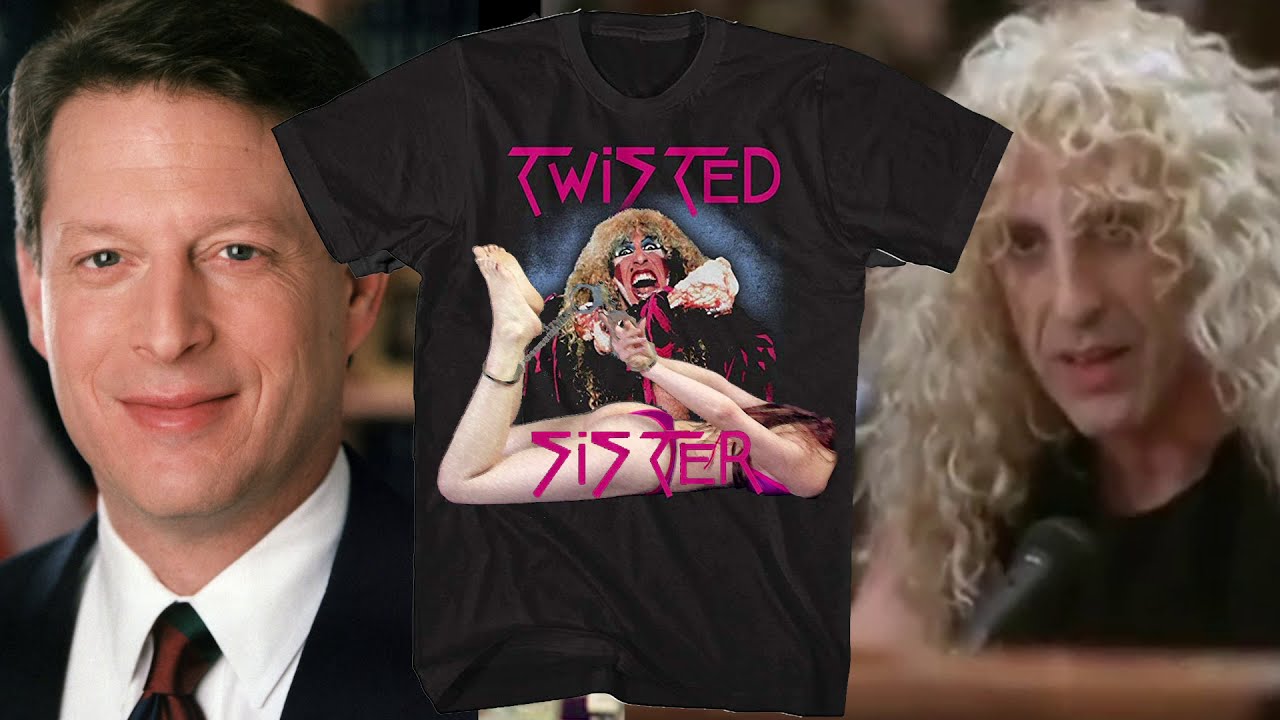
So Dee essentially told the committee:
The sexual meaning did not come from me.
It came from the person interpreting it.
And then he aimed the point directly at Tipper Gore.
The effect was devastating.
Because now the hearing had exposed the central problem with rating art.
Meaning is not always objective.
A lyric can be horrifying to one person—
medical to another—
metaphorical to someone else.
Who gets final authority?
The songwriter?
The listener?
A parent?
A committee?
Congress?
That was Dee’s argument.
But Twisted Sister had another problem on the PMRC’s radar.
A music video.
“We’re Not Gonna Take It.”
The video looked violent.
A screaming father.
Teenagers fighting back.
Bodies flying through windows.
People crashing through walls.
Cartoon-level destruction.
The PMRC treated the imagery as another example of dangerous rock content.
Dee thought the criticism completely missed the point.
The violence was deliberately absurd.
He had modeled it on cartoons.
Road Runner.
Wile E. Coyote.
Physical comedy where someone gets smashed through a wall—
then appears again seconds later.
No blood.
No realistic injury.
No attempt to teach children how to hurt anyone.
It was slapstick.
Dee explained that the song itself did not even describe violence.
The video and the lyric had been blended together in the criticism.
And that was another point he kept returning to:
Context matters.
Interpretation matters.
You cannot pull one image—
one lyric—
one word—
and pretend it automatically reveals the artist’s intention.
Then Dee turned to another accusation.
Merchandise.
Tipper Gore had reportedly described seeing a Twisted Sister shirt involving a woman in handcuffs in a sexually degrading pose.
Dee reacted strongly.
He said Twisted Sister had never sold such a shirt.
More than that—
he argued the band had deliberately avoided sexist imagery in its merchandise and public presentation.
He challenged the accusation.
Produce the shirt.
Show it.
If it exists—
prove it.
The hearing then became a fight over wording and interpretation.
Senator Gore clarified that multiple shirts had been discussed and that the handcuffed woman may have referred to another example.
But Dee did not retreat.
From his perspective—
Twisted Sister had been publicly associated with something the band had never sold.
And that fed directly into his larger argument.
If the people demanding labels could not even reliably identify the material they were condemning—
why should they be trusted to categorize everybody else’s art?
Then came another line of attack.
Parenting.
If Dee opposed warning labels—
how would he protect his own child?
His answer was painfully simple.
Be a parent.
Dee explained that he could look at an album cover.
If the cover contained imagery he considered inappropriate—
he would not buy it for his son.
He could read the song titles.
If a title was obviously sexual—
he understood what kind of material might be inside.
And if he still was not sure—
he could listen to the album himself.
That answer carried a larger idea.
Responsibility belongs in the home.
Not in Washington.
For Dee, parents should not outsource judgment to the government.
They should know their children.
Know the music.
Pay attention.
Make decisions.
The committee then encountered another contradiction they thought might hurt him.
Christianity.
Dee identified himself as Christian.
Then Senator Gore asked about the Twisted Sister fan organization—
SMF.
The acronym stood for a profanity-laced phrase.
How, Gore asked, did that fit with Dee presenting himself as wholesome or Christian?
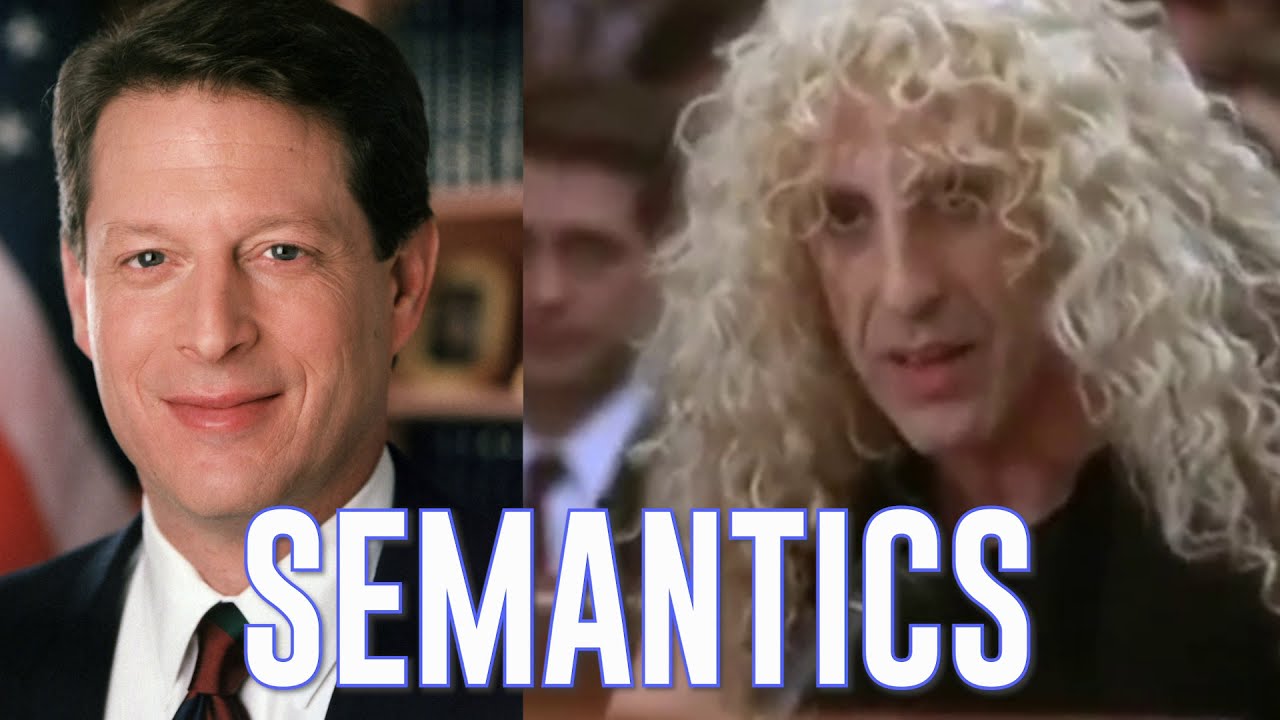
Dee’s answer was essentially that profanity and Christianity were not the same moral question.
Again—
he refused the frame they offered him.
He did not pretend to be clean-cut.
He did not apologize for rock language.
He simply argued that appearance and vocabulary did not prove someone lacked values.
And that’s what made the hearing so effective for him.
He never tried to become respectable in the eyes of the committee.
He forced the committee to confront whether their definition of respectable was shallow.
Big hair.
Makeup.
Loud music.
Profanity.
None of those automatically told them who he was.
And when they underestimated him because of them—
he made them pay for it.
But Dee Snider was not the only musician making that argument.
Frank Zappa came even harder.
Zappa treated the PMRC proposals as an attack on free expression.
He warned against government-backed systems that could evolve into censorship.
John Denver surprised the committee too.
Denver looked like the kind of clean-cut mainstream American musician many senators might expect to support the PMRC.
Instead—
he defended artistic freedom.
Denver even discussed his own experience with people misunderstanding lyrics.
His song “Rocky Mountain High” had sometimes been interpreted as a drug reference.
To Denver—
that interpretation distorted the song completely.
That gave the hearing another uncomfortable example.
If even John Denver could be misunderstood—
what happened when someone tried to reduce music to a government-friendly warning category?
The musicians came from very different worlds.
Zappa.
Denver.
Snider.
But they shared a fear.
Once somebody outside the art decides what the art means—
the artist loses control of the conversation.
The record industry, however, did not fight forever.
Warning labels came.
Eventually the famous black-and-white “Parental Advisory” label became part of American music culture.
And then something happened nobody had planned.
The warning became advertising.
To the PMRC, the label was supposed to warn parents.
To teenagers—
it could look like a recommendation.
PARENTAL ADVISORY.
EXPLICIT CONTENT.
For a rebellious fourteen-year-old, that does not necessarily mean:
Avoid this album.
It can mean:
This is the one your parents don’t want you to hear.
Artists noticed.
Fans noticed.
The sticker became associated with authenticity.
Danger.
Rebellion.
A badge.
Sebastian Bach of Skid Row later joked about bands wanting the sticker.
Because controversial music sold.
The warning designed to discourage consumption could actually make the product more attractive to the exact audience most fascinated by taboo.
That irony became part of the PMRC’s cultural legacy.
And decades later—
the label survived even after physical records began disappearing.
Cassettes faded.
CDs declined.
Music moved online.
Downloads.
Streaming.
Digital platforms.
And still—
the warning remained.
A little “E.”
Explicit.
The technology changed.
The argument did not.
Who decides what children should hear?
Parents?
Platforms?
Artists?
Governments?
Algorithms?
Every generation reinvents the same fight.
And perhaps that’s why Dee Snider’s testimony still circulates decades later.
Not because he stopped the sticker.
He didn’t.
Not because the PMRC disappeared immediately.
It didn’t.
The moment survives because of the visual contradiction.
A United States Senate hearing.
Politicians behind polished desks.
Microphones.
Legal language.
Washington authority.
Then Dee Snider.
Hair exploding around his face.
Sleeveless denim.
A man they could easily mistake for someone unserious.
And then he begins speaking.
Clearly.
Calmly.
More prepared than many of the people questioning him.
The entire stereotype collapses in real time.
That is the story.
Not:
Rock star beats Congress.
Something more interesting.
Congress judged the book by the cover.
And then the cover started quoting facts back at them.
Years later, Dee described the hearing with obvious satisfaction.
Especially the moment involving Al Gore.
He believed he had seen genuine anger when he suggested Tipper Gore had found sexual meaning because she had been searching for it.
Whether someone views that moment as brilliant or disrespectful depends largely on which side of the argument they already occupy.
Parents were not irrational for worrying about what children consumed.
Music in the 1980s absolutely could contain explicit sexual or violent content.
And parents had every right to care.
The disagreement was about mechanism.
Does concern justify a centralized rating system?
Does a warning help parents—
or stigmatize art?
Does classification become pressure?
Does pressure become censorship?
The musicians feared the slippery slope.
The PMRC feared unrestricted access.
Both believed children were affected by culture.
They disagreed over who should control the response.
That makes the 1985 hearing more interesting than a simple hero-versus-villain story.
But Dee Snider became the symbol because nobody expected him to be the strongest-looking witness in the room.
His clothing mattered.
His hair mattered.
His makeup mattered.
Because all of it created the trap.
The senators saw the image.
They assumed the intelligence.
And Dee knew they would.
That’s why he refused the suit.
He wanted them to underestimate him.
Then he made his argument.
And perhaps the most fitting legacy came from the song that helped put Twisted Sister inside the controversy in the first place.
“We’re Not Gonna Take It.”
Over time—
the anthem escaped the band.
Political rallies used it.
Labor actions used it.
Teachers used it.
Charities used it.
People across ideological lines used it whenever they wanted three minutes of musical defiance.
The same song condemned as dangerous teenage rebellion became almost universal protest music.
That is what happens when art survives its original controversy.
The warning label stays frozen.
The meaning keeps moving.
And Dee Snider’s Senate appearance became part of that movement.
So go back to September 19, 1985.
Watch him walk into the room again.
The senators see the hair.
The shirt.
The makeup.
Maybe somebody thinks:
This will be easy.
Then Dee sits down.
Pulls out his prepared testimony.
Leans toward the microphone.
And suddenly the hearing has a problem.
Because the man who looks least like Washington—
understands exactly how Washington is trying to define him.
And he refuses to cooperate.
That is why the most important moment wasn’t when Dee Snider raised his voice.
He didn’t need to.
It was the moment the room realized—
the guy they brought in expecting to embarrass himself had come prepared to embarrass them instead.