The high plains of eastern Colorado became a crucible of fire and blood in September 1868, as a 50-man contingent of civilian scouts under Major George A. Forsyth found themselves trapped on a small sandbar in the Arikaree River, besieged by a force of nearly a thousand Cheyenne, Lakota, and Arapaho warriors. For nine harrowing days, the men of Forsyth’s Scouts, a handpicked company of hardened frontiersmen and Civil War veterans, fought for their very survival against an overwhelming enemy force that included the legendary Cheyenne war leader Roman Nose.
The engagement, which would come to be known as the Battle of Beecher Island, stands as one of the most desperate and iconic last stands in the annals of the American frontier, a brutal testament to the escalating violence that defined the plains wars.
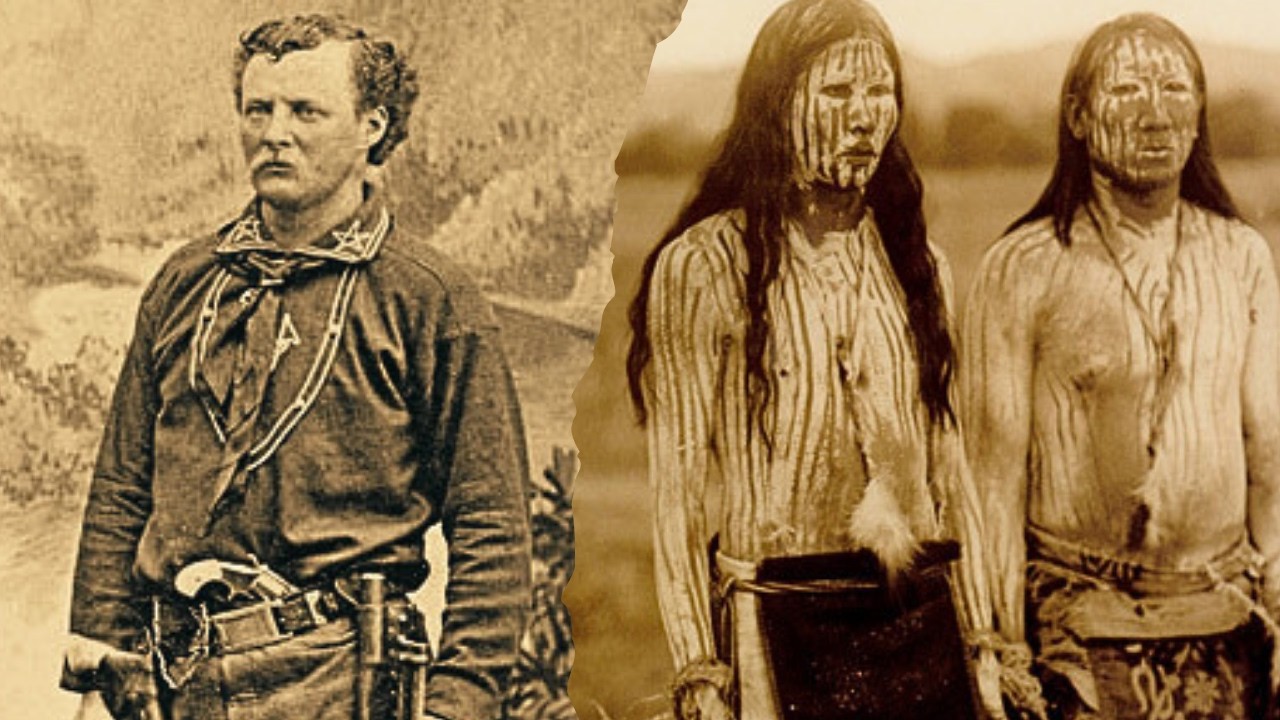 The seeds of this bloody confrontation were sown in a summer of relentless raids and counter-raids across the Kansas and Colorado frontier. By August 1868, the region was a powder keg, with Cheyenne Dog Soldiers and other warrior societies striking at settlements, wagon trains, and railroad construction crews in response to decades of encroachment, broken treaties, and the horrific massacre at Sand Creek in 1864. General Philip Sheridan, newly appointed commander of the Department of the Missouri, sought to counter these attacks with a new kind of unit.
He authorized Major George A. Forsyth, a 31-year-old Civil War veteran who had served on his staff, to raise a company of fifty “first-class hardy frontiersmen” to track down and engage the hostiles. Forsyth, eager for field command, recruited a motley crew from the forts of western Kansas, including experienced plainsmen like Sharp Grover, young adventurers, farmers, and even a 19-year-old Jewish immigrant from Philadelphia named Sigmund Schlesinger who had never fired a gun.
Armed with Spencer repeating rifles and Colt revolvers, Forsyth’s command set out from Fort Hays in early September, scouring the plains for signs of the enemy. After days of fruitless searching, they received word of an attack on freighters near Fort Wallace and took up the trail. Initially tracking a small war party of about 25 warriors, the scouts pushed deeper into the heart of Cheyenne territory, unaware that they were following the signs of a massive gathering.
The trail led them toward the Arikaree River, a tributary of the Republican River in present-day Yuma County, Colorado. As they advanced, the more experienced scouts grew uneasy, recognizing that the tracks indicated a much larger force than anticipated. Despite warnings from his men, Forsyth pressed on, driven by a determination to engage the enemy at any cost.
On the evening of September 16, the command made camp near a small, willow-covered island in the middle of the shallow, sandy river, a decision that would prove to be both their salvation and their prison.
At dawn on September 17, the stillness was shattered by the thunder of hooves and the piercing war cries of hundreds of warriors. The Cheyenne, led by Roman Nose, launched a surprise attack, attempting to stampede the scouts’ horses and overrun their camp. The initial charge was repulsed, but the scouts were forced to abandon their position and scramble for cover on the small island, which was only about 70 yards from either bank and raised a mere foot above the water.
The Cheyenne had successfully made off with the pack mules carrying the expedition’s extra ammunition, food, and medical supplies, leaving the scouts with only what they carried on their persons. As the sun rose, Forsyth and his men found themselves completely surrounded. The major later wrote that the ground “seemed to grow them,” as warriors appeared from every direction, their numbers swelling to an estimated 900 to 1,000 fighters.
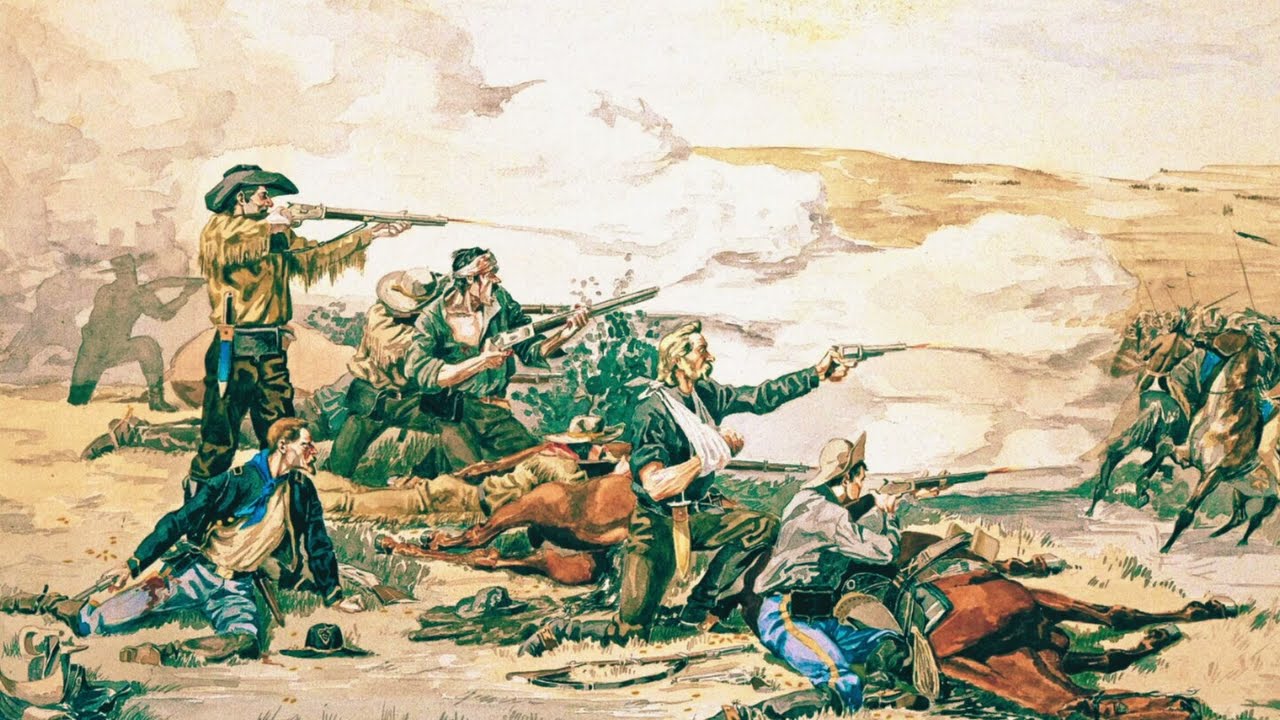
The first day of the battle was a maelstrom of lead and arrows. The scouts, using their knives, tin plates, and bare hands, desperately dug shallow rifle pits in the sandy island, using the bodies of their dying horses as makeshift breastworks. The Cheyenne, armed with an array of captured and traded rifles, poured a devastating fire into the island.
 Within minutes, the scouts had suffered their first casualties. Major Forsyth himself was hit twice, taking a bullet to his right thigh and another that shattered the bone in his left leg. Despite his grievous wounds, he remained in command, directing his men to conserve their ammunition and make every shot count.
The fighting was intense and unrelenting, with the Cheyenne launching multiple charges against the island, each one met with a devastating volley of Spencer rifle fire. It was during one of these charges that Lieutenant Frederick H. Beecher, Forsyth’s second-in-command and a 27-year-old veteran of Gettysburg, was mortally wounded.
He staggered to Forsyth’s pit, muttered “My poor mother,” and died.
The most dramatic moment of the battle came when the Cheyenne launched their largest charge, a massed assault of hundreds of mounted warriors led by the imposing figure of Roman Nose. With his horned headdress trailing behind him, Roman Nose rode at the head of the charge, a “perfect type of savage warrior” in Forsyth’s words. The scouts held their fire until the warriors were almost on top of them, then unleashed a devastating volley that tore through the charging ranks.
Roman Nose and his horse were seen to fall, and the charge broke, dividing around the island as the warriors retreated. While the scouts believed they had killed the legendary war leader, Cheyenne accounts tell a different story. Roman Nose, it is said, had violated a sacred taboo by eating from a metal utensil, which had compromised his spiritual medicine.
He had sat out the early fighting, but after being shamed by his fellow warriors, he joined the battle in the afternoon, knowing his medicine was broken. He was mortally wounded during a later charge and died in the village, refusing medical aid.
As the sun set on the first day, the scouts were exhausted, wounded, and running low on ammunition. They had no food and no water, but a welcome rain shower provided them with a precious supply of drinking water. They also began to cut and eat raw meat from the dead horses, a grim necessity for survival.
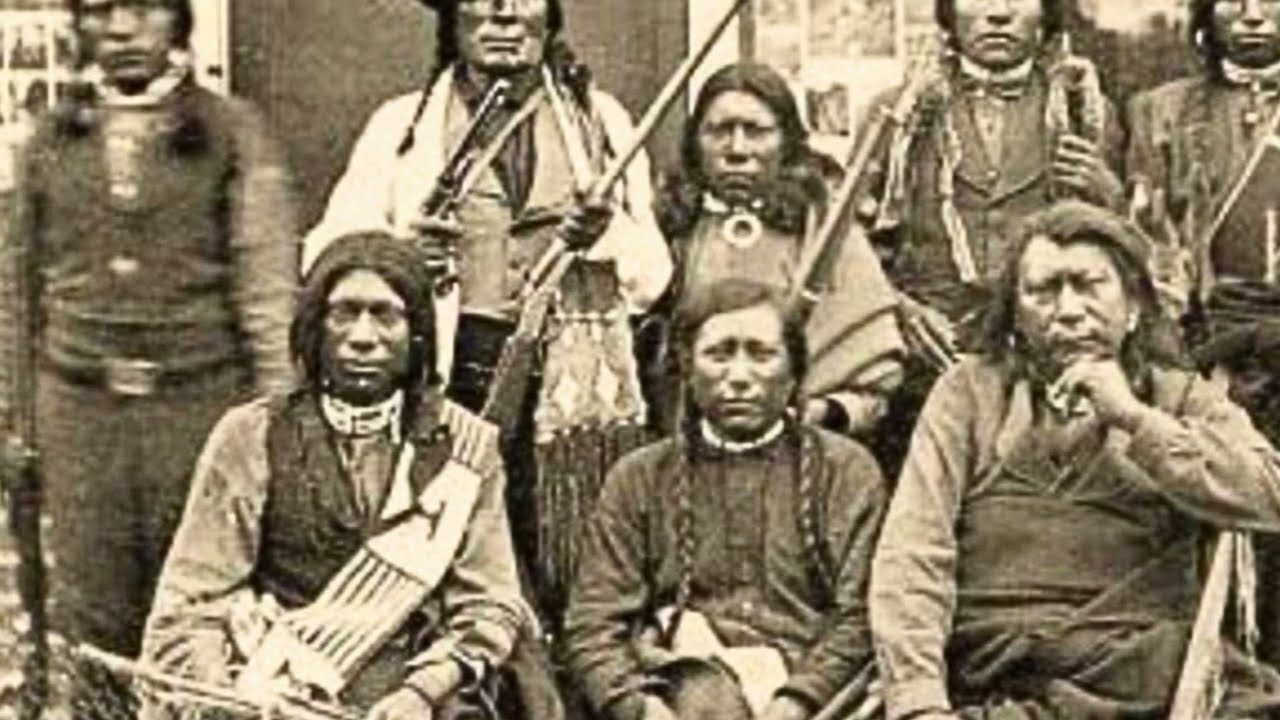 That night, Forsyth made the difficult decision to send for help. Two volunteers, Pierre Trudeau and a teenager named Jack Stillwell, slipped out of the island under the cover of darkness, crawling through the tall grass and walking backwards to disguise their tracks. Their mission was to travel 110 miles to Fort Wallace to bring reinforcements.
The next morning, the siege resumed, with the Cheyenne sniping at the island from the surrounding bluffs. The scouts, now well-dug-in, held their fire, conserving their precious ammunition. The days blurred together into a hellish routine of heat, thirst, and the stench of rotting horseflesh.
The wounded men grew delirious as gangrene set in. Forsyth, with a bullet still lodged in his thigh, performed surgery on himself, cutting the slug out with a straight razor while his men held his flesh taut.
On the third day, the Cheyenne attempted to approach under a flag of truce, but Forsyth, suspecting a ruse, ordered his men to fire on them. The warriors got the message and retreated. Two more scouts, Donovan and Ply, were sent out on the night of the third day to try to reach Fort Wallace.
They did not return, and the men on the island feared they had been killed. The days continued to pass, marked by intense heat, dwindling hope, and the constant threat of another mass assault. The Cheyenne, however, had suffered heavy casualties and seemed unwilling to launch another full-scale charge against the deadly accurate fire of the scouts.
They instead seemed content to lay siege, hoping to starve the defenders out. By the fifth day, the sniper fire began to lessen, and by the afternoon, it had almost completely stopped. The Cheyenne were withdrawing, their women and children having already moved on, their wailing laments for the dead fading into the distance.
The scouts on the island were in a desperate state. Their food was gone, their wounded were dying, and they had no idea if their messengers had ever made it through. On the eighth day, Forsyth called his men together and offered them a choice: those who could travel should try to escape on foot, while he and the wounded would stay behind and take their chances.
 The men unanimously refused to leave their commander, vowing to stand by him to the end. Their loyalty was rewarded on the morning of the ninth day, September 25, when a scout spotted movement on the horizon. It was a column of the 10th Cavalry, the famed Buffalo Soldiers, under the command of Lieutenant Colonel Louis H.
Carpenter. The relief column had been guided to the island by the scouts Ply and Donovan, who had successfully reached Fort Wallace. The men on the island, who had been on the brink of death, erupted in cheers, weeping and embracing each other as they realized they had been saved.
The rescue was a turning point. The Battle of Beecher Island was over. The scouts had suffered six men killed, including Lieutenant Beecher and the army surgeon, Dr.
J. H. Moors, who had died of his head wound days after the battle.
Several others would die of their wounds in the following days. The Cheyenne casualties were far heavier, with estimates ranging from 32 to 75 killed, though the exact number remains unknown. Roman Nose, the great war leader, was among the dead.
The battle was a tactical victory for the scouts, who had held off a vastly superior force, but it was also a stark illustration of the brutal and unforgiving nature of the frontier conflict. Major Forsyth, who had been criticized for his reckless pursuit, was hailed as a hero, though some of his men would later chafe at the “hero worship” he received. The island on the Arikaree River was renamed Beecher Island in honor of the fallen lieutenant, and it became a monument to one of the most desperate last stands in American history.
The aftermath of the battle did nothing to quell the violence on the plains. The Cheyenne, though bloodied, were not broken. The Dog Soldiers and other warrior societies continued to raid, and the U.
S. Army launched a massive winter campaign against the southern plains tribes. The Battle of Beecher Island, while a dramatic and celebrated engagement, was but a single, bloody chapter in the long and tragic story of the Indian Wars.
The Cheyenne, who had been fighting for their very way of life, would be relentlessly pursued and ultimately forced onto reservations, their nomadic existence and their sacred buffalo herds destroyed by the relentless march of westward expansion. The scouts who survived the ordeal would go on to live long lives, some finding fame and others fading into obscurity, but they would never forget the nine days they spent fighting for their lives on a tiny sandbar in the middle of the Arikaree River. The battle remains a powerful and haunting symbol of the courage, savagery, and ultimate tragedy of the American frontier.