MUNICH — The parents of Adolf Hitler’s mistress outlived the Third Reich by decades, died in their beds in Bavaria, and were buried in a small village cemetery under a silence so complete that most of their neighbors never knew who they had been living beside.
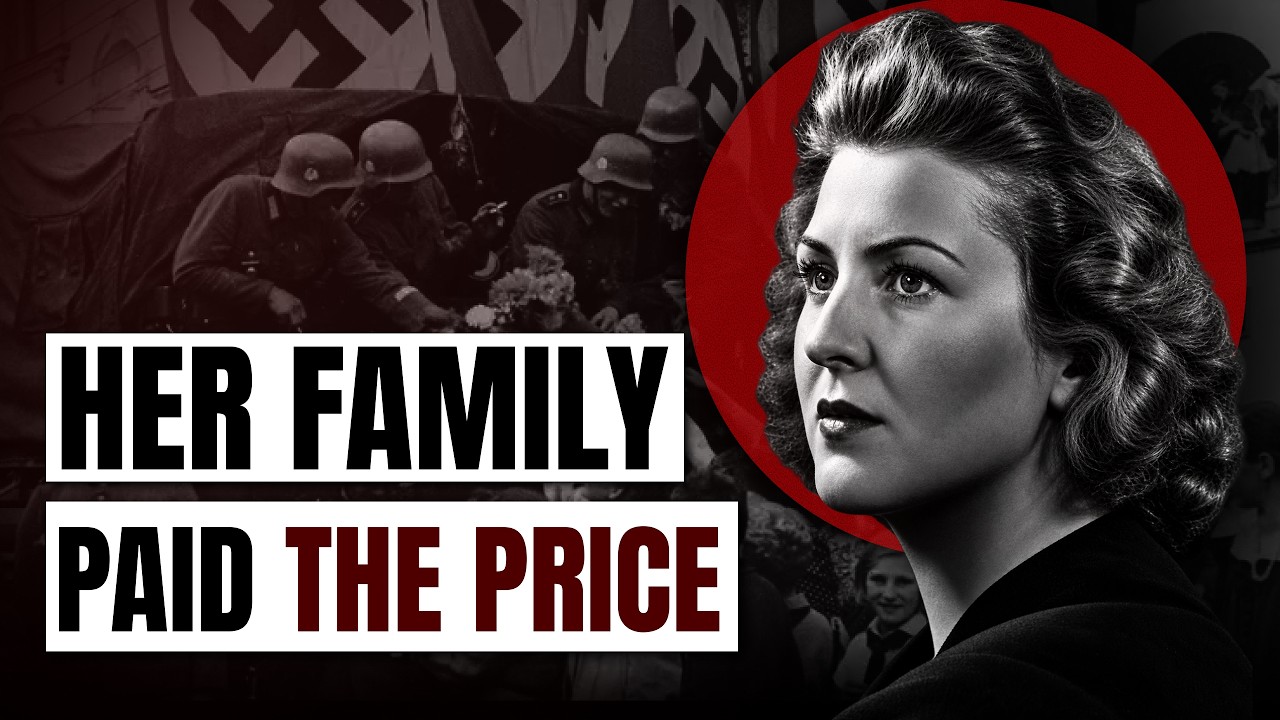
Fritz Braun, a schoolteacher and First World War veteran who served on the Western Front, died in January 1964 at the age of 84. He had survived the collapse of the German Empire, the hyperinflation of the 1920s, the rise and destruction of the Nazi state, the founding of two separate Germanies, the Berlin Wall, and the Cuban missile crisis. His wife Franziska, known to everyone as Fanny, outlived him by twelve more years, dying in January 1976 in an old farmhouse in the small Bavarian town of Rupolding, long enough to see the Vietnam War end and an American president resign in disgrace over Watergate.
For more than three decades after the most infamous double suicide of the twentieth century, two of the three people who raised Eva Braun were simply living quietly in Bavaria — paying taxes, attending church on Sundays, and never once explaining themselves to the world that came looking for answers.
That is not the ending anyone would have predicted for a family standing this close to the center of the Nazi regime. Nearly everyone else in Hitler’s inner circle in those final weeks either died with him in the bunker, faced a courtroom at Nuremberg, or spent the rest of their lives publicly defending the indefensible. The Braun family did something almost nobody else close to Hitler managed.
They disappeared quietly, completely on purpose.
The story of what happened to them — the parents, the two surviving sisters, and a child born exactly one week after Hitler ordered her own father shot — is stranger and considerably darker than most retellings allow.
On paper, the Brauns were about as unremarkable a middle-class Bavarian household as could be found. Fritz was a teacher. Fanny had worked as a seamstress and, before that, competed as a ski racer.
In 1921, with their three daughters still small, the couple actually divorced, then remarried the following year, likely for financial reasons as Germany’s currency collapsed into hyperinflation. Whatever drove that decision, the family’s public face stayed composed and respectable throughout — an instinct that would define them for the next five decades.
Their three daughters were Ilse, the eldest; Eva, the middle child; and Gretl, the youngest. All three would eventually orbit the same man. Only one of them would marry him.
The sister who ended up furthest from Hitler’s inner circle arguably lived the most quietly remarkable life of the three. Ilse Braun spent close to a decade working as an assistant to a Jewish ear, nose, and throat surgeon in Munich, Dr. Martin Marx.
By some accounts, the two were closer than employer and employee. She only left the practice in 1937, when Dr. Marx — watching Germany’s race laws tighten around Jewish professionals — decided to flee to the United States rather than wait to see what came next.
 So while her younger sister was becoming the private companion of the man responsible for that entire machinery of persecution, Ilse spent years working for one of its targets. She never joined the Nazi Party, was a European amateur ballroom dancing champion in her spare time, and remained openly skeptical of the regime. In January 1945, with Soviet troops closing in from the east, she made her way to Berlin and warned Eva over dinner that Hitler was dragging the entire country into an abyss.
Eva, by every account, brushed it off.
The two sisters were not always at odds. Years earlier, in 1935, when Eva overdosed on sleeping pills in what historians generally read as a bid for Hitler’s attention after feeling neglected, it was Ilse who found her that night, got her medical help, and quietly removed pages from Eva’s diary before anyone else could read them — protecting her sister’s relationship even while disapproving of the man behind it.
Gretl, the youngest, took the opposite road entirely. She had been working as a clerk at Heinrich Hoffmann’s photography studio — the same studio where Eva first met Hitler — since 1931. By the mid-1930s, the family was already living off the benefits of Eva’s position.
Hitler personally arranged a three-bedroom Munich apartment for the sisters in 1935 and a villa in the fashionable Bogenhausen district the following year. To the neighbors, Eva’s income was explained away as a photographer’s salary. It was not entirely a lie.
She really did work as a photographer for Hoffmann. It simply left out the part that mattered.
Gretl, meanwhile, became a genuine fixture at the Berghof, folded into Hitler’s inner social circle. And in 1944, she made the marriage that would come to define and very nearly consume her family’s future.
On June 3, 1944, Gretl Braun married Hermann Fegelein, an SS Gruppenführer serving as Heinrich Himmler’s personal liaison officer to Hitler, in a civil ceremony in Salzburg. Hitler and Martin Bormann stood as witnesses. It kicked off a two-day celebration — the kind of lavish, champagne-soaked party Nazi Germany’s elite still allowed themselves even as the war clearly slipped away from them.
Three days later, Allied forces landed at Normandy.
What almost nobody raised a glass to that weekend was what Fegelein had actually done to earn his rank. In the summer of 1941, he had commanded the SS Cavalry Brigade during the invasion of the Soviet Union, a unit that in a matter of weeks was responsible for the deaths of more than 17,000 civilians in the Pripet Marshes, the overwhelming majority of them Jewish. Historians studying the brigade’s own radio logs have since described its operations as among the opening chapters of the Holocaust itself.
Gretl’s new husband had helped build the very machinery of murder for which the regime is remembered.
Fast forward to April 1945. Berlin is surrounded, and Hermann Fegelein — a man who had built his entire career on personal loyalty to power — did something almost predictable. He ran.
He vanished from the Führerbunker for two full days, right as Hitler was also learning that Fegelein’s own boss, Himmler, had been secretly negotiating surrender with the Western Allies behind his back.
When Hitler’s security detail finally tracked Fegelein down, he was in a Berlin apartment, out of uniform and drunk, stuffing suitcases with cash and jewelry — some of it reportedly Eva’s — alongside a woman who was not his very pregnant wife. Hitler, already incandescent over Himmler’s betrayal, had his own brother-in-law arrested, court-martialed, and on April 28 shot in the Reich Chancellery garden for desertion, two days before his own death.

On April 29, in a brief ceremony inside the bunker, Hitler finally married Eva Braun. Less than forty hours later, on April 30, the two of them took their own lives together as Soviet troops fought their way toward the building above them.
Exactly one week after her husband’s execution, on May 5, 1945, Gretl Braun gave birth to a daughter at Oberaudorf. She named the baby Eva Barbara, after the aunt the child would never meet. Born to a mother widowed on Hitler’s own order, in a country that no longer technically existed, carrying the name of the century’s most notorious mistress — it is hard to imagine a stranger set of circumstances for anyone to be born into.
When American forces reached Munich, they went looking for the Braun family almost immediately. Franziska was interrogated repeatedly through the late 1940s. A transcript from one session dated September 1948 still sits in an American university archive today.
Her story never changed. She barely knew what her daughter did in Berlin, she said. Politics was never discussed at home.
The family had been kept at a comfortable, deliberate distance from all of it.
Historians who have studied that testimony tend to view it with real skepticism. It is difficult to reconcile total ignorance with a family that had been handed an apartment, then a villa, then years of quiet financial support — all traceable to one daughter’s position at Hitler’s side. But skepticism is not proof, and the Allied denazification tribunals eventually classified both Franziska and later Gretl in the lowest category of complicity under the system: Mitläufer, meaning simply “follower.”
No significant assets, no real Nazi Party role, no direct evidence of participating in any crime. They walked away with a label, not a sentence. Ilse was never seriously investigated at all.
There was, by every account, simply nothing there to investigate.
There is one more footnote to this chapter that has never been fully confirmed but is too strange to leave out. After the war, Adolf Eichmann reportedly claimed to have traced a thread of Jewish ancestry several generations back in the Braun family line — something Hitler, if true, apparently never knew about the family he had effectively married into. Most historians treat the claim with real suspicion, since it came from a man with every reason to muddy the historical record about his own role in the Holocaust.
True or not, it is the kind of detail that changes how one looks at that wedding photograph.
This may be the most genuinely unusual part of the whole story. Compare the Brauns to the family of Hermann Göring, Hitler’s own designated successor. Göring’s wife spent decades after the war publicly defending him.
His daughter gave interviews about her father for the rest of her life. That family remained a fixture of postwar fascination precisely because they kept engaging with their own history. The Brauns did the opposite, almost systematically.
 Gretl remarried in 1954 to a Munich textile businessman named Kurt Berlinghoff and quietly built an entirely new identity around that marriage. In the years before that, she had worked ordinary jobs under her own first name — cleaning houses, sewing, eventually retail — surrounded by co-workers who by all accounts had no idea who she was related to. For eight hours a day, she simply got to be Gretl.
Franziska lived out her final years in the farmhouse in Rupolding, dying there in January 1976. Fritz had died twelve years earlier, in January 1964, at 84, having outlasted the Third Reich by nearly two decades. Ilse never remarried after two failed marriages, had no children of her own, and died of cancer in Munich in 1979.
All three of them are buried together in the same small village cemetery, alongside one more name.
Very little of Eva’s personal archive survived through the family itself. Most of what historians work with today — her photographs, her home movies, fragments of her letters — comes from material the Allies seized in 1945, not from anything the Brauns chose to preserve or hand over. For researchers writing about Eva Braun in the decades since, the family’s cooperation has been close to nonexistent.
Whatever they knew, remembered, or simply wanted to forget, they mostly kept to themselves.
Eva Barbara Fegelein grew up in postwar Bavaria under her mother’s new married name, largely shielded, it appears, from the full weight of who her father and her aunt had actually been. By the little that is known, she lived what looked from the outside like an unremarkable life. In April 1971, that changed.
Her boyfriend was killed in a car accident. Not long after, at 25 years old, Eva Barbara took her own life.
Exactly what happened in those final weeks was never made fully public, and it is not really anyone’s place to speculate on the details now. But there is something quietly striking about the fact that the last direct link between this family and the horror of April 1945 ended not in a bunker or a courtroom, but in a private grief that had nothing to do with Hitler at all — and everything to do with being a 25-year-old who had just lost someone she loved.
Even now, professional historians cannot fully agree on how much Eva herself actually understood. One influential postwar historian dismissed her as barely significant enough to study at all, a woman with essentially no role in the century’s worst crimes. Others argue that willful blindness at that level of physical closeness to power is a choice in its own right.
Her own family built their entire postwar life around insisting on the first version. Whether that was the truth or simply the one story that let them keep living quietly in Bavaria is not something anyone still alive can answer for certain.
So how does a family this deeply entangled with Hitler simply vanish from history when almost nobody else connected to him managed the same trick? The honest answer appears to be that they never tried to explain themselves — and they never stopped being ordinary, on purpose. No memoirs, no television interviews, no public defense, and no public confession either.
Just decades of quiet, undocumented, unremarkable time. Grocery shopping, church on Sundays, a farmhouse in Rupolding, a shop counter in Munich.
It is a strange kind of ending for a story that began in a bunker beneath Berlin. But perhaps that is the real answer to what happened to Eva Braun’s family. Nothing, on purpose, for as long as they could possibly manage it.
And for the better part of thirty years, it worked.