Joel Ortiz was carrying a suitcase containing roughly $250,000 in cash through Los Angeles International Airport when members of the REACT task force closed in. He had just converted stolen cryptocurrency into physical money and was preparing to board a flight to Europe. A short time earlier, the former high school valededictorian had been living a double life—by day a college student studying information technology, by night one of the country’s most wanted cyber criminals. Within minutes, law enforcement surrounded him at his gate.
The arrest came without resistance. By the time the handcuffs clicked around his wrists, his empire of stolen digital wealth had already begun to crumble. Ortiz grew up in a public housing project in Boston, where his family struggled to make ends meet. From a young age, he stood out for his intense curiosity about technology.
Where other kids played video games, Ortiz would take apart old computers to figure out how they worked. His dedication paid off in high school, where he graduated as valededictorian and won a scholarship to study information technology. Friends and teachers described him as reserved, awkward at times, but undeniably brilliant. Yet it was in the unseen corners of the internet that Ortiz truly came alive.
Online, he found communities where hacking was not just a skill but a way to make fast money. What started as harmless exploration soon drew him into forums where cybercriminals traded stolen data, hacking techniques, and social media accounts. One underground marketplace, known as OG Users, became his entry point into the digital underworld. For Ortiz, hacking was another puzzle to solve—and another potential ticket to a life far from the one he had known.
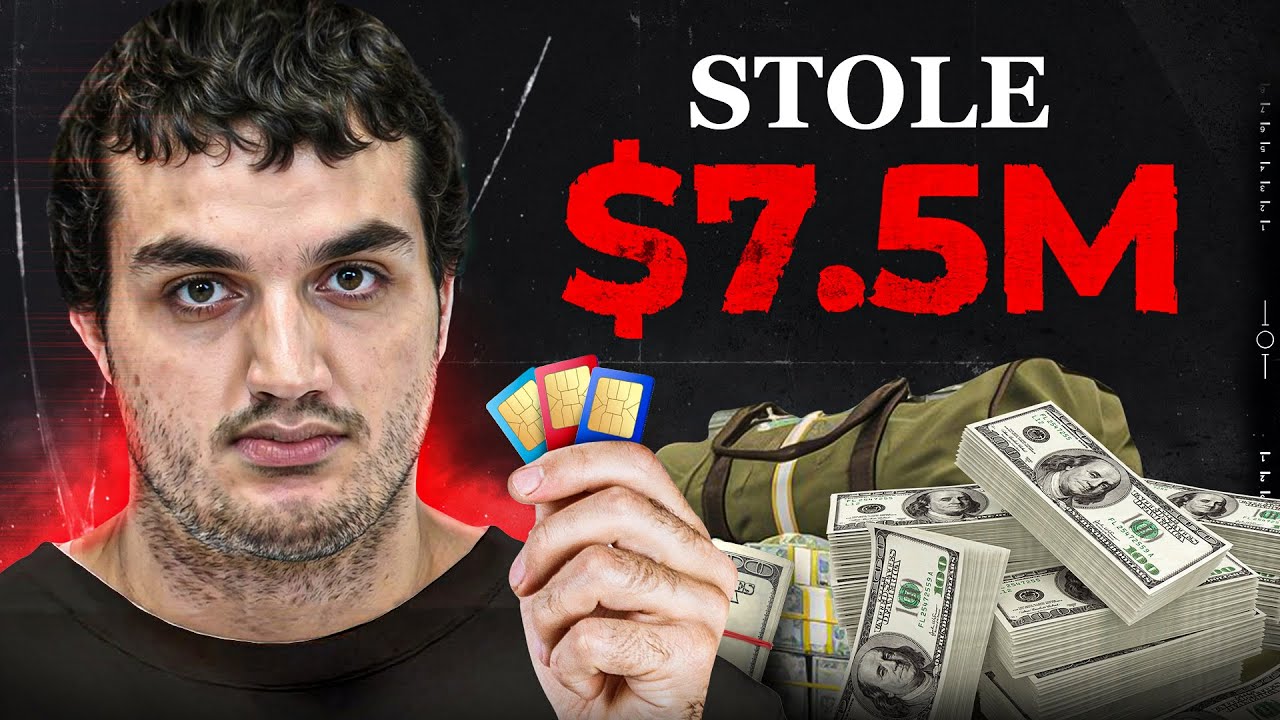
The temptation proved impossible to resist. The method that captivated him was SIM swapping, a technique that allowed hackers to trick telecom companies into transferring a target’s phone number to a different SIM card. By intercepting text messages and bypassing two-factor authentication, hackers could gain full control over their victim’s digital accounts—including cryptocurrency wallets. In the loosely regulated world of digital currency, this loophole was being exploited ruthlessly, and Ortiz stepped right in.
He started small, stealing a few thousand dollars at a time. But the rush was immediate, and the money flowed easily. Before long, small gains no longer satisfied him. He set his sights higher, targeting cryptocurrency investors who had the most to lose.
With each successful heist, his reputation in hacker circles grew, and so did his greed. By the time his schemes had matured, he had siphoned approximately $7. 5 million from his victims’ cryptocurrency accounts, converting the stolen funds into cash he could spend at will. The Ortiz who had grown up in public housing was gone, replaced by a new persona draped in Gucci, Armani, and Louis Vuitton.
He bought expensive cars, booked luxury hotels, and flew first class around the world. He seemed determined to burn through the money as quickly as possible. But living the high life was not enough—Ortiz wanted everyone to see it. He flooded social media with photos of cash, designer clothes, and lavish trips, presenting himself to followers as living the dream.
What his followers did not know was that every dollar he flaunted had been stolen. To him, the posts may have felt like harmless bragging, a way to celebrate his success from his victims’ misfortune. But for the cybercrime investigators tracking him, each post was a blazing neon sign pointing straight to him. His victims, meanwhile, watched helplessly as their savings vanished at the hands of someone they could not see and did not know.
To them, he was a ghost. But Ortiz’s empire of stolen wealth was built on deception and arrogance, and those same traits began to pull him apart. His family noticed his sudden fortune with a mix of confusion and unease. How could a college student afford such clothes, cars, and trips?
Some were impressed, others sensed something was deeply wrong, but no one dared ask. Ortiz could feel the questions stacking up in the silence of his closest relationships. The more money he flaunted, the further he drifted from the person he had once been. Friends from high school no longer recognized him, and he felt increasingly isolated, surrounded instead by people drawn to his wealth, not to him.
He became a stranger to those who loved him and a ghost to those who followed him online. Yet he could not stop posting. His feed had become an addiction, fueling a craving for validation that only came from showing off stolen riches. With every new post, the noose tightened.
Behind the scenes, REACT—a specialized cybercrime unit based in Santa Clara, California—had been watching Ortiz closely. The task force, trained to hunt digital criminals who believed they were untouchable, saw Ortiz as exactly the kind of target they were built for: brazen, overconfident, and, above all, careless. His own social media posts painted a detailed picture of where he had been, what he had bought, and when. They traced his movements, mapped his purchases, and connected the dots between him and the victims he had drained.
What they needed was the perfect moment to move. That moment came when Ortiz booked a flight to Europe, believing he was securing his escape. Instead, he gave REACT the final piece of their plan. As he walked confidently toward his gate at LAX, ready to start a life of luxury abroad, the task force closed in.
Just months after his arrest, Ortiz stood before a California courtroom to face the consequences of his actions. The designer clothes, expensive trips, and stacks of stolen cash were gone. In their place came a 10-year prison sentence. The court found him guilty of identity theft, grand theft, and numerous violations of privacy—each charge a reminder of every victim he had left empty-handed.
For his family, the sentence was a tragedy: a promising young man, a high school valedictorian with a bright future, lost to a world of crime. For his victims, it was justice. The money he had flaunted so freely had been stolen from people who could least afford to lose it. His story made headlines across the country as a cautionary tale of ambition turning to greed, talent twisted into theft.
Inside the walls of the prison, the empire he had built so recklessly turned to dust, leaving him with nothing but memories, regret, and the undeniable truth that his choices had finally caught up with him.